Originaldokument
GPT Image 2 · en
Scene:
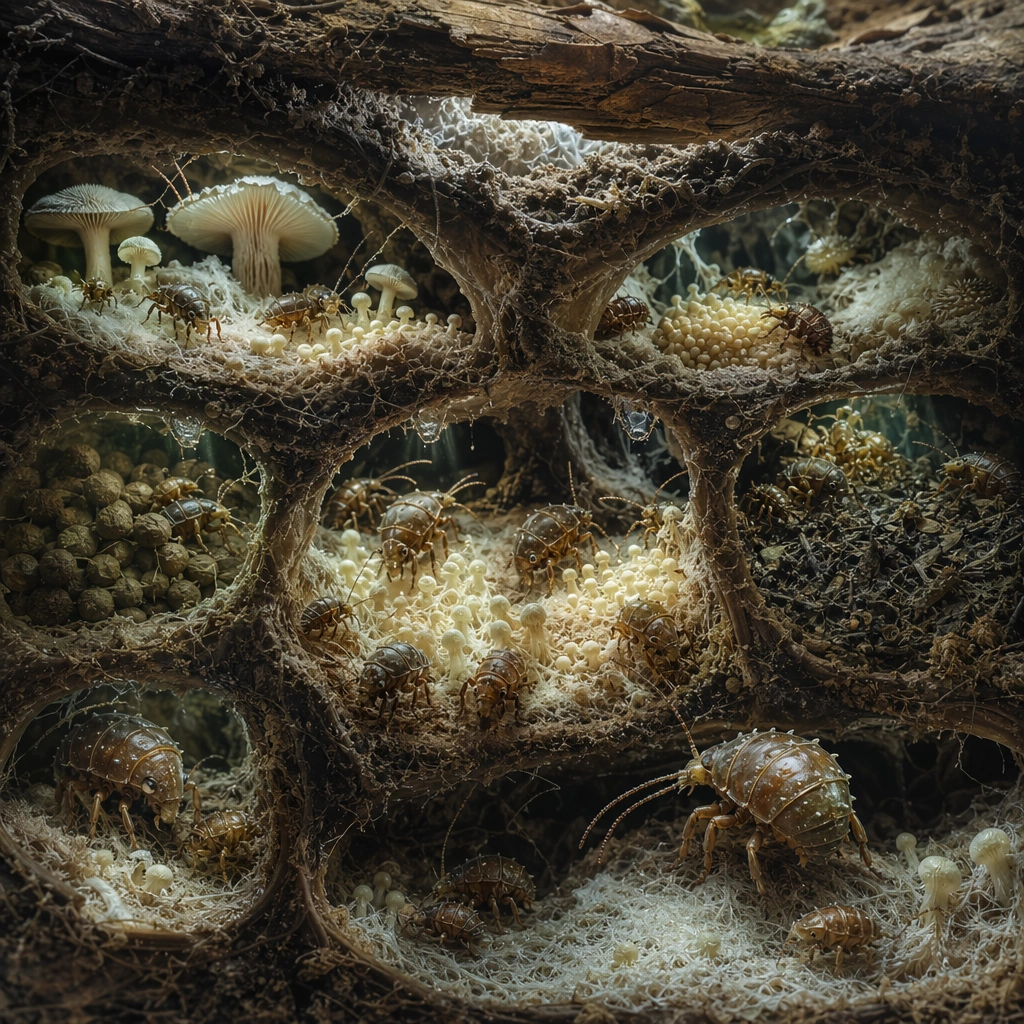
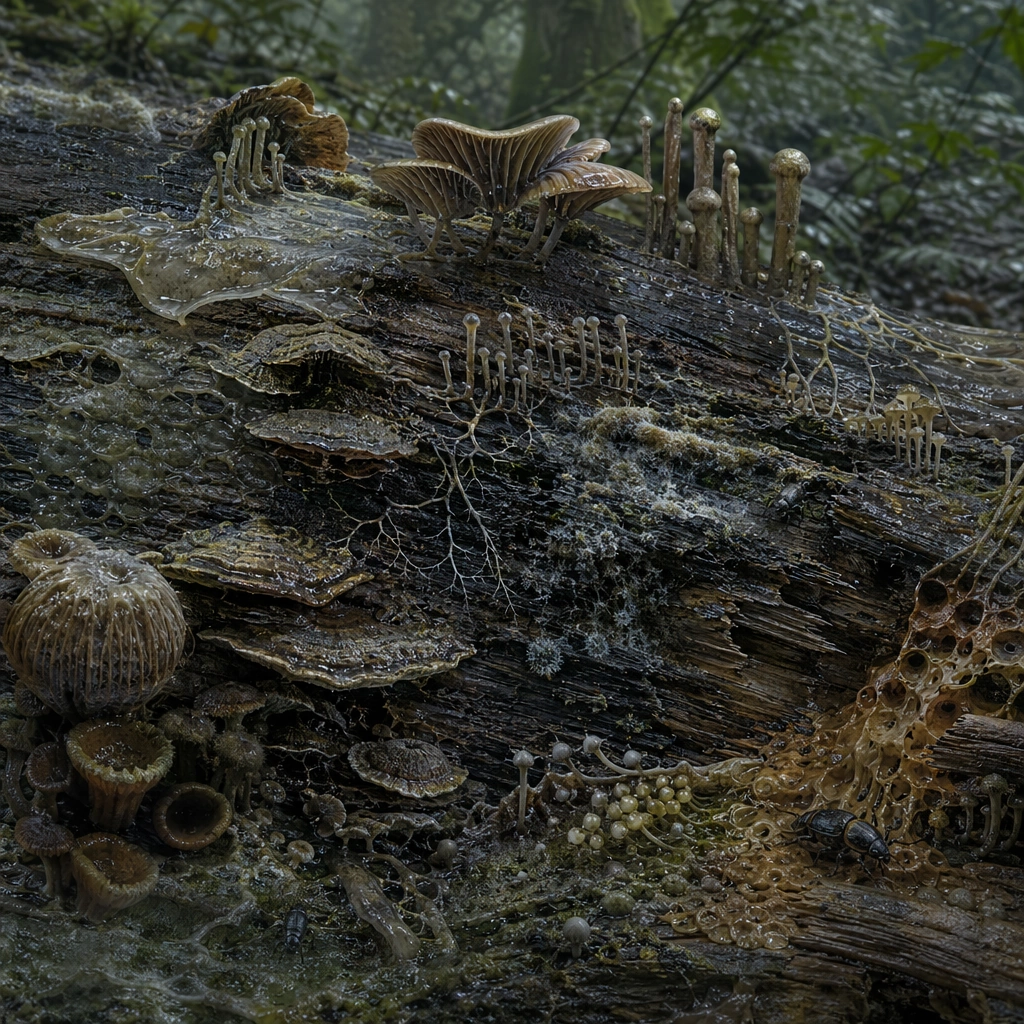
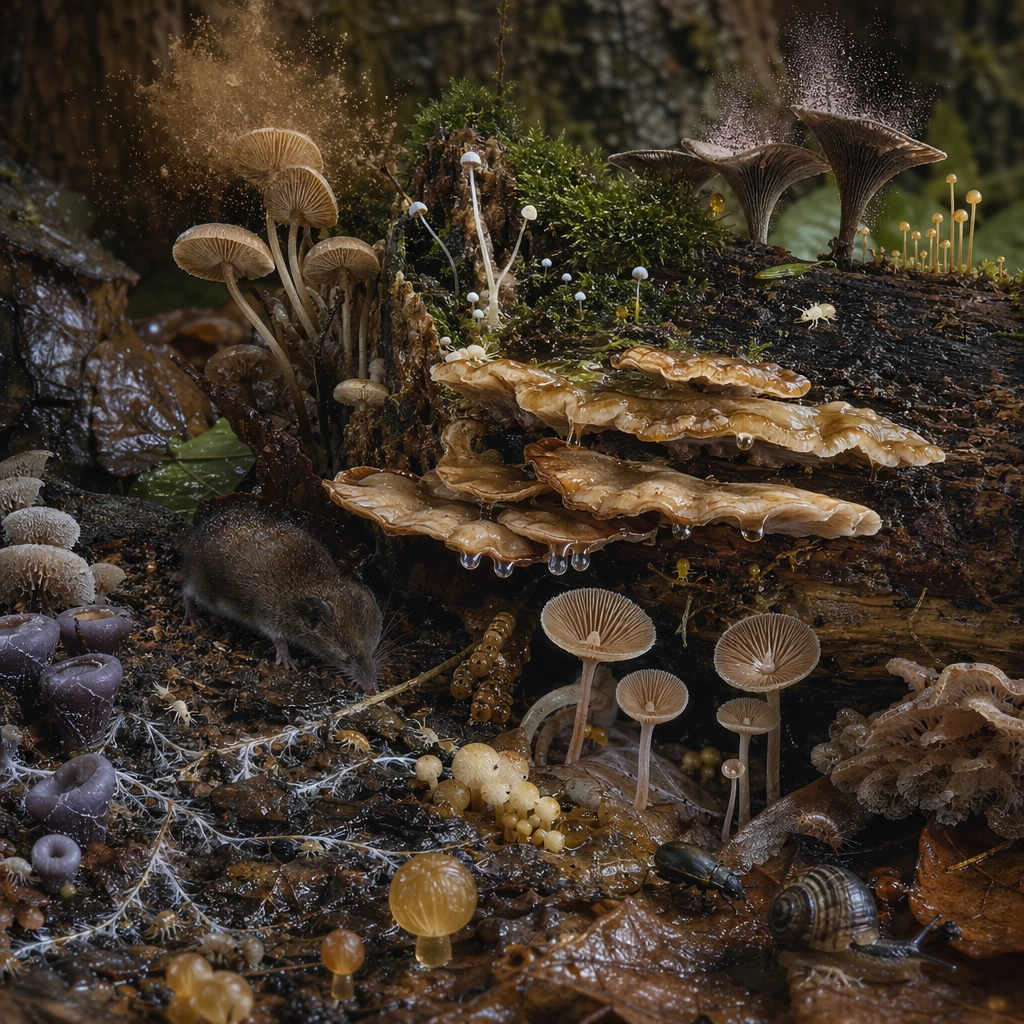
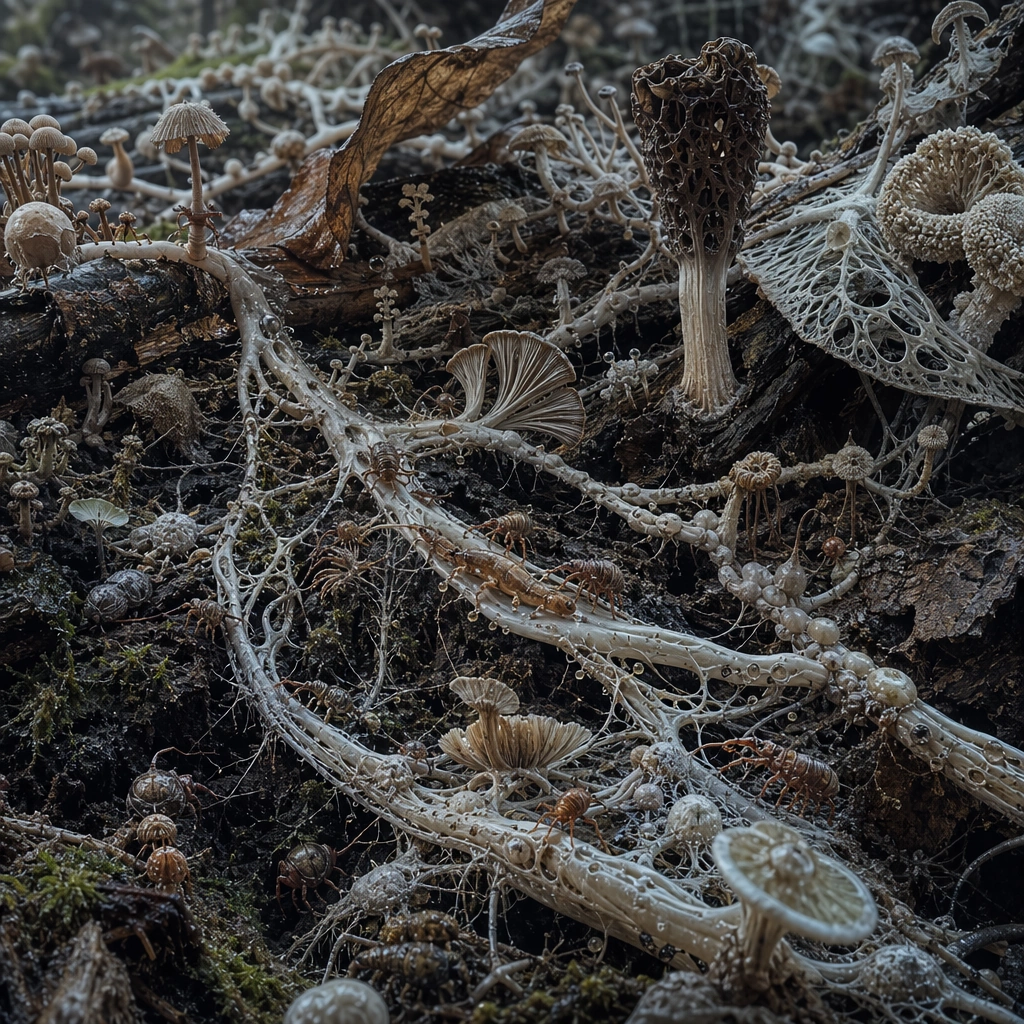
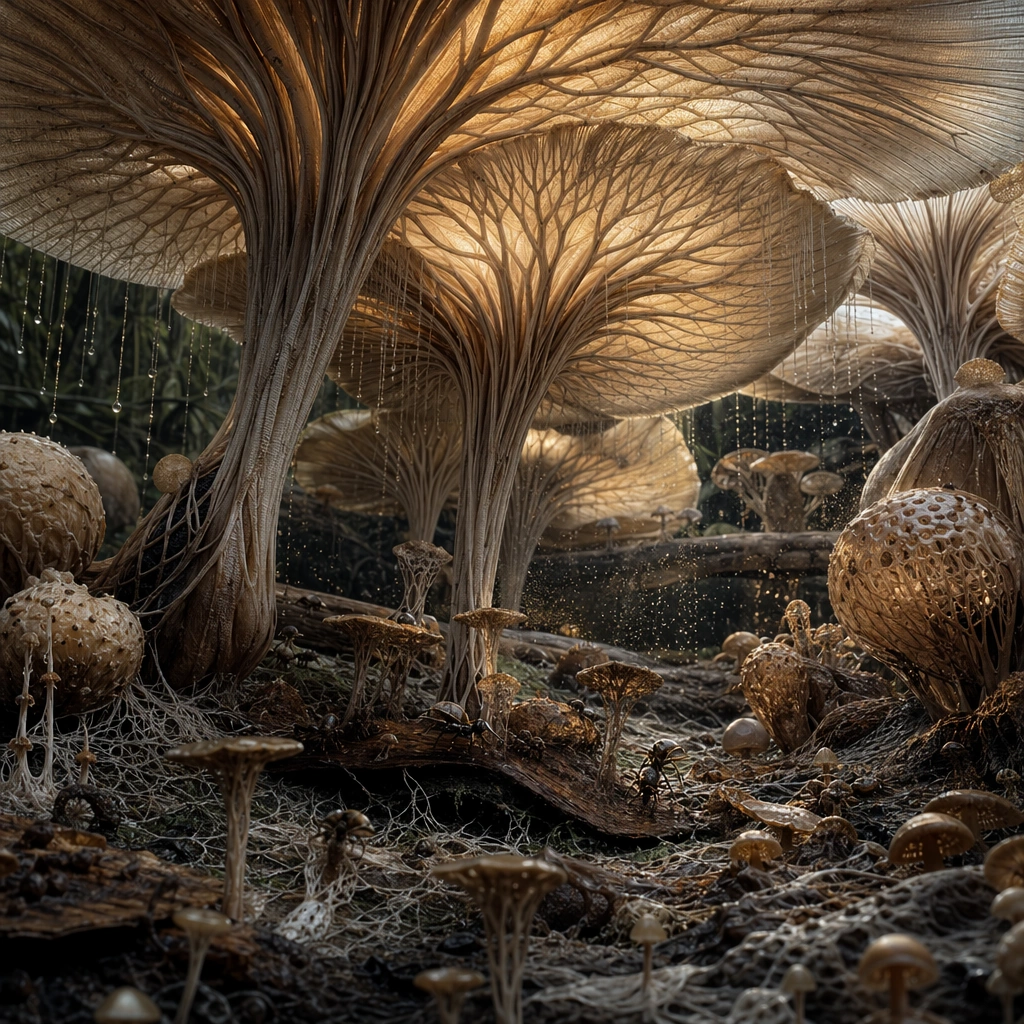
Place the camera at beetle height on a damp forest-floor path just after rain, with leaf litter, bark splinters, and pebbles reading as large terrain. The square frame should feel crowded with dozens of mushroom species rising overhead in soft cool light filtered through unseen canopy shadow. Build the frame as a square natural history study with disciplined composition, believable lighting, and enough environmental evidence to explain how this organism or system functions without any caption. Keep the image polished, observational, and suitable for a research gallery rather than pulp fantasy spectacle.

Subject:
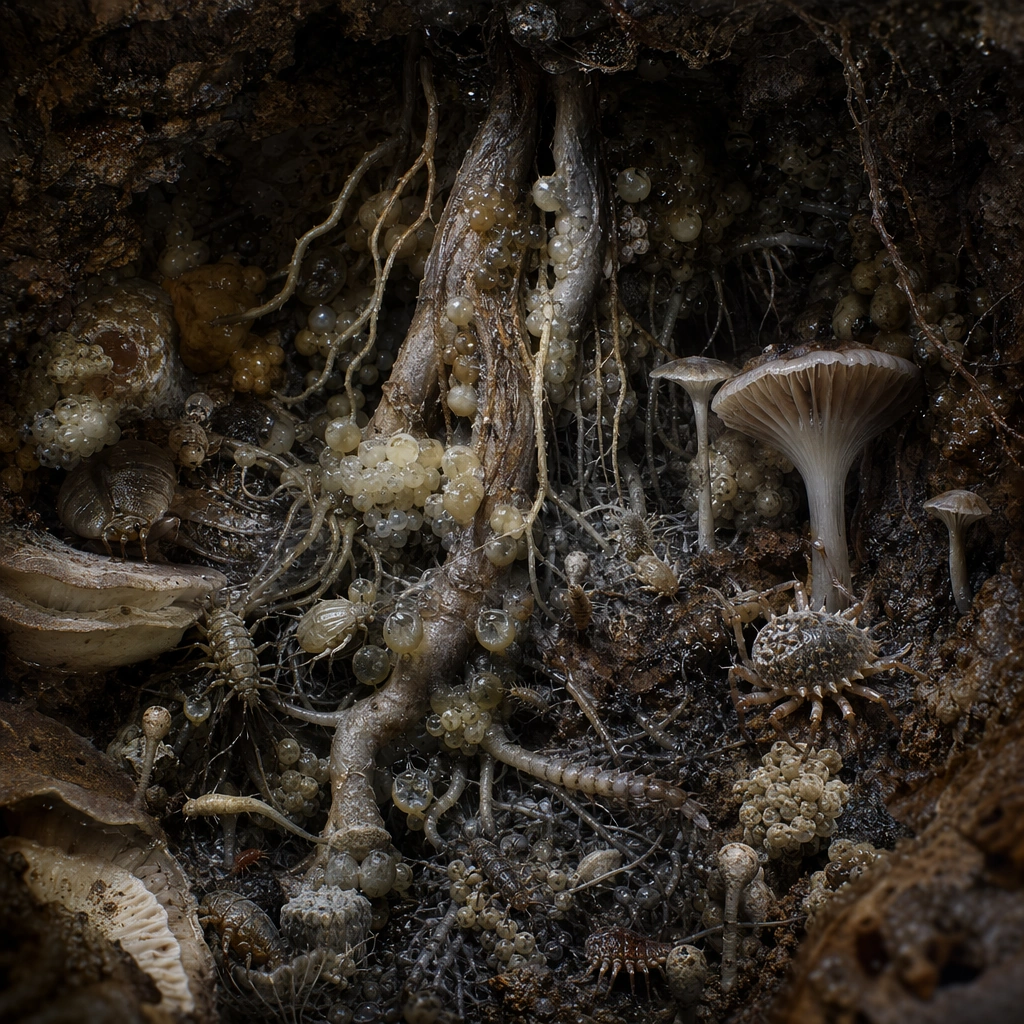
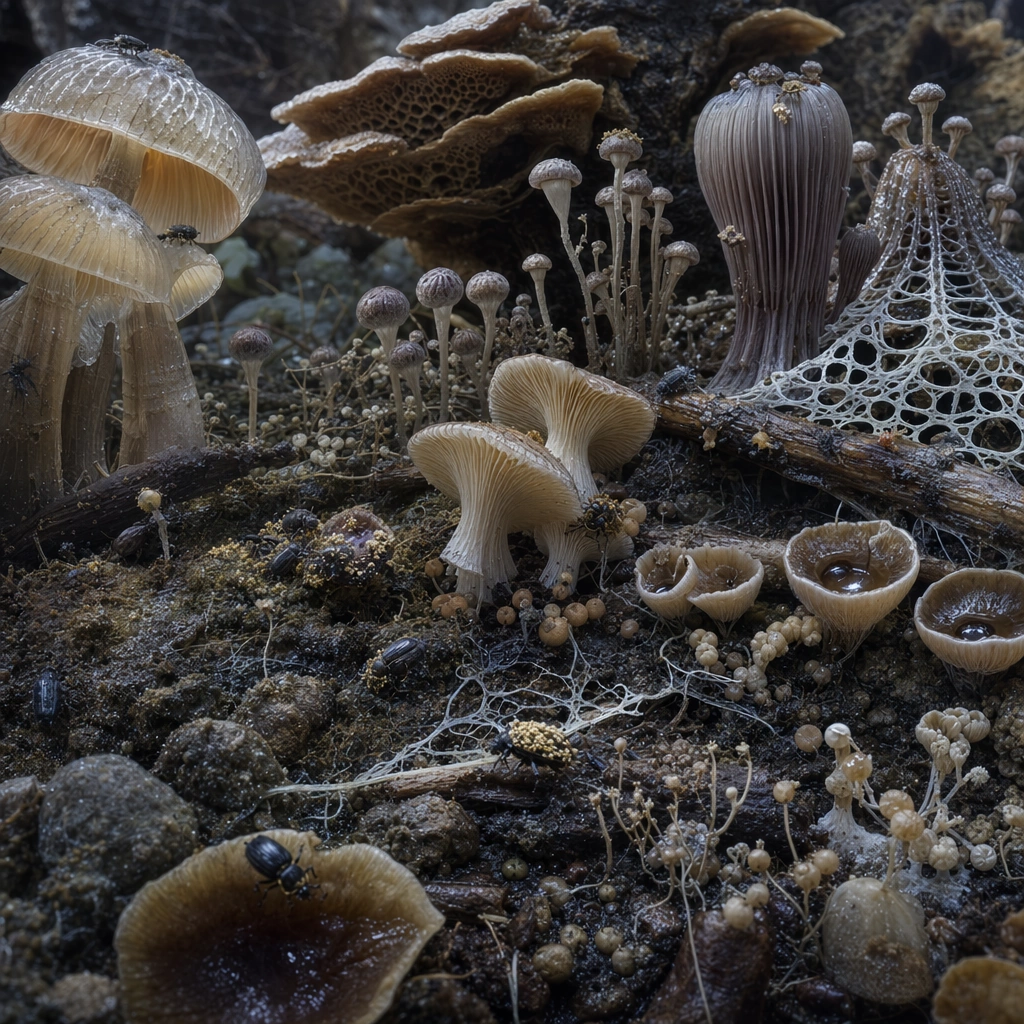
Feature varied fungal architectures: translucent lantern caps, ribbed towers, cup forms storing dew, mesh fungi bridging twigs, and broad mycelial mats stitching soil islands together. Tiny beetle-like animals should navigate the scene as farmers, grazers, or pollinators of spores. Show the anatomy, habitat interaction, and scale cues clearly so the viewer can infer locomotion, feeding, reproduction, or ecological role from the visual alone. Every visible structure should feel evolved for a purpose, with layered foreground, midground, and background information that rewards close inspection.

Important details:
Treat the forest floor as a dense biological city where moisture, decay, and spore traffic drive form. Caps, gills, stalks, hyphal mats, and insect partnerships should all look evolved to manage shade, humidity, nutrient exchange, and reproduction. Texture is critical: wet cuticle, velvety cap bloom, threadlike hyphae, and mineral-rich mud must feel touchable. Keep species distinct yet ecologically related, with each form suggesting a niche in moisture retention, light capture, spore dispersal, or symbiosis. Favor coherent biology over decorative excess: tissues, shells, membranes, spores, tendrils, fins, silica lattices, or atmospheric sacs should all follow one material logic. Preserve a convincing relationship between the environment and the body plan, use restrained color hierarchy, and make the image feel like a serious speculative field record rather than a random monster concept.

Use case:
Fungal Kingdom Microcosm single study 1/9.

Constraints:
No readable text, no watermark, no logos, preserve exact 1:1 aspect ratio, no fairy-house cliches, no cartoon gnomes, no oversized human objects, no bright fantasy magic glow, no accidental brand resemblance, no direct copy of known terrestrial species, no cartoon simplification.
Verwendung
- Den vollständigen Original-Prompt einschließlich Parametern kopieren.
- Motiv, Text und Komposition an die eigenen Anforderungen anpassen.
- Ein kompatibles externes Werkzeug nutzen; Zugangsbedingungen und Ergebnis prüfen.
Vor dem Start
- Prüfen, ob ein Referenzbild nötig ist. Kompatibilität belegt nicht das tatsächlich verwendete Modell.
- Namen, Zahlen und Bildtexte prüfen; Modellversionen können andere Ergebnisse liefern.