Originaldokument
GPT Image 2 · en
Scene:
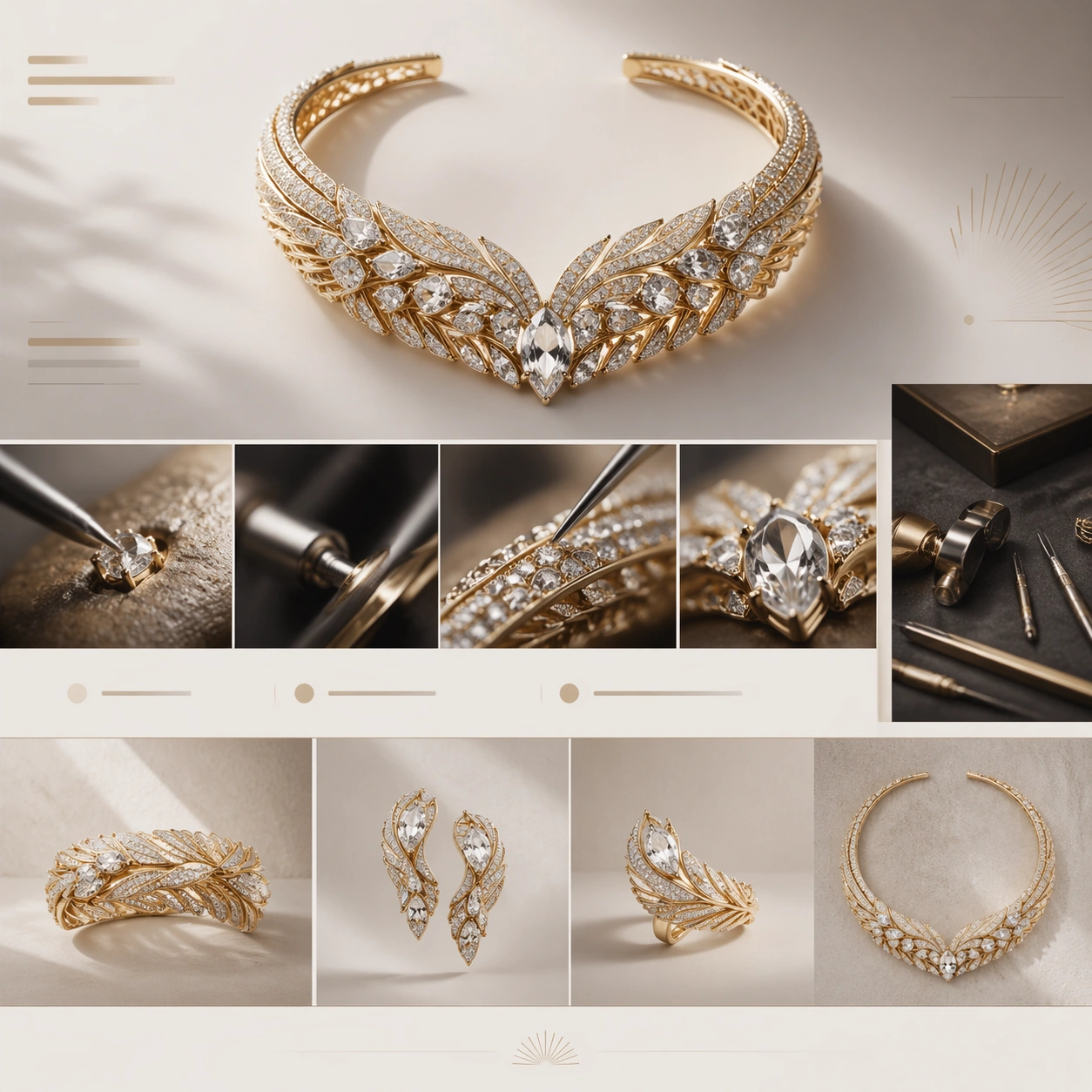
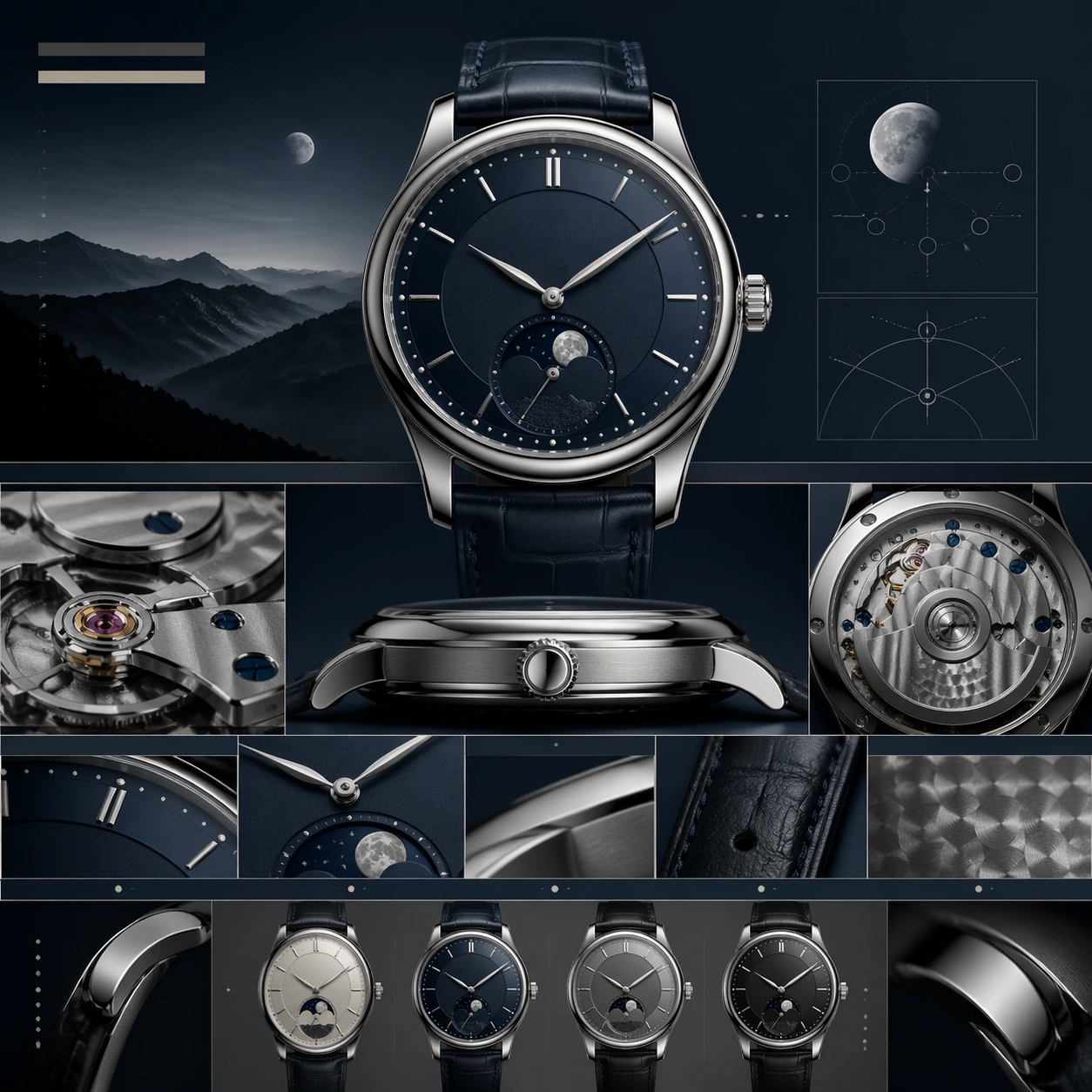
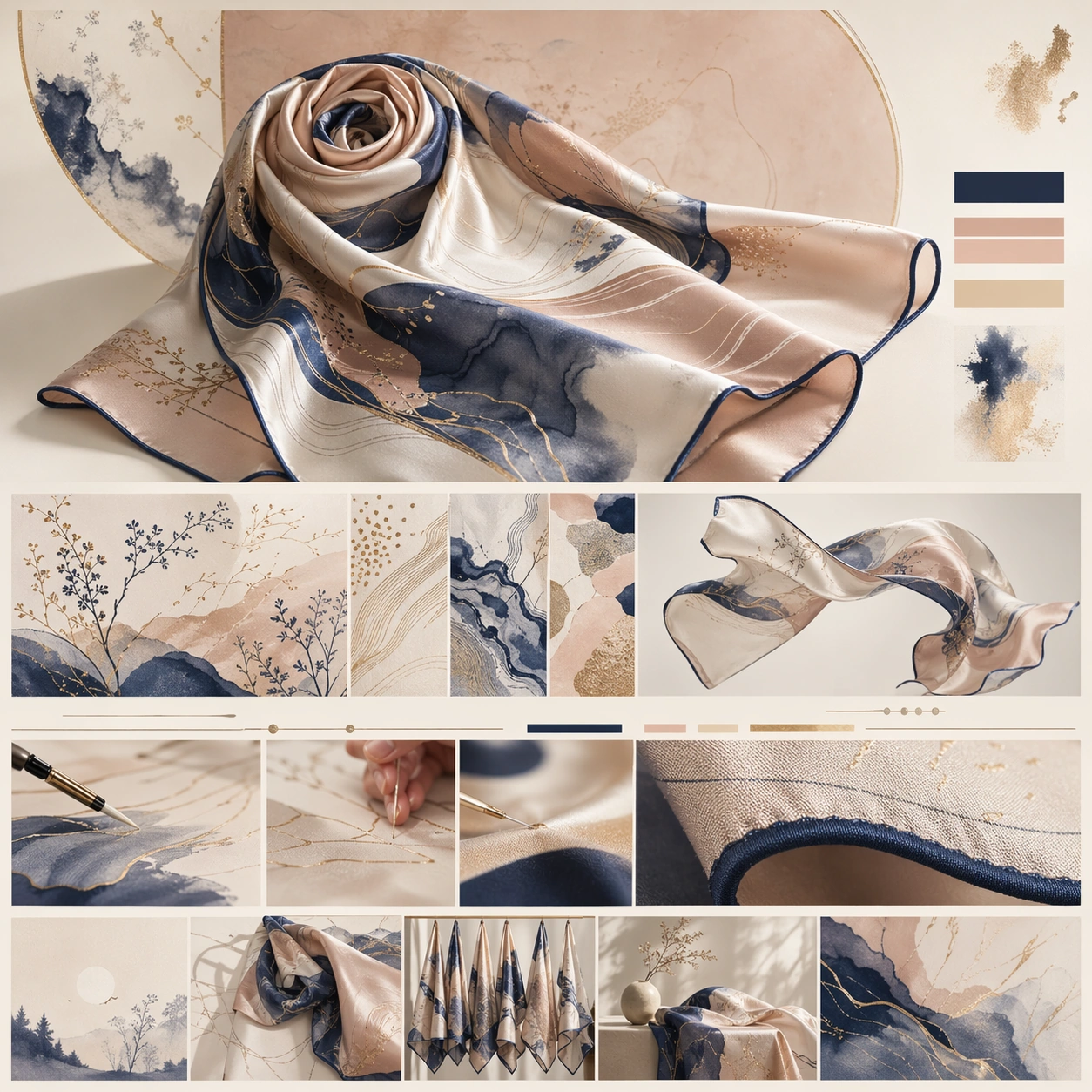
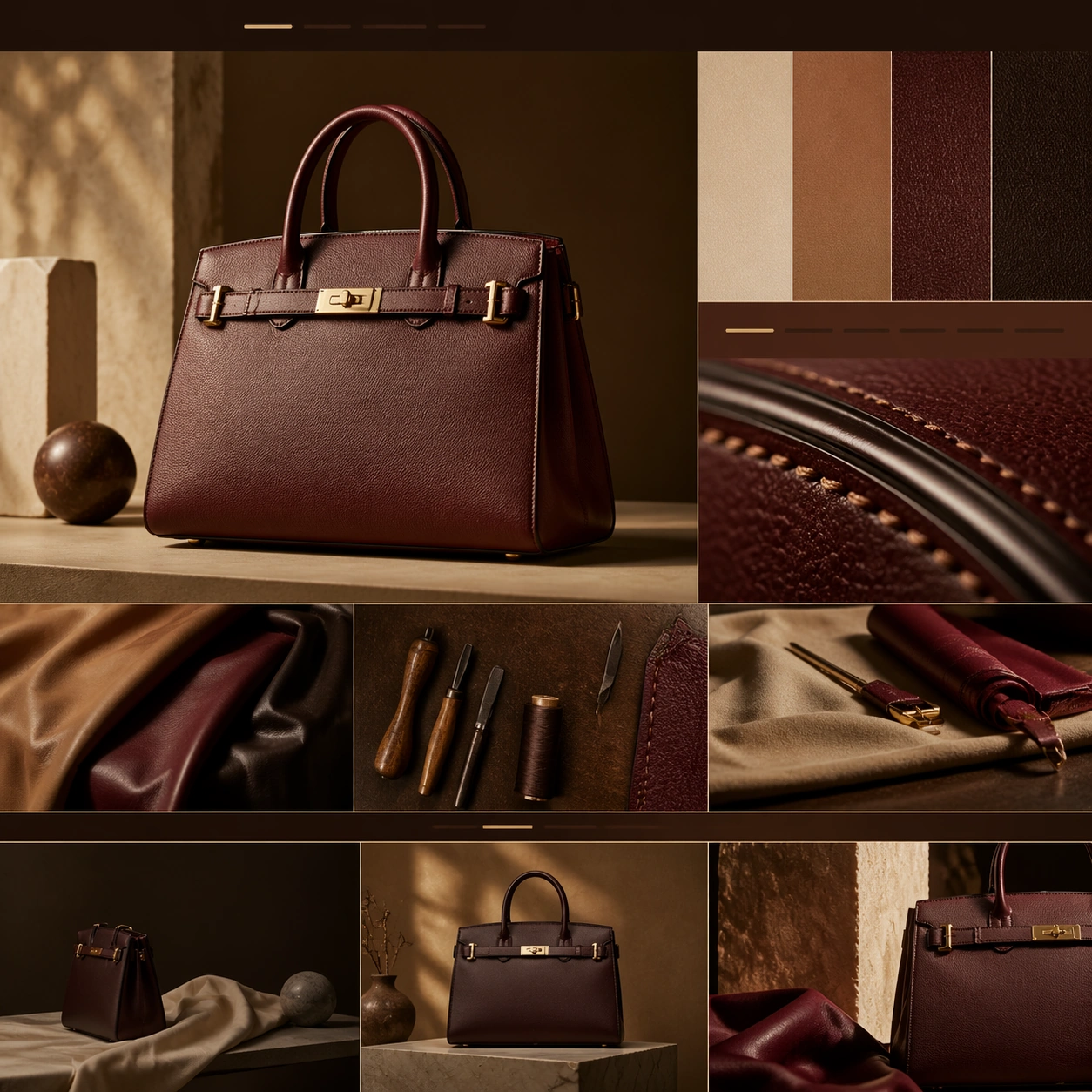
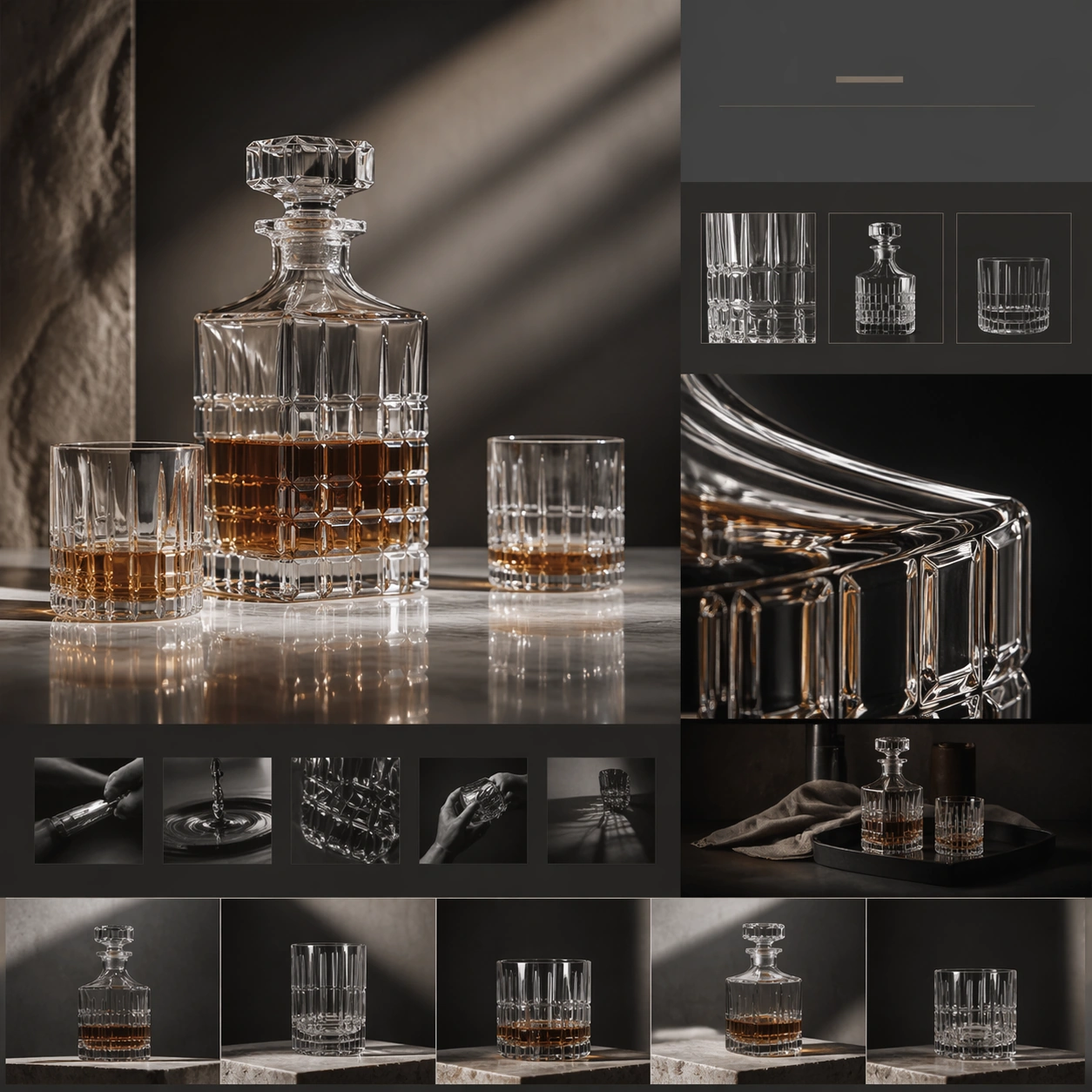
A square luxury brand-story page still for a crystal decanter collection, composed like a refined lifestyle-maison web chapter. The palette is smoke gray, warm crystal highlights, pale stone, and deep charcoal, with controlled light refraction and elegant reflections. The frame should feel like a hero chapter above material and collecting chapters, arranged within a highly polished editorial web layout.

Subject:
Feature a crystal decanter and matching glassware as the hero objects, rendered with believable weight, bevels, liquid reflections, and subtle tinting. Build the surrounding web composition from abstract title bars, collection cards, crystal-detail close-ups, and chapter bands suggesting craftsmanship, ritual, and object curation without readable text. Include one macro crop of the cut crystal edge and one supporting still-life module with tray, fabric, or shadow pattern to imply an intimate collector environment. The crystal objects remain central and luxurious.

Important details:
The image should communicate collector-grade luxury and object culture, not barware retail. Glass thickness, refraction, stopper fit, and facet geometry must feel plausible and expensive. The page hierarchy should move from spectacle hero to craft detail to lifestyle ritual to collection framing, all through measured spacing and quiet restraint. The overall mood should feel cinematic, tactile, and premium, without becoming flashy.

Use case:
Luxury Brand Story Page single study 9/9, testing crystal-object storytelling with collector atmosphere, material close-up, and chaptered luxury web rhythm.

Constraints:
No readable text, no watermark, no logos, preserve exact 1:1 aspect ratio, no browser chrome, no crowded bar scene, no party people, no exaggerated neon reflections, no cheap liquor-ad clichés, no distorted glass refraction or stopper geometry.
Verwendung
- Den vollständigen Original-Prompt einschließlich Parametern kopieren.
- Motiv, Text und Komposition an die eigenen Anforderungen anpassen.
- Ein kompatibles externes Werkzeug nutzen; Zugangsbedingungen und Ergebnis prüfen.
Vor dem Start
- Prüfen, ob ein Referenzbild nötig ist. Kompatibilität belegt nicht das tatsächlich verwendete Modell.
- Namen, Zahlen und Bildtexte prüfen; Modellversionen können andere Ergebnisse liefern.