Originaldokument
GPT Image 2 · en
Scene:
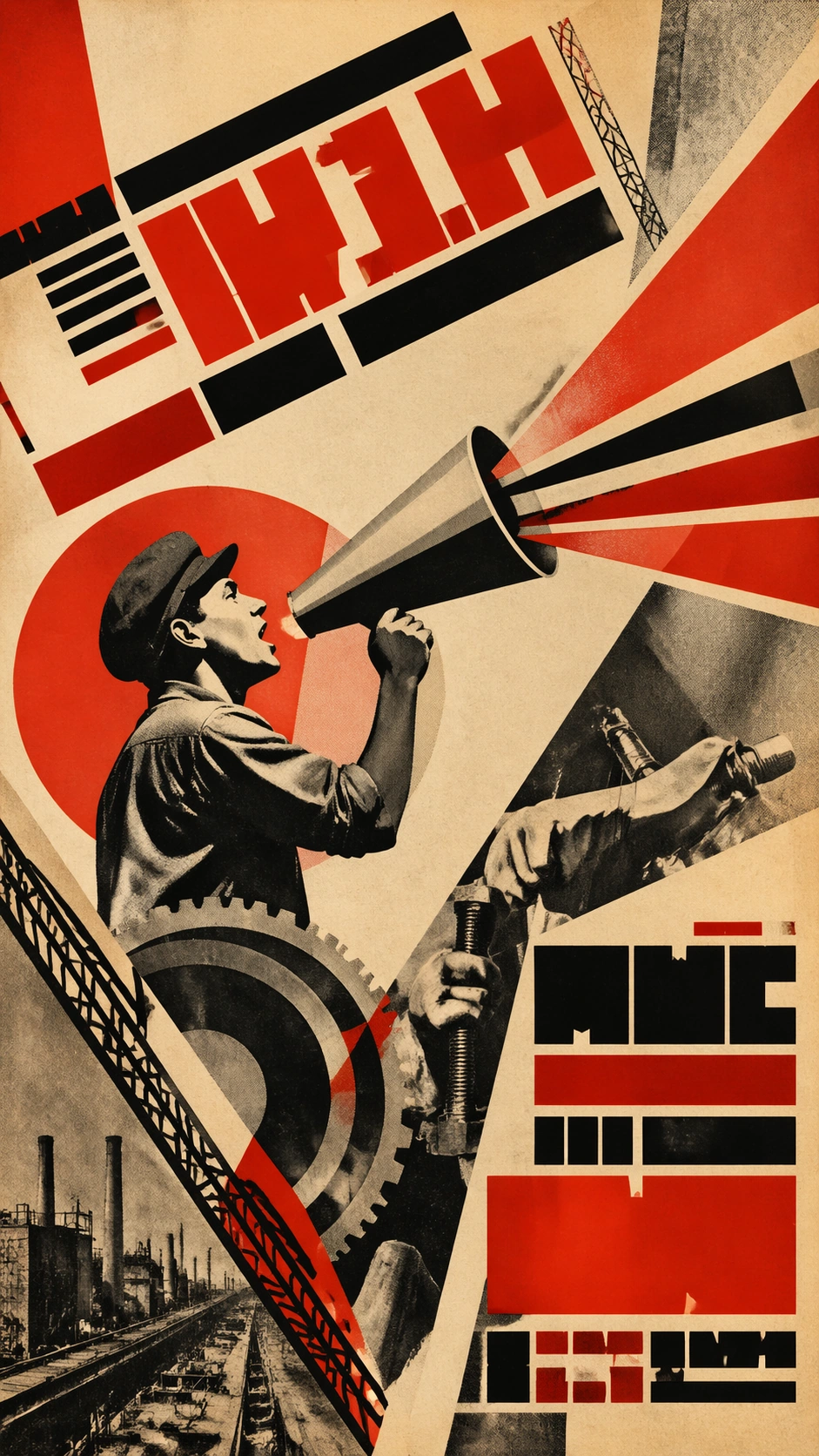
A vertical 9:16 fictional museum-study poster inspired by early twentieth-century constructivist political graphic design. The composition is sharp, diagonal, and geometric: red and black wedges, cream paper, photomontage texture, halftone grain, and asymmetric blocks. Large headline areas appear as bold abstract block-letter shapes and bars, but they must remain unreadable. The poster should feel like a design-history specimen, not an active campaign.

Subject:
A stylized worker-like figure in profile holds a megaphone made from angular paper shapes, projecting triangular sound beams across the page. Around the figure are industrial circles, cropped gears, diagonal scaffolding, and photomontage fragments of anonymous hands and tools. No real political emblems, national symbols, party marks, or recognizable leaders appear. The figure is symbolic and invented, with strong graphic silhouette and controlled visual hierarchy.

Important details:
Emphasize constructivist layout logic: severe diagonals, limited palette, hard-edged geometry, overprinted red ink, rough paper, halftone fragments, and tension between image and typography fields. The unreadable headline blocks should occupy believable poster positions at top and lower right. Keep the composition historically informed without copying a specific known poster. It must read as educational style transfer and structured layout research.

Use case:
Propaganda Poster History single study 1/8, an independent constructivist poster-language specimen for design-history comparison.

Constraints:
No readable text, no watermark, no logos, preserve exact 9:16 vertical aspect ratio, no real party symbols, no real leader likeness, no actual slogan, no contemporary election reference, no clean digital gradient.
Verwendung
- Den vollständigen Original-Prompt einschließlich Parametern kopieren.
- Motiv, Text und Komposition an die eigenen Anforderungen anpassen.
- Ein kompatibles externes Werkzeug nutzen; Zugangsbedingungen und Ergebnis prüfen.
Vor dem Start
- Prüfen, ob ein Referenzbild nötig ist. Kompatibilität belegt nicht das tatsächlich verwendete Modell.
- Namen, Zahlen und Bildtexte prüfen; Modellversionen können andere Ergebnisse liefern.