Originaldokument
GPT Image 2 · en
Scene:
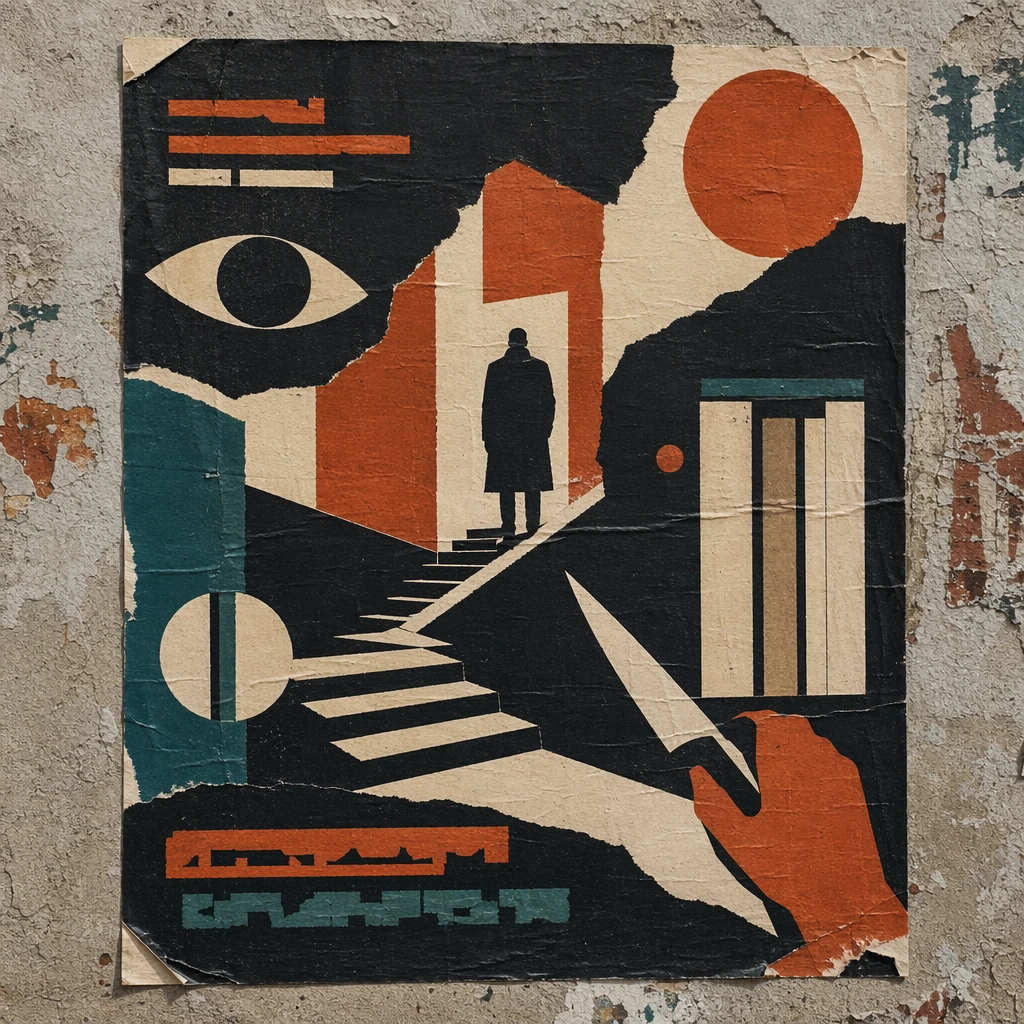
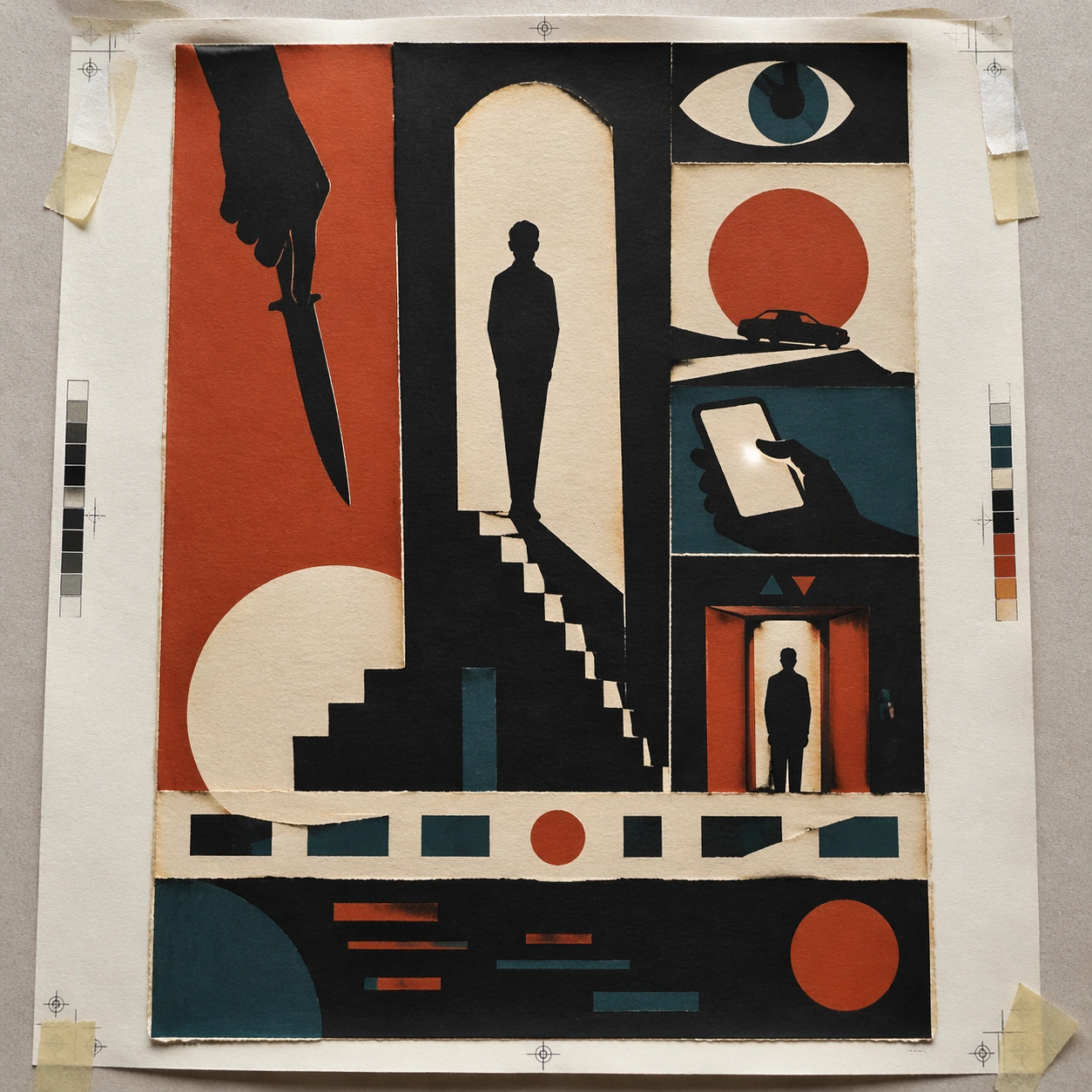
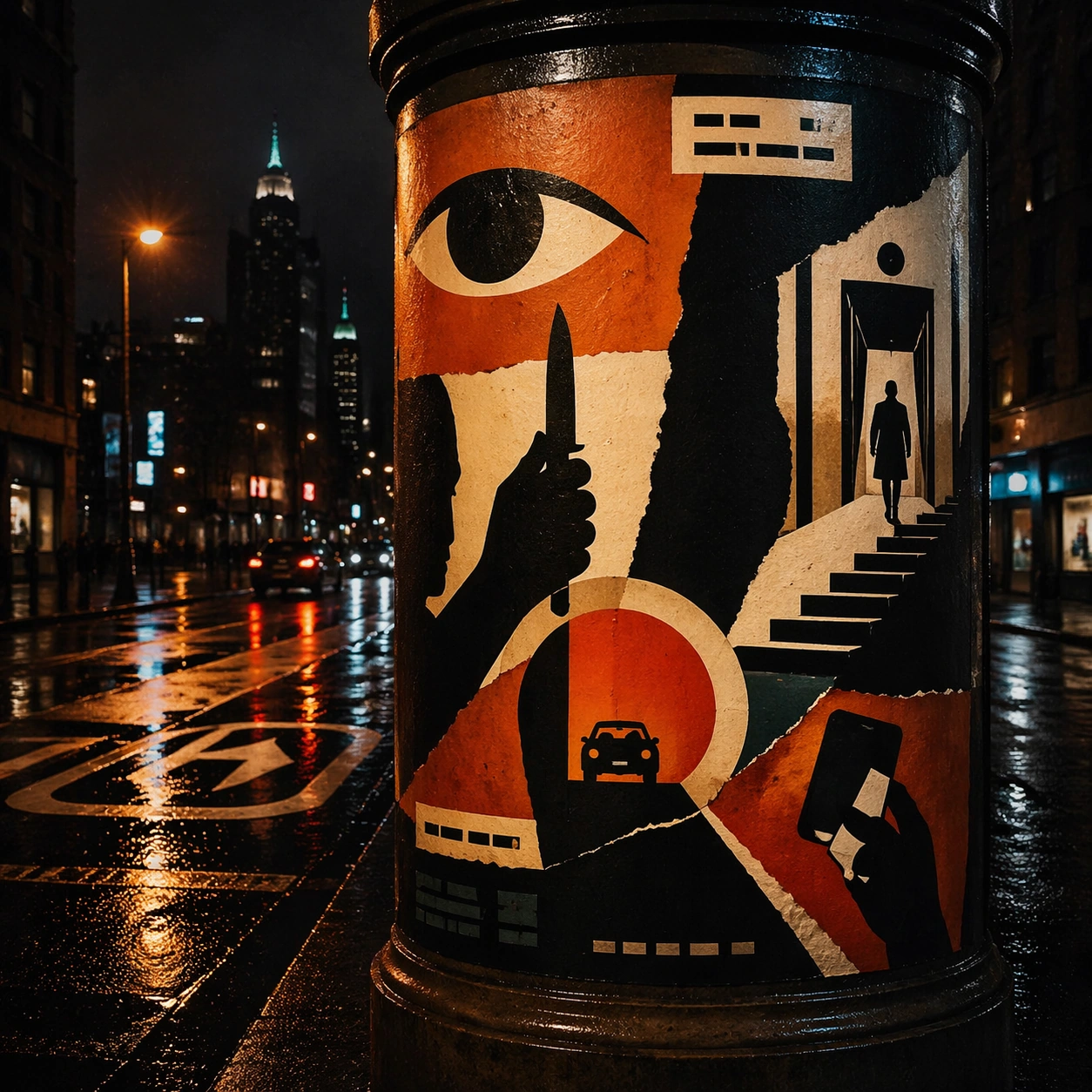
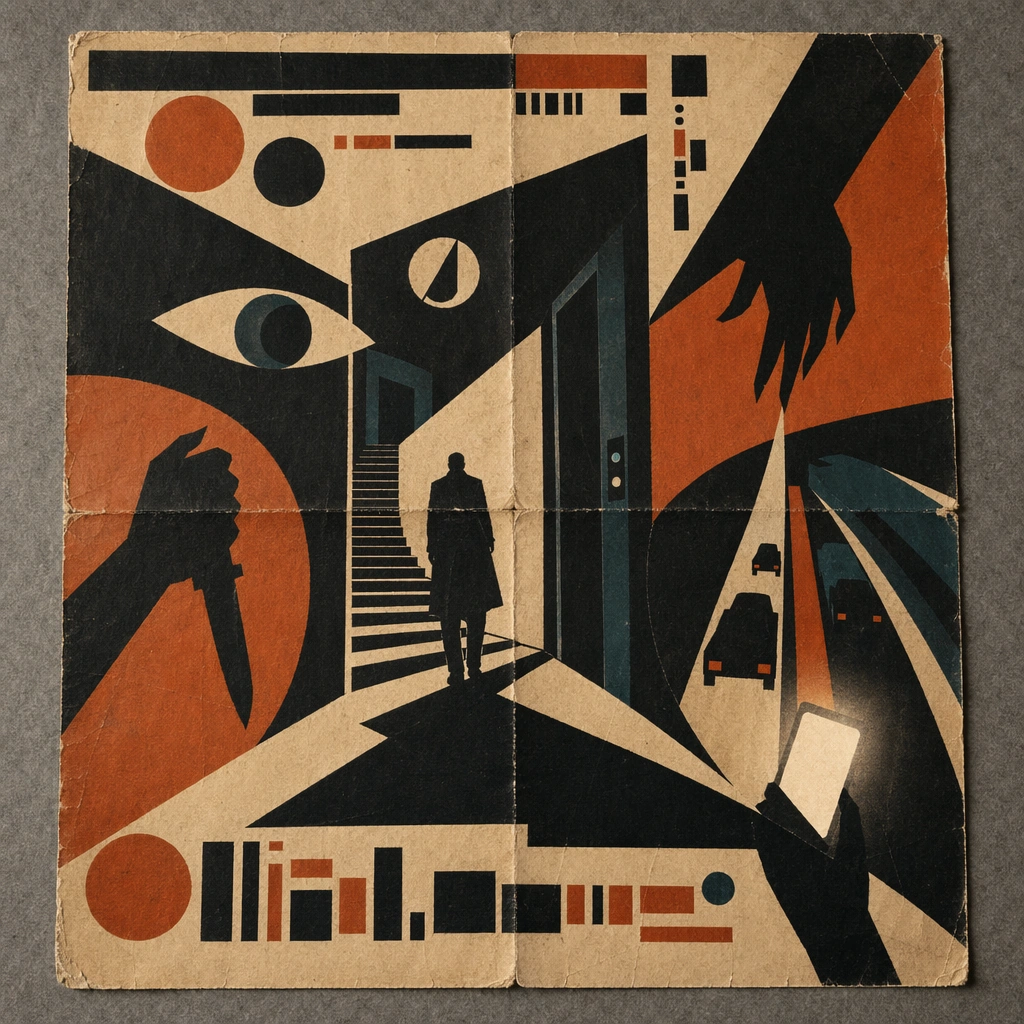
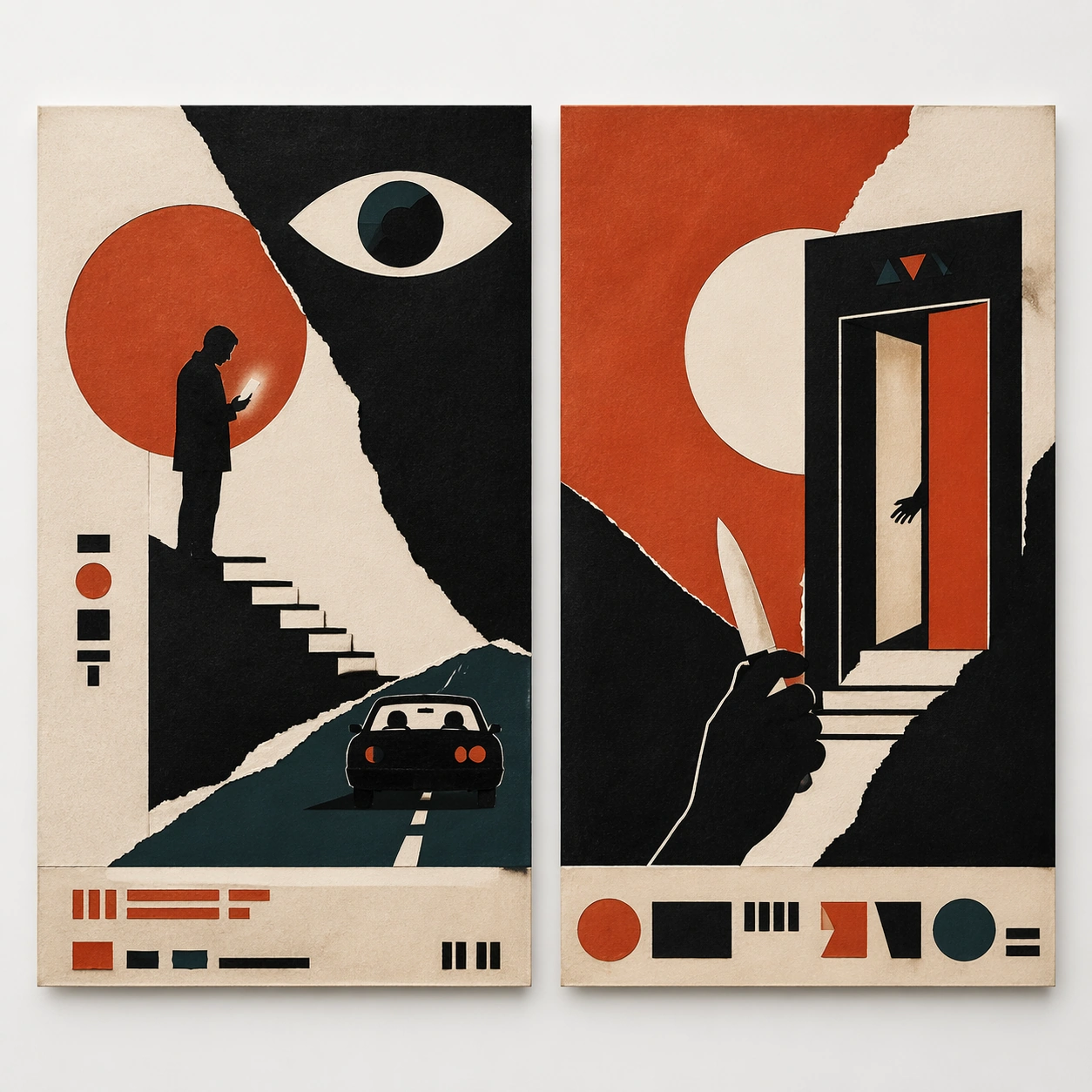
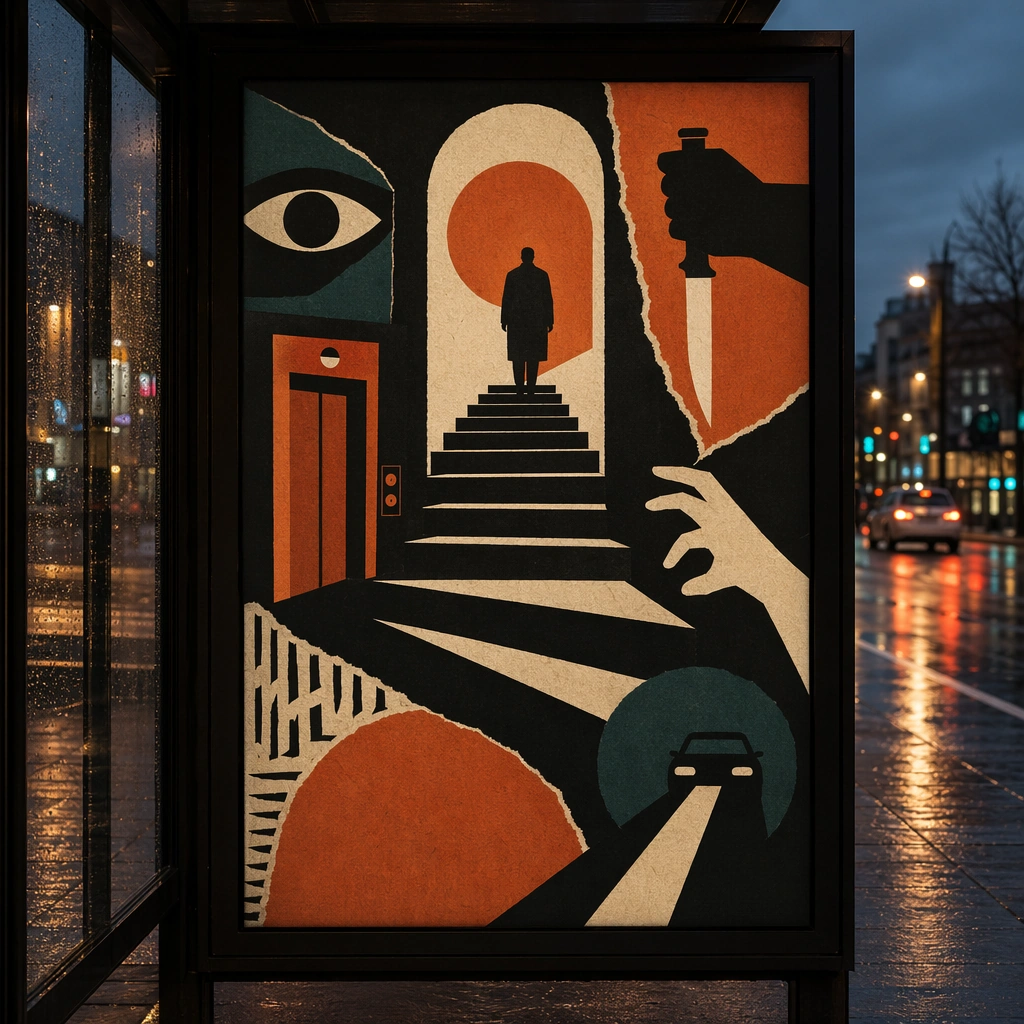
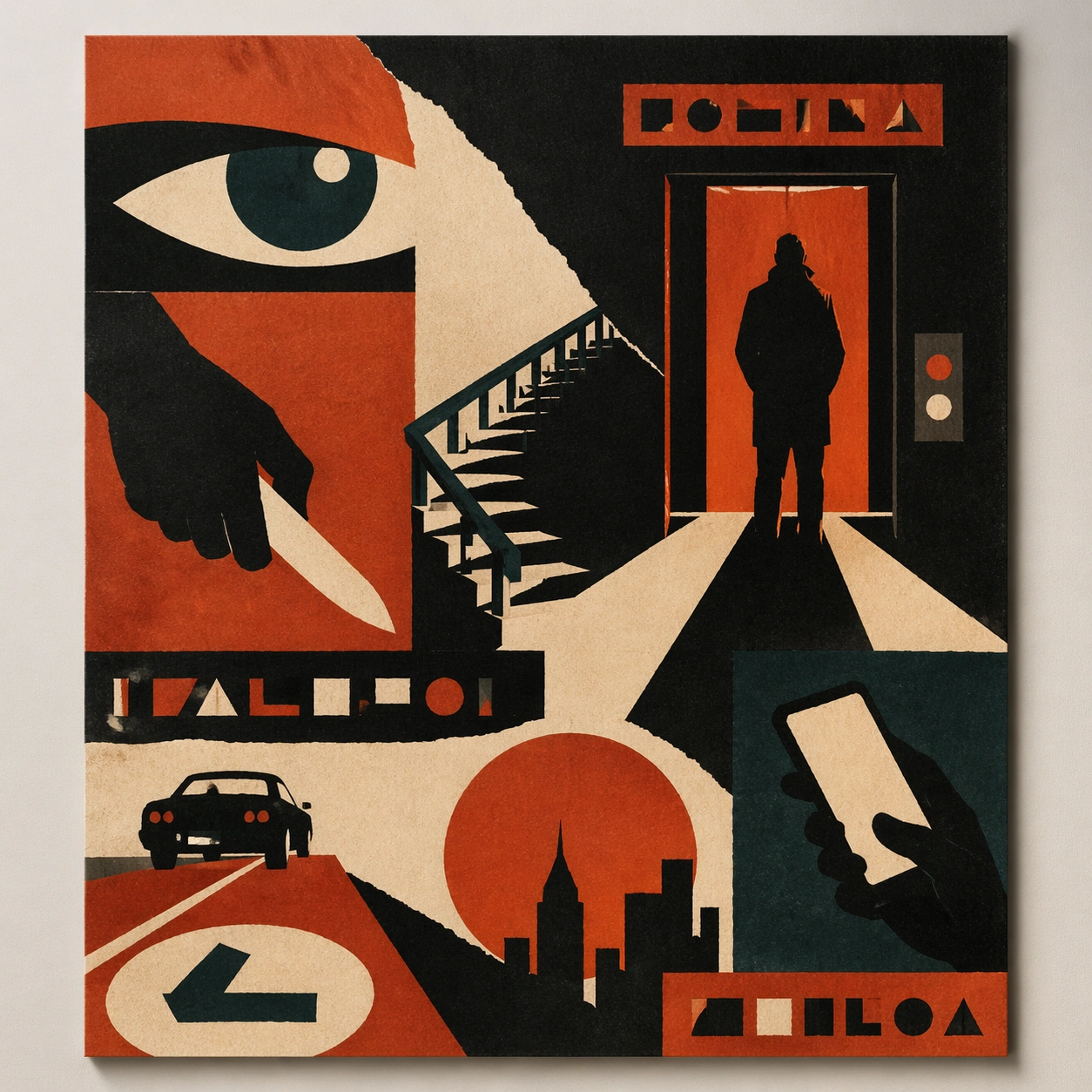
A square front-facing poster presentation on a clean neutral wall, lit like a premium print test, with crisp edges and a polished but still tactile finish appropriate to the style. The poster should express mid-century minimalist paper-cut poster language driven by torn shapes, narrative negative space, and three-color restraint, using matte black, rust orange, cream, and a very limited dark teal accent and a tactile surface appropriate to the medium.

Subject:
Apply the historical poster language to a contemporary urban subject so the old visual grammar proves it can carry present-day themes without losing authenticity or formal discipline. Use single silhouettes, staircases, hands, knives, eyes, circles, doorways, and dramatic shadows as the main visual ingredients, and organize them with simple cut-paper title bars and glyph fragments kept abstract and unreadable. For the contemporary-subject axis, thread in ride-share lanes, phone glare, and elevator doors converted into severe paper-cut suspense. The poster must feel like an original design object rather than a reproduction of any known work.

Important details:
This is not parody. The contemporary subject should feel genuinely absorbed into the style through palette, composition, symbolic compression, and non-readable lettering treatment. Preserve deliberate imbalance, clean cut contours, visible paper fibers, and story told through absence as much as presence. Keep every letterform abstract and non-readable, as if it were a typographic texture rather than language. Make the style unmistakable through composition, palette, surface behavior, and symbolic compression. no glossy gradients, no tiny fiddly detail, no photoreal rendering, no ornamental clutter.

Use case:
Paper-Cut Film single study 9/9, testing historical grammar on a present-day subject.

Constraints:
No readable text, no watermark, no logos, preserve exact 1:1 aspect ratio, no copyrighted characters, no real brand marks, no QR codes, no interface chrome, no accidental gibberish lettering.
Verwendung
- Den vollständigen Original-Prompt einschließlich Parametern kopieren.
- Motiv, Text und Komposition an die eigenen Anforderungen anpassen.
- Ein kompatibles externes Werkzeug nutzen; Zugangsbedingungen und Ergebnis prüfen.
Vor dem Start
- Prüfen, ob ein Referenzbild nötig ist. Kompatibilität belegt nicht das tatsächlich verwendete Modell.
- Namen, Zahlen und Bildtexte prüfen; Modellversionen können andere Ergebnisse liefern.