Originaldokument
GPT Image 2 · en
Scene:
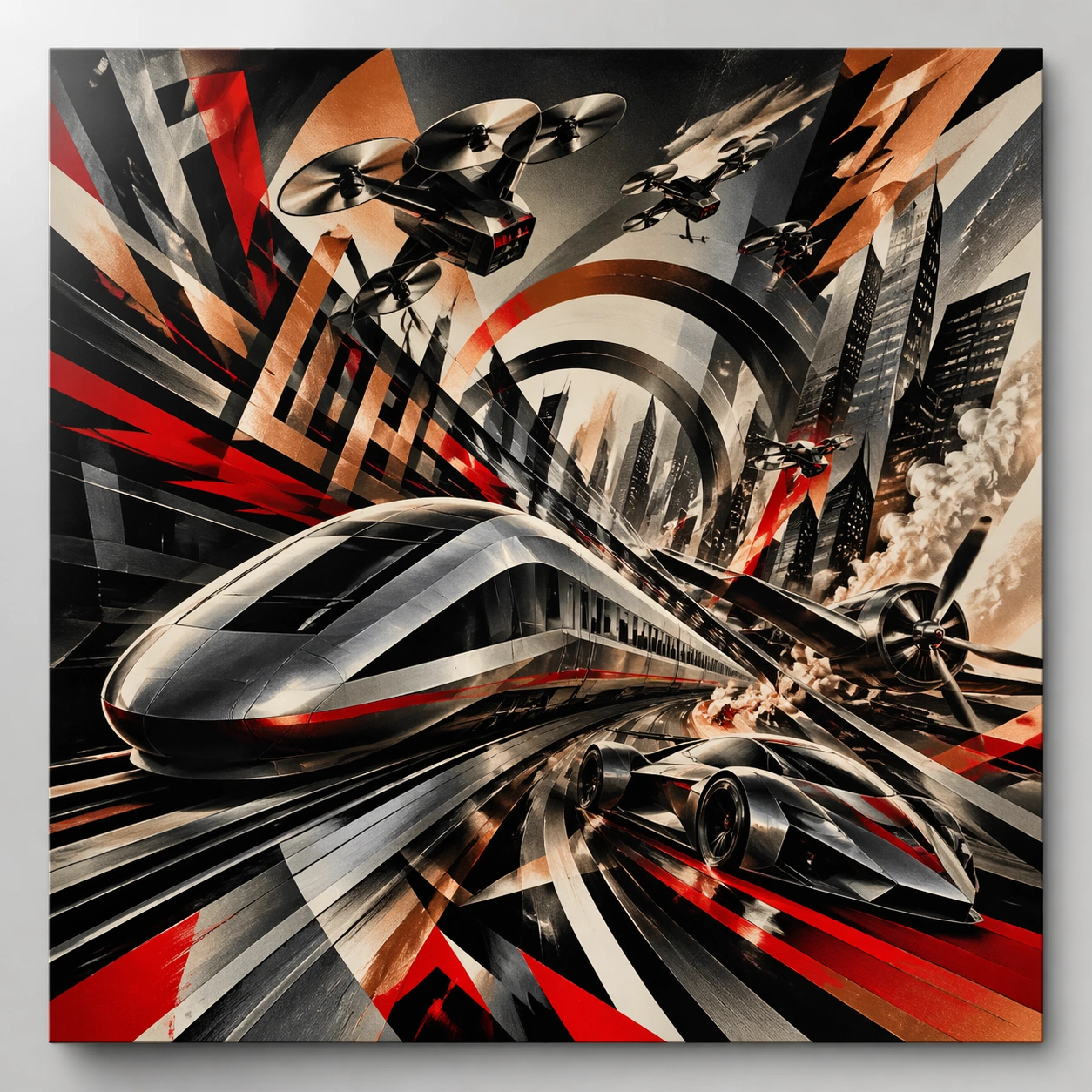
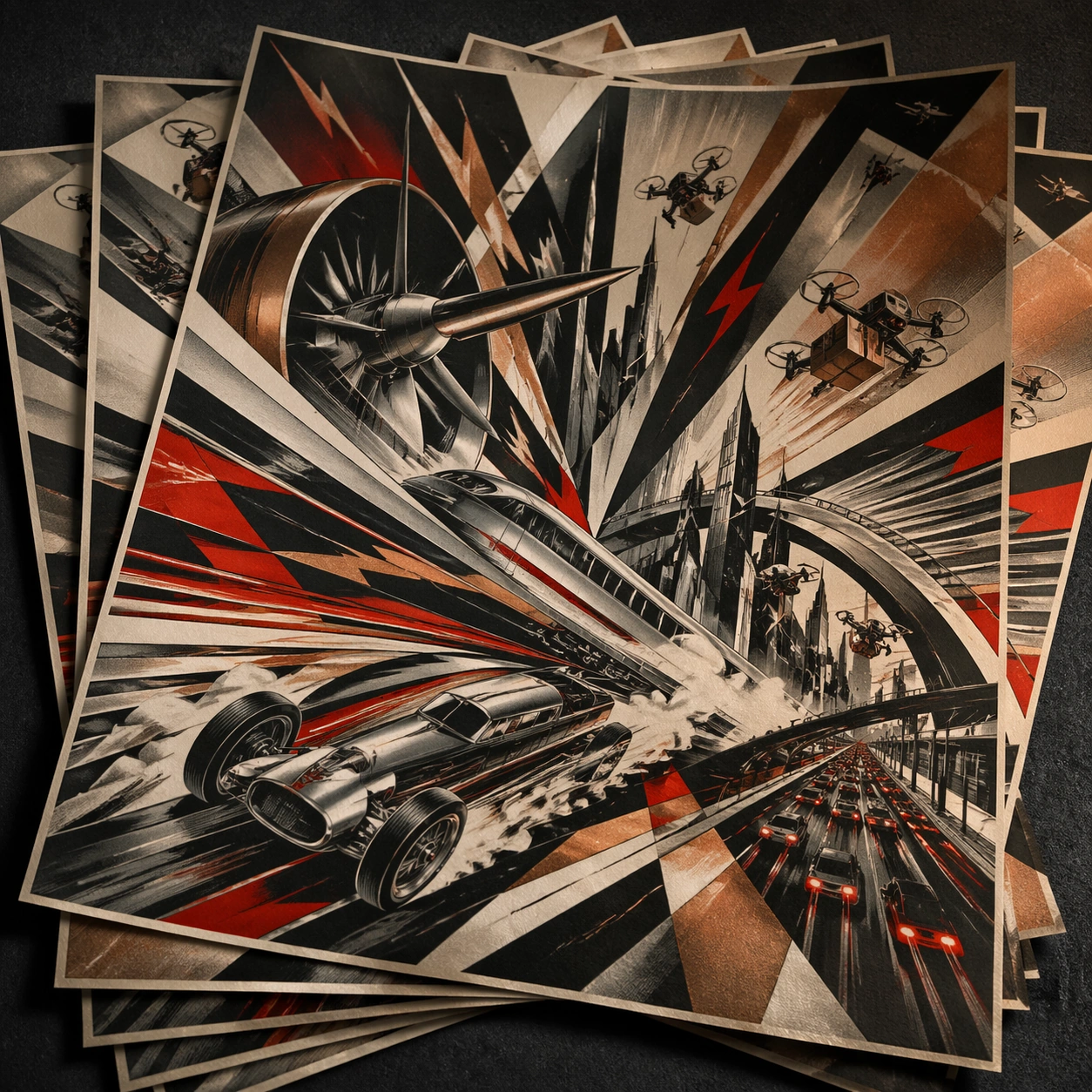
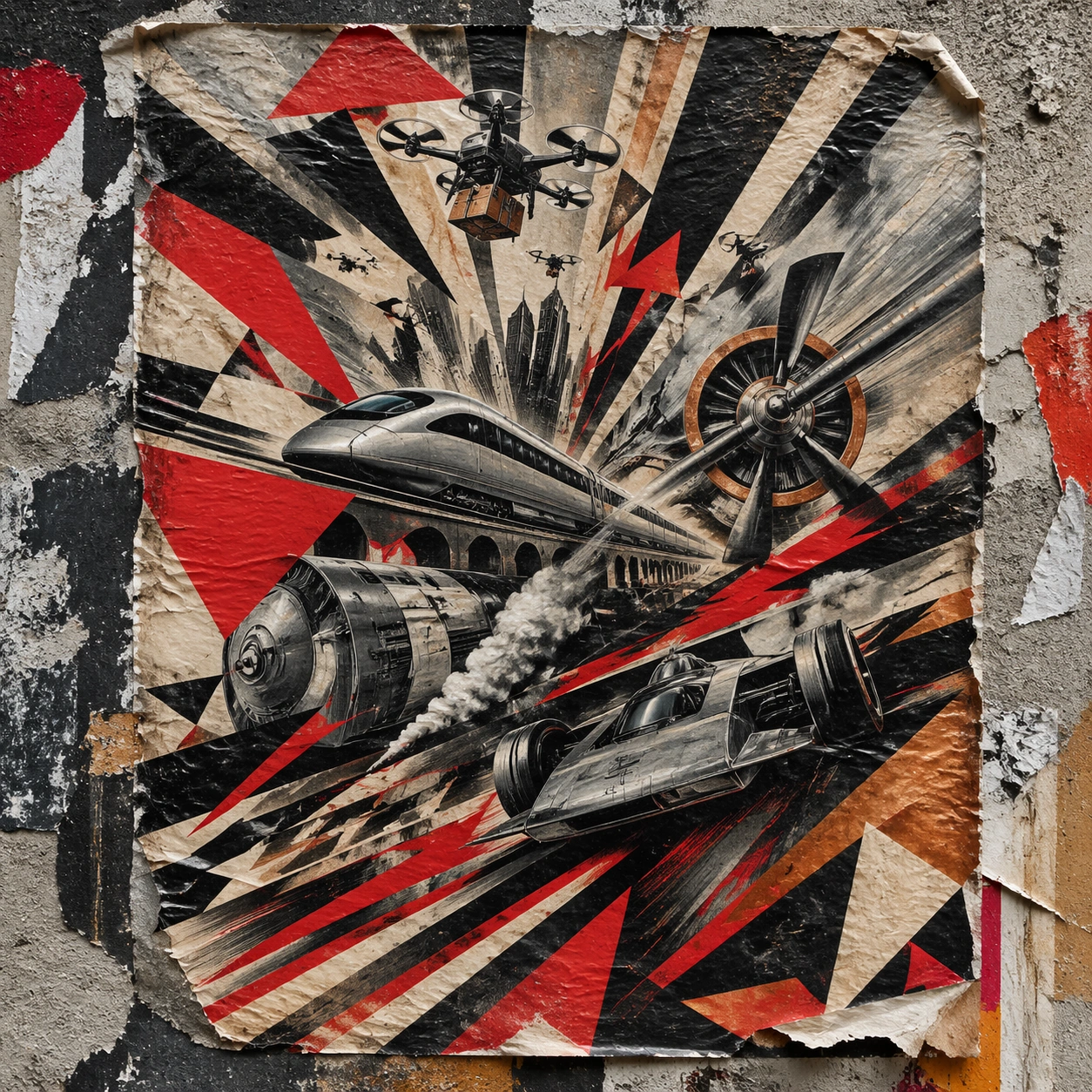
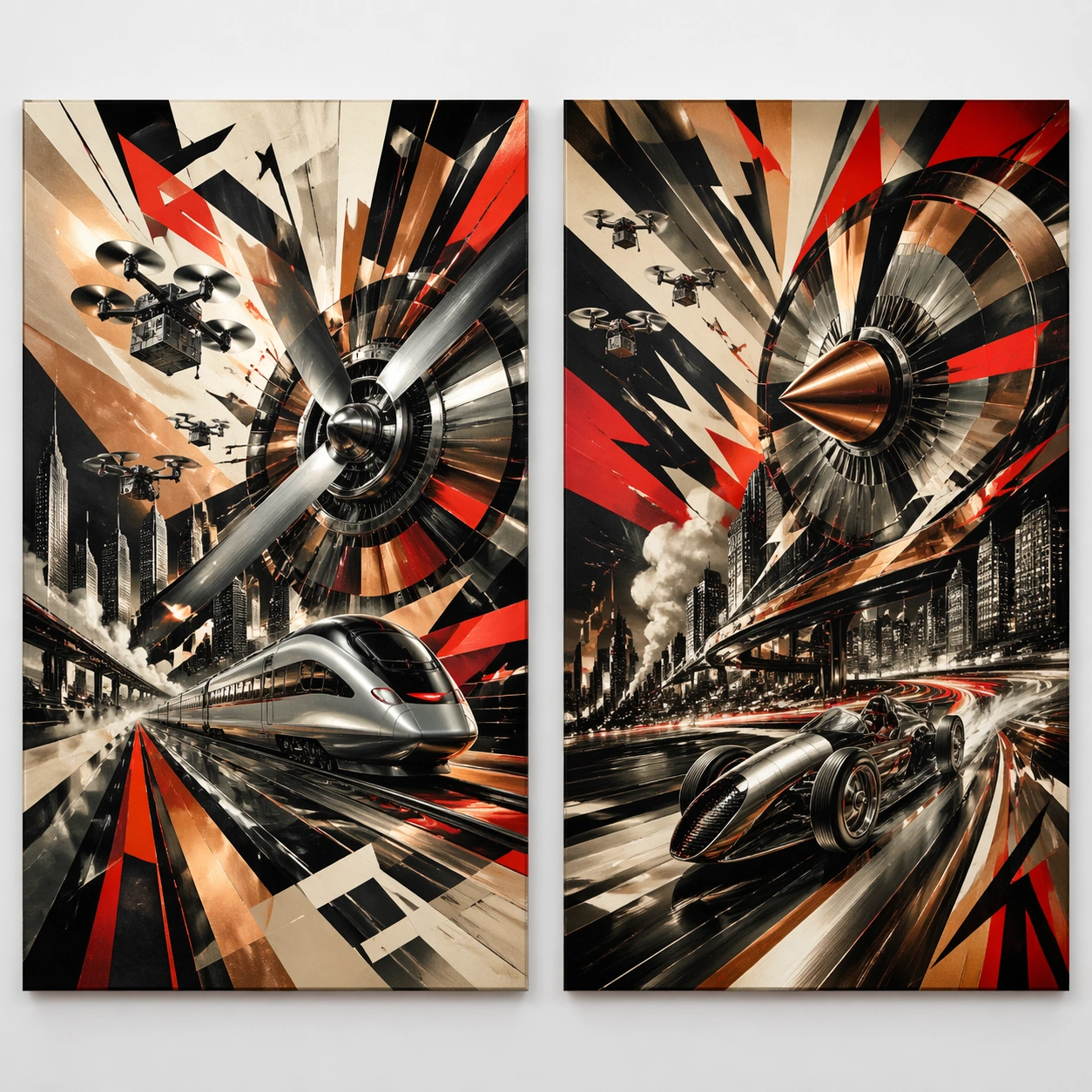
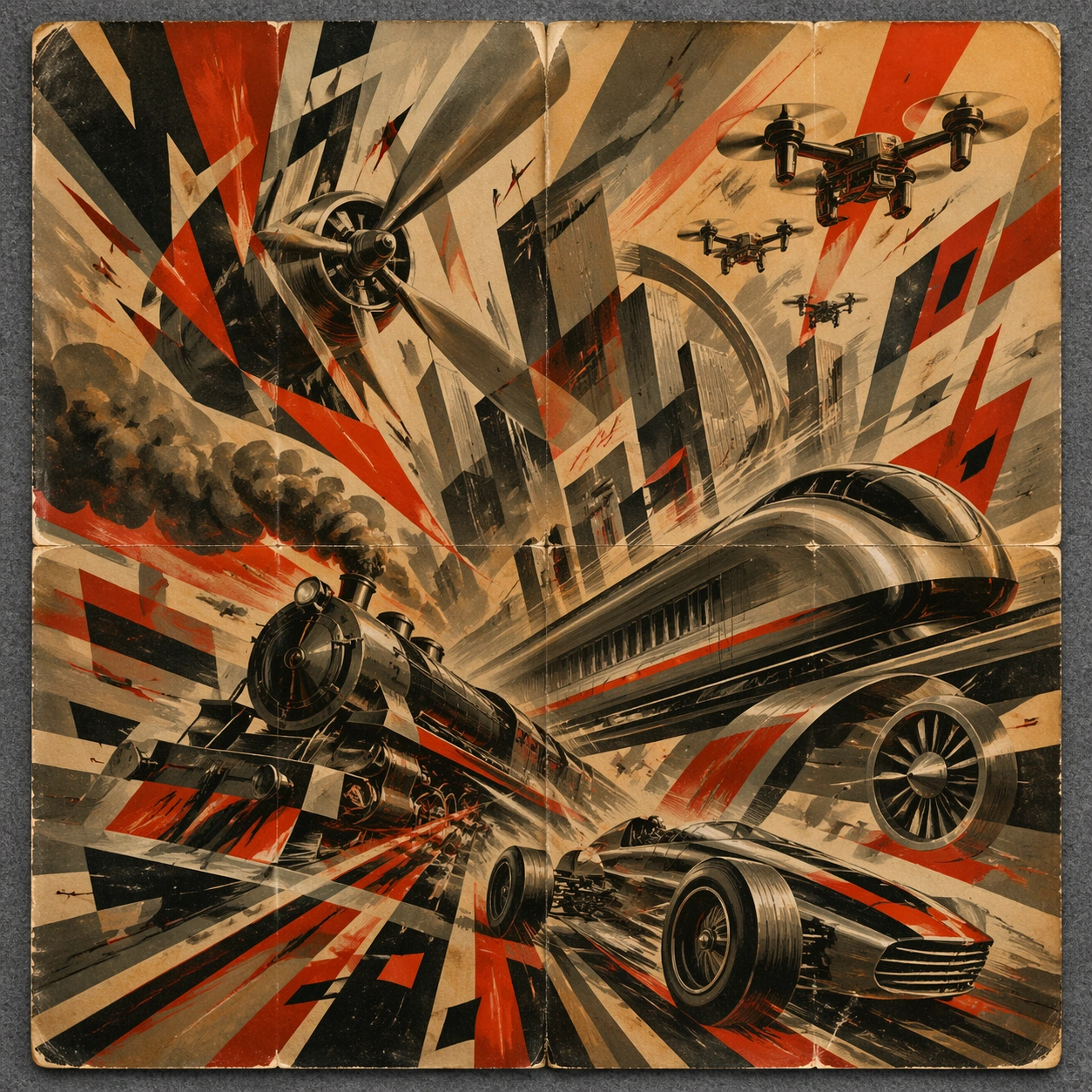
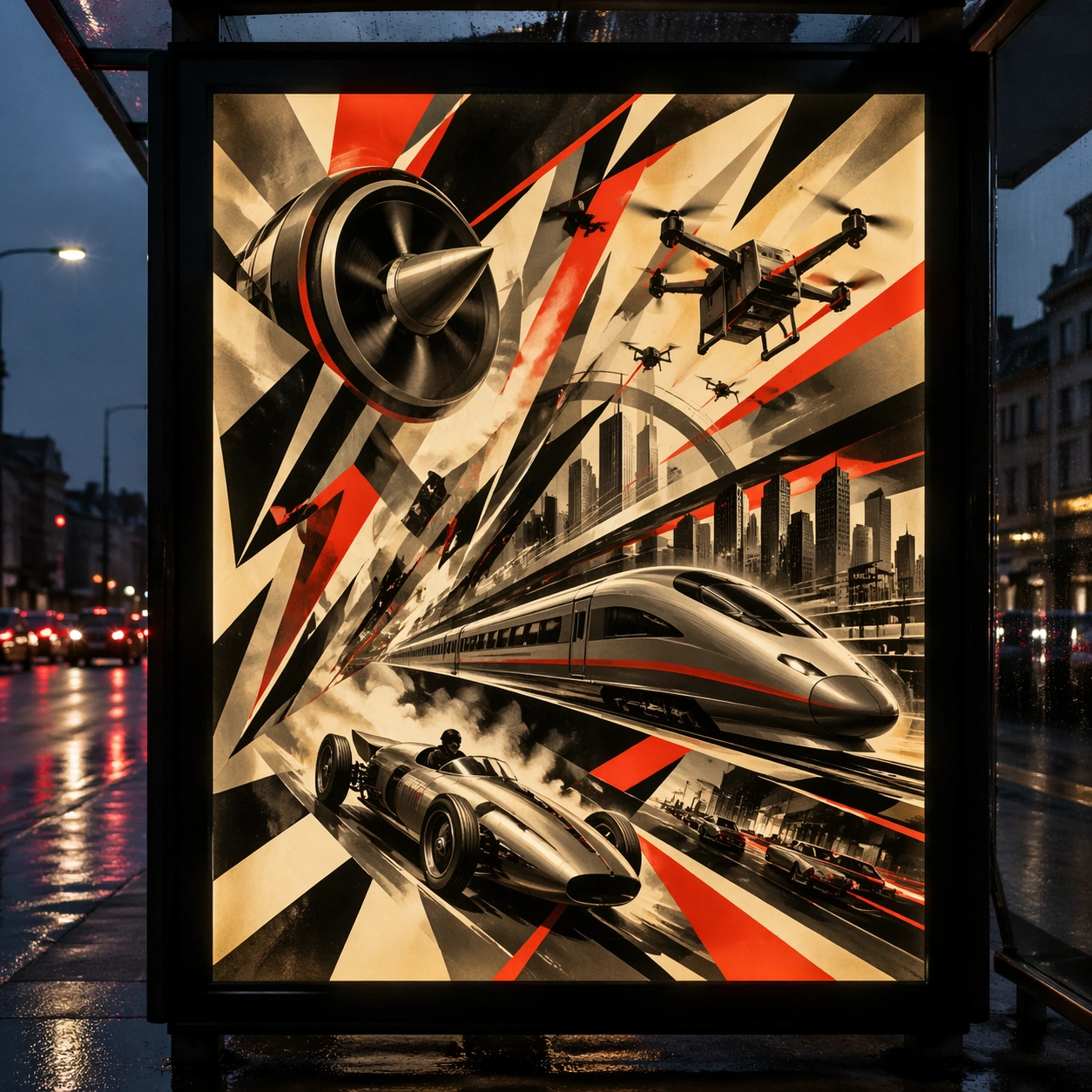
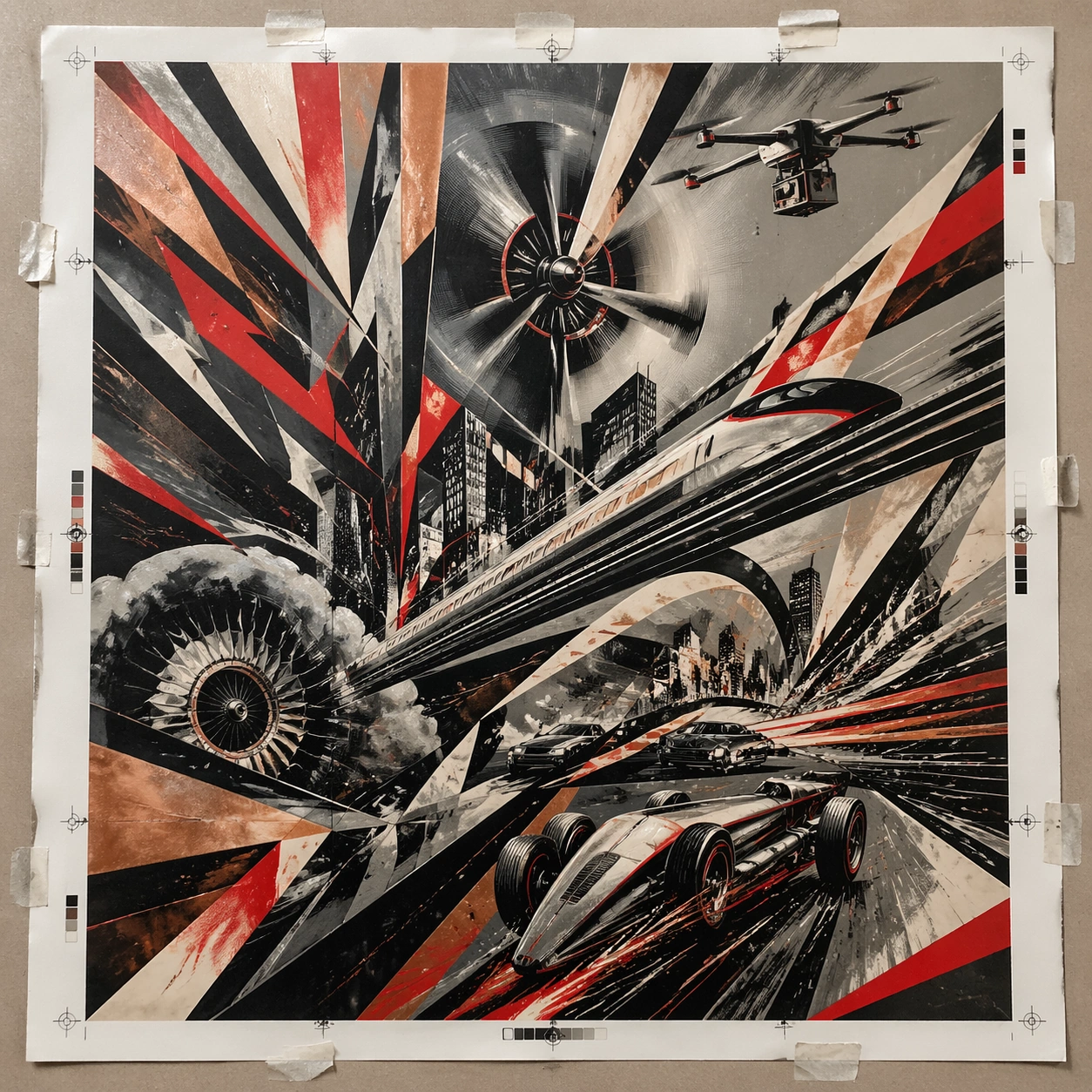
A square overhead tabletop photograph of a fresh poster proof on neutral worktable paper, lit by cool daylight, with crop marks, tape tabs, and slight paper bow visible around the sheet. The poster should express machine-age futurist poster language with fractured motion, metallic planes, angular overlaps, and speed-worshiping thrust, using gunmetal silver, copper, cream, black, and electric red accents and a tactile surface appropriate to the medium.

Subject:
Design the poster as a print-shop proof, preserving the same poster language while allowing production clues such as edge trims, registration targets, and process marks to frame the composition. Use trains, propellers, racing cars, turbines, smoke trails, city arcs, and explosive speed lines as the main visual ingredients, and organize them with chopped angular typographic shards used as non-readable motion accents. For the contemporary-subject axis, thread in high-speed rail, delivery drones, and urban night traffic translated into ecstatic machine momentum. The poster must feel like an original design object rather than a reproduction of any known work.

Important details:
The image must still read as a finished poster concept, but it should carry believable print-process evidence and material tactility instead of gallery-wall perfection. Preserve dynamic rotation, vector thrust, hard overlaps, metallic sheen restraint, and aggressive directional rhythm. Keep every letterform abstract and non-readable, as if it were a typographic texture rather than language. Make the style unmistakable through composition, palette, surface behavior, and symbolic compression. no static composition, no soft nostalgic brushwork, no pastoral calm, no rounded playful forms.

Use case:
Italian Futurism single study 2/9, testing production realism and process evidence.

Constraints:
No readable text, no watermark, no logos, preserve exact 1:1 aspect ratio, no copyrighted characters, no real brand marks, no QR codes, no interface chrome, no accidental gibberish lettering.
Verwendung
- Den vollständigen Original-Prompt einschließlich Parametern kopieren.
- Motiv, Text und Komposition an die eigenen Anforderungen anpassen.
- Ein kompatibles externes Werkzeug nutzen; Zugangsbedingungen und Ergebnis prüfen.
Vor dem Start
- Prüfen, ob ein Referenzbild nötig ist. Kompatibilität belegt nicht das tatsächlich verwendete Modell.
- Namen, Zahlen und Bildtexte prüfen; Modellversionen können andere Ergebnisse liefern.