
Originaldokument
GPT Image 2 · en
Scene:
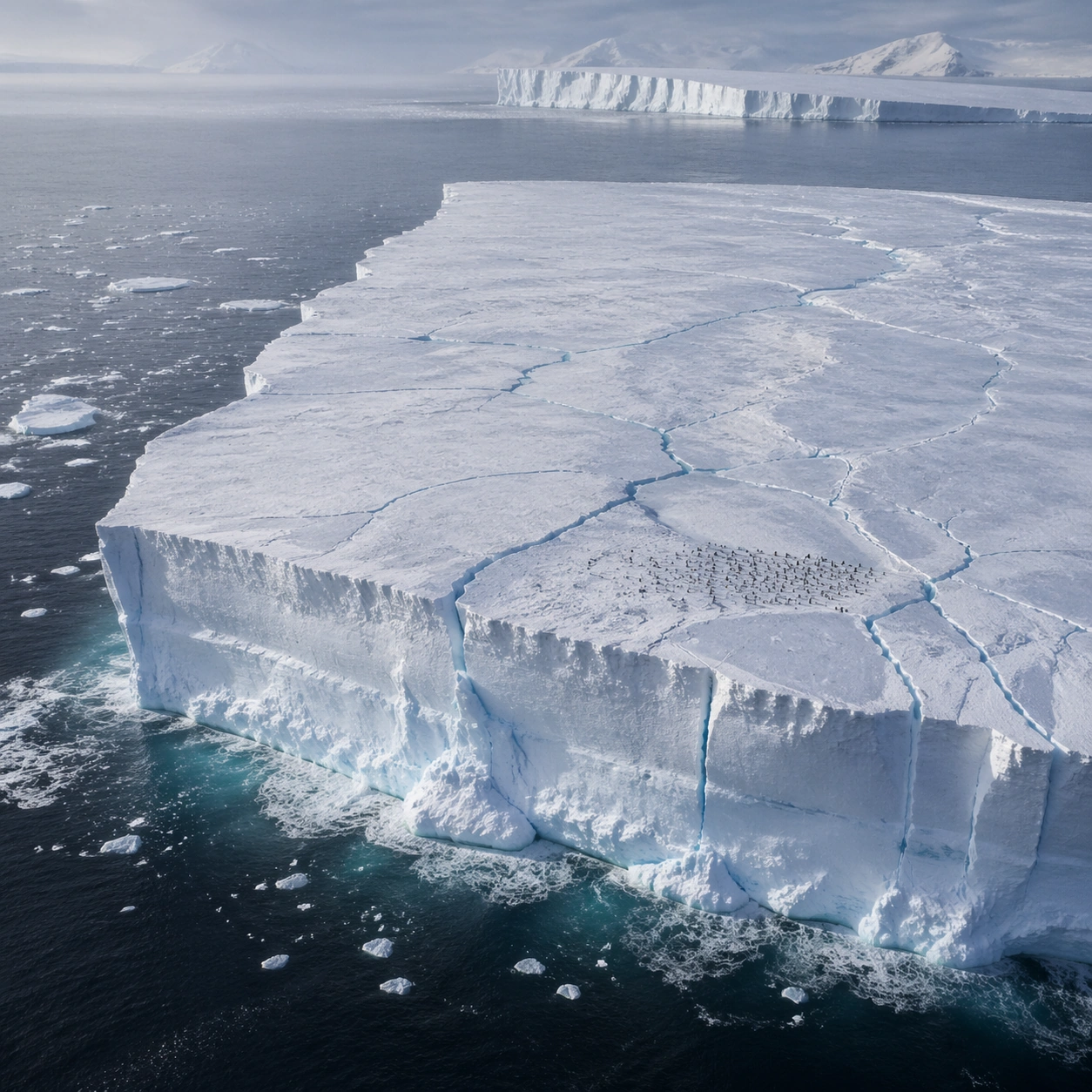
Create a square, photoreal landscape study of antarctic tabular iceberg. Compose it as the planform geometry and overall shape logic of the landscape, using an elevated oblique aerial view that still preserves believable scale and natural topography. Let light reveal contour, fracture, and pattern instead of flattening the terrain Keep the frame cinematic but disciplined, with a clear foreground, middle distance, and far mass so the viewer can measure real depth. The image should feel like a field photograph made with patience, precision, and sublime restraint rather than a fantasy matte painting.

Subject:
Show a vast Antarctic tabular iceberg adrift at sea, with one side dropping in a near-vertical ice cliff, blue fracture lines, open polar water, and a tiny penguin colony visible on the flat top. This variation should emphasize aerial scale read. The main landform must dominate the composition, but secondary elements should quietly explain how the place works: water paths, sediment lines, snow bands, surf, ash, wind streaks, stars, or human traces where appropriate. Everything in the image should support the same idea of scale and climate, so the scene reads as one coherent environment rather than a stack of spectacular details.

Important details:
Preserve rectilinear iceberg geometry, sharp ice-edge scale, cold polar clarity, faint blue internal compression bands, and the unsettling simplicity of a floating frozen plateau. Emphasize rhythm, repetition, and large-form geometry without losing physical realism. Keep geology, weather, and atmosphere physically believable. Use subtle micro-texture, tonal separation, and air perspective to reinforce distance. If a human, vehicle, tent, caravan, bird, or boat appears, it must remain tiny and subordinate to the landscape, functioning only as a scale witness. The composition should feel original, severe, and elegant, with no decorative filler and no imitation of any copyrighted visual property.

Use case:
Antarctic Tabular Iceberg single study 3/9, exploring the aerial scale read variation.

Constraints:
No readable text, no watermark, no logos, preserve exact 1:1 aspect ratio, no research station, no cruise liner, no aurora curtains, no whimsical cartoon penguins, no map labels, no diagram arrows, no satellite-interface graphics, no kitsch color grading, no artificial border, no split-panel treatment.
Verwendung
- Den vollständigen Original-Prompt einschließlich Parametern kopieren.
- Motiv, Text und Komposition an die eigenen Anforderungen anpassen.
- Ein kompatibles externes Werkzeug nutzen; Zugangsbedingungen und Ergebnis prüfen.
Vor dem Start
- Prüfen, ob ein Referenzbild nötig ist. Kompatibilität belegt nicht das tatsächlich verwendete Modell.
- Namen, Zahlen und Bildtexte prüfen; Modellversionen können andere Ergebnisse liefern.