Originaldokument
GPT Image 2 · en
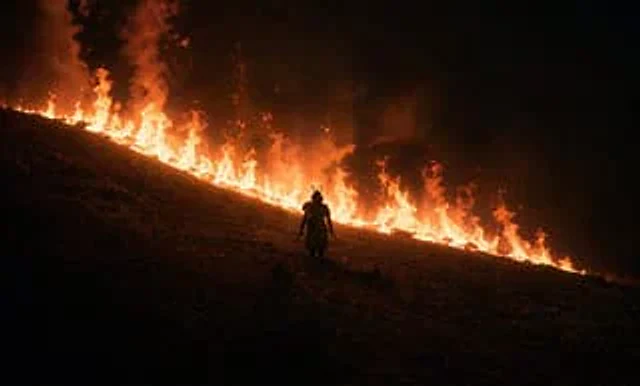
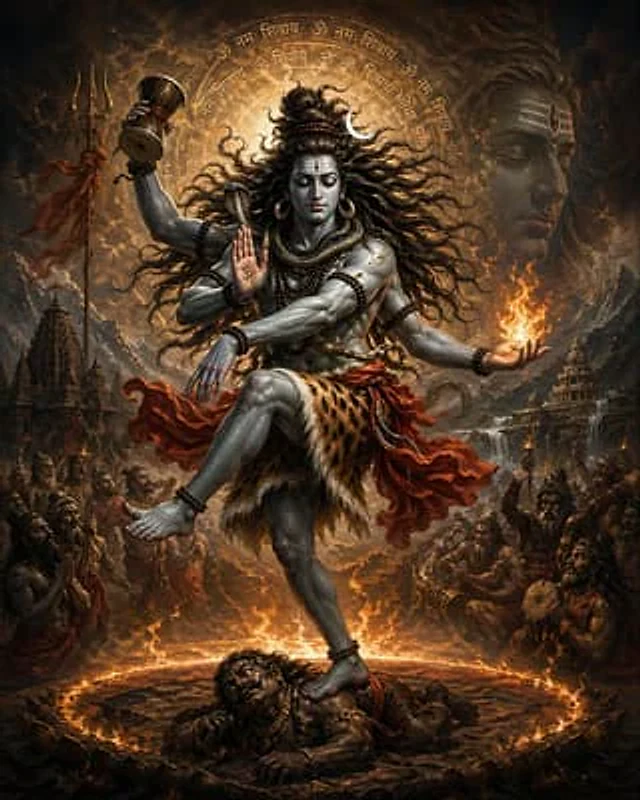
A grand mythological fantasy painting depicts Shiva performing the Thandava dance in the center of a sacred fire. His entire body is in dynamic motion, one leg raised, the other foot resting on his fallen form. Shiva possesses grey-blue skin, strong muscles, and long, wild, dark hair that explodes in all directions, topped in a high bun adorned with a white crescent moon. His expression is solemn and sacred. A cobra coils around his neck, and he wears numerous rudrasam necklaces, bracelets, armlets, large circular earrings, and other sacred ornaments. He wears a tiger-skin loincloth, its red-orange ribbons billowing wildly in the air. One raised hand holds a small damaru drum, while the other hand makes a blessing gesture, the palm displaying the syllable "Om." Above his open palm, a bright flame materializes. Behind his head is a large, luminous halo inscribed with Sanskrit mantras, creating a radiant mandala effect. The backdrop is a post-apocalyptic Himalayan temple landscape, complete with dark clouds, smoke, embers, rocky mountains, waterfalls, and ancient stone shrines and temple towers on either side. A trident wrapped in red cloth stands on the left. Shiva is surrounded by ten devotees and ascetics on either side, chanting devoutly, kneeling, raising their arms, holding torches, and striking drumbeats. Beneath Shiva lies the figure of a dark-skinned man lying on the stone ground. The ground is cracked and lava is churning, with a ring of blazing lava and flames encircling the dance platform. The film employs dramatic, cinematic lighting, contrasting deep charcoal shadows with bright orange firelight, showcasing highly detailed anatomy, intricate jewels and textures, flowing hair and fabric movement, a devout epic fantasy realism style, painterly brushstrokes, a symmetrical central composition, ultra-high detail, high contrast, and a vertical poster format.Verwendung
- Den vollständigen Original-Prompt einschließlich Parametern kopieren.
- Motiv, Text und Komposition an die eigenen Anforderungen anpassen.
- Ein kompatibles externes Werkzeug nutzen; Zugangsbedingungen und Ergebnis prüfen.
Vor dem Start
- Prüfen, ob ein Referenzbild nötig ist. Kompatibilität belegt nicht das tatsächlich verwendete Modell.
- Namen, Zahlen und Bildtexte prüfen; Modellversionen können andere Ergebnisse liefern.