
Originaldokument
GPT Image 2 · en
Scene:
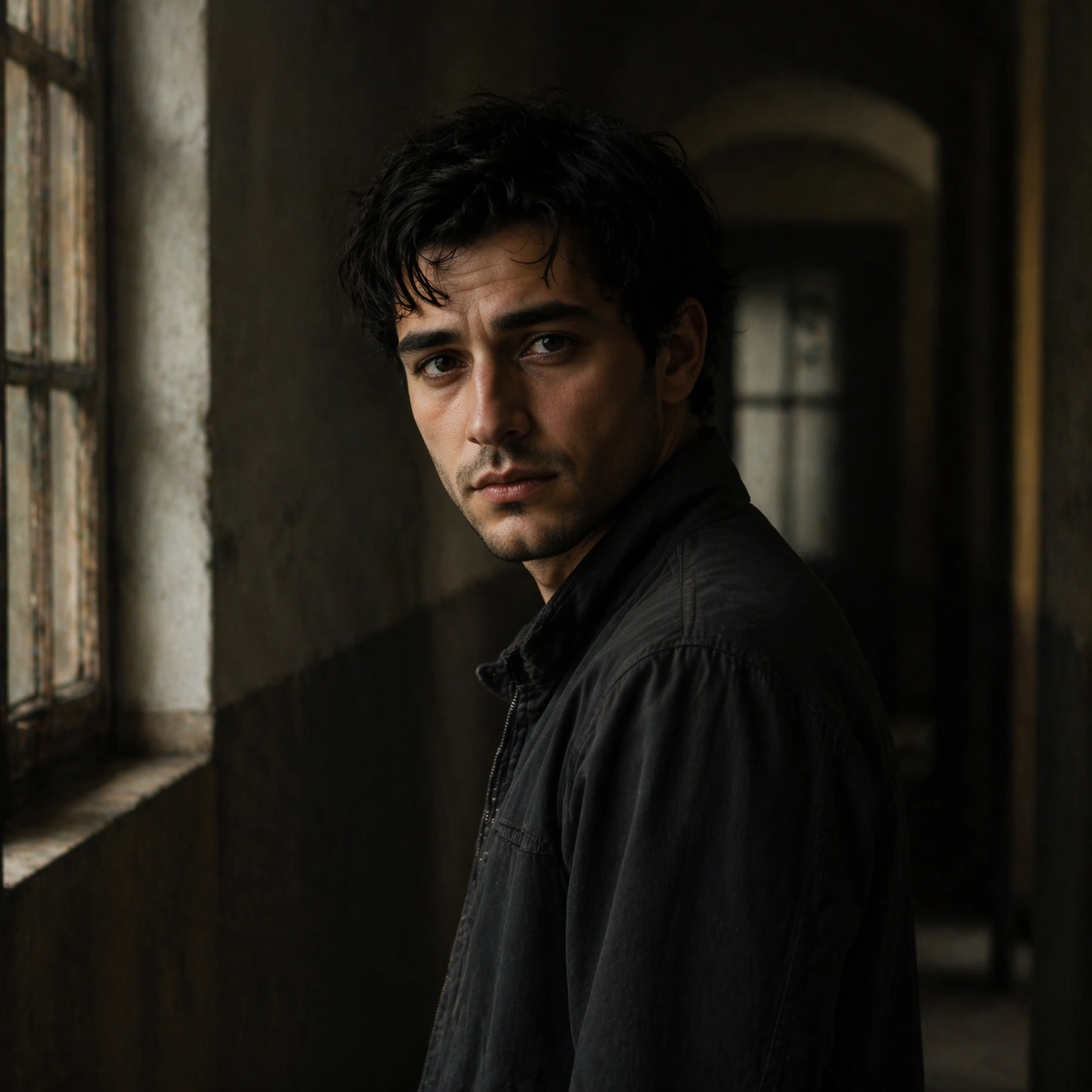
Create a square 1:1 portrait image for Cinematic Story Portrait Sequence. Use a hallway, alley, corridor, or threshold frame with directional light and clean silhouette control. The frame should feel like a finished professional deliverable rather than a casual snapshot, with clear lens discipline, believable light falloff, and a palette that directly supports Build portrait sequences that feel like stills from a character-driven film, with emotional continuity, scene logic, and camera-language variation.. Keep enough surrounding space and compositional control for gallery, research, campaign, or approval-board reuse while staying photoreal and human-scaled.

Subject:
Center one film protagonist with pale olive skin, tired expressive eyes, slightly tousled dark hair, and a grounded natural build. Use a transition space to show the same character in motion or pause while preserving exact face / hair base / body proportions from the reference model. Use the example direction from the brief as grounding context: Build portrait sequences that feel like stills from a character-driven film, with emotional continuity, scene logic, and camera-language variation.. Wardrobe, lighting, environment, and pose may shift to serve this variation, but the viewer must immediately understand that the same reference identity is still in front of the camera.

Important details:
This backlog line is difficult because Build portrait sequences that feel like stills from a character-driven film, with emotional continuity, scene logic, and camera-language variation.. Preserve skin tone family, bone structure, eye spacing, nose shape, mouth shape, hairline logic, shoulder width, and overall body read across the entire series. preserve exact face / hair base / body proportions from the reference model. This image should feel like the next shot in one film, not a new casting choice. Avoid the common failure described in the brief: ordinary image models often lose likeness once styling, lighting, or layout changes enter the frame. Success should feel like the result should feel professionally usable, coherent, and clearly built around one stable human identity.

Use case:
Cinematic Story Portrait Sequence series study 3/9, a transitional pause portrait.

Constraints:
No readable text, no watermark, no logos, preserve exact 1:1 aspect ratio, preserve exact face / hair base / body proportions from the reference model, no hidden face, no body warp, no action blur, no background signage.
Verwendung
- Den vollständigen Original-Prompt einschließlich Parametern kopieren.
- Motiv, Text und Komposition an die eigenen Anforderungen anpassen.
- Ein kompatibles externes Werkzeug nutzen; Zugangsbedingungen und Ergebnis prüfen.
Vor dem Start
- Prüfen, ob ein Referenzbild nötig ist. Kompatibilität belegt nicht das tatsächlich verwendete Modell.
- Namen, Zahlen und Bildtexte prüfen; Modellversionen können andere Ergebnisse liefern.