
Contenido original en inglés
4 de septiembre de 2026 —
OpenCode's latest release shows why the agent layer is becoming a product of its own
Today's Daily Brief tracks where AI is becoming more operational: an open coding agent with unusually broad developer attention, a new Windows hardware baseline for local models, policy pressure on AI's energy footprint, and fresh infrastructure for agents and reinforcement learning. Each item links to the announcement, repository or reporting behind it.
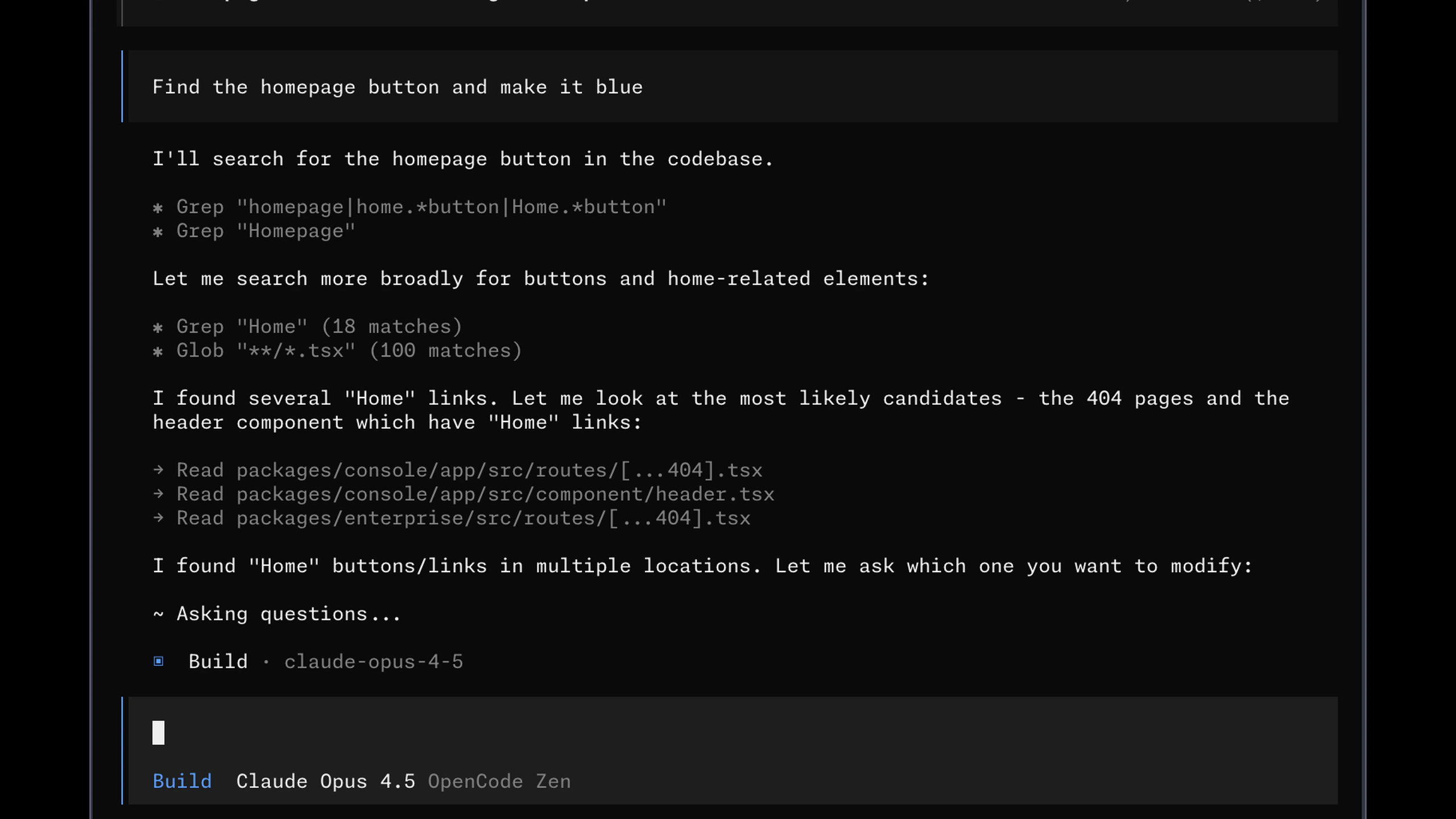
OpenCode's latest release shows why the agent layer is becoming a product of its own
OpenCode drew new attention on GitHub while continuing an active release cycle. Its current pitch is an open-source coding agent that can connect to multiple model providers instead of tying the interface and workflow to one model vendor.
Release 1.18.27 focused on provider timeouts and Anthropic reasoning compatibility—small-looking changes that expose how much reliability work sits between a capable model and a usable coding agent.
Microsoft and AMD define a Windows PC class for running 30B-plus models locally
Microsoft announced Project Zenith, a Windows developer-device category that starts with AMD Ryzen AI Halo hardware, at least 64GB of unified memory and more than 250GB/s of memory bandwidth.
Microsoft says the baseline is intended for local, unmetered use of models above 30 billion parameters, alongside a preconfigured developer environment.
China links its 2026–2030 AI expansion plan to energy efficiency and disclosure
China's Cyberspace Administration published a multi-agency plan that connects AI development with efficient computing, renewable electricity, cooling, carbon accounting and industrial deployment.
The plan sets an implementation framework rather than a single technical standard or hard cap on AI growth.
OpenAI positions Astra around long-running, steerable computer work
OpenAI introduced GPT-6 Astra for longer workflows involving browsing, computer use, software engineering and other tools, beginning with a limited organizational rollout.
The launch emphasizes mid-task steering and continuity across tool calls, making supervision and permission boundaries part of the product claim.
Moonshot AI is reportedly moving toward a Hong Kong IPO
Reports say Moonshot AI has taken steps toward a Hong Kong listing, with potential fundraising estimates ranging from roughly $3 billion to $5 billion.
Moonshot has not publicly confirmed final terms, and no public prospectus was available in the reviewed sources, so the size and timing remain provisional.
RenoDX's active nightly builds highlight the limits of generic PC HDR conversion
RenoDX published another nightly build while maintaining hundreds of game-specific assets around a shared DirectX graphics-modification framework.
Unlike one-click HDR conversion, the project replaces selected shaders and adjusts individual rendering pipelines, trading convenience for deeper control.
Miles v0.1 packages more of the distributed reinforcement-learning stack
Miles v0.1 presents a full-stack system for model post-training, combining rollout generation, distributed training and weight synchronization across inference workers.
The project claim is broader than support for one algorithm: it aims to make long-running, multi-machine reinforcement-learning jobs easier to operate and inspect.