Documento original
GPT Image 2 · en
Scene:
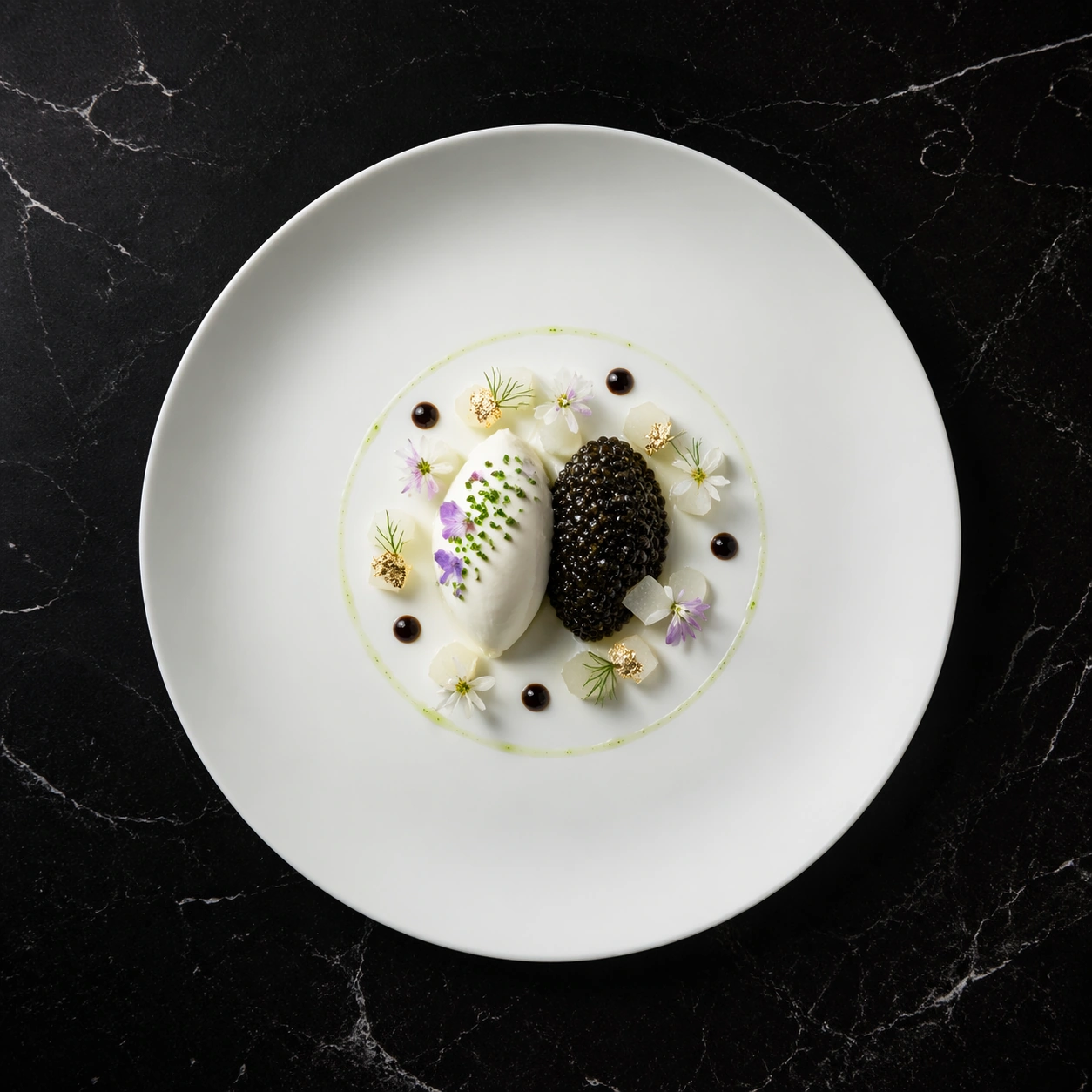
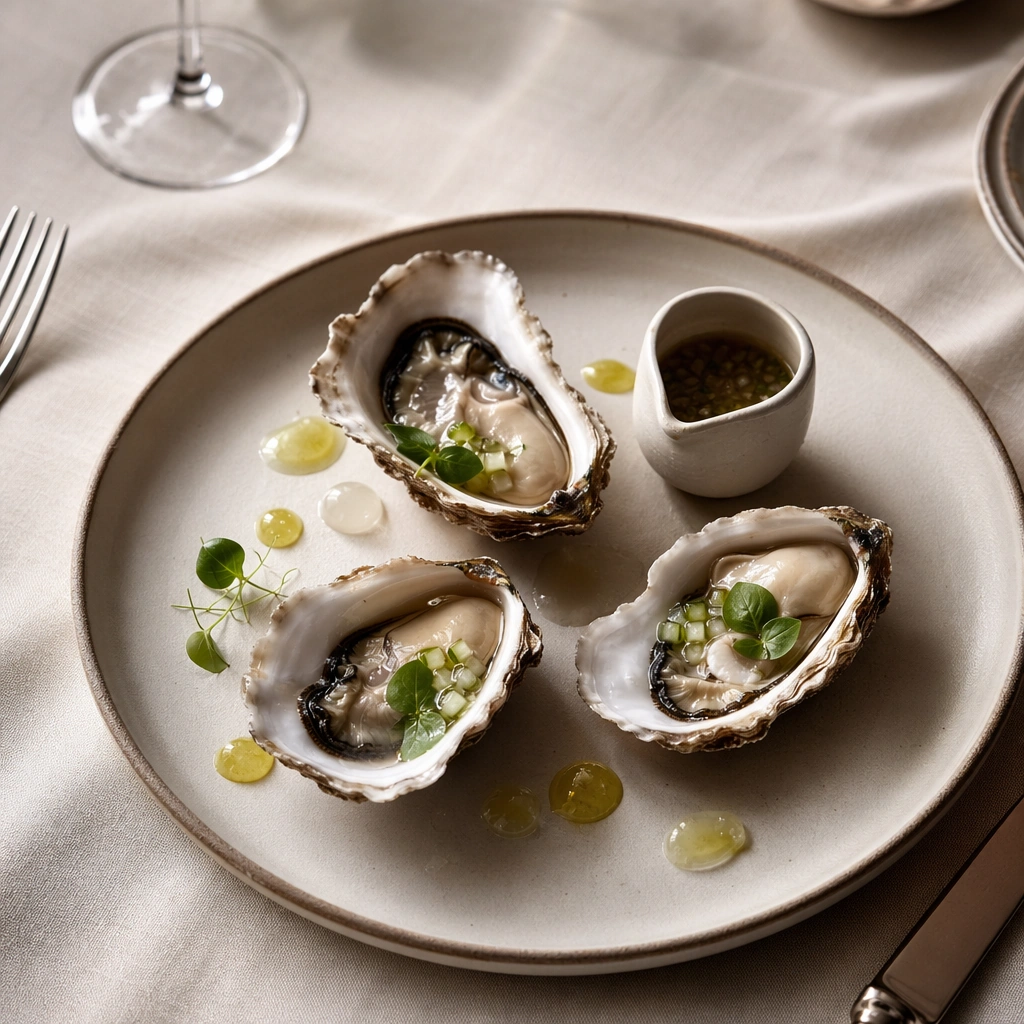
Compose a square restaurant editorial food photograph with a controlled three-quarter camera angle, tactile linen, brushed metal cutlery used sparingly at the edge of frame, and lighting that feels like a real dining room service captured by a magazine photographer. Keep the tonal range warm, dimensional, and refined, with enough negative space around the plate for the image to function as a hero asset rather than a crowded snapshot. Switch to a near-overhead camera while keeping the same premium restaurant styling, shallow ambient shadow, and elegant spacing between elements.

Subject:
The food must read as a true signature dish developed by a serious kitchen: precise portions, believable sauce behavior, carefully considered garnish, and a table context that suggests a coherent restaurant identity instead of generic luxury styling. Arrange opened oysters, citrus gel, chilled metal accents, and one small sauce vessel as a composed first-course editorial.

Important details:
Restaurant credibility matters more than spectacle. Preserve appetizing moisture, plausible ingredient hierarchy, and disciplined prop styling. Every crumb, herb leaf, ceramic reflection, and fold in the table linen should support the editorial story while keeping the dish unmistakably central. This image should feel fully self-contained while still belonging to the same broader topic and commercial world. The frame should feel crisp, cold, and expensive, with believable shell moisture, controlled reflections, and strong plate-to-table relationships.

Use case:
Signature Dishes single study 5/9, built for Prompt Atlas coverage of a food and beverage commercial visual system.

Constraints:
No readable text, no watermark, no logos, preserve exact 1:1 aspect ratio, no plastic-looking food, no overloaded garnish, no sloppy sauce smears, no cartoon color saturation, no stock-photo posing, no messy background clutter, no seafood tower, no crushed-ice excess, no beach props.
Cómo usar
- Copia el prompt original completo, incluidos los parámetros.
- Adapta el tema, el texto y la composición a tus necesidades.
- Usa una herramienta externa compatible; comprueba el acceso y el resultado.
Antes de empezar
- Comprueba si necesita una imagen de referencia. La compatibilidad no demuestra qué modelo generó el ejemplo.
- Revisa nombres, cifras y textos; el resultado puede variar entre versiones del modelo.