Documento original
GPT Image 2 · en
Scene:
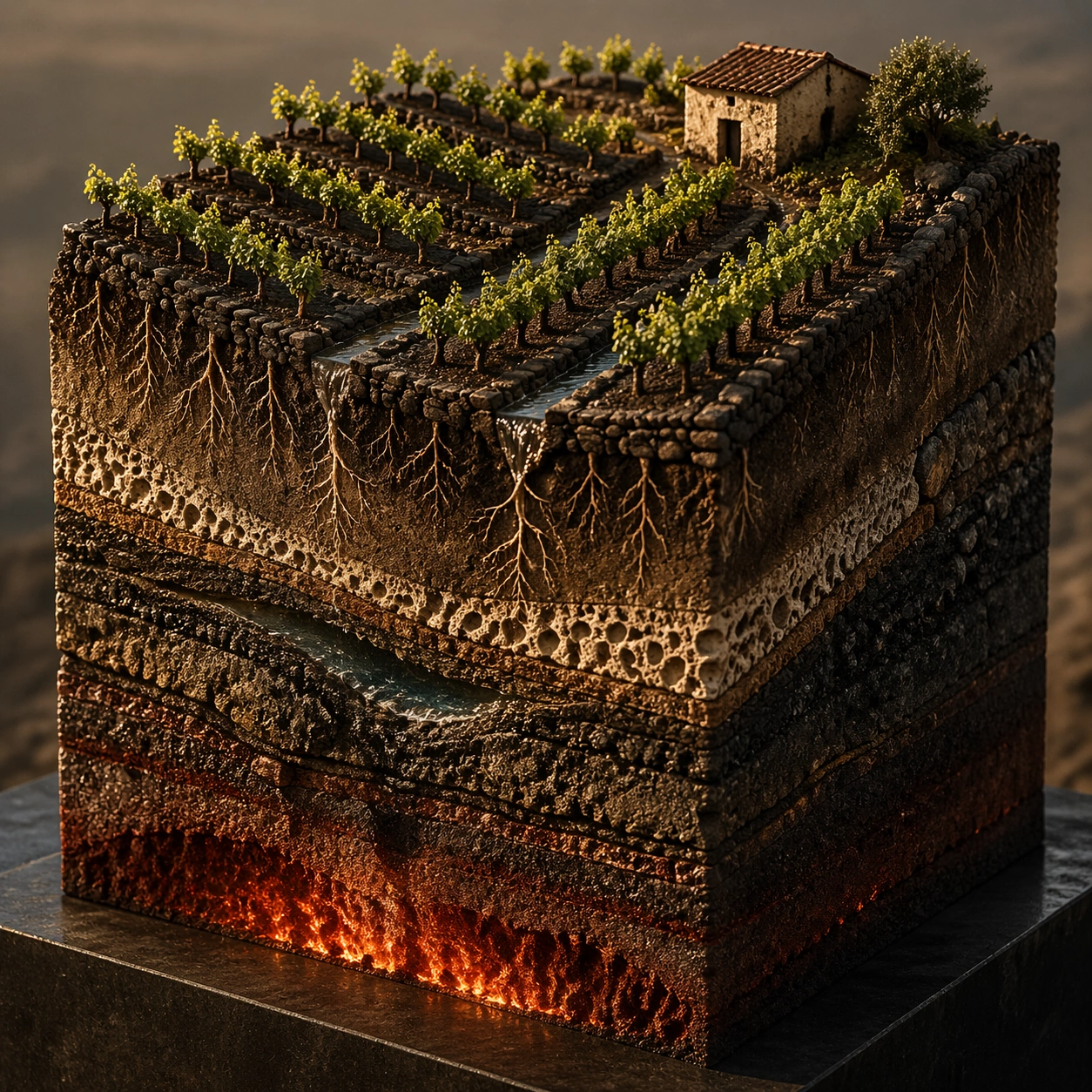
A square fine-art product photograph of a volcanic vineyard diorama cube on a dark stone pedestal. Use golden-hour side light, sharp macro detail, and a warm earthy palette of vine green, black basalt, ochre soil, and ember red. The view should show the top vineyard rows and the cutaway side faces as one continuous specimen.

Subject:
The top face shows terraced grape vines on a volcanic slope, with dry stone walls, small irrigation channels, dark gravel mulch, and a tiny farmhouse without signage. The cube sides reveal vine roots penetrating ash-rich soil, basalt fragments, pumice layers, mineral veins, an underground water pocket, old lava flow bands, and a glowing but deep magma chamber far below. Include root hairs, cracked scoria, moisture stains, and tiny pebbles along the cut edges.

Important details:
The challenge is material realism and continuity. Vine rows must align with visible root systems, terrace walls must continue into foundations, and volcanic layers must remain ordered rather than random stripes. The magma chamber should provide subtle warm light from below without turning the cube into fantasy. Soil, pumice, basalt, roots, and water all need distinct textures. The result should feel like a scientific luxury object and a landscape miniature at once.

Use case:
Hyperreal Diorama Cube single study 7/8, testing a volcanic vineyard cube with agricultural surface detail, roots, minerals, aquifer pockets, and lava layers.

Constraints:
No readable text, no watermark, no logos, preserve exact 1:1 aspect ratio, no wine labels, no branded farmhouse, no floating labels, no fantasy lava fountains, no giant grapes, no disconnected root systems, no smeared basalt texture, no cropped terrace walls.
Cómo usar
- Copia el prompt original completo, incluidos los parámetros.
- Adapta el tema, el texto y la composición a tus necesidades.
- Usa una herramienta externa compatible; comprueba el acceso y el resultado.
Antes de empezar
- Comprueba si necesita una imagen de referencia. La compatibilidad no demuestra qué modelo generó el ejemplo.
- Revisa nombres, cifras y textos; el resultado puede variar entre versiones del modelo.