Documento original
GPT Image 2 · en
Scene:
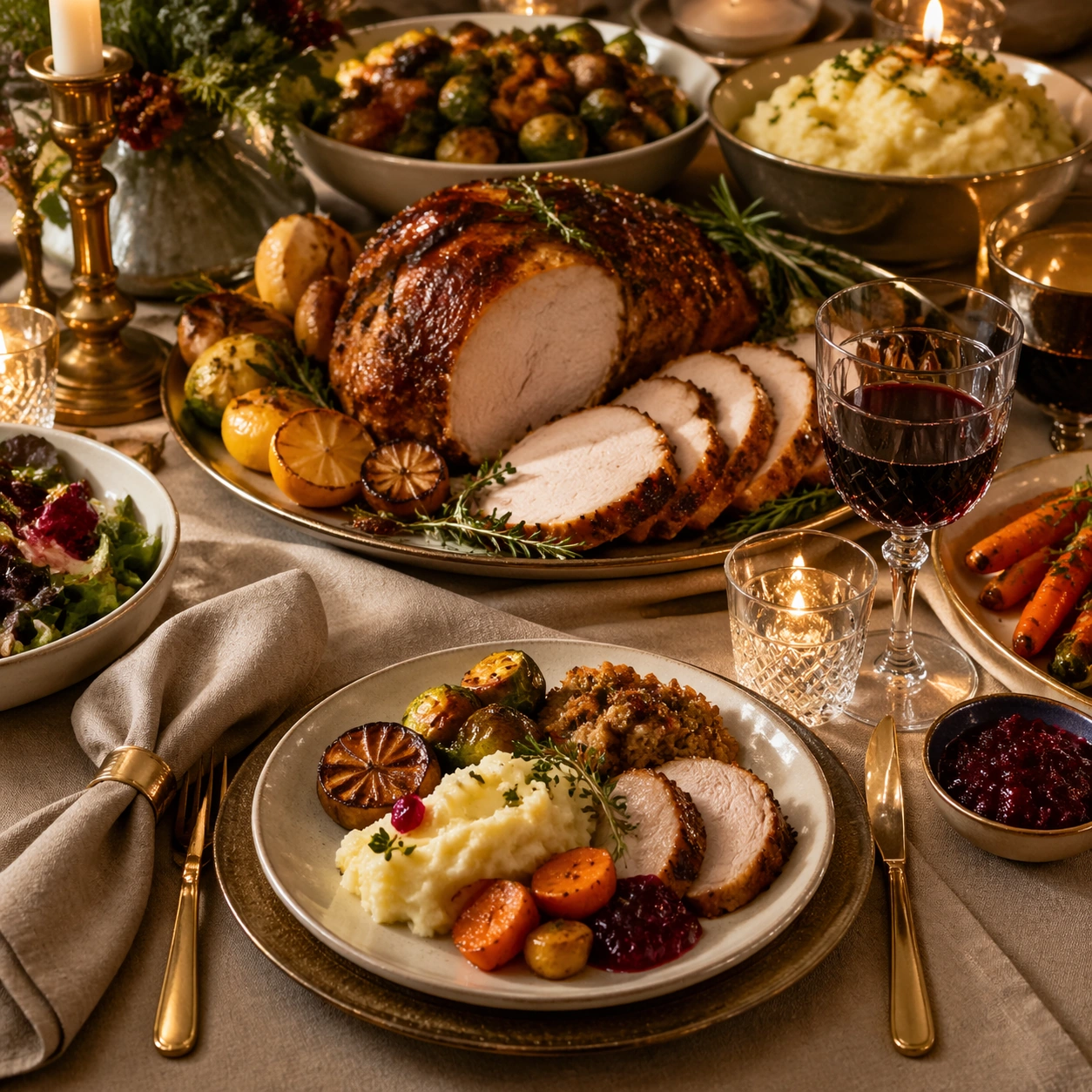
Compose a square feast or banquet campaign image with abundant but controlled table choreography, rich servingware, and a celebratory atmosphere that feels suitable for hospitality campaigns, seasonal dining promotions, or event editorials. The frame should manage many elements without losing hierarchy, elegance, or appetite appeal. Use a square crop of one portion of the table with candlelight, plateware, napkin folds, and partial dish visibility creating intimate celebration.

Subject:
The food must look substantial and celebratory, with believable multi-dish coordination, serving logic, and table rituals that suggest a real banquet rather than a random buffet pile. Let the place setting and nearby food communicate premium hospitality and anticipation.

Important details:
This topic depends on composition reasoning. Preserve a strong centerpiece, readable secondary dishes, coherent servingware, and lighting that supports depth across the table. Celebration should emerge from abundance, color, and ritual objects, not from gimmicks or branded holiday symbols. Everything must feel premium, coordinated, and logistically plausible. This image should feel fully self-contained while still belonging to the same broader topic and commercial world. Material realism matters: glass sparkle, candle glow, linen depth, and polished flatware should all feel warm and believable without overpowering the food.

Use case:
Festive Feast single study 5/9, built for Prompt Atlas coverage of a food and beverage commercial visual system.

Constraints:
No readable text, no watermark, no logos, preserve exact 1:1 aspect ratio, no readable text, no logos, no generic wedding décor, no buffet-chaos clutter, no novelty party props, no copied holiday mascots, no visible faces dominating the frame, no wedding invitation cards, no readable place cards, no luxury-brand logos.
Cómo usar
- Copia el prompt original completo, incluidos los parámetros.
- Adapta el tema, el texto y la composición a tus necesidades.
- Usa una herramienta externa compatible; comprueba el acceso y el resultado.
Antes de empezar
- Comprueba si necesita una imagen de referencia. La compatibilidad no demuestra qué modelo generó el ejemplo.
- Revisa nombres, cifras y textos; el resultado puede variar entre versiones del modelo.