Documento original
GPT Image 2 · en
Scene:
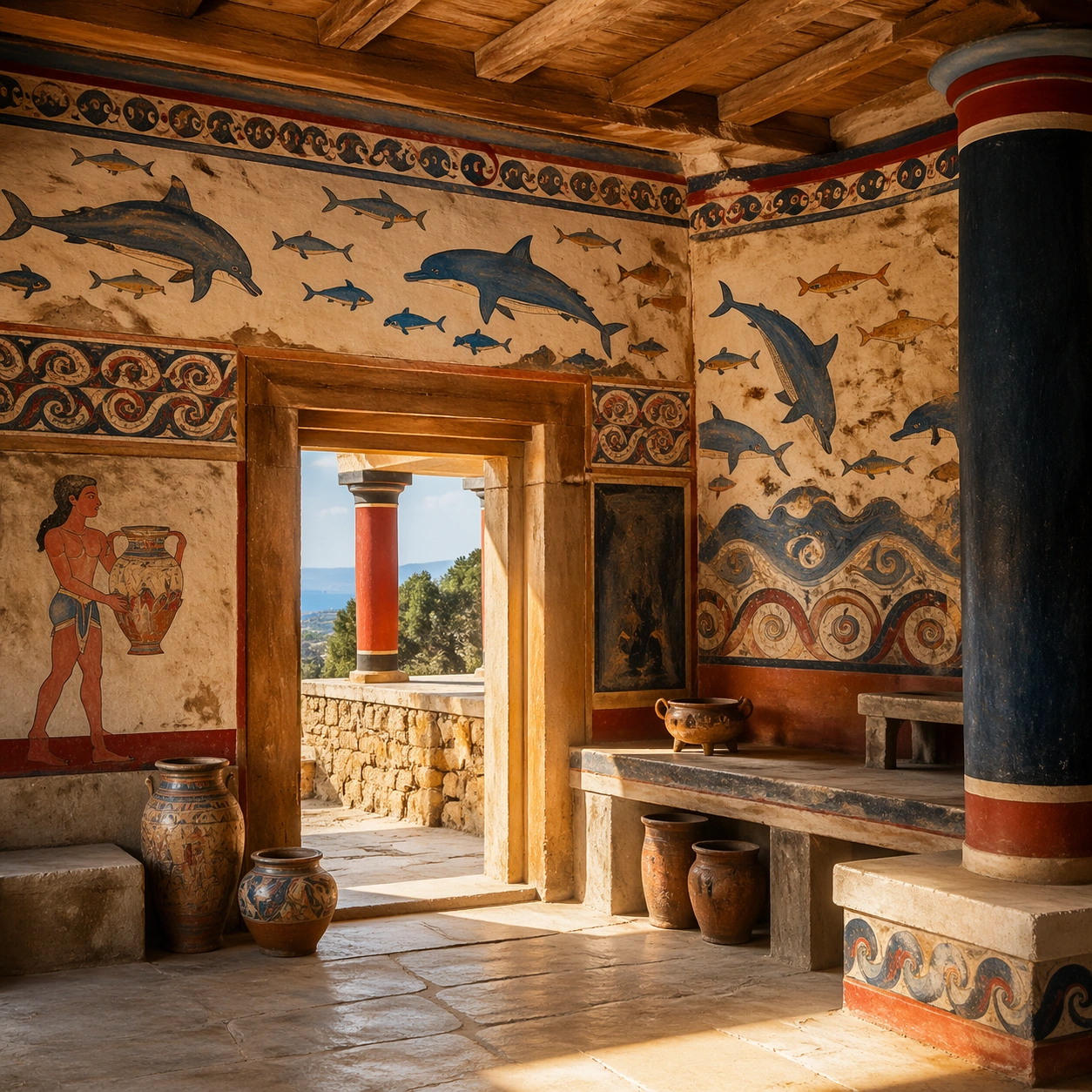
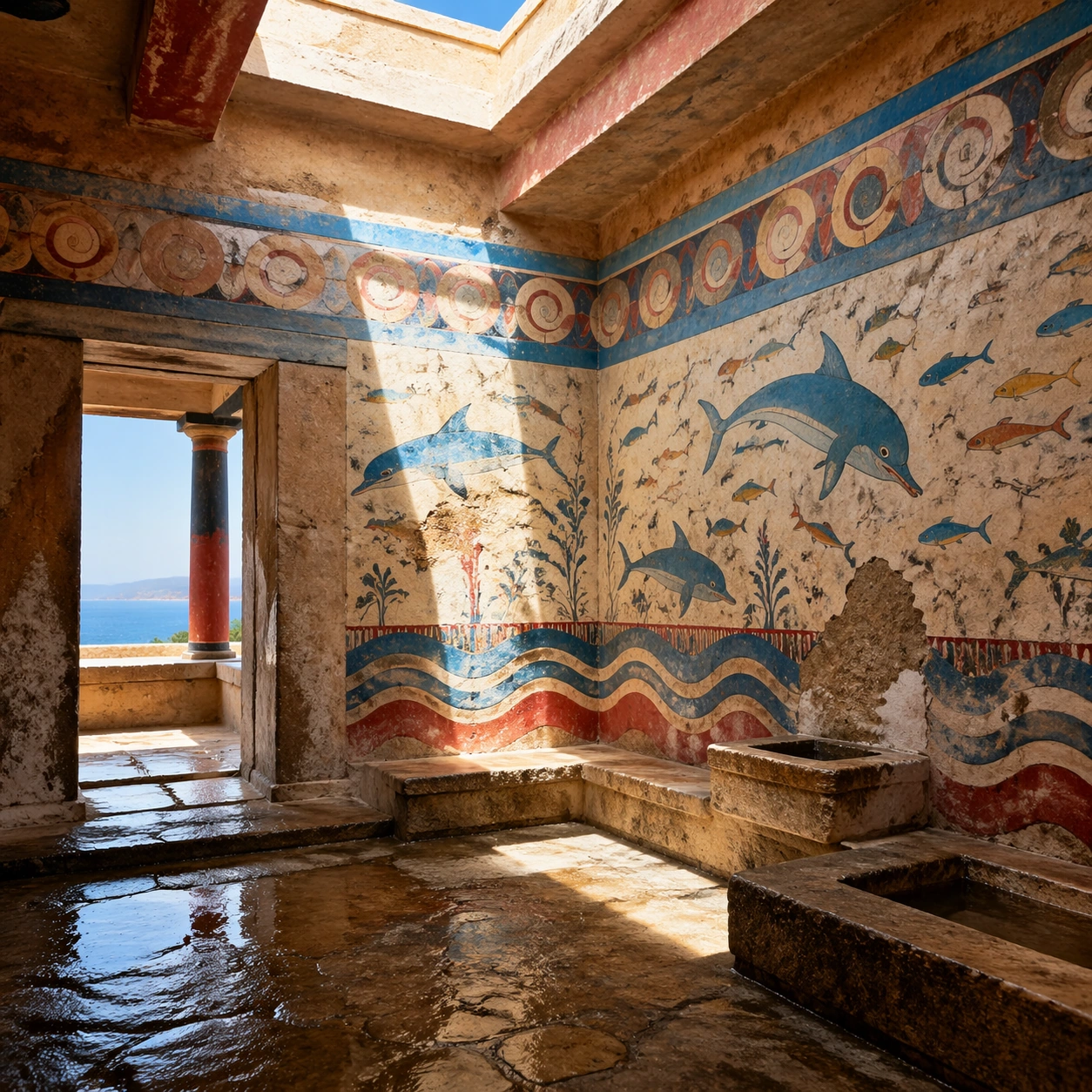
A square mood variation from the same civilization theme, built around clearer seaside daylight entering from an upper opening, making pigment saturation and plaster sheen shift without changing the room identity. The image should stay grounded in field realism while testing how different illumination changes material reading, atmosphere, and emotional register. Keep the frame self-contained and coherent, as if photographed during a second visit under altered conditions.

Subject:
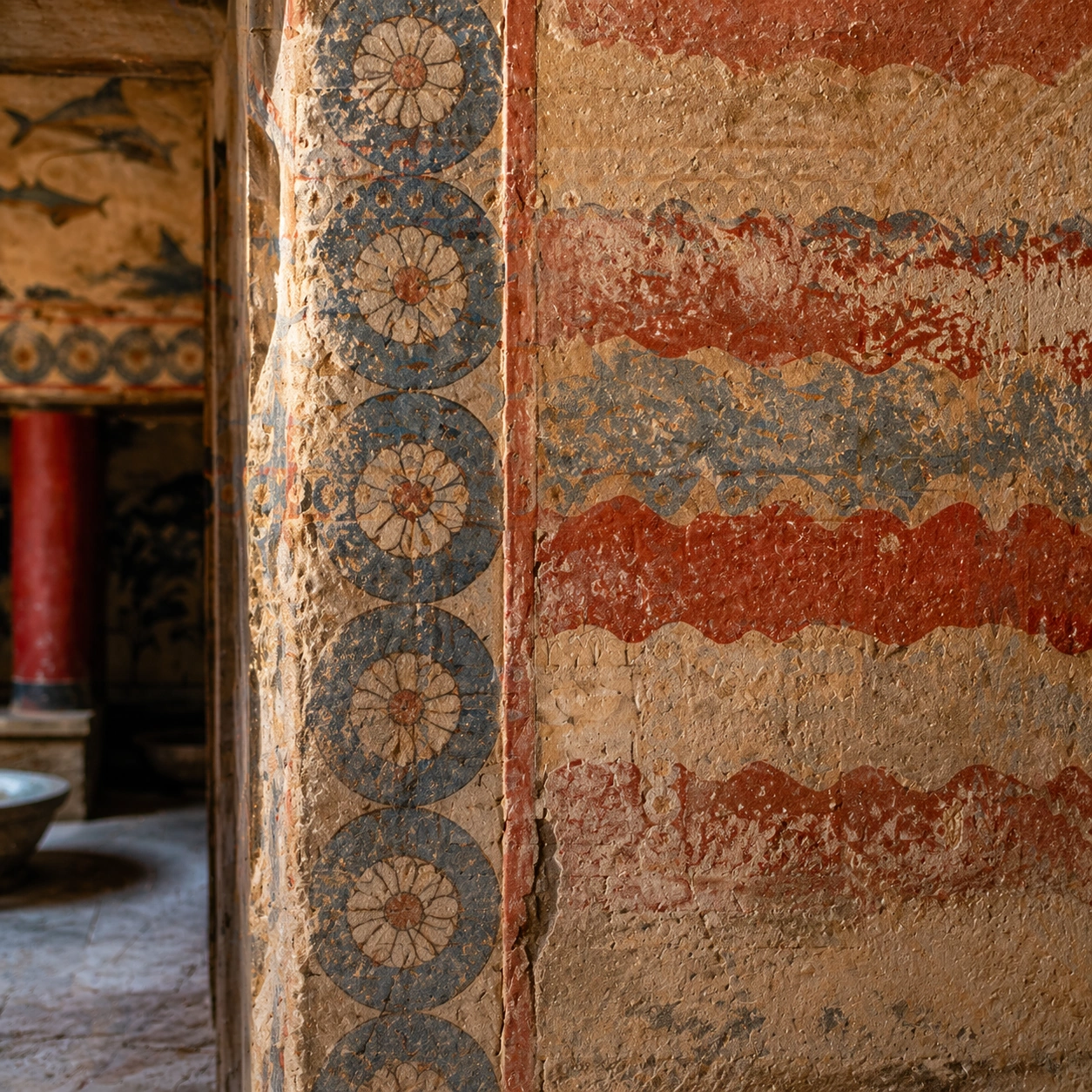
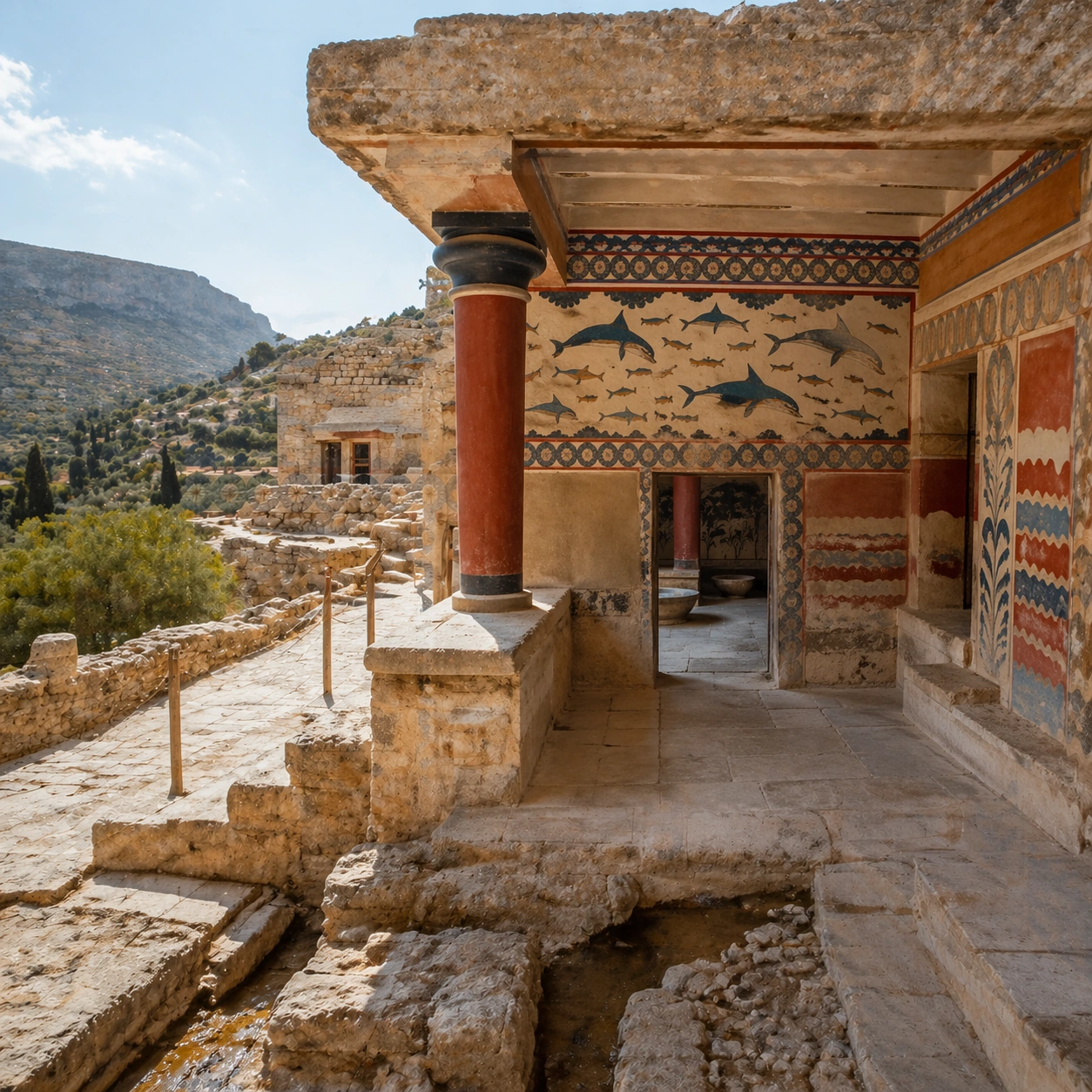
Show a culturally accurate site or interior connected to the same world as the main topic, but not as a direct dependency on the series reference. The focus should be on how light transforms relief, color, moisture, water, dust, or vegetation while preserving archaeological credibility. Architectural forms, objects, and setting must still belong to the same civilization with no cross-cultural contamination.

Important details:
Keep the room recognizably Minoan, with fluid marine motifs, elegant fresco cadence, red and blue pigment behavior, and Bronze Age architectural forms rather than later classical Greek systems. Use the shift in light to reveal different evidence than the other studies: pigment glow, root sheen, caustics, wet stone, canyon shadow, marine haze, terrace depth, or quarry moisture. Keep the result serious and observational rather than romanticized. Non-readable motifs are acceptable, but there should be no signs, captions, or modern display devices. The image should feel like a rigorous visual experiment in historical atmosphere.

Use case:
Minoan Frescoes Living Again single study 7/9.

Constraints:
No readable text, no watermark, no logos, preserve exact 1:1 aspect ratio, no Roman statues, no Renaissance furniture, no fantasy palaces, no modern gallery labels, no theatrical color filters, no supernatural effects, no montage composition, no glossy concept-art exaggeration.
Cómo usar
- Copia el prompt original completo, incluidos los parámetros.
- Adapta el tema, el texto y la composición a tus necesidades.
- Usa una herramienta externa compatible; comprueba el acceso y el resultado.
Antes de empezar
- Comprueba si necesita una imagen de referencia. La compatibilidad no demuestra qué modelo generó el ejemplo.
- Revisa nombres, cifras y textos; el resultado puede variar entre versiones del modelo.