
Documento original
GPT Image 2 · en
Scene:
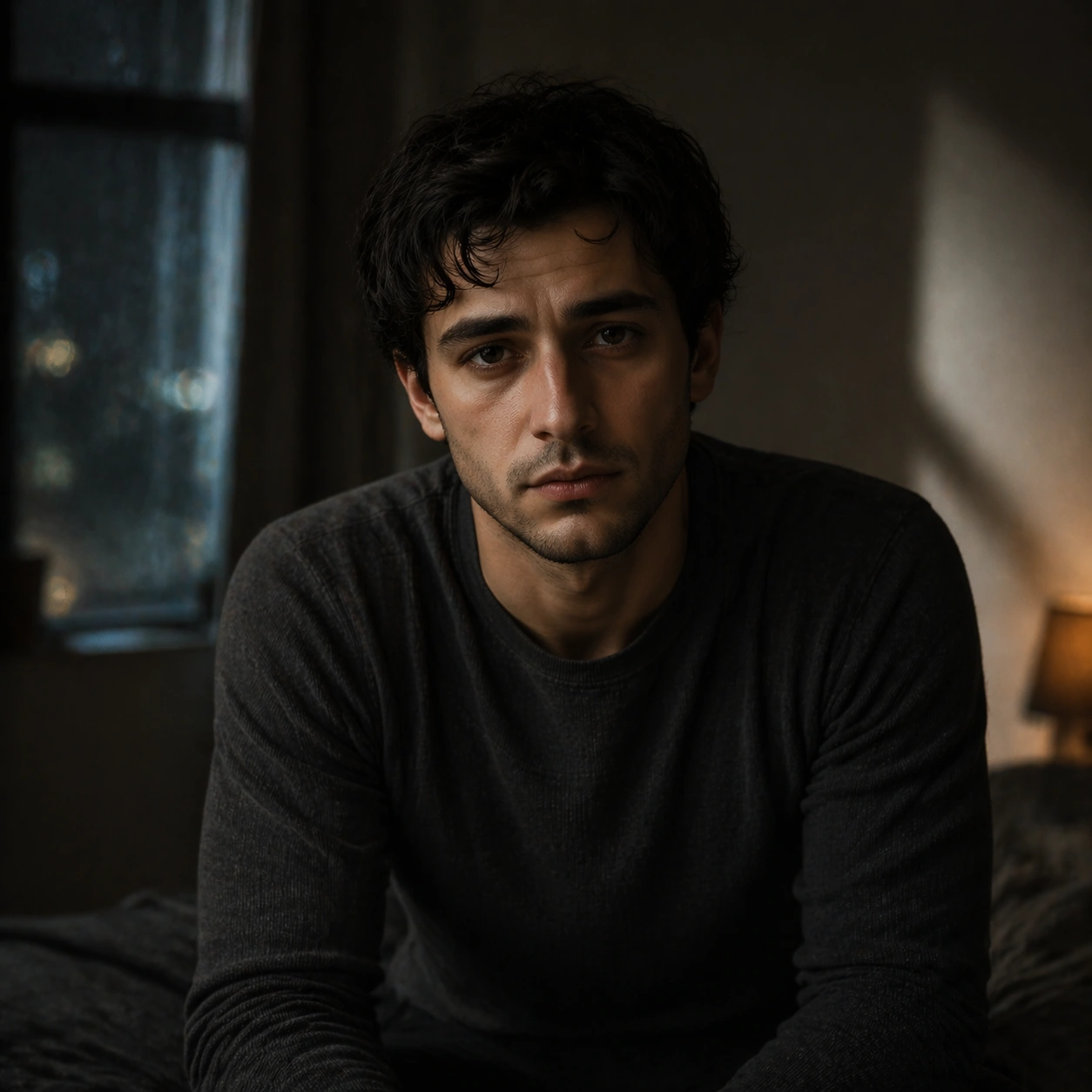
Create a square 1:1 portrait image for Cinematic Story Portrait Sequence. Use a carefully staged room or interior with motivated light, layered depth, and one clear emotional focus. The frame should feel like a finished professional deliverable rather than a casual snapshot, with clear lens discipline, believable light falloff, and a palette that directly supports Build portrait sequences that feel like stills from a character-driven film, with emotional continuity, scene logic, and camera-language variation.. Keep enough surrounding space and compositional control for gallery, research, campaign, or approval-board reuse while staying photoreal and human-scaled.

Subject:
Center one film protagonist with pale olive skin, tired expressive eyes, slightly tousled dark hair, and a grounded natural build. Place the same character into a story situation without changing who they are. Preserve the anchor identity even as costume texture or environment becomes richer. Use the example direction from the brief as grounding context: Build portrait sequences that feel like stills from a character-driven film, with emotional continuity, scene logic, and camera-language variation.. Wardrobe, lighting, environment, and pose may shift to serve this variation, but the viewer must immediately understand that the same reference identity is still in front of the camera.

Important details:
This backlog line is difficult because Build portrait sequences that feel like stills from a character-driven film, with emotional continuity, scene logic, and camera-language variation.. Preserve skin tone family, bone structure, eye spacing, nose shape, mouth shape, hairline logic, shoulder width, and overall body read across the entire series. preserve exact face / hair base / body proportions from the reference model. The scene may feel cinematic, but likeness still outranks atmosphere. Avoid the common failure described in the brief: ordinary image models often lose likeness once styling, lighting, or layout changes enter the frame. Success should feel like the result should feel professionally usable, coherent, and clearly built around one stable human identity.

Use case:
Cinematic Story Portrait Sequence series study 2/9, an interior story beat.

Constraints:
No readable text, no watermark, no logos, preserve exact 1:1 aspect ratio, preserve exact face / hair base / body proportions from the reference model, no extra protagonists, no busy set dressing, no drastic age shift, no unrelated props.
Cómo usar
- Copia el prompt original completo, incluidos los parámetros.
- Adapta el tema, el texto y la composición a tus necesidades.
- Usa una herramienta externa compatible; comprueba el acceso y el resultado.
Antes de empezar
- Comprueba si necesita una imagen de referencia. La compatibilidad no demuestra qué modelo generó el ejemplo.
- Revisa nombres, cifras y textos; el resultado puede variar entre versiones del modelo.