Documento original
GPT Image 2 · en
Scene:
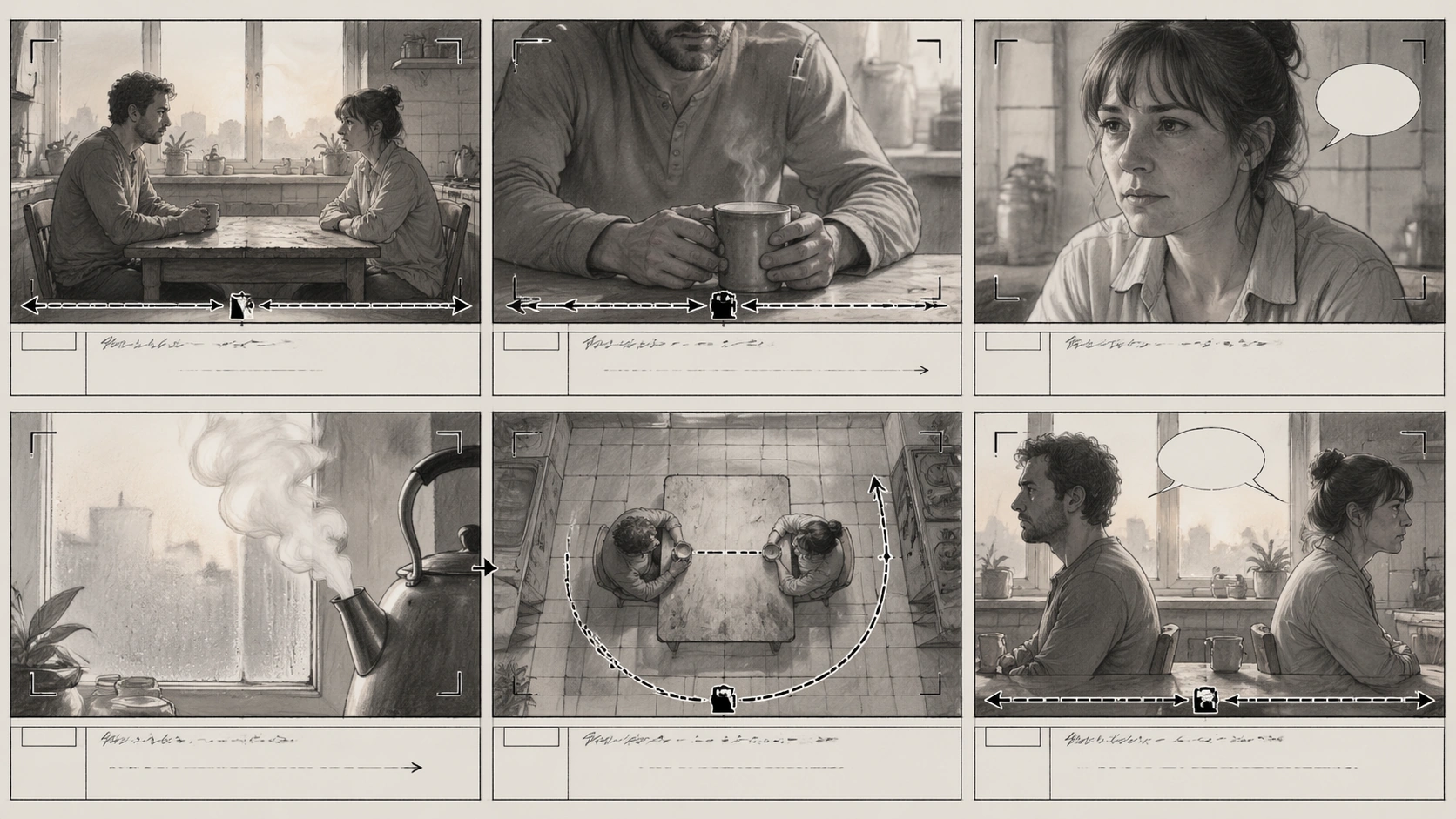
A horizontal 16:9 drama storyboard sheet in soft graphite pencil and warm gray wash, arranged as six equal panels in a strict 2 by 3 grid. Each panel has blank notes bands, unreadable shorthand, camera arrows, focus brackets, and occasional empty dialogue balloons. The setting is a small apartment kitchen at dawn, with window light, tiled backsplash, steam from a kettle, a table, two chairs, and domestic clutter rendered with quiet realism.

Subject:
Two adult characters are staged for a tense conversation without readable dialogue. The six panels show cinematic blocking: wide two-shot across the table, slow dolly toward one character's hands around a mug, reverse close-up of the other character holding back emotion, insert of steam twisting in window light, overhead diagram-like panel showing chair positions and camera path, and final profile two-shot with emotional distance. The characters remain consistent in clothing, posture, and relative position.

Important details:
The board should demonstrate production-ready camera language: dolly path, shot-reverse-shot planning, insert timing, overhead blocking, and final composition. Arrows and focus brackets should be clear but not labeled with readable words. Materials should feel believable in pencil: ceramic mug, steam, condensation on window glass, worn table surface, cotton shirt folds, and soft morning shadows. Keep the grid clean and the emotional storytelling legible without text.

Use case:
Film Storyboard Sequence single study 8/8, an independent kitchen drama board testing shot grammar and restrained production layout.

Constraints:
No readable text, no watermark, no logos, preserve exact 16:9 horizontal aspect ratio, no legible dialogue, no brand objects, no broken grid, no extra characters, no inconsistent kitchen layout, no glossy comic color.
Cómo usar
- Copia el prompt original completo, incluidos los parámetros.
- Adapta el tema, el texto y la composición a tus necesidades.
- Usa una herramienta externa compatible; comprueba el acceso y el resultado.
Antes de empezar
- Comprueba si necesita una imagen de referencia. La compatibilidad no demuestra qué modelo generó el ejemplo.
- Revisa nombres, cifras y textos; el resultado puede variar entre versiones del modelo.