Documento original
GPT Image 2 · en
Scene:
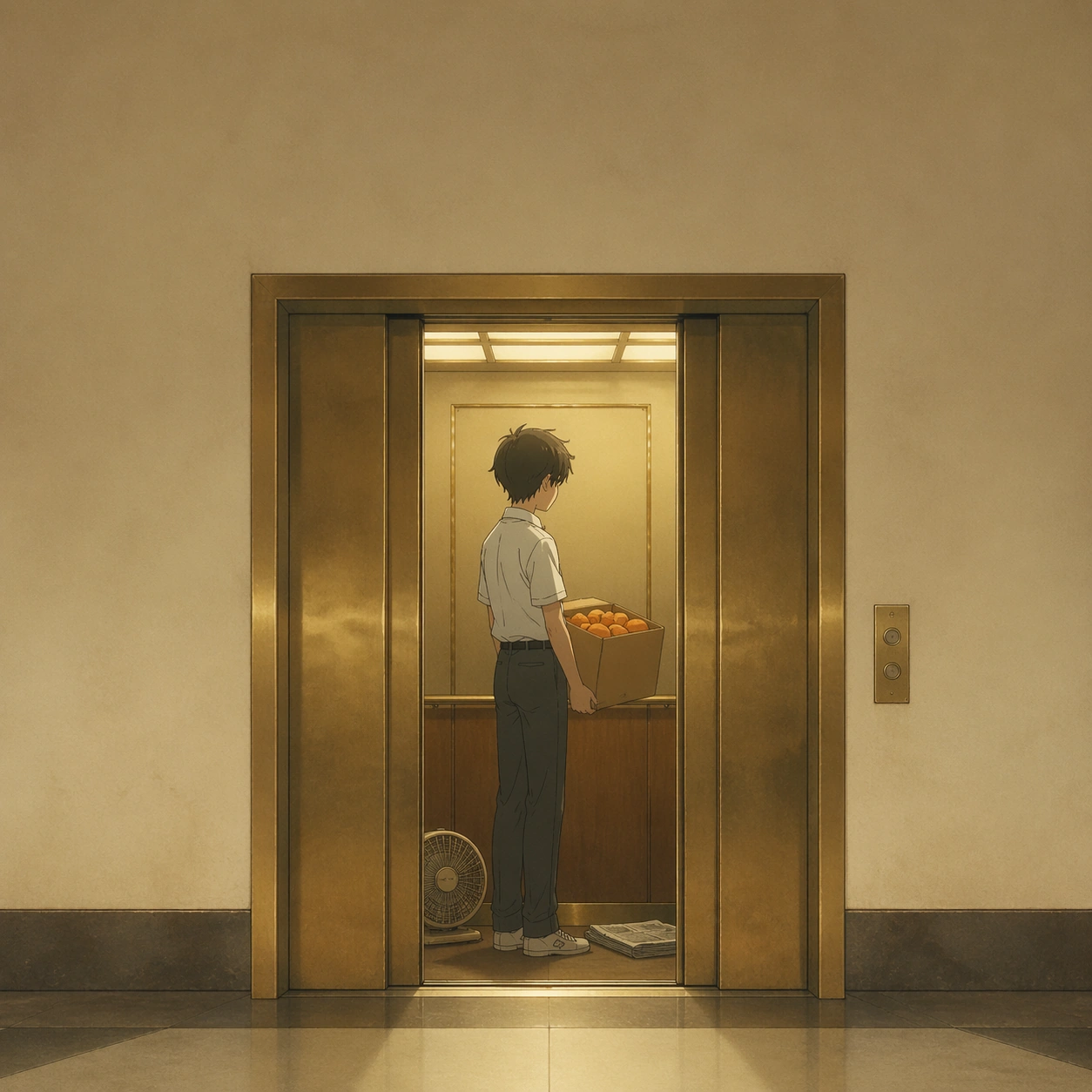
A square poster built around a single vintage elevator interior, doors half open, framed from directly outside so the cab becomes a clean luminous rectangle in the center. Outside the elevator is a quiet hotel corridor washed in pale cream shadow; inside the cab is warm late-summer gold. The composition should be simple and graphic, with a strong block of negative space above the doors and a thin band below, like a carefully art-directed festival one-sheet printed on matte paper.

Subject:
Inside the elevator stands an anime-coded boy in a summer uniform holding a cardboard box of oranges. He is turned slightly away, caught in an in-between moment before departure. At his feet sit a portable fan and a folded newspaper shape with no readable text. The figure should read instantly through posture, hair silhouette, and the orange box, while the box and the elevator create the main geometry. The corridor beyond remains empty, emphasizing the emotional pause. The image must hint at youth and memory without becoming sentimental advertising.

Important details:
Translate anime nostalgia into disciplined poster architecture. Keep the palette reduced to sun-faded cream, brass, muted citrus orange, and one cool gray shadow. Avoid cartoon brightness. The elevator opening should act like a stage within the poster, balancing the character and the box. Leave clear implied zones for title and billing without actual words. The final impression should be elegant, slightly melancholy, and suitable for a premium international film festival campaign.

Use case:
Arthouse One-Sheet Anime Remake single study 7/9, focused on architectural framing, youth memory, and object-led character recognition.

Constraints:
No readable text, no watermark, no logos, preserve exact 1:1 aspect ratio, no wide ensemble cast, no flashy lens flares, no comic exaggeration, no overdesigned corridor decor.
Cómo usar
- Copia el prompt original completo, incluidos los parámetros.
- Adapta el tema, el texto y la composición a tus necesidades.
- Usa una herramienta externa compatible; comprueba el acceso y el resultado.
Antes de empezar
- Comprueba si necesita una imagen de referencia. La compatibilidad no demuestra qué modelo generó el ejemplo.
- Revisa nombres, cifras y textos; el resultado puede variar entre versiones del modelo.