Documento original
GPT Image 2 · en
Scene:
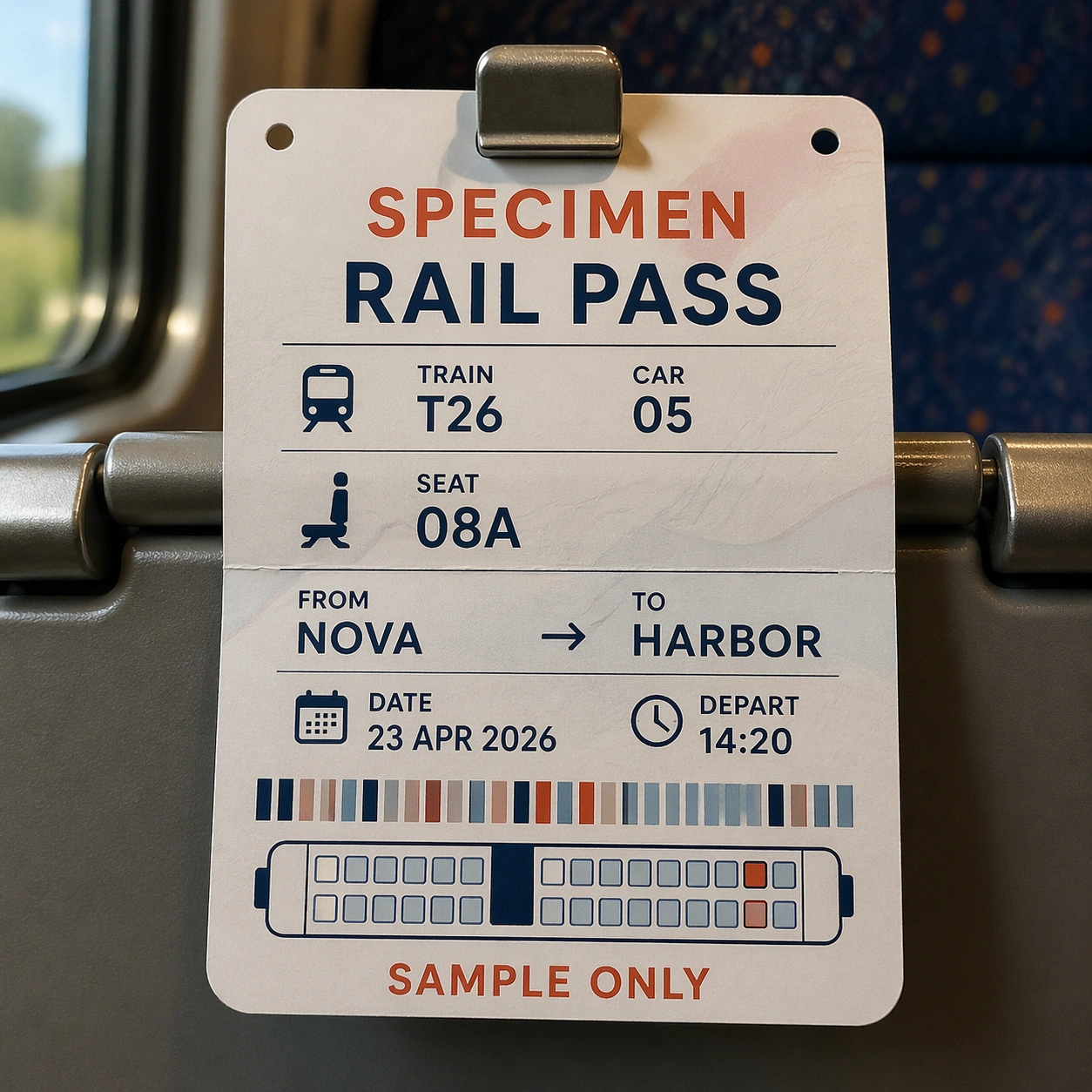
A square photorealistic image of a fictional rail seat reservation card clipped to a train seatback tray. The card is printed on satin paper with rounded corners, tiny punched holes, and a folded crease. Behind it, the train interior is softly blurred: fabric seat, window light, and a metal tray hinge. The camera is front-facing so the text plane is readable.

Subject:
Create a fictional rail reservation specimen. The exact readable text should include: SPECIMEN, RAIL PASS, TRAIN T26, CAR 05, SEAT 08A, FROM NOVA, TO HARBOR, DATE 23 APR 2026, DEPART 14:20, SAMPLE ONLY. Add a decorative non-scannable barcode-like strip and a simple carriage seat diagram made of rectangles. Do not include real railway operators, real station names, passenger name, ticket number, QR code, payment data, or terms and conditions.

Important details:
The test is transit-document realism in context: crisp ticket typography, small icon alignment, paper thickness, punched holes, clip shadow, mild paper bend, and believable train-seat materials. The reservation must look product-real but clearly fictional and non-operational. Keep the specified route and seat fields readable; all other background marks should be abstract texture. No real transport brand identity should appear.

Use case:
Pseudo-Real Documents single study 8/8, testing readable rail reservation layout, satin card material, transport context, and safe fictional ticket design.

Constraints:
No readable text except the specified rail reservation strings, no watermark, no logos, preserve exact 1:1 aspect ratio, no real rail company, no real station names, no passenger name, no ticket number, no QR code, no scannable barcode, no payment data, no extra schedule text.
Cómo usar
- Copia el prompt original completo, incluidos los parámetros.
- Adapta el tema, el texto y la composición a tus necesidades.
- Usa una herramienta externa compatible; comprueba el acceso y el resultado.
Antes de empezar
- Comprueba si necesita una imagen de referencia. La compatibilidad no demuestra qué modelo generó el ejemplo.
- Revisa nombres, cifras y textos; el resultado puede variar entre versiones del modelo.