Documento original
GPT Image 2 · en
Scene:
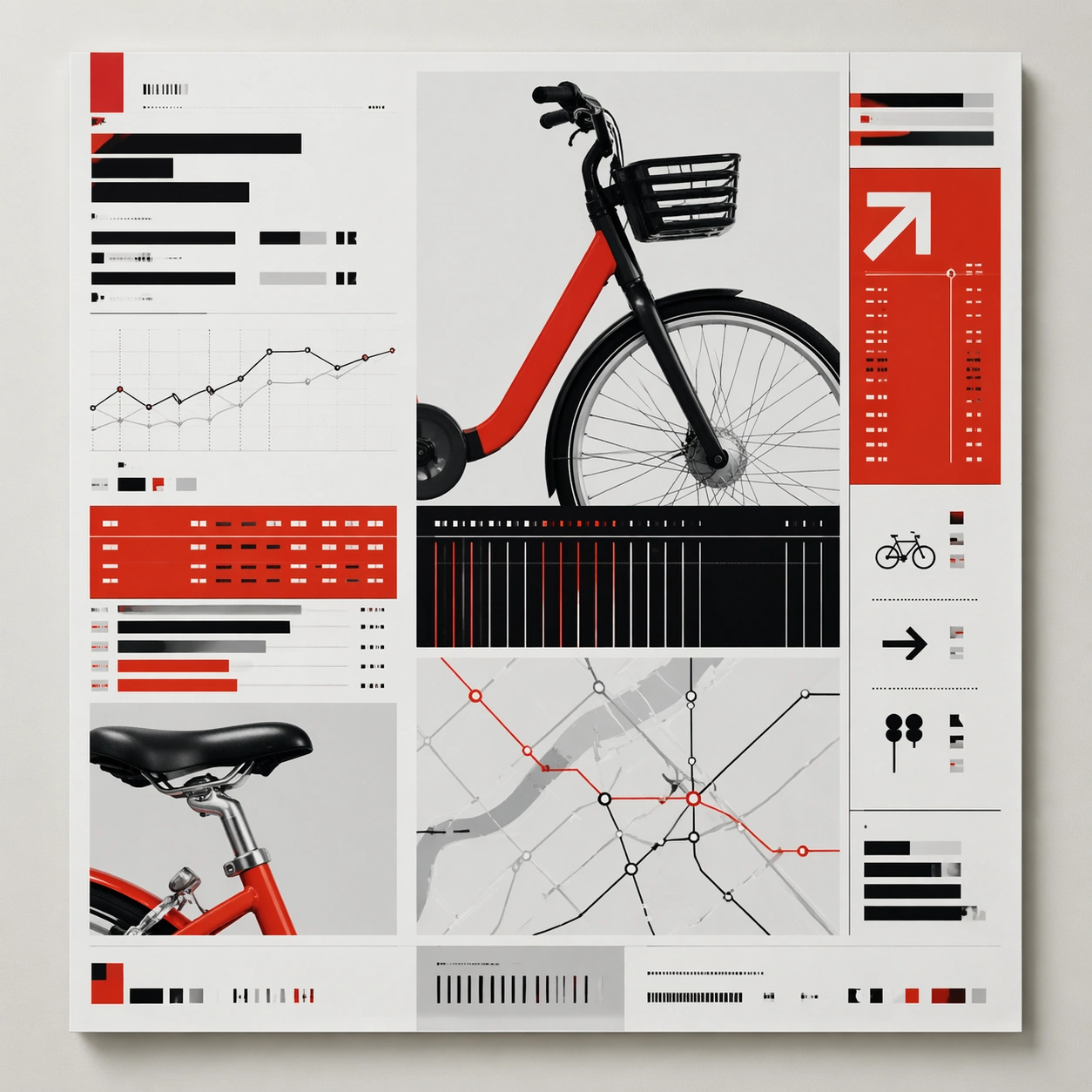
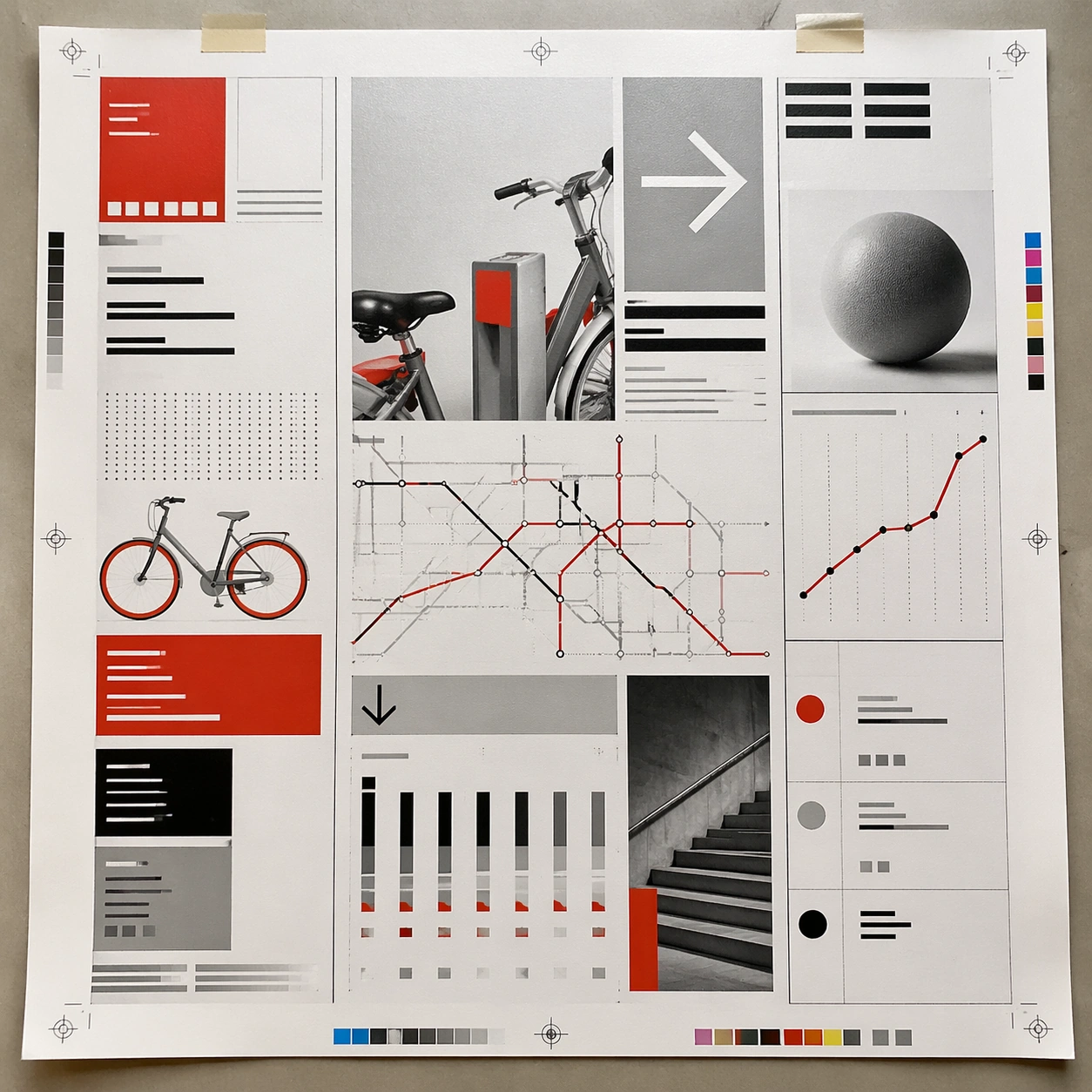
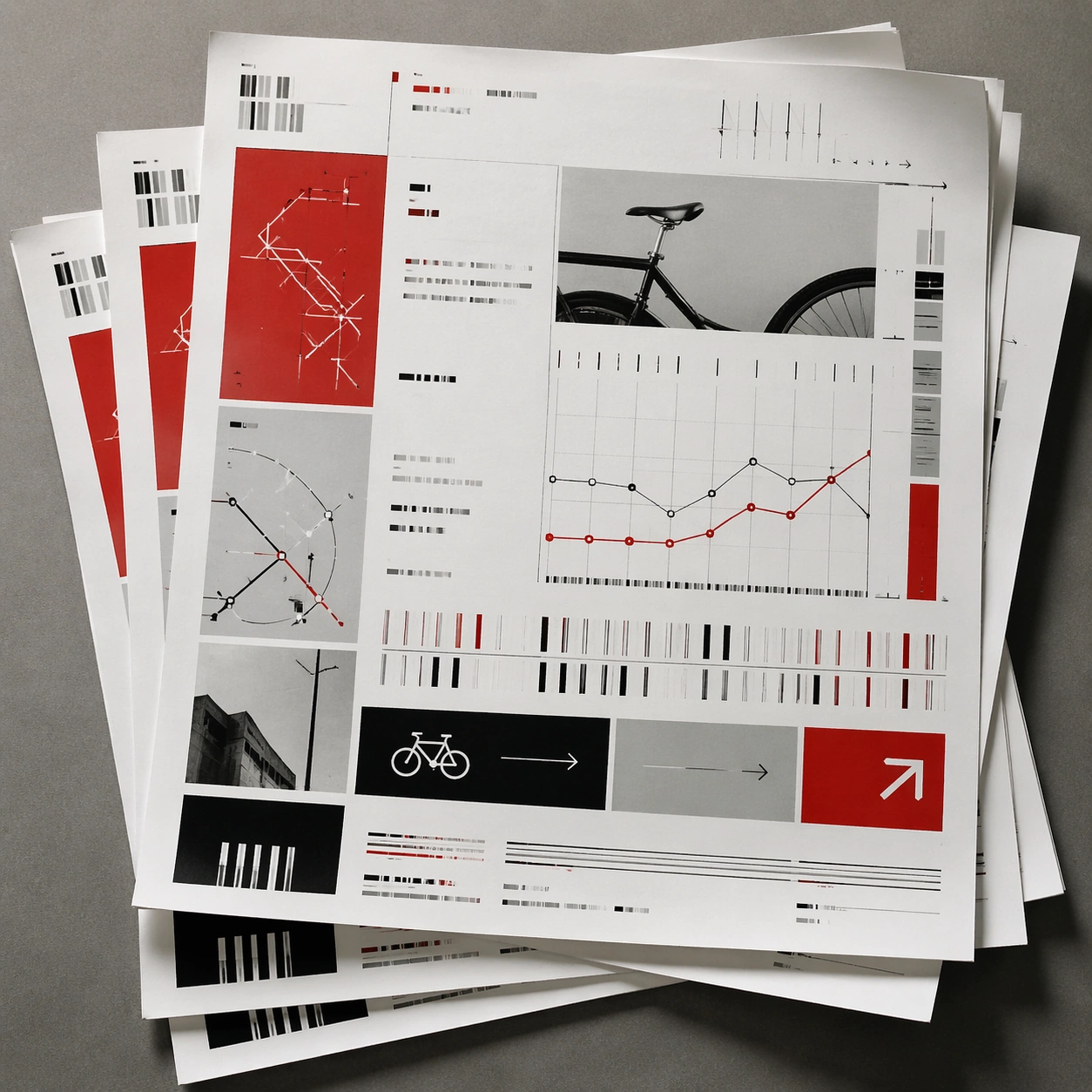
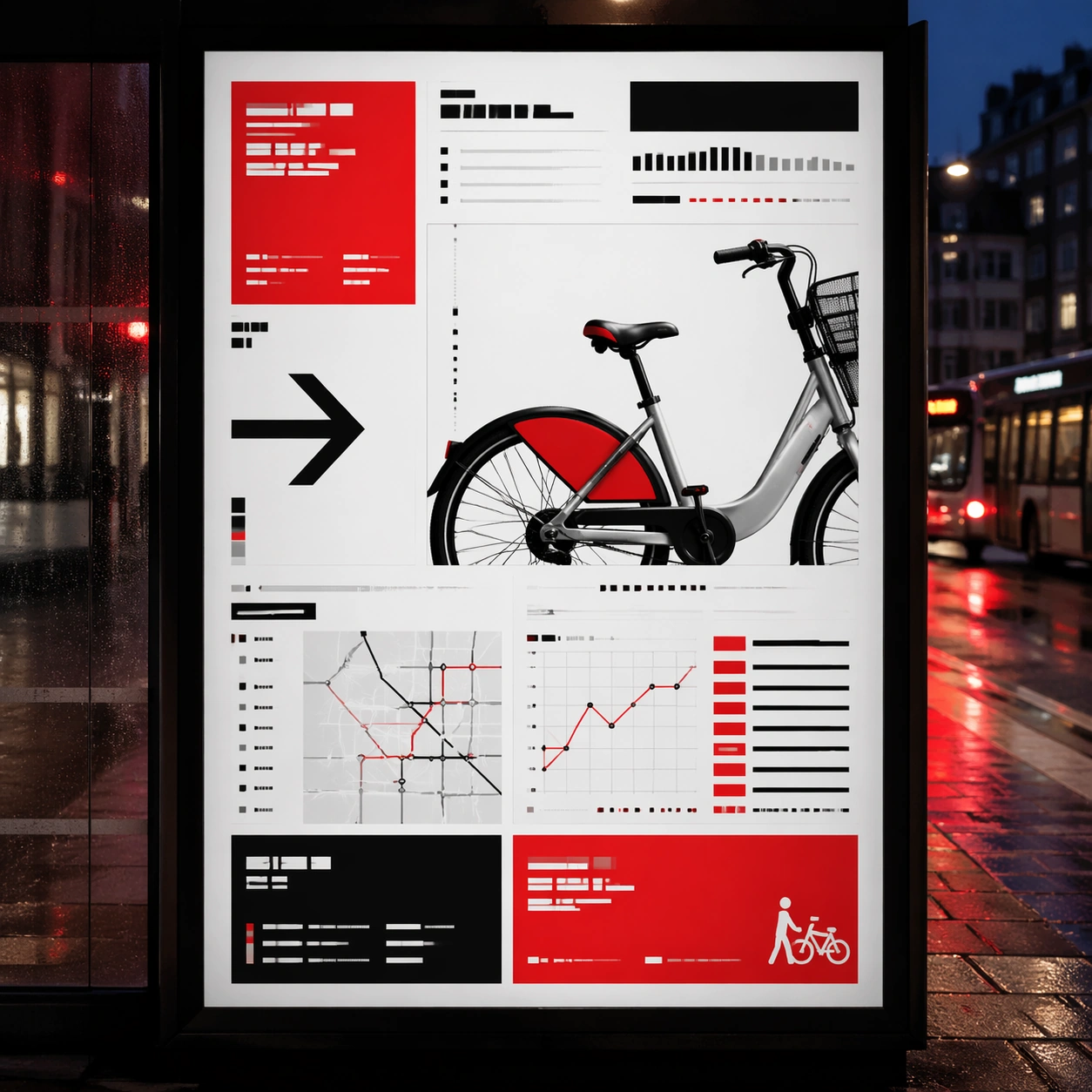
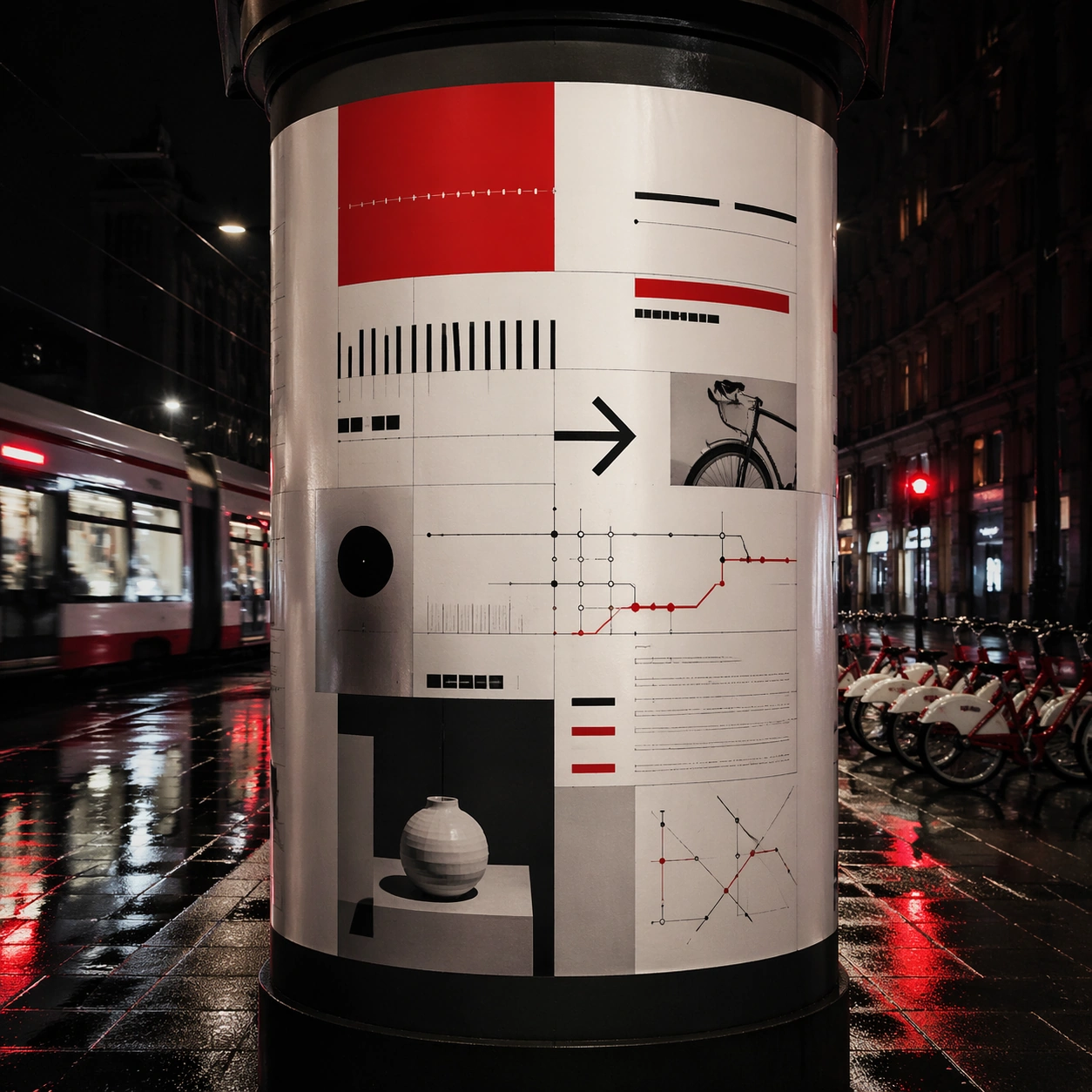
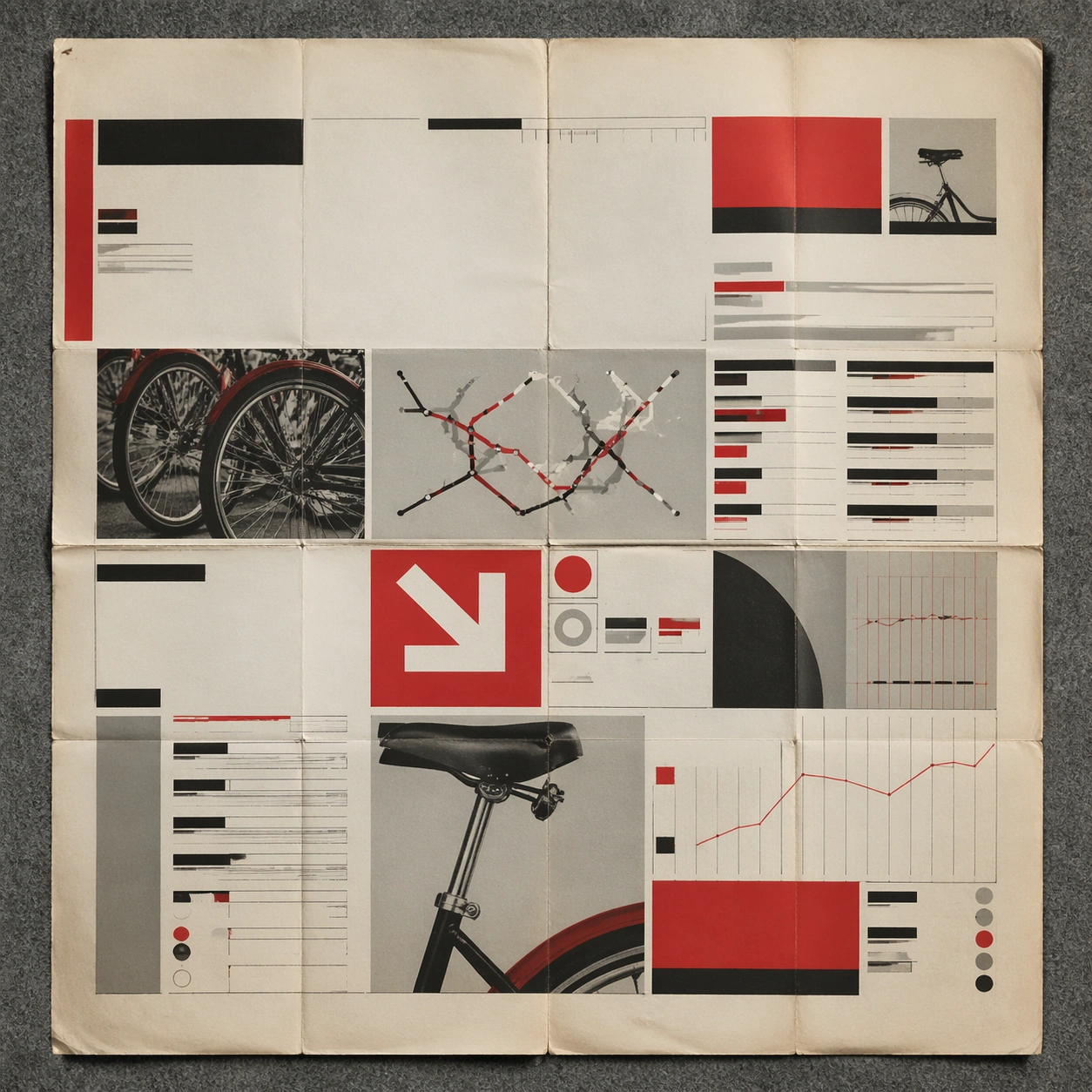
A square conservation-table view of a vintage poster laid on gray felt under raking light, with visible fold lines, softened corners, and subtle aging that still preserves the integrity of the image. The poster should express rigorous Swiss grid design with modular columns, disciplined margins, quiet asymmetry, and large white fields, using red, black, white, graphite gray, and occasional cool silver paper tone and a tactile surface appropriate to the medium.

Subject:
Present the poster as an archive copy that has been stored, unfolded, and carefully documented, letting age and handling reveal how the design holds up across time. Use gallery objects, arrows, cropped still-life fragments, line charts, timetable bars, and alignment guides as the main visual ingredients, and organize them with grotesk typographic blocks, rules, and index markers rendered as non-readable layout forms. For the contemporary-subject axis, thread in shared bicycles, transit maps, and civic information cues reduced into a severe exhibition grid. The poster must feel like an original design object rather than a reproduction of any known work.

Important details:
Aging must stay believable rather than theatrical: slight yellowing, fold memory, edge wear, and pigment variation should support the historical or crafted feeling of the style. Preserve baseline precision, invisible column logic, severe spacing discipline, and crisp edge hierarchy. Keep every letterform abstract and non-readable, as if it were a typographic texture rather than language. Make the style unmistakable through composition, palette, surface behavior, and symbolic compression. no centered symmetry, no distressed paper, no decorative ornament, no playful doodles.

Use case:
Swiss Grid single study 5/9, testing archival endurance and age character.

Constraints:
No readable text, no watermark, no logos, preserve exact 1:1 aspect ratio, no copyrighted characters, no real brand marks, no QR codes, no interface chrome, no accidental gibberish lettering.
Cómo usar
- Copia el prompt original completo, incluidos los parámetros.
- Adapta el tema, el texto y la composición a tus necesidades.
- Usa una herramienta externa compatible; comprueba el acceso y el resultado.
Antes de empezar
- Comprueba si necesita una imagen de referencia. La compatibilidad no demuestra qué modelo generó el ejemplo.
- Revisa nombres, cifras y textos; el resultado puede variar entre versiones del modelo.