Documento original
GPT Image 2 · en
Scene:
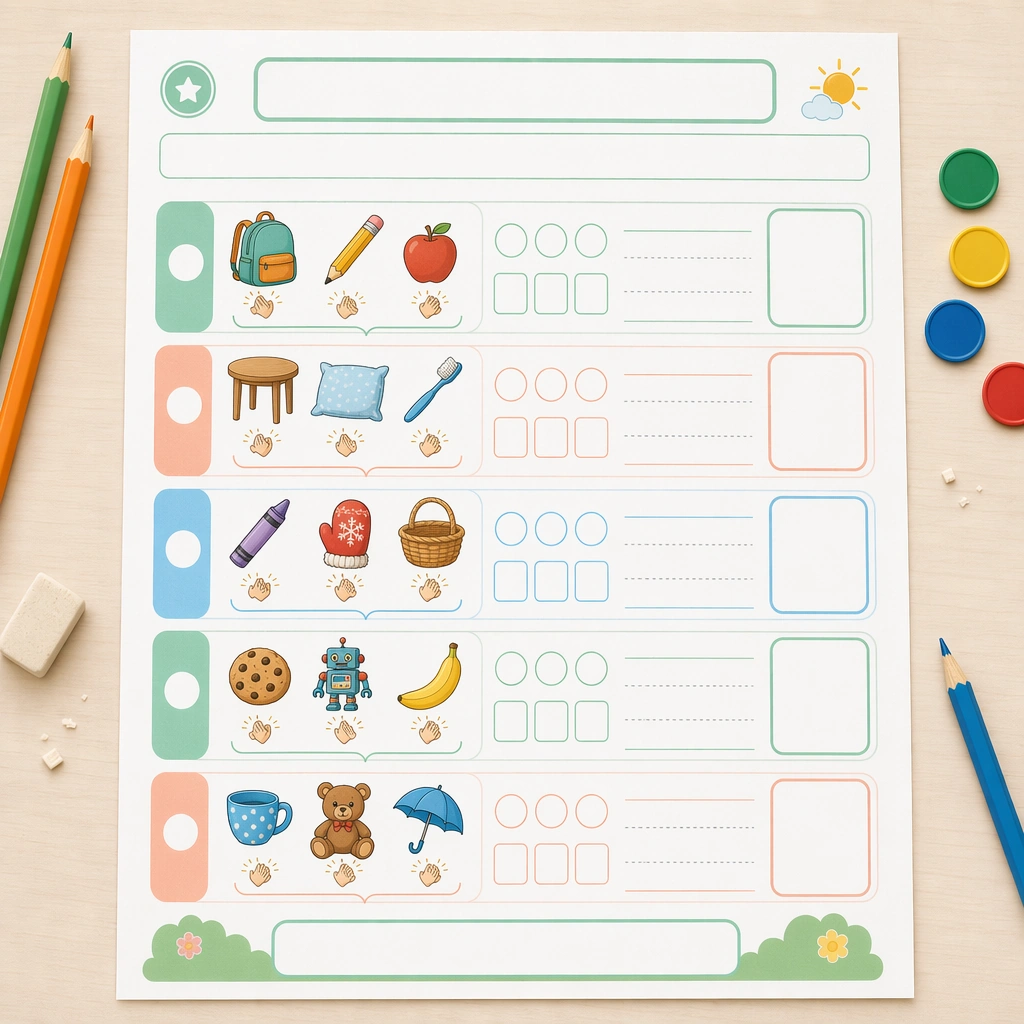
Render the identical square print-proof photograph again, with the same desk crop, page scale, and soft classroom lighting. It should appear as another sheet from the same literacy unit, reviewed by a curriculum designer for consistency across a printable packet and digital download bundle. Keep the square frame balanced, calm, and production-ready so the asset can serve gallery review, research comparison, and real educational delivery at the same time.

Subject:
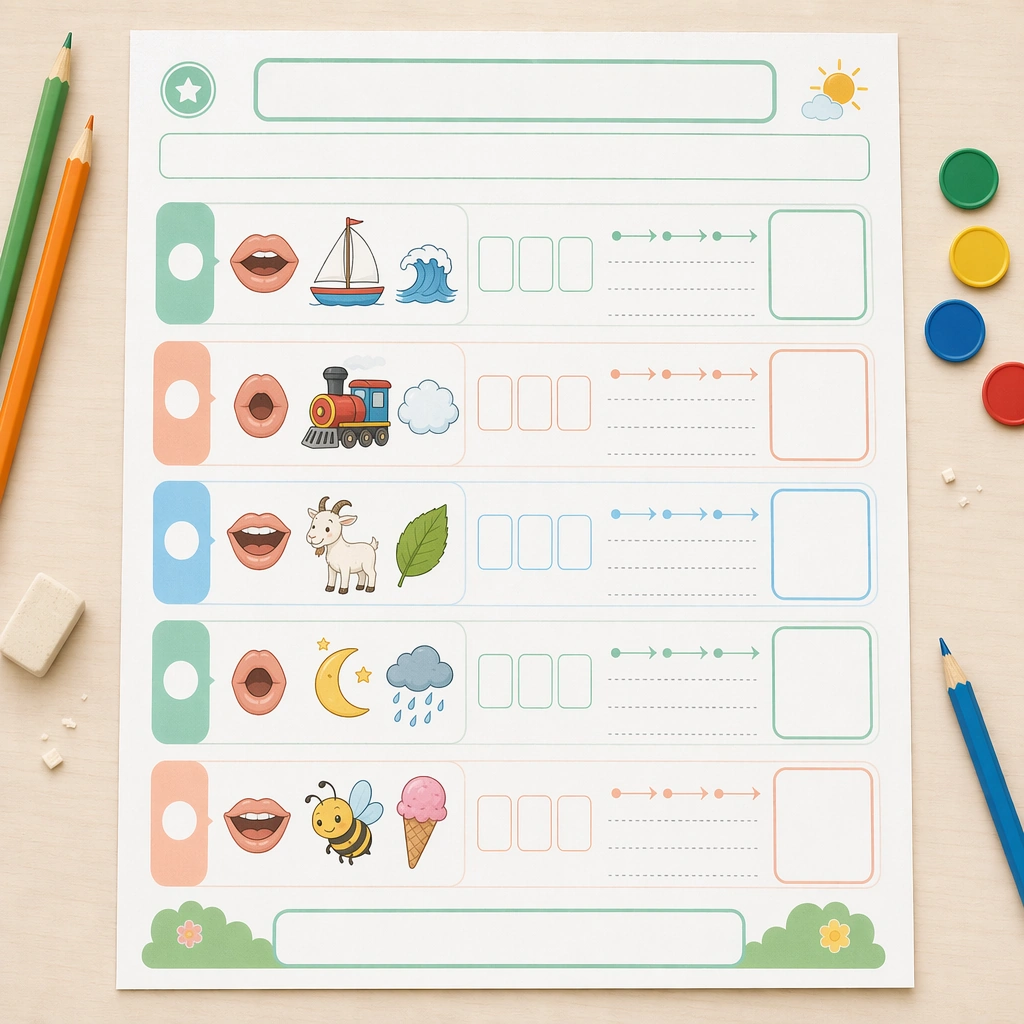
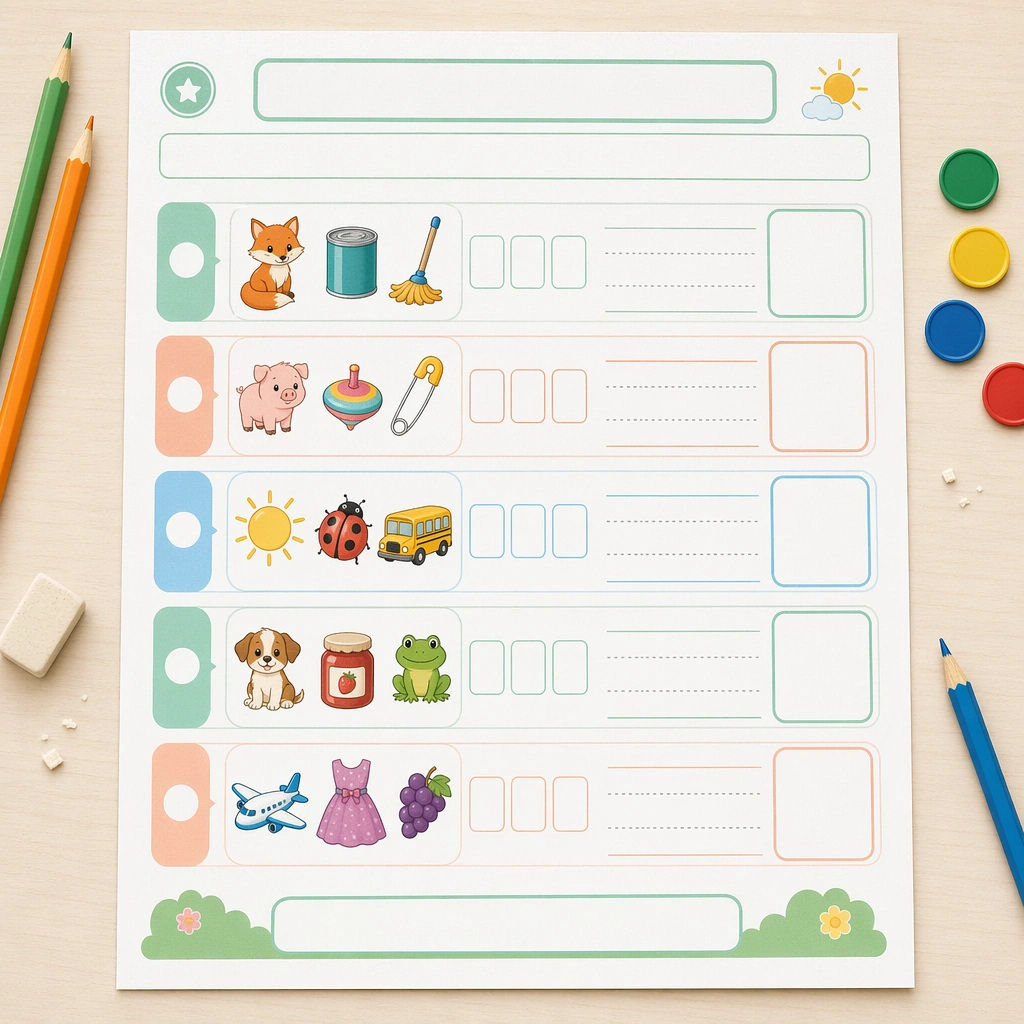
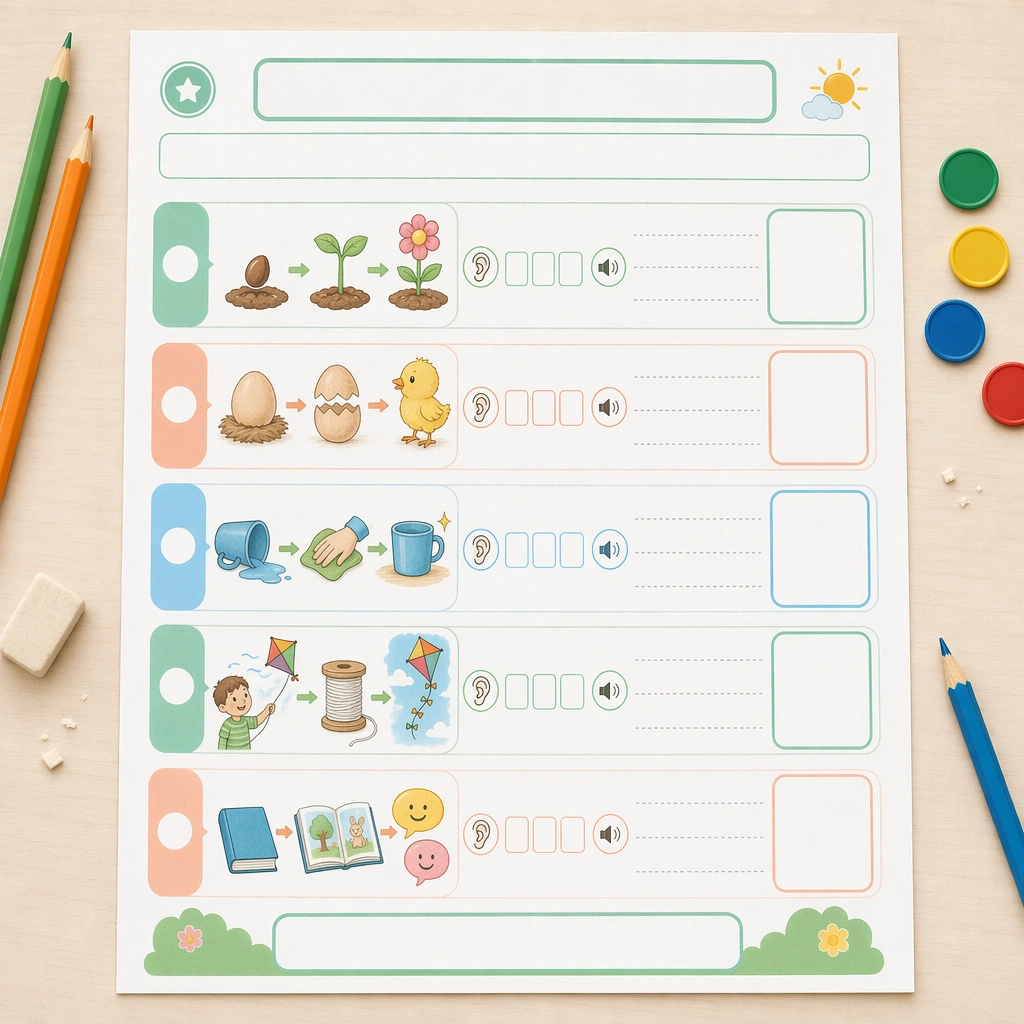
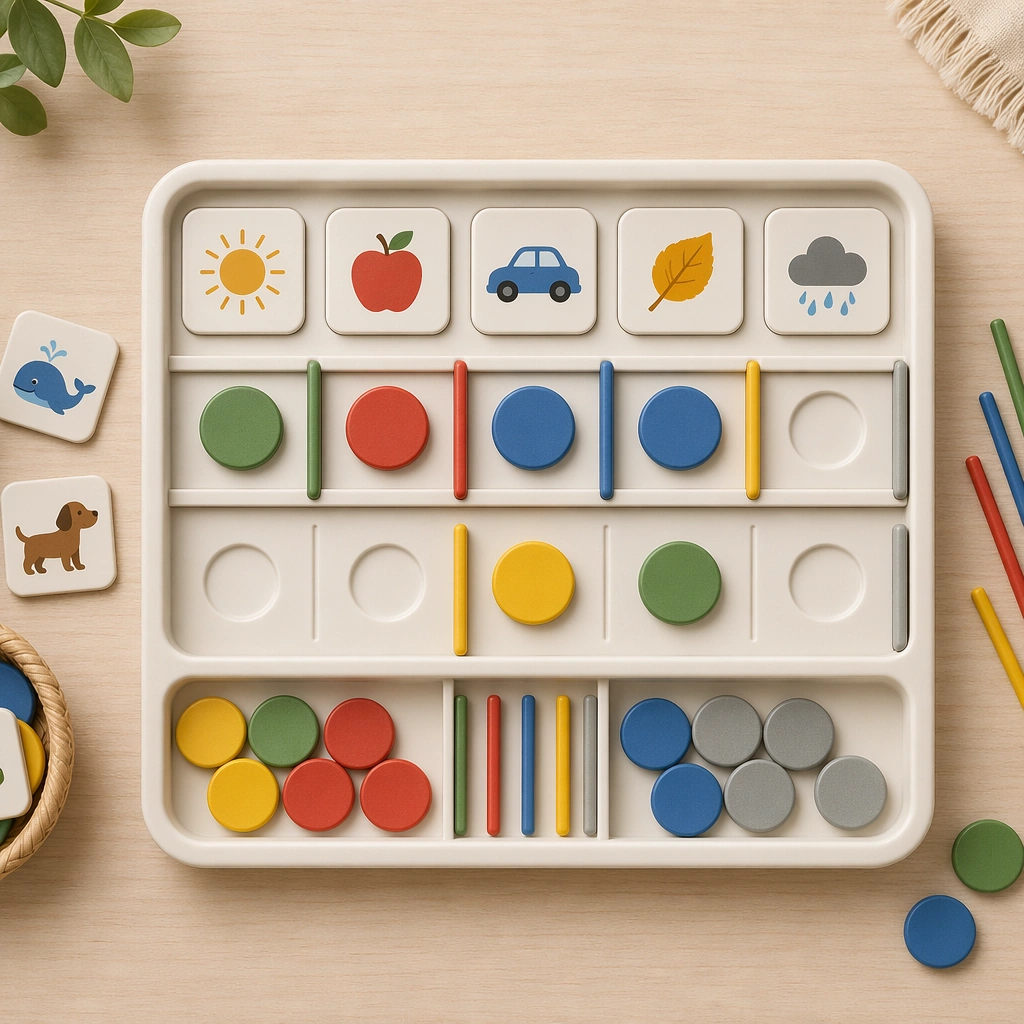
Build the page around clapping and segmentation cues: picture cards, empty beat circles, step markers, hand icons, and grouping brackets that help children feel parts of a spoken word without relying on actual text. Keep the picture support lively and age-appropriate, with familiar school and home objects. The subject matter should feel intentionally selected for a coherent curriculum family rather than like a random decorative assortment.

Important details:
The same system constraints must hold: matching margins, rounded activity blocks, pastel guidance colors, and blank instruction areas. The image should communicate pacing, repetition, and child accessibility through graphic rhythm alone, proving the worksheet family can handle multiple exercise types. Preserve the same worksheet margins, answer-box scale, icon cadence, divider rhythm, and blank title bars from the reference sheet. Use variation only in the teaching content, supporting props, and scene-specific mood while preserving the core visual system exactly.

Use case:
Phonics and Reading Practice Sheet series study 3/4, syllable clap sheet.

Constraints:
No readable text, no watermark, no logos, preserve exact 1:1 aspect ratio, no readable letters, no real words, no teacher handwriting, no messy desk clutter, no adult branding, no distorted paper edges.
Cómo usar
- Copia el prompt original completo, incluidos los parámetros.
- Adapta el tema, el texto y la composición a tus necesidades.
- Usa una herramienta externa compatible; comprueba el acceso y el resultado.
Antes de empezar
- Comprueba si necesita una imagen de referencia. La compatibilidad no demuestra qué modelo generó el ejemplo.
- Revisa nombres, cifras y textos; el resultado puede variar entre versiones del modelo.