Documento original
GPT Image 2 · en
Scene:
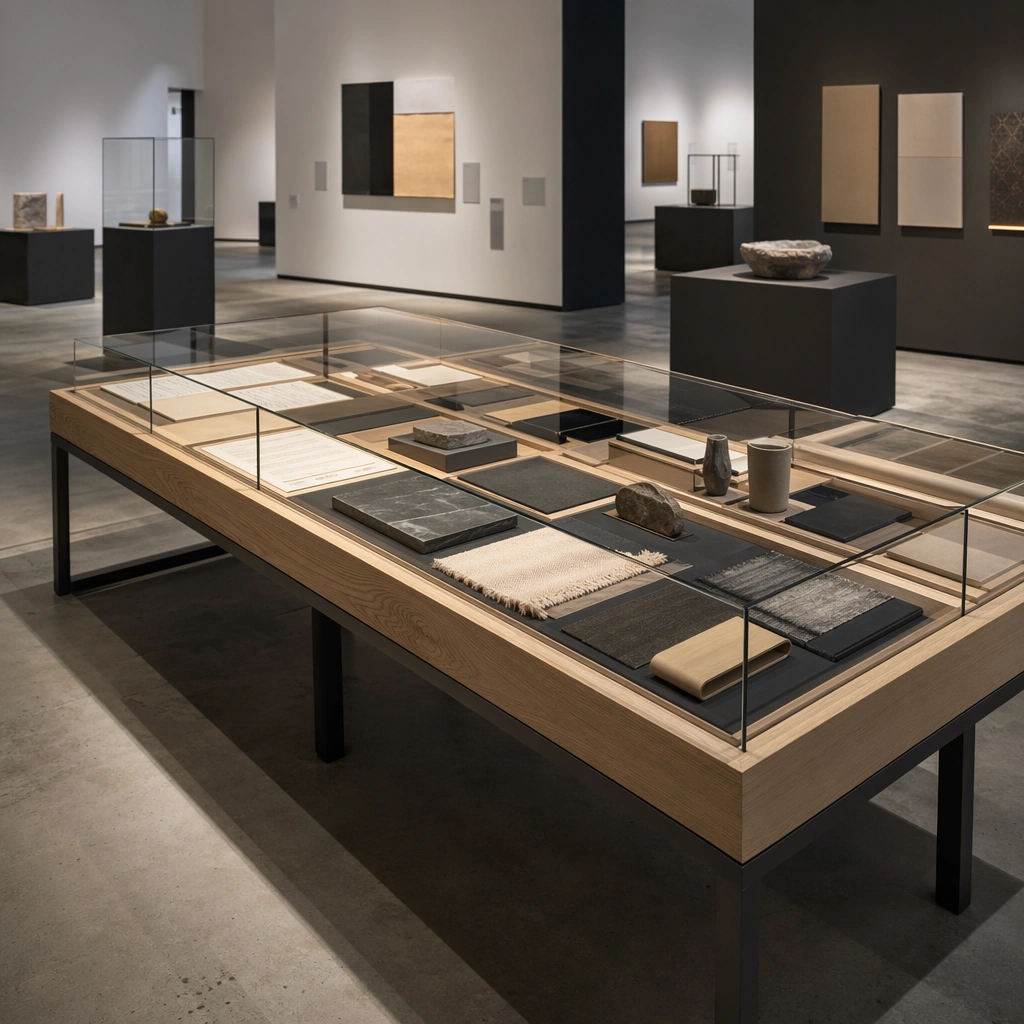
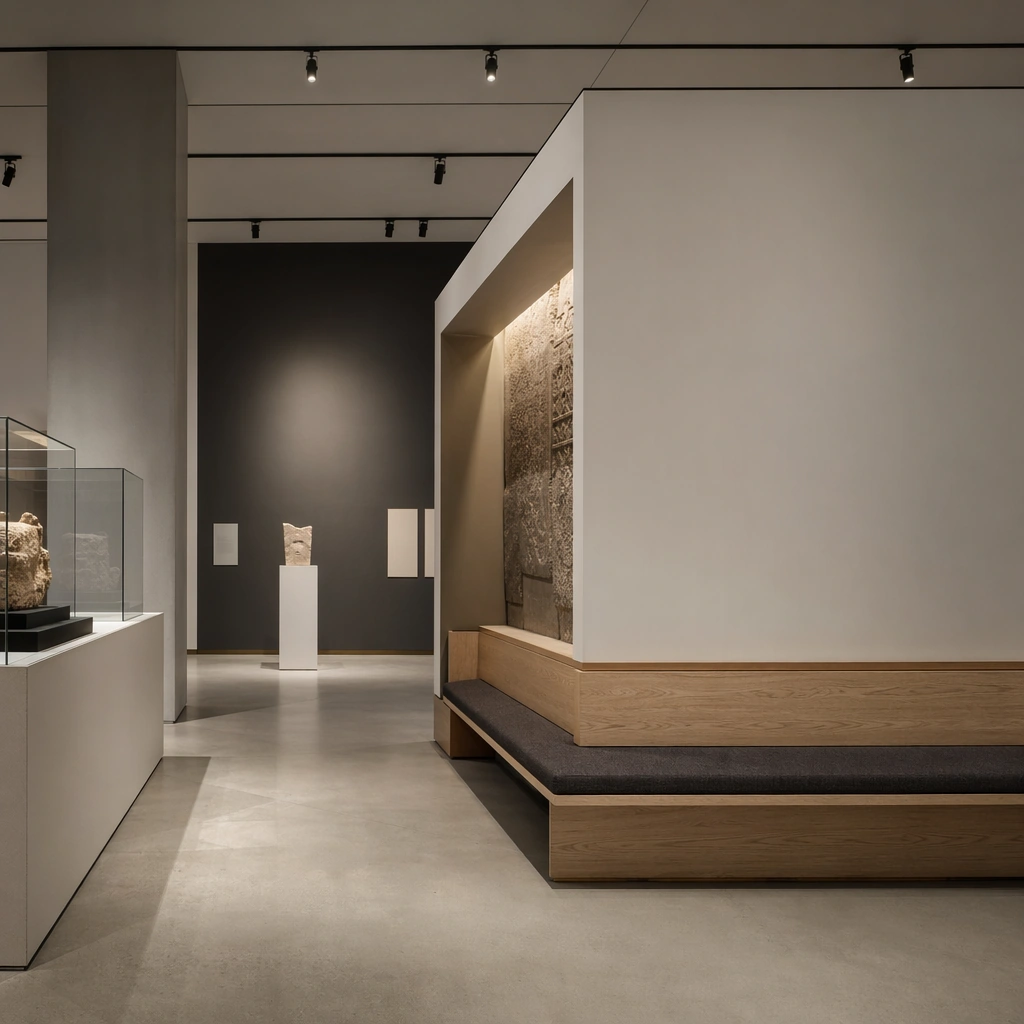
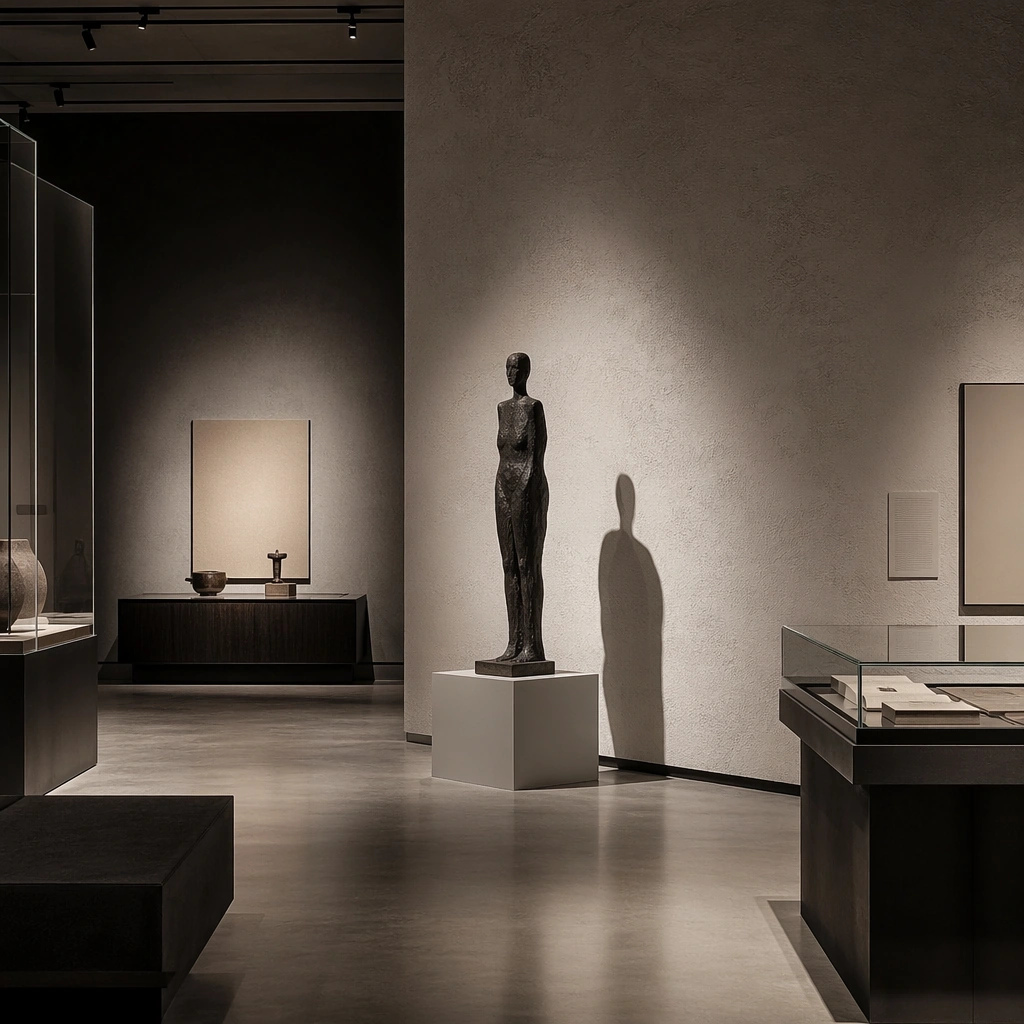
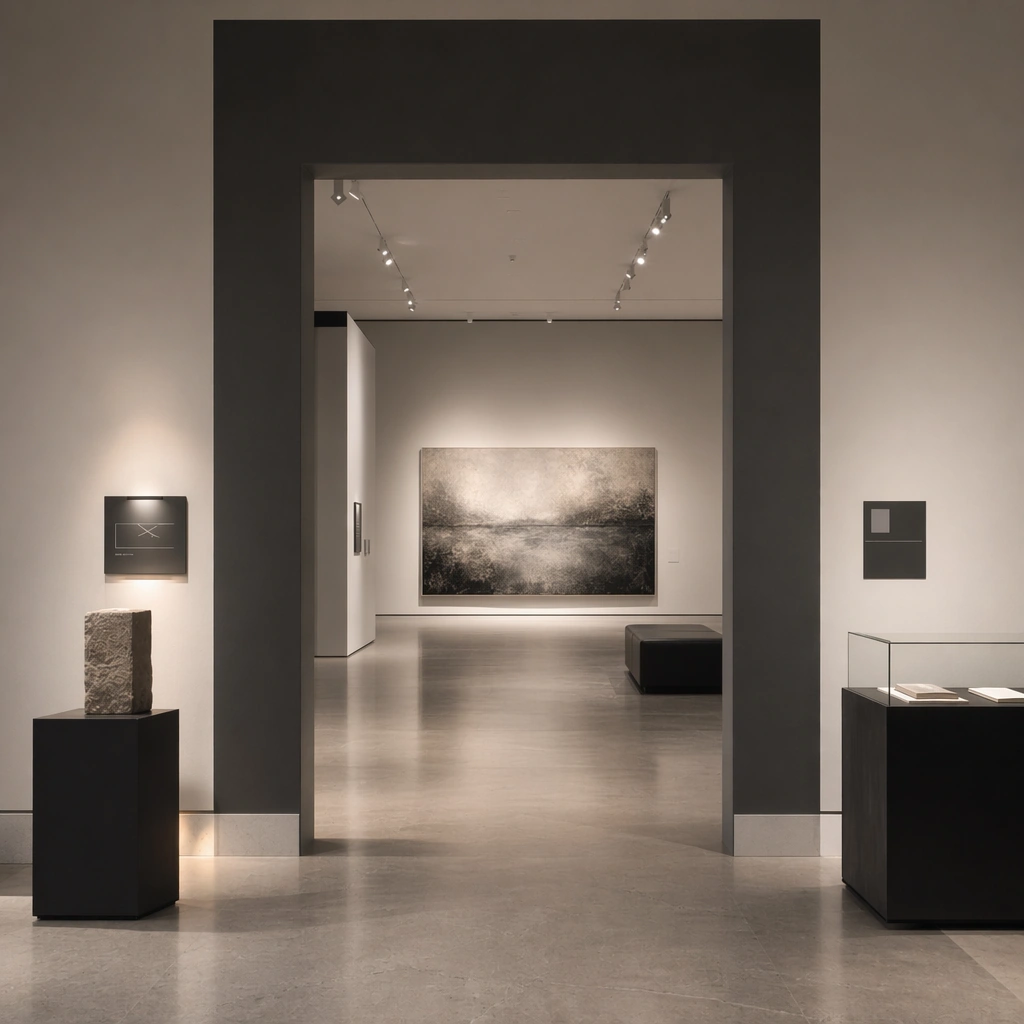
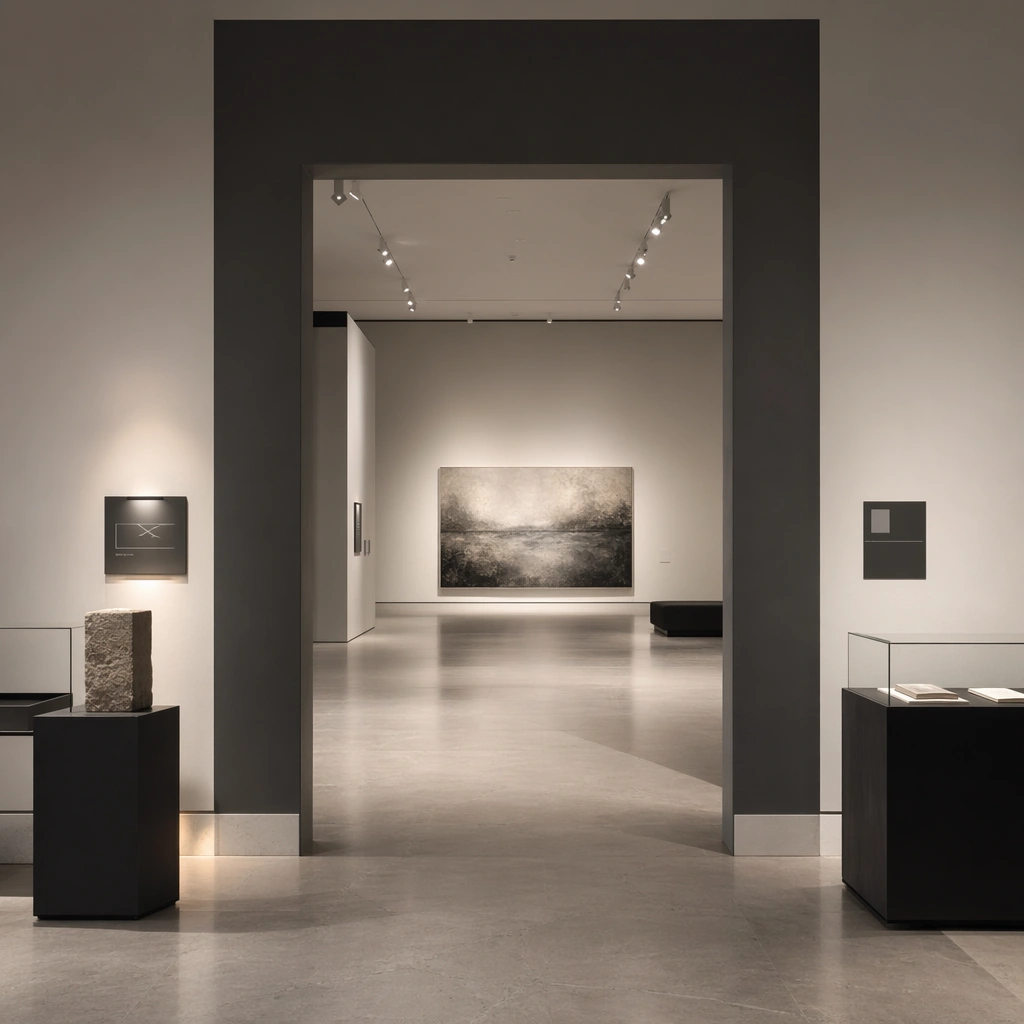
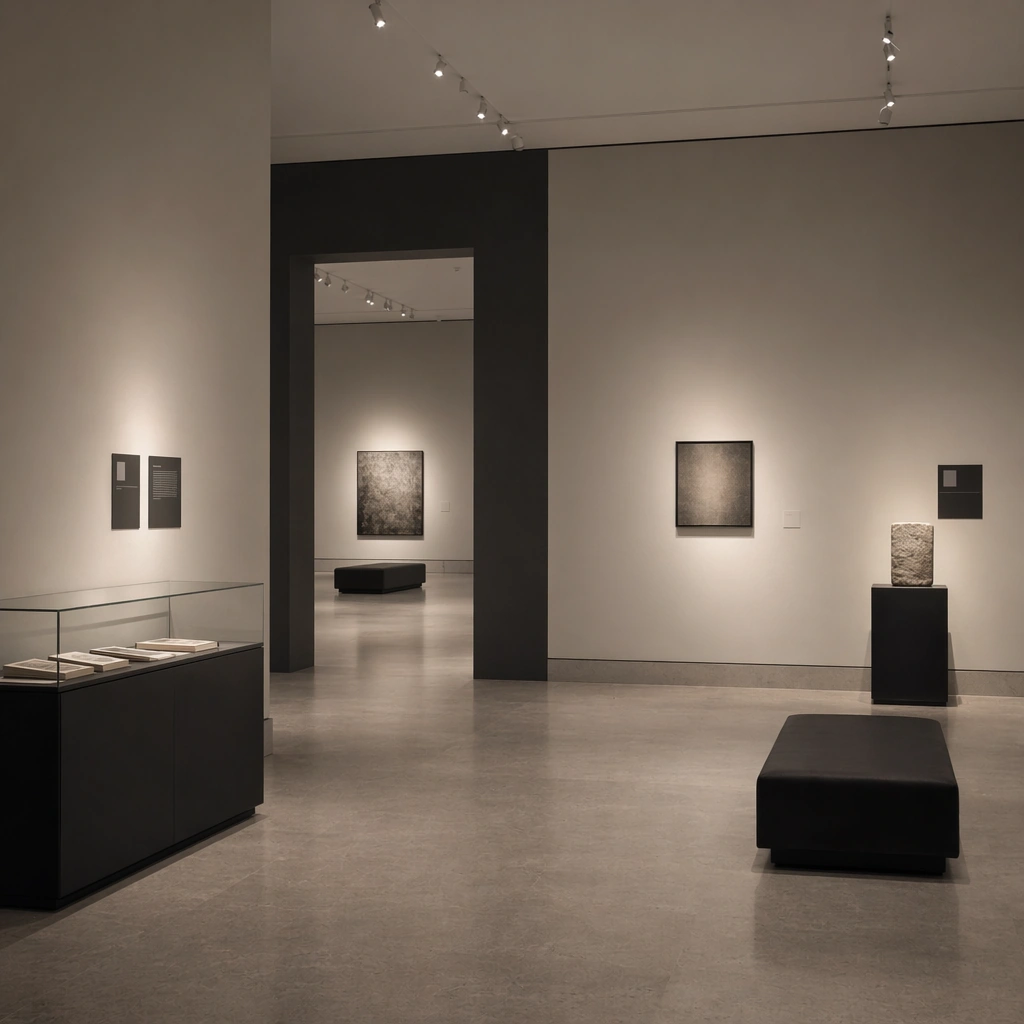
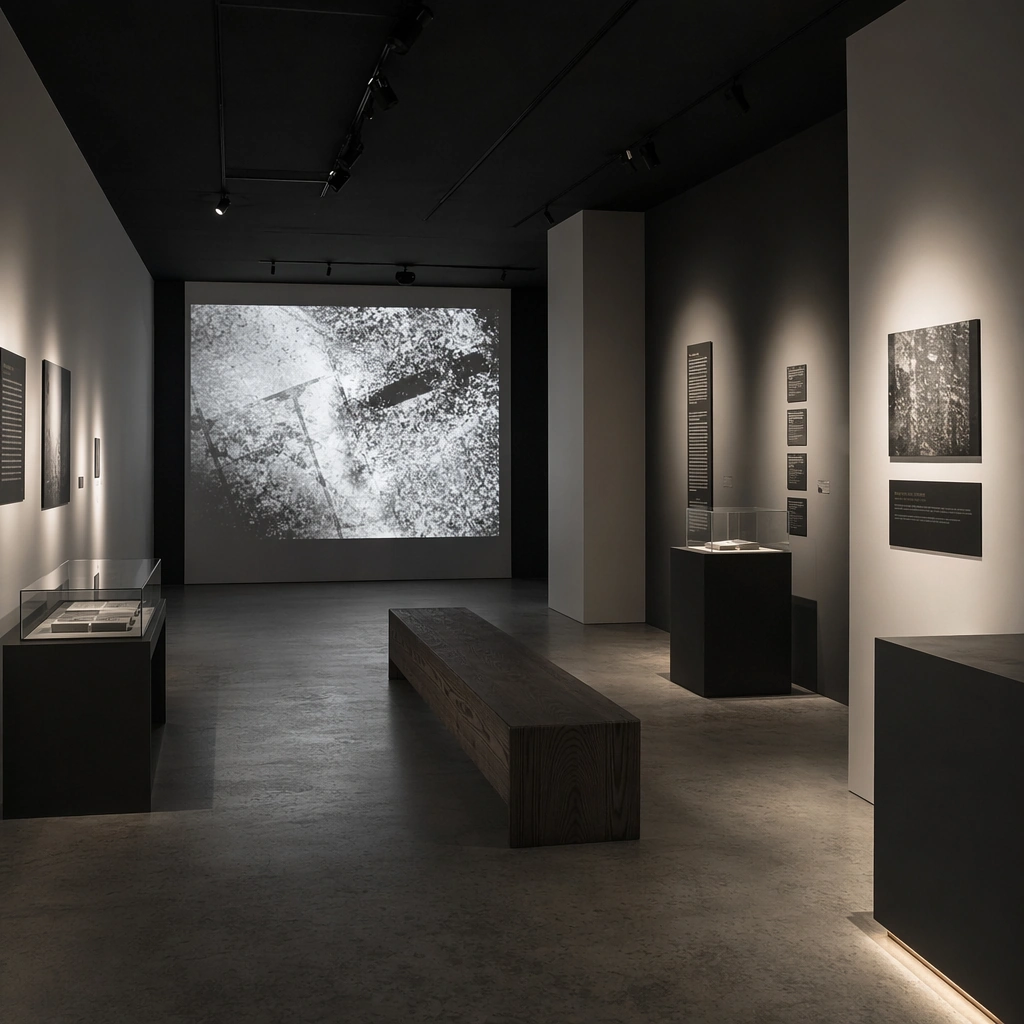
Create a square standalone support study for Gallery Exhibition Spatial Sequence. Use a dark projection room with bench seating and soft image glow on walls and frame it like a premium commercial still or design-editorial crop with clear focal hierarchy, disciplined perspective, and enough breathing room for the materials and objects to read at both thumbnail and full size. Keep chalk white, charcoal gray, pale concrete, soft shadow black, and controlled spotlight warmth as the tonal guide so the image still belongs to the same theme family, and light the scene in a controlled way that emphasizes texture, edge quality, and authored atmosphere over spectacle.

Subject:
Show a gallery and exhibition environment with disciplined white and charcoal volumes, precise spotlighting, plinths, archival display furniture, abstract wall-label zones, and carefully paced emptiness. In this support study, focus on light spill, acoustic darkness, and immersive sequencing. The image should work independently, yet it must still feel like it belongs to the same broader world of Gallery Sequence. Make the space, props, and detailing useful for real campaign, editorial, or design-review contexts rather than moodboard abstraction.

Important details:
Carry forward the broader language of the wall-label rhythm, plinth geometry, spotlight language, floor material, and slow exhibition pacing, but let this image prove a new support surface or secondary deliverable. Material realism is essential: wood grain, metal sheen, glass edges, textiles, and stone should feel physically plausible and carefully art directed. Any graphic panels, labels, menus, packaging, or captions must stay abstract and unreadable. The overall result should feel reusable for museum campaigns, exhibition proposals, cultural editorials, and spatial storytelling decks, with enough structure that a creative or operations team could build on it.

Use case:
Gallery Exhibition Spatial Sequence single study 7/9, exploring support still for media-room planning in exhibitions.

Constraints:
No readable text, no watermark, no logos, preserve exact 1:1 aspect ratio, no crowds, no readable wall text, no security barriers, no colorful trade-show clutter, no random gifts-shop products, no recognizable movie frames.
Cómo usar
- Copia el prompt original completo, incluidos los parámetros.
- Adapta el tema, el texto y la composición a tus necesidades.
- Usa una herramienta externa compatible; comprueba el acceso y el resultado.
Antes de empezar
- Comprueba si necesita una imagen de referencia. La compatibilidad no demuestra qué modelo generó el ejemplo.
- Revisa nombres, cifras y textos; el resultado puede variar entre versiones del modelo.