Documento original
GPT Image 2 · en
Scene:
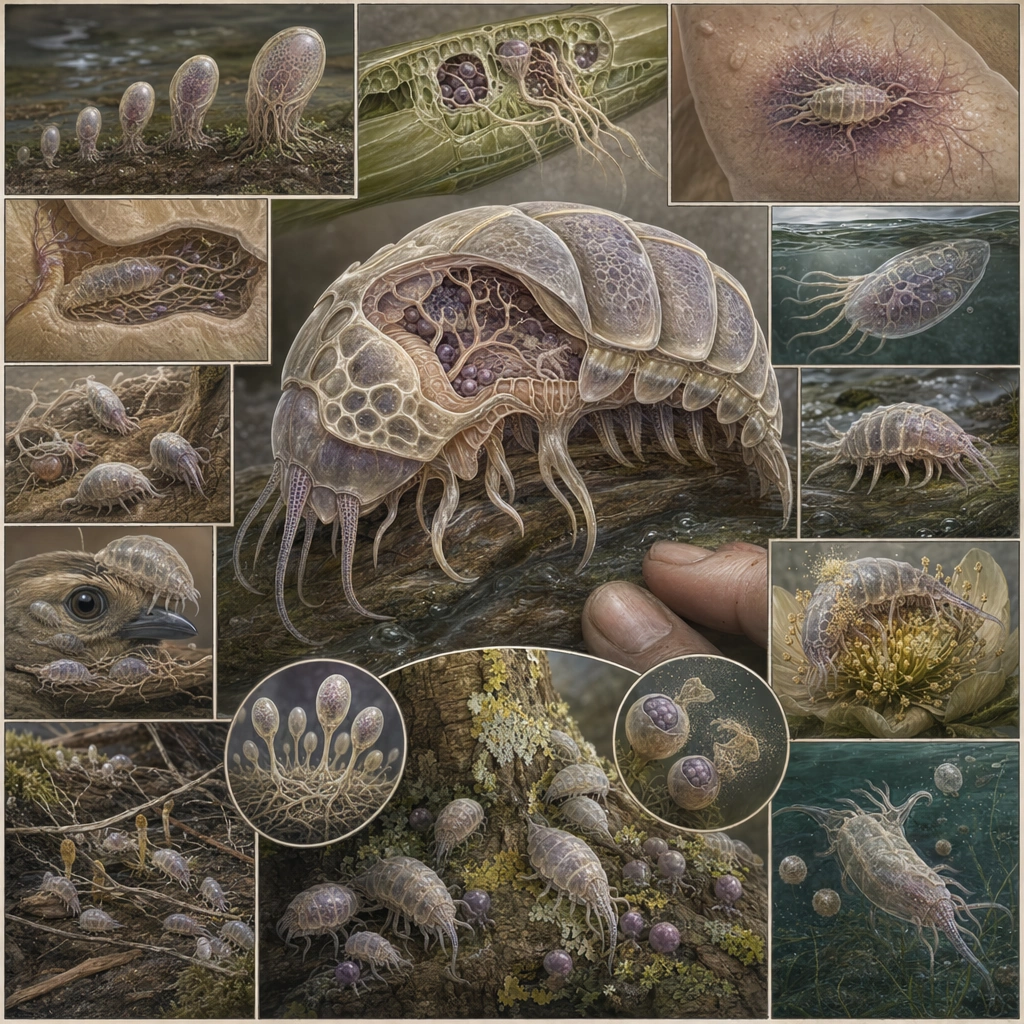
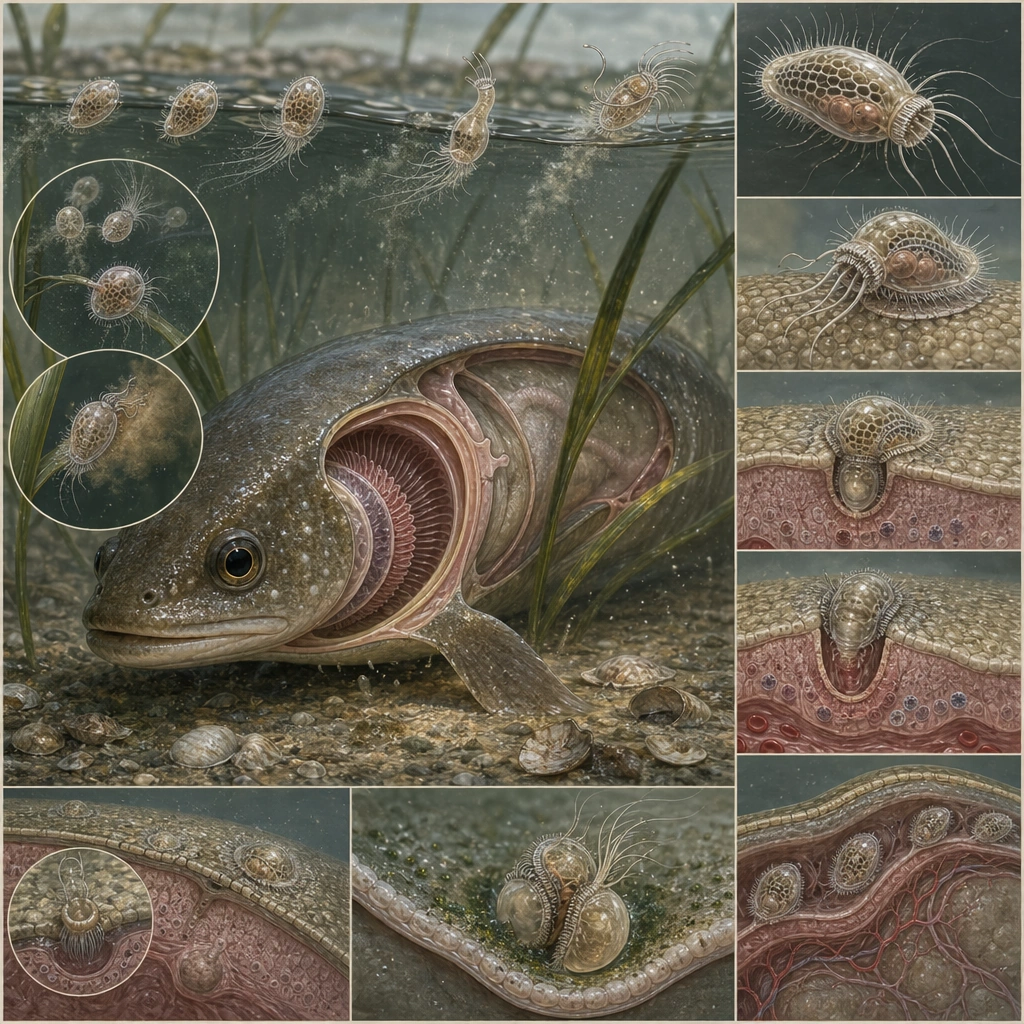
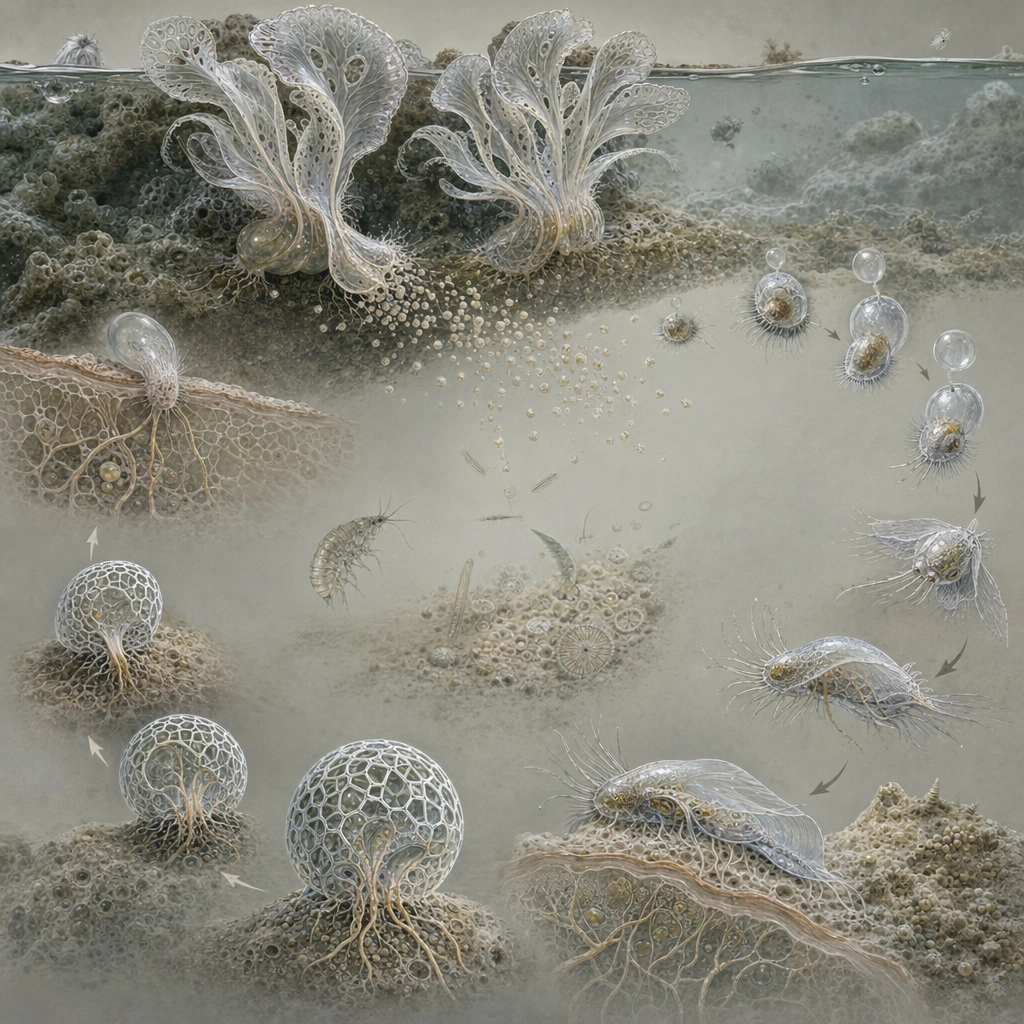
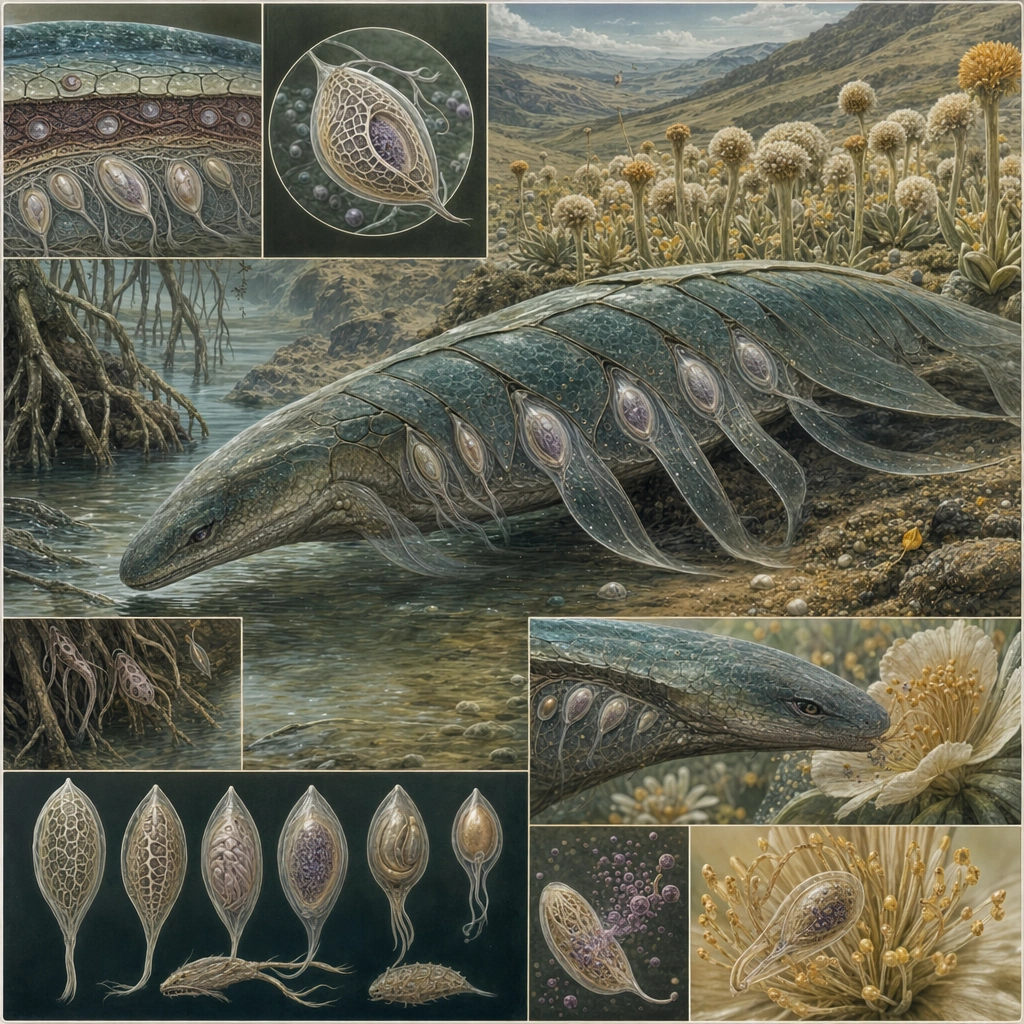
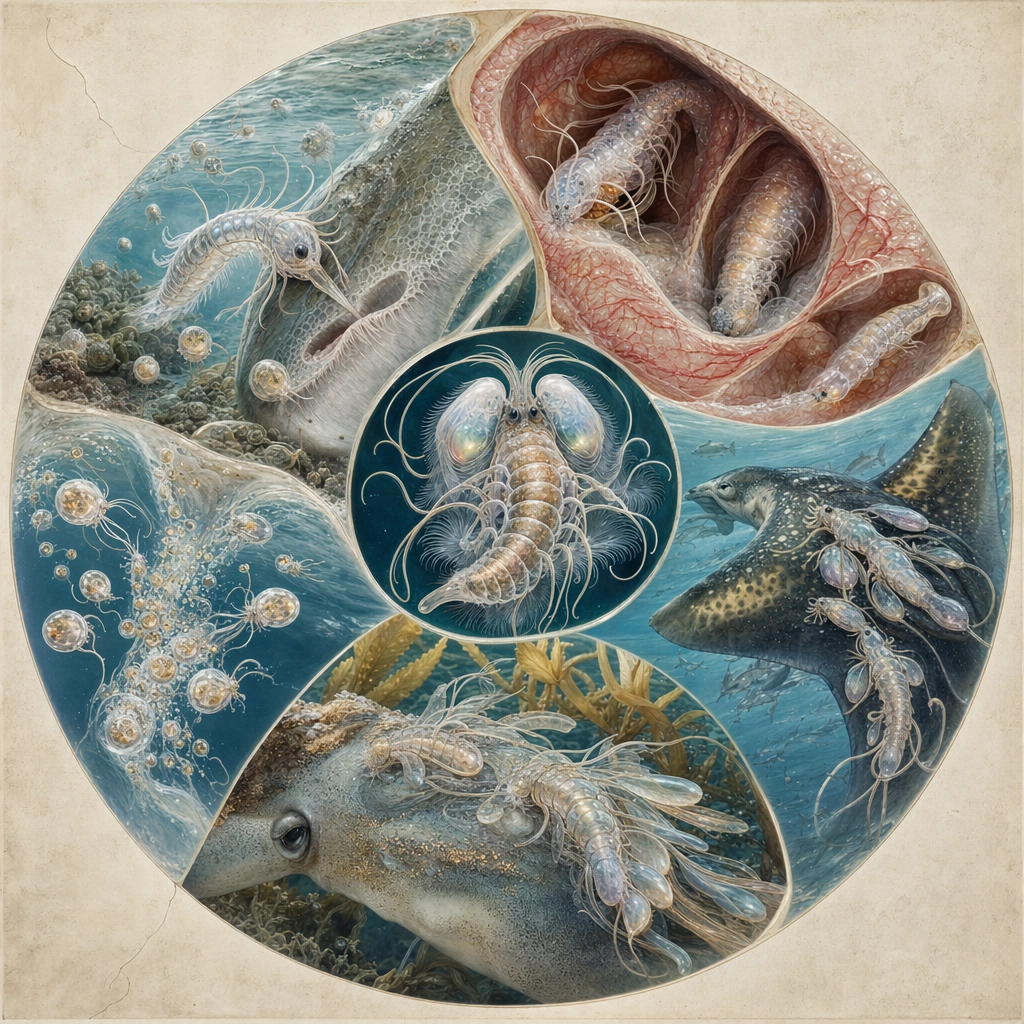
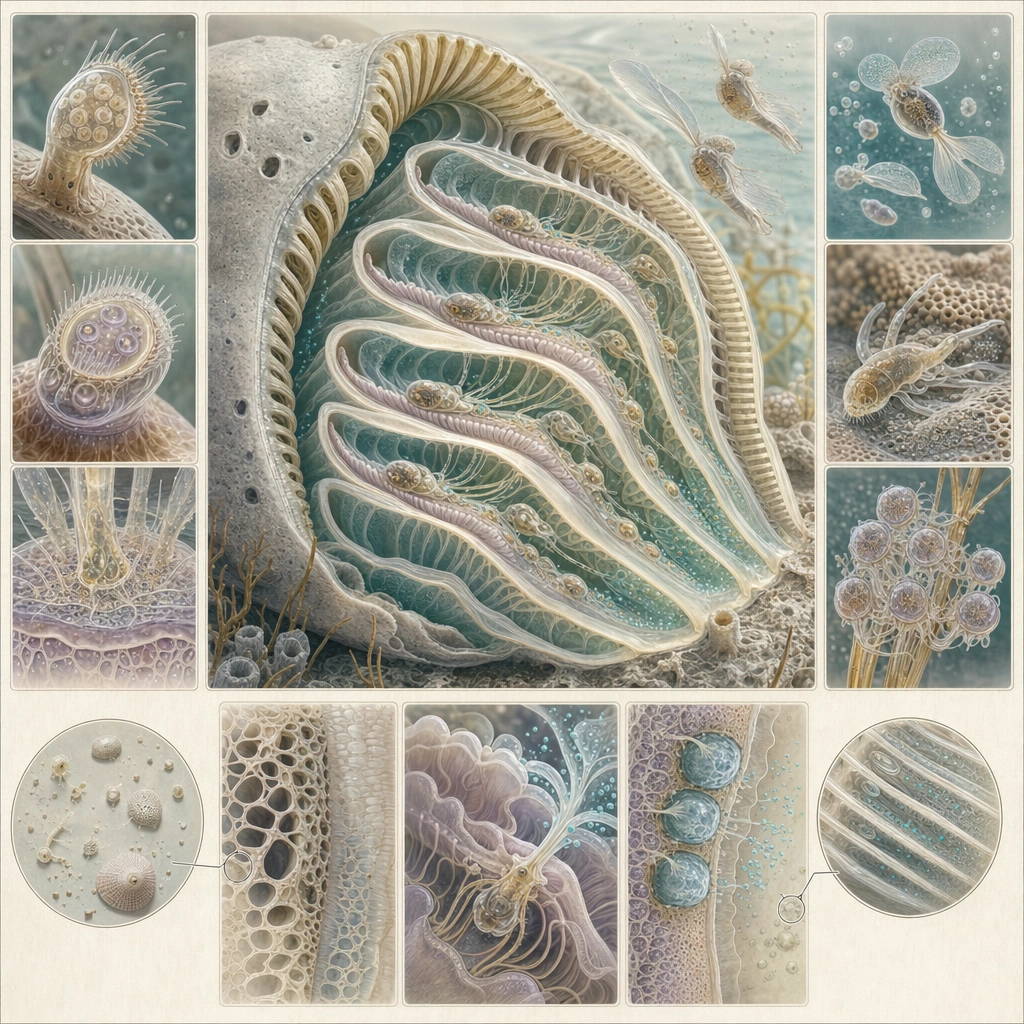
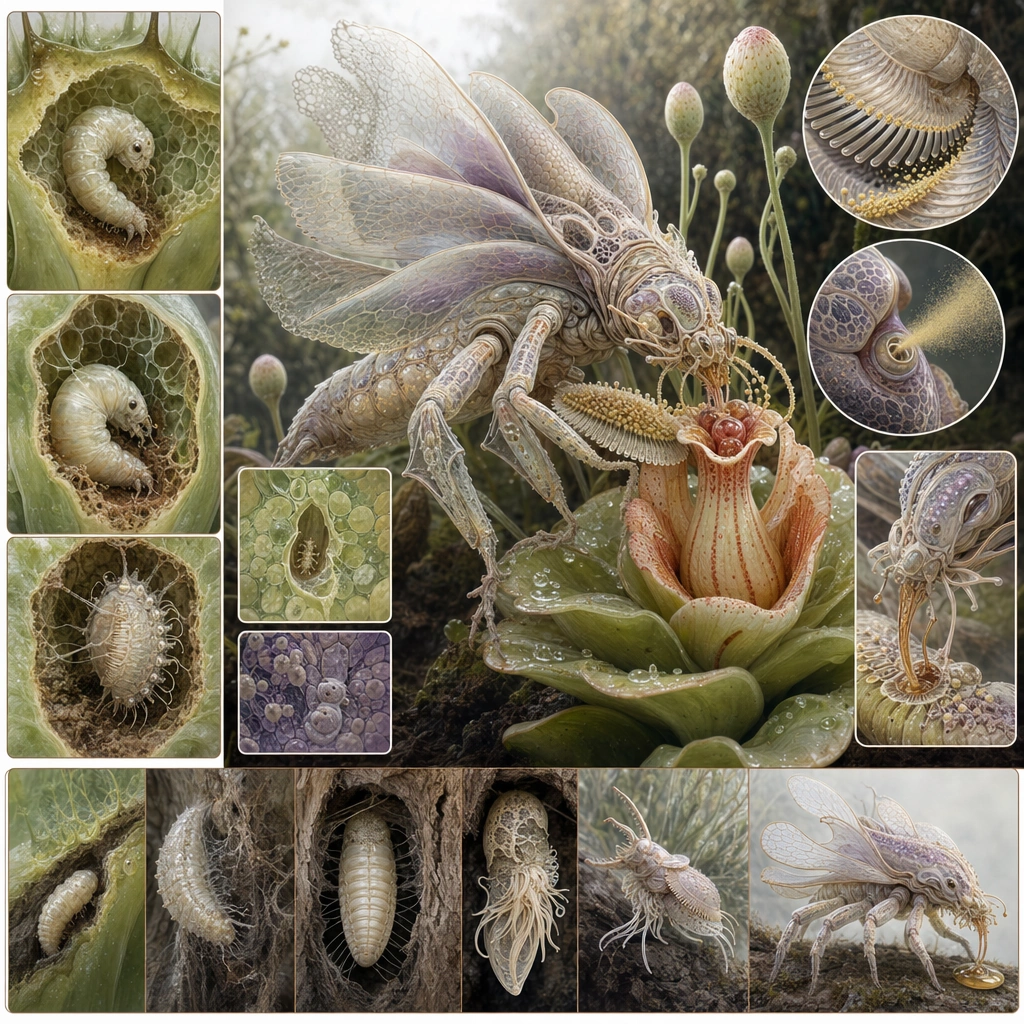
Design a botanical-lifecycle poster on a bright but restrained field-guide background, with clean diagram zones arranged around a central adult-stage illustration. The composition should feel educational, elegant, and easy to parse without any written text. Build the frame as a square natural history study with disciplined composition, believable lighting, and enough environmental evidence to explain how this organism or system functions without any caption. Keep the image polished, observational, and suitable for a research gallery rather than pulp fantasy spectacle.

Subject:
Show the adult organism interacting with flowering or spore-bearing host structures in a way that benefits reproduction while also feeding itself. Include close views of carrying surfaces, release structures, and how the host tolerates or welcomes the visitor at this stage. Show the anatomy, habitat interaction, and scale cues clearly so the viewer can infer locomotion, feeding, reproduction, or ecological role from the visual alone. Every visible structure should feel evolved for a purpose, with layered foreground, midground, and background information that rewards close inspection.

Important details:
Assume the organism changes ecological role by life stage. Early phases may exploit host tissue, later phases may provide immune modulation, pollination, cleaning, or nutrient transfer. The lifecycle must read as coherent biology rather than arbitrary plot twists. The key idea is role reversal: the same lineage that harmed one host earlier now provides ecological service to another. Make this shift visible through anatomy, posture, and board sequencing. Favor coherent biology over decorative excess: tissues, shells, membranes, spores, tendrils, fins, silica lattices, or atmospheric sacs should all follow one material logic. Preserve a convincing relationship between the environment and the body plan, use restrained color hierarchy, and make the image feel like a serious speculative field record rather than a random monster concept.

Use case:
Parasite-Mutualism Life Cycle Poster single study 4/9.

Constraints:
No readable text, no watermark, no logos, preserve exact 1:1 aspect ratio, no butterfly copy, no decorative infographic icons, no readable arrows, no whimsical children-book style, no accidental brand resemblance, no direct copy of known terrestrial species, no cartoon simplification.
Cómo usar
- Copia el prompt original completo, incluidos los parámetros.
- Adapta el tema, el texto y la composición a tus necesidades.
- Usa una herramienta externa compatible; comprueba el acceso y el resultado.
Antes de empezar
- Comprueba si necesita una imagen de referencia. La compatibilidad no demuestra qué modelo generó el ejemplo.
- Revisa nombres, cifras y textos; el resultado puede variar entre versiones del modelo.