Documento original
GPT Image 2 · en
Scene:
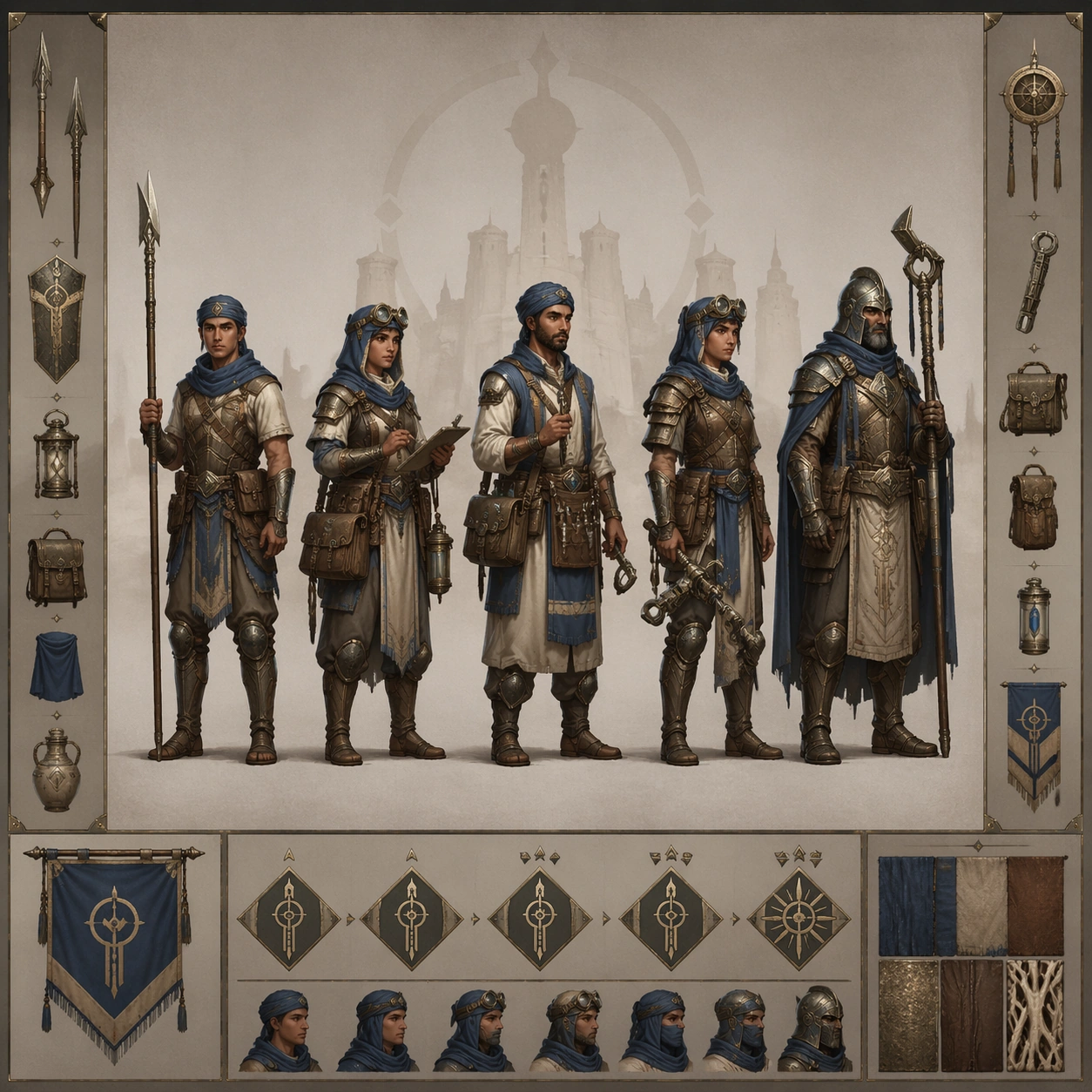
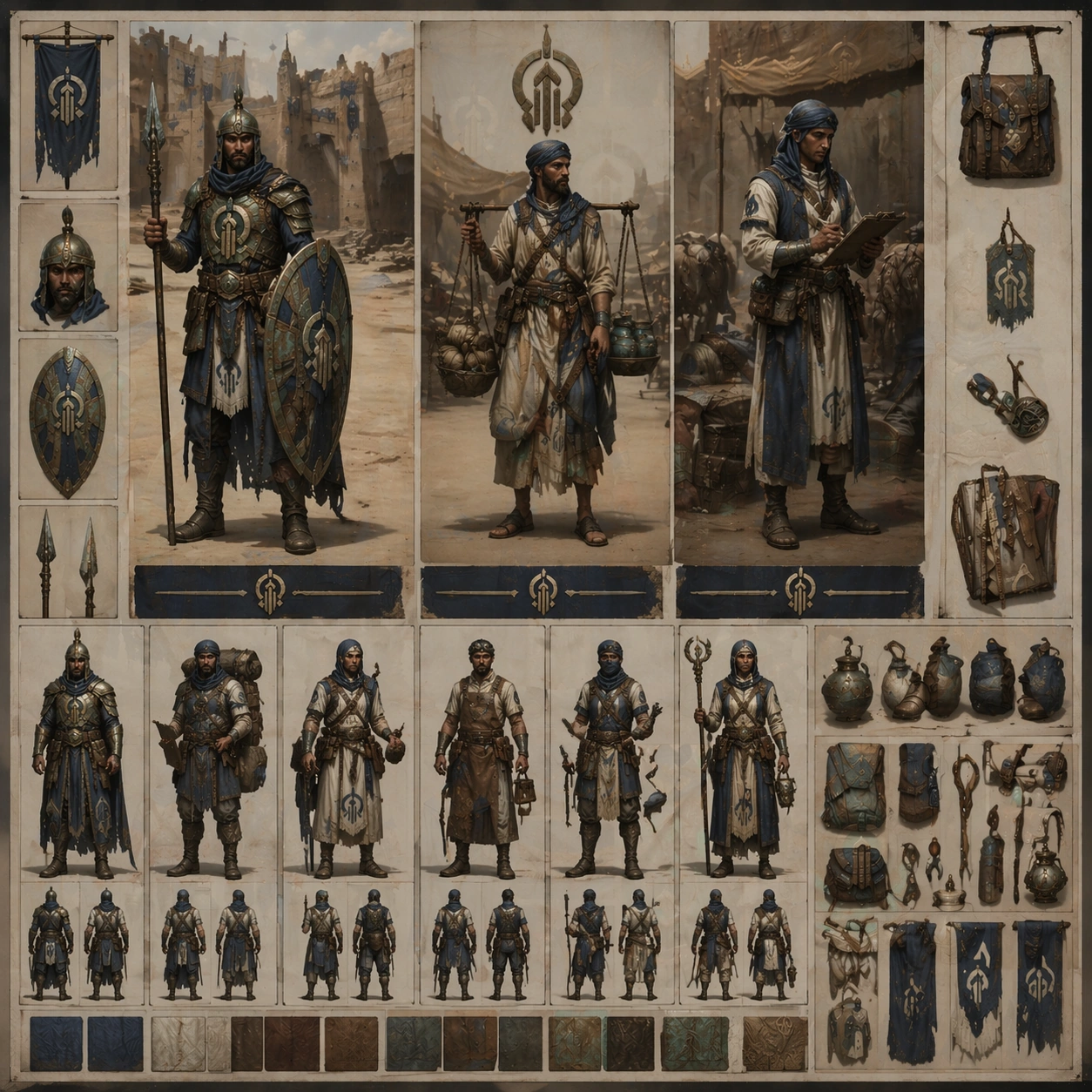
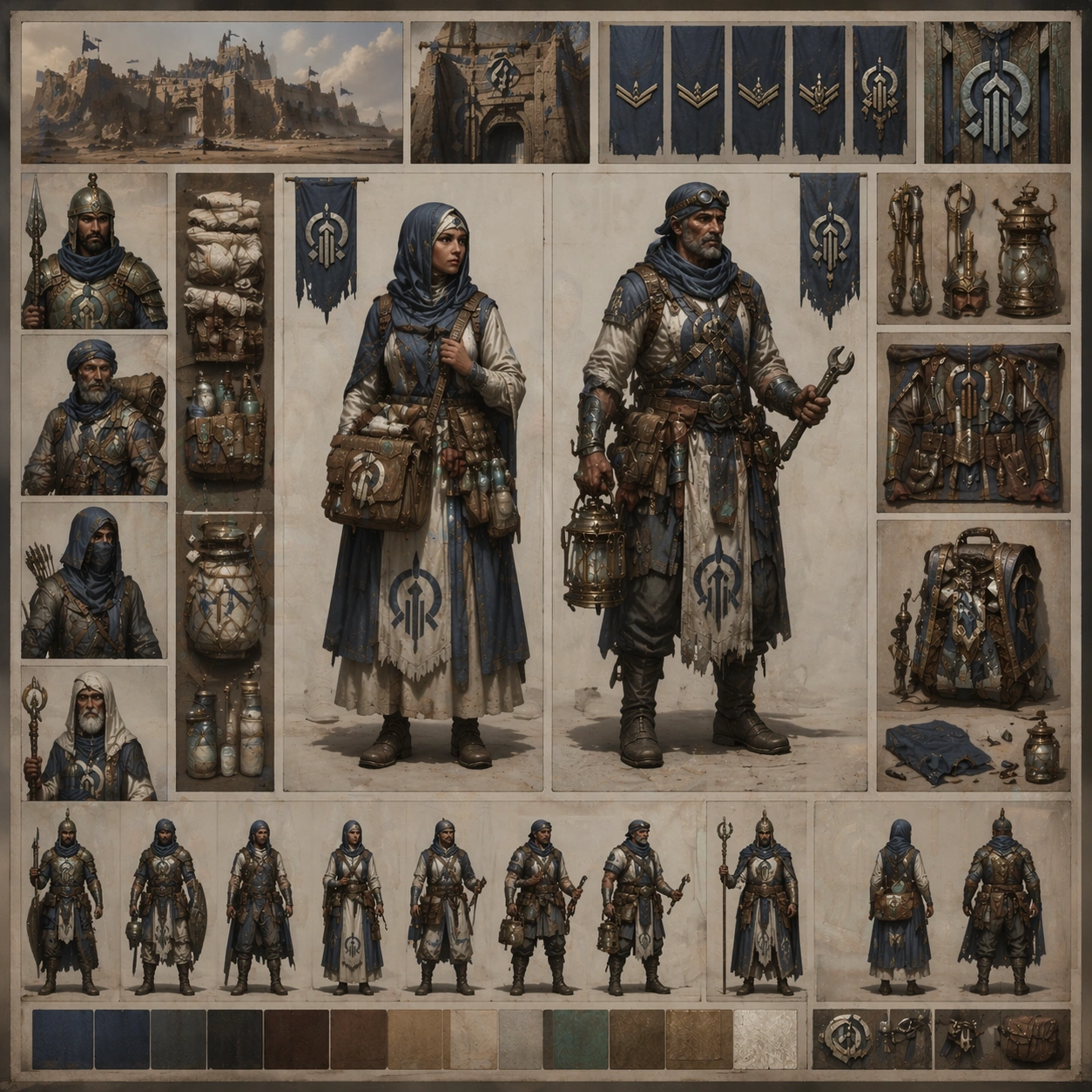
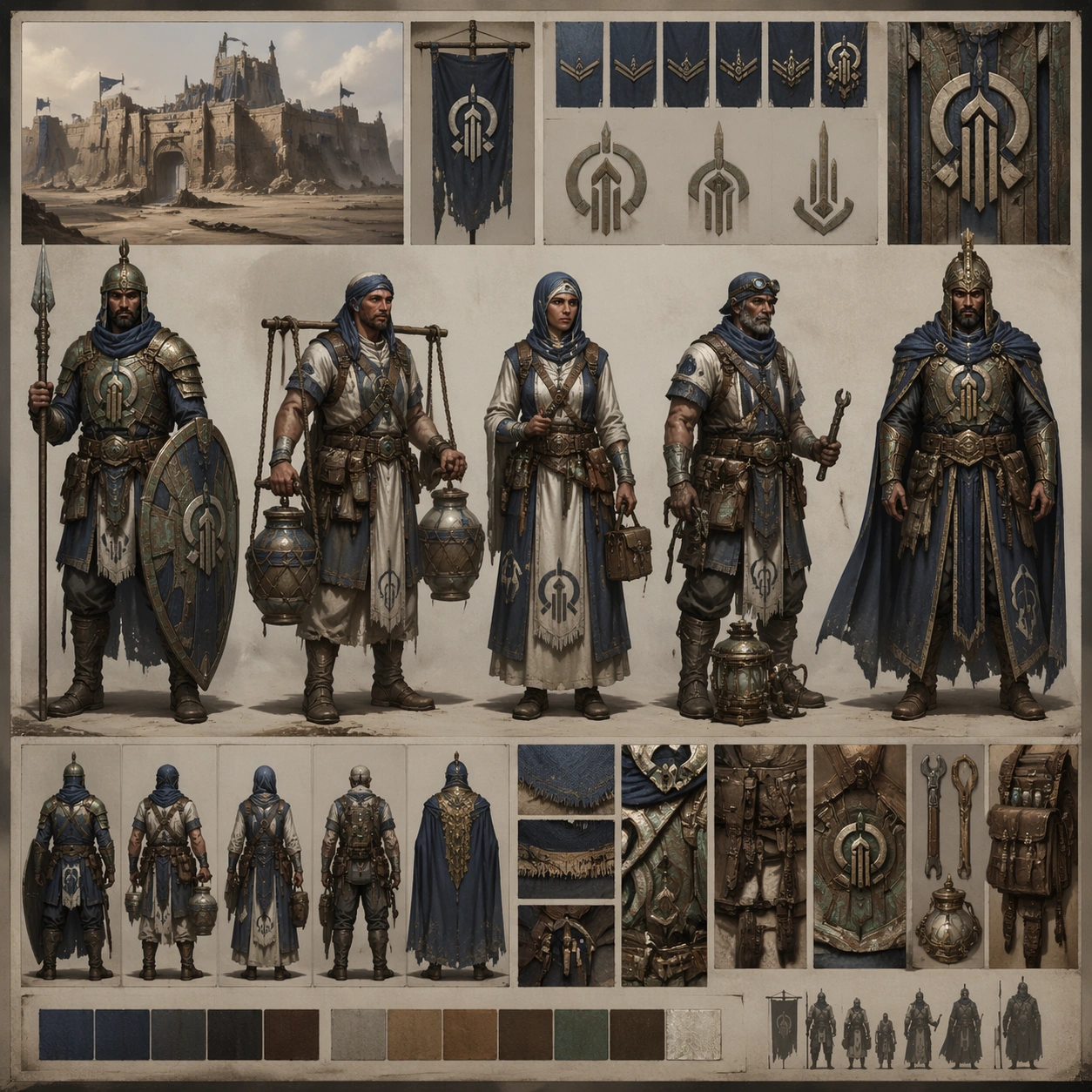
Build a square casting-board hero image viewed like a premium concept bible page pinned on a neutral studio wall, with structured compartments, clean margins, and strong central hierarchy. Keep the overall frame square, polished, and production-ready game art bible presentation with crisp panel rhythm, believable costume construction, and enough visual hierarchy for downstream UI or documentation reuse. Let materials, lighting, and spacing feel intentional enough for gallery, research, campaign, or approval-board reuse without depending on readable text.

Subject:
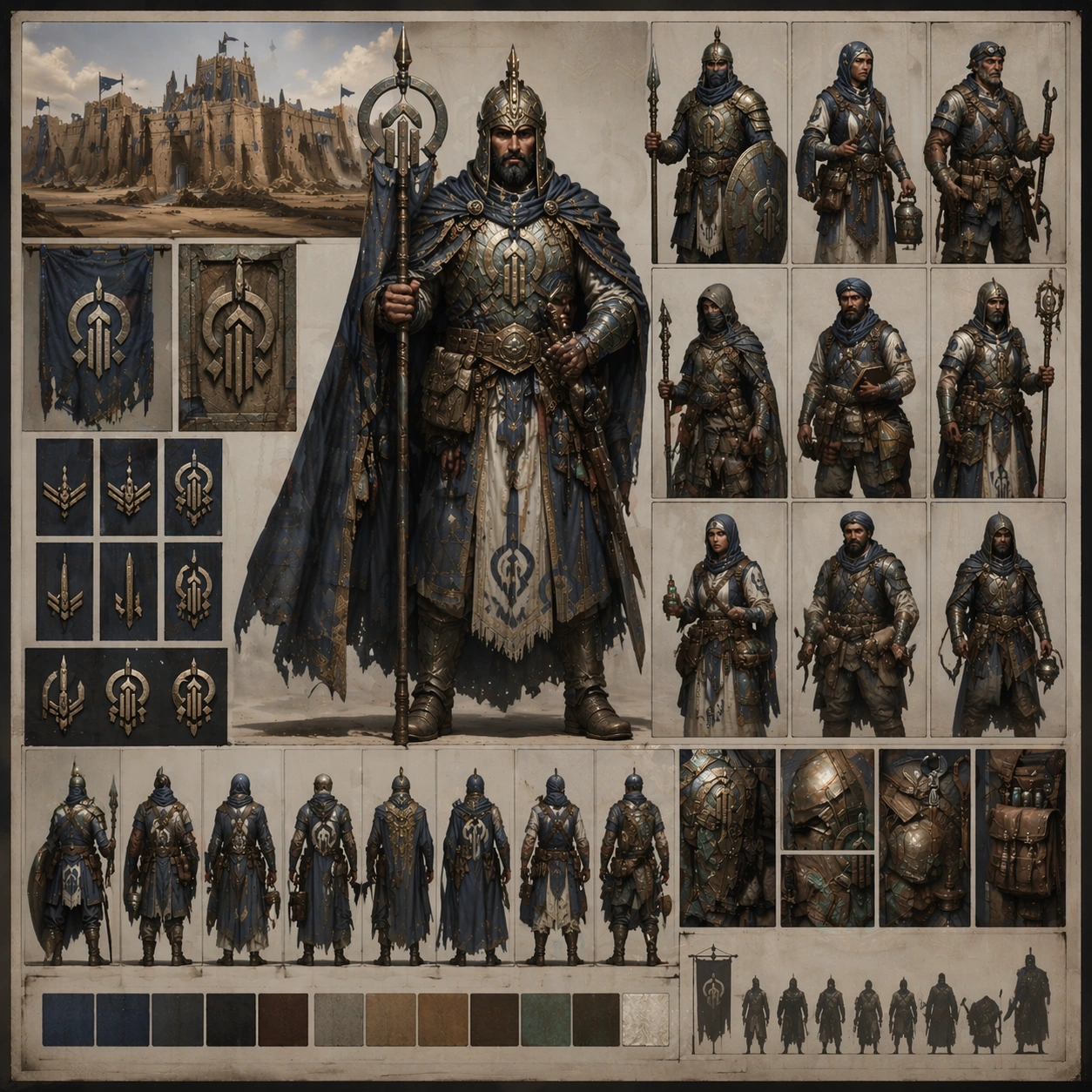
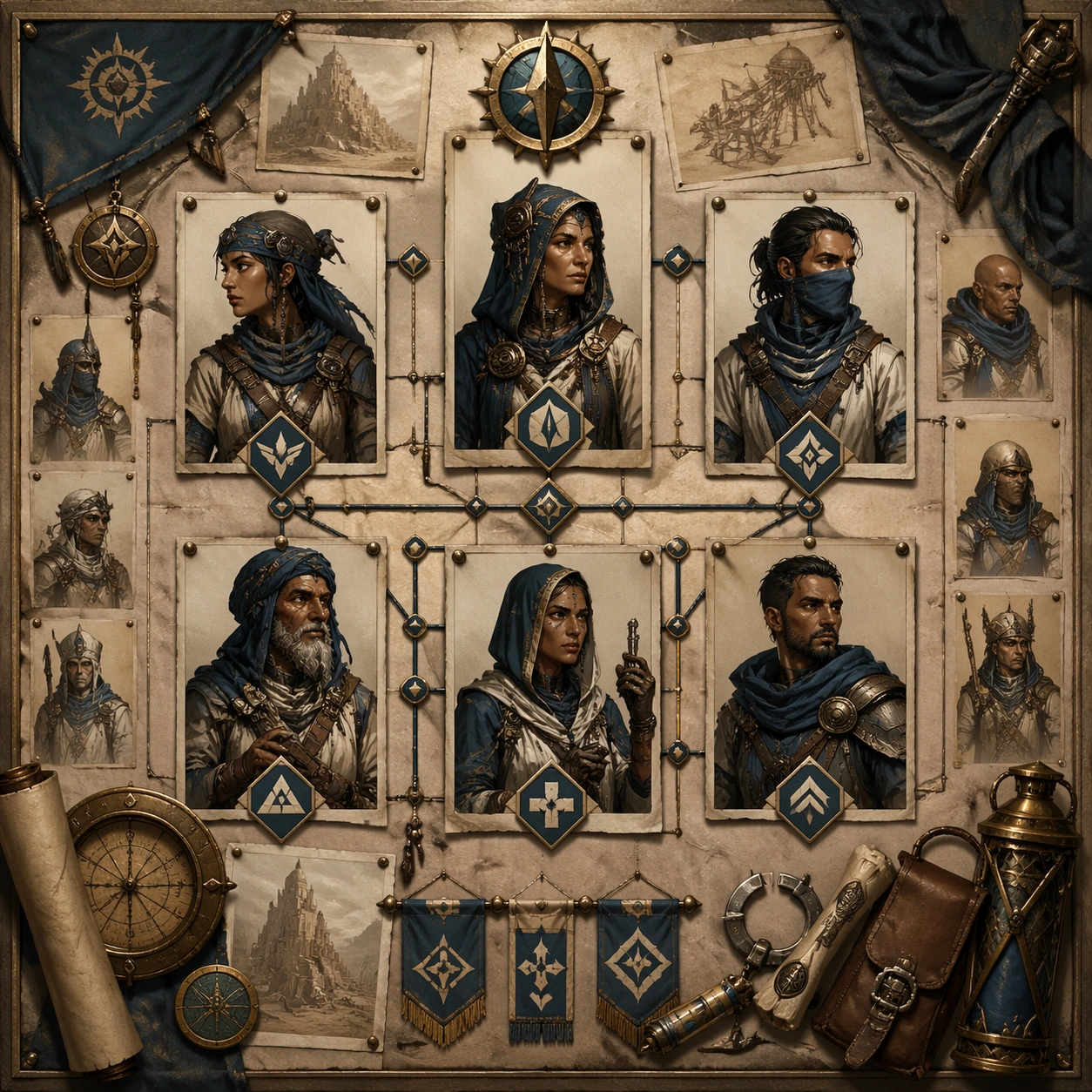
Present five archetypes from the same citadel faction in one frame: a gate guard, a water merchant, a field medic, a machine tender, and an elite captain. Ground the image inside a wind-carved desert citadel faction with oxidized bronze, indigo cloth, pale bone accents, practical leather, and a sun-faded military-monastic attitude. Use multiple adult NPC archetypes such as guard, quartermaster, medic, machinist, scout, priest, and captain, but keep them visually linked through the same regional craft language and social hierarchy.

Important details:
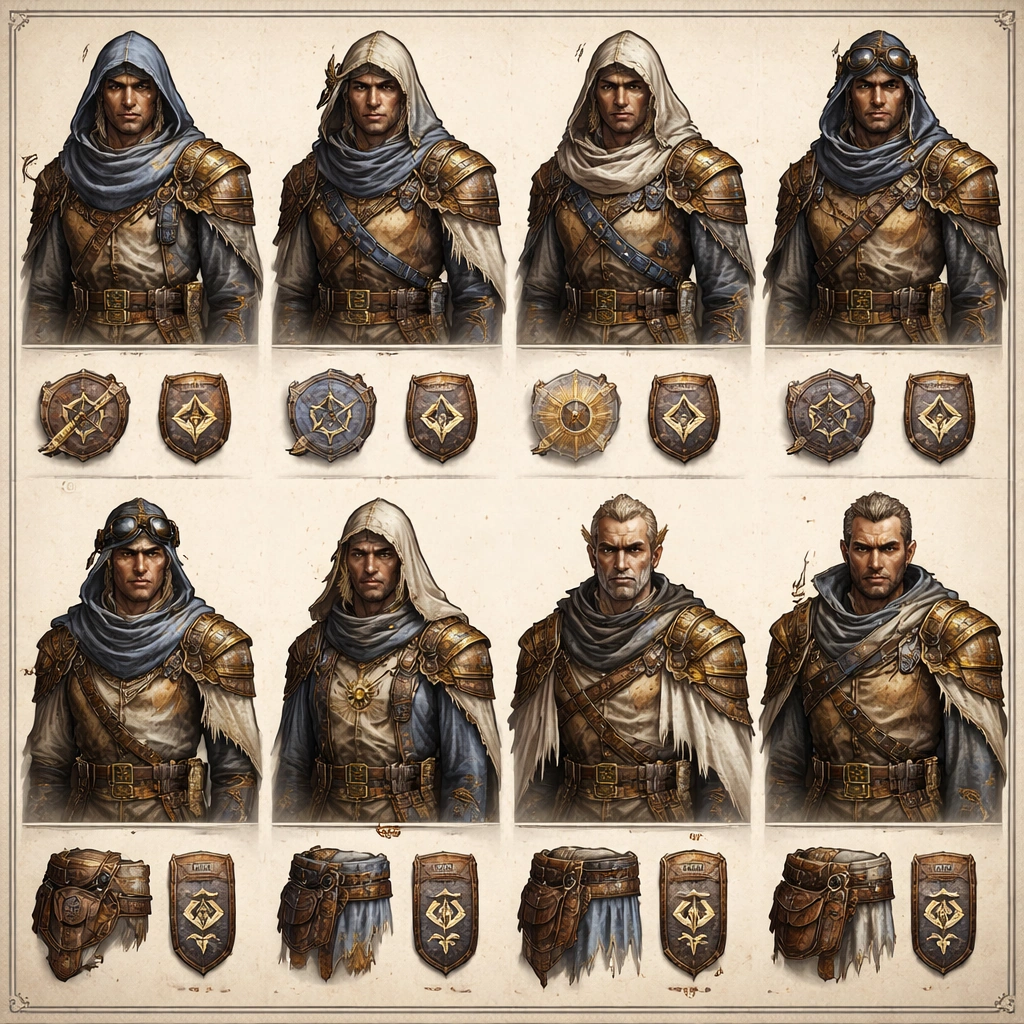
Keep insignia geometry, rank markers, cloth layering, tool silhouettes, and color hierarchy coherent across every role so the cast reads like one population rather than unrelated hero concepts. Make the captain visibly higher rank without turning the others into extras. Every figure should feel game-usable, grounded, and distinct in job function. Use this frame to establish the reference system that later dependent images must preserve. Favor believable production craft, clean hierarchy, and reusable visual logic over empty spectacle or random decoration.

Use case:
NPC Faction Casting Sheet series study 1/9, the anchor board that defines the faction casting language.

Constraints:
No readable text, no watermark, no logos, preserve exact 1:1 aspect ratio, no unrelated fantasy races, no random neon tech, no comic exaggeration, no costume drift between roles.
Cómo usar
- Copia el prompt original completo, incluidos los parámetros.
- Adapta el tema, el texto y la composición a tus necesidades.
- Usa una herramienta externa compatible; comprueba el acceso y el resultado.
Antes de empezar
- Comprueba si necesita una imagen de referencia. La compatibilidad no demuestra qué modelo generó el ejemplo.
- Revisa nombres, cifras y textos; el resultado puede variar entre versiones del modelo.