Document original
GPT Image 2 · en
Scene:
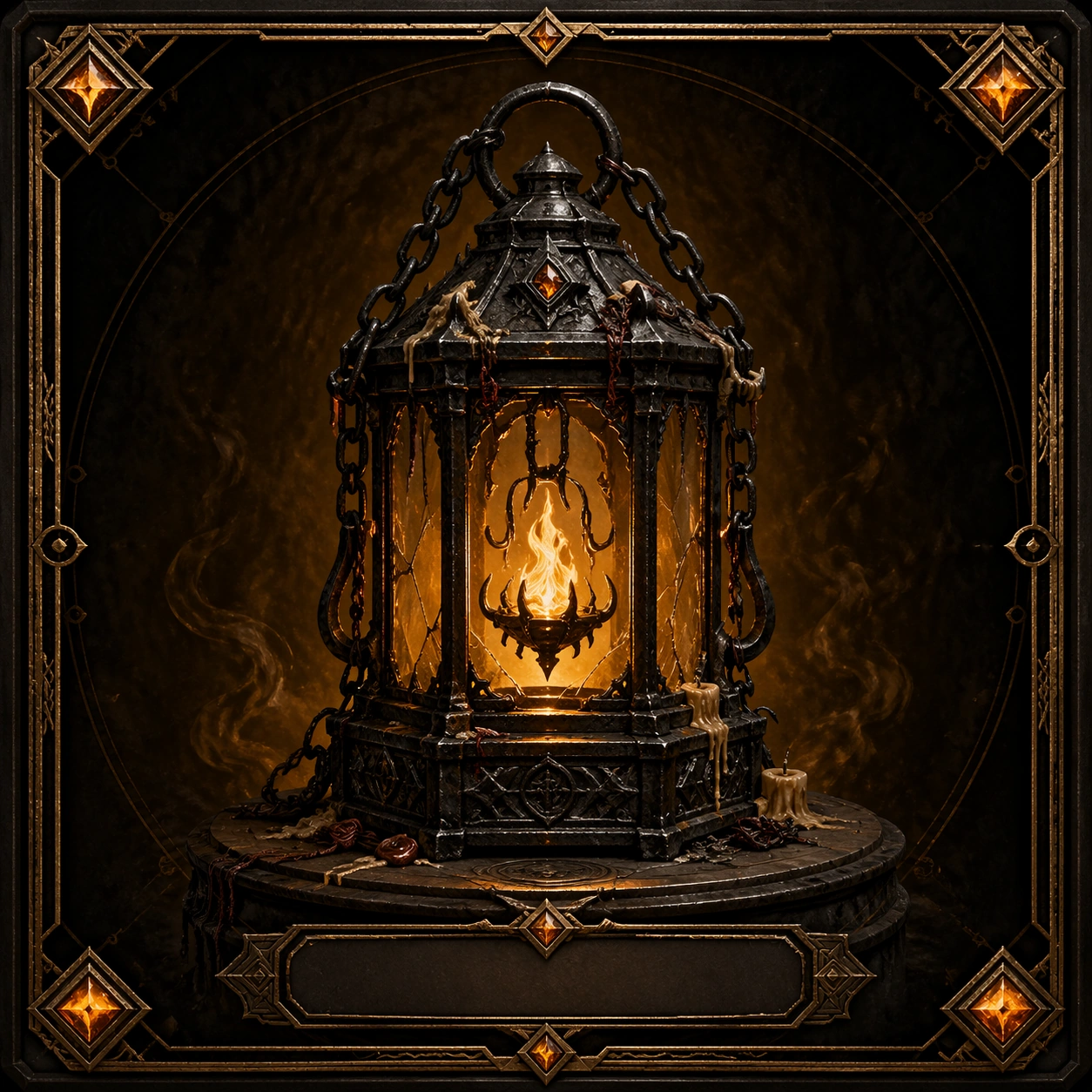
Create a square collectible lore card with a premium codex layout, centered object pedestal, dark velvet background, and restrained bronze frame accents. The card should feel like an in-game archive page rather than a loose still life: one large relic in the middle, blank plaque areas, faint decorative border geometry, and a controlled halo of smoky amber light. Keep the composition symmetrical enough to read as a collectible card while still feeling tactile and dramatic.

Subject:
The relic is a haunted lantern reliquary made from blackened iron, cracked amber glass, soot-dark chains, and a suspended pale flame that seems trapped inside a small cage of ritual hooks. The base is engraved with abstract warding marks that remain unreadable. Tiny melted wax drips, old ash, and a few seal-thread knots imply repeated attempts to contain whatever spirit once lived inside it. The lantern should feel dangerous yet treasured, as if players would keep it for both lore and power.

Important details:
Make the object itself tell the story. The iron should feel scorched and old, the amber glass should glow from within, and the flame should look eerie but controlled rather than explosive. The card frame language must suggest rarity through shape, metallic trim, and gemlike insets, not through words. Preserve strong silhouette clarity and make the relic feel worthy of a codex entry, reward card, or quest archive. Avoid generic fantasy clutter; every surface detail should reinforce age, containment, and cursed value.

Use case:
Relic Artifact Lore Card Set single study 1/9.

Constraints:
No readable text, no watermark, no logos, preserve exact 1:1 aspect ratio, no modern lantern parts, no extra weapons, no character portrait, no random skull overload, no noisy particle storm, no broken card frame.
Mode d’emploi
- Copiez le prompt original complet, paramètres compris.
- Adaptez le sujet, le texte et la composition à vos besoins.
- Utilisez un outil externe compatible ; vérifiez l’accès et le résultat.
Avant de commencer
- Vérifiez si une image de référence est nécessaire. La compatibilité ne prouve pas le modèle utilisé pour cet exemple.
- Vérifiez noms, chiffres et textes ; les versions du modèle peuvent produire des résultats différents.