
Document original
GPT Image 2 · en
Scene:
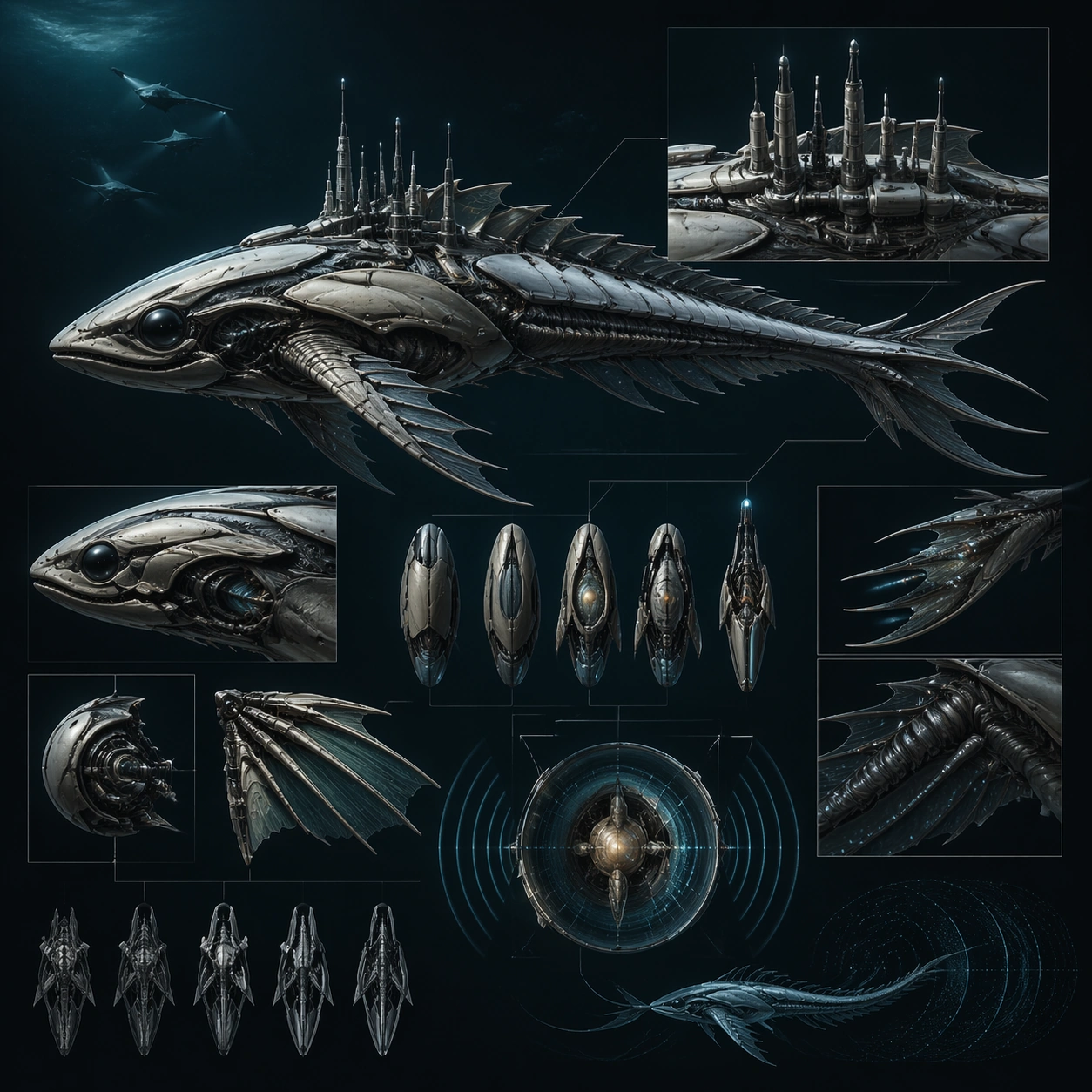
Design a square biomechanical concept plate that reads clearly from a distance and rewards close inspection. Use one strong main pose or view supported by carefully placed detail windows, component callouts, or environment cues. Show a sleek aquatic entity with side profile, dorsal instrumentation, fin mechanics, and sonar organ insets against a dark water field.

Subject:
Show a complete biomechanical entity or subsystem with clear task identity: guard, carrier, swimmer, scout, ritual host, or similar. The fusion between body logic and engineering should feel intentional and load-bearing. Blend marine anatomy, observation sensors, and low-disturbance propulsion into one coherent survey specialist.

Important details:
Favor anatomical structure, movement plausibility, and material discipline over surface noise. The result should feel buildable within its fictional world, not like a random accumulation of tubes and spikes. The result should feel elegant and purposeful, not like a random robot fish. Preserve readable biomechanics so joints, muscles, shells, and machines all seem to cooperate under one functional design logic.

Use case:
Biomech Board single study 2/5, designed as a self-contained support image for this topic.

Constraints:
No readable text, no watermark, no logos, preserve exact 1:1 aspect ratio, no horror torture imagery, no generic robot soldier clichés, no comic-book posing, no logo insignia, no submarine cartoon styling.
Mode d’emploi
- Copiez le prompt original complet, paramètres compris.
- Adaptez le sujet, le texte et la composition à vos besoins.
- Utilisez un outil externe compatible ; vérifiez l’accès et le résultat.
Avant de commencer
- Vérifiez si une image de référence est nécessaire. La compatibilité ne prouve pas le modèle utilisé pour cet exemple.
- Vérifiez noms, chiffres et textes ; les versions du modèle peuvent produire des résultats différents.