Document original
GPT Image 2 · en
Scene:
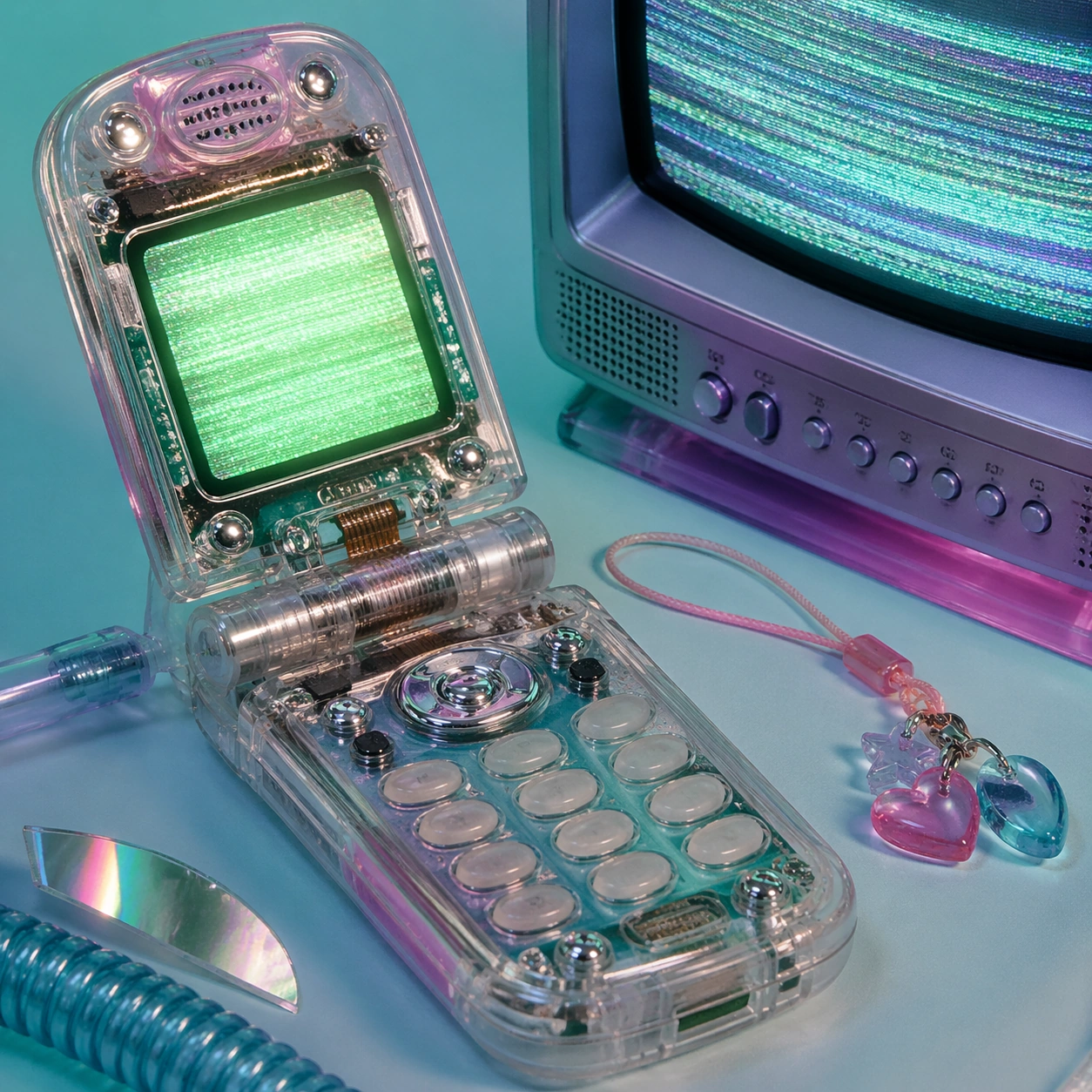
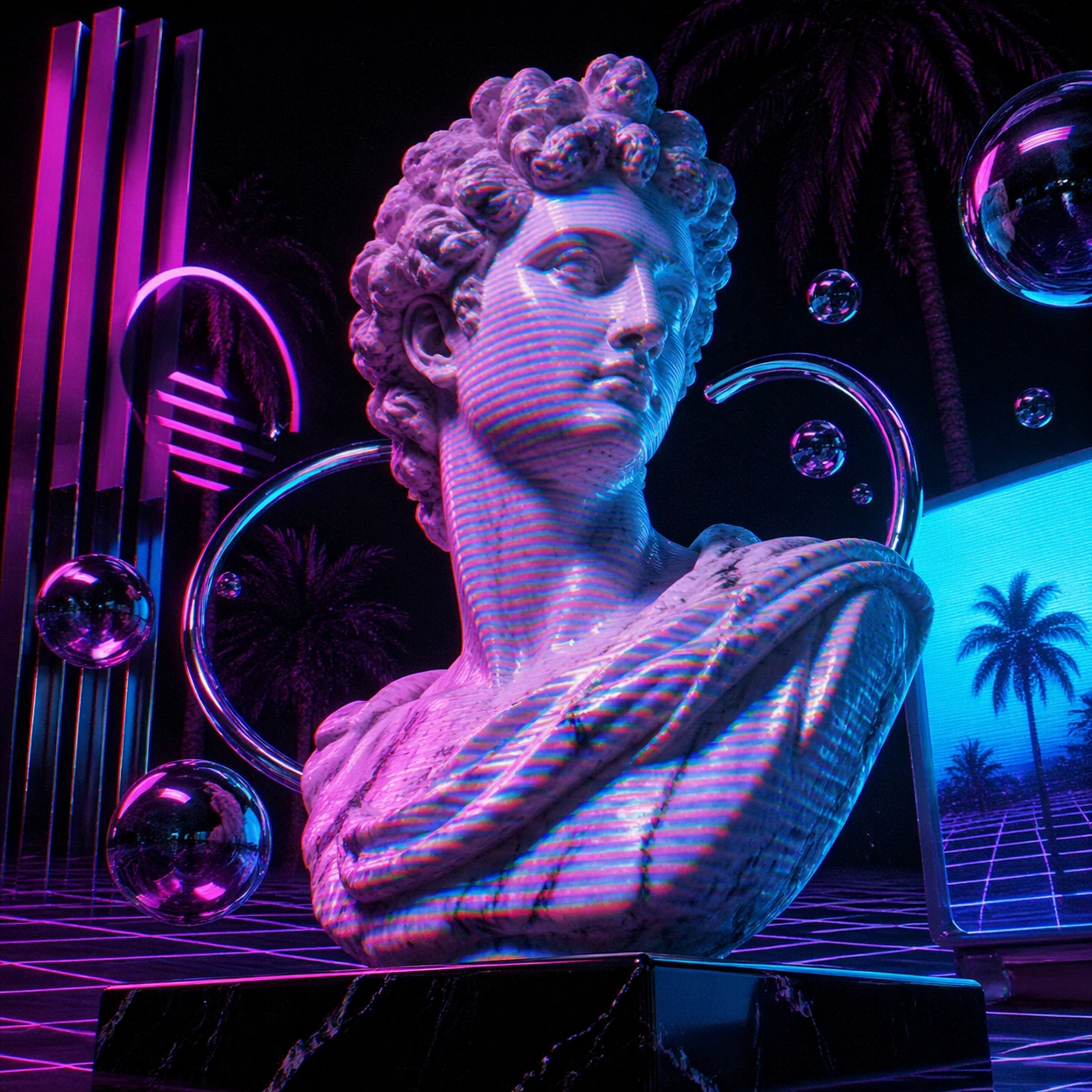
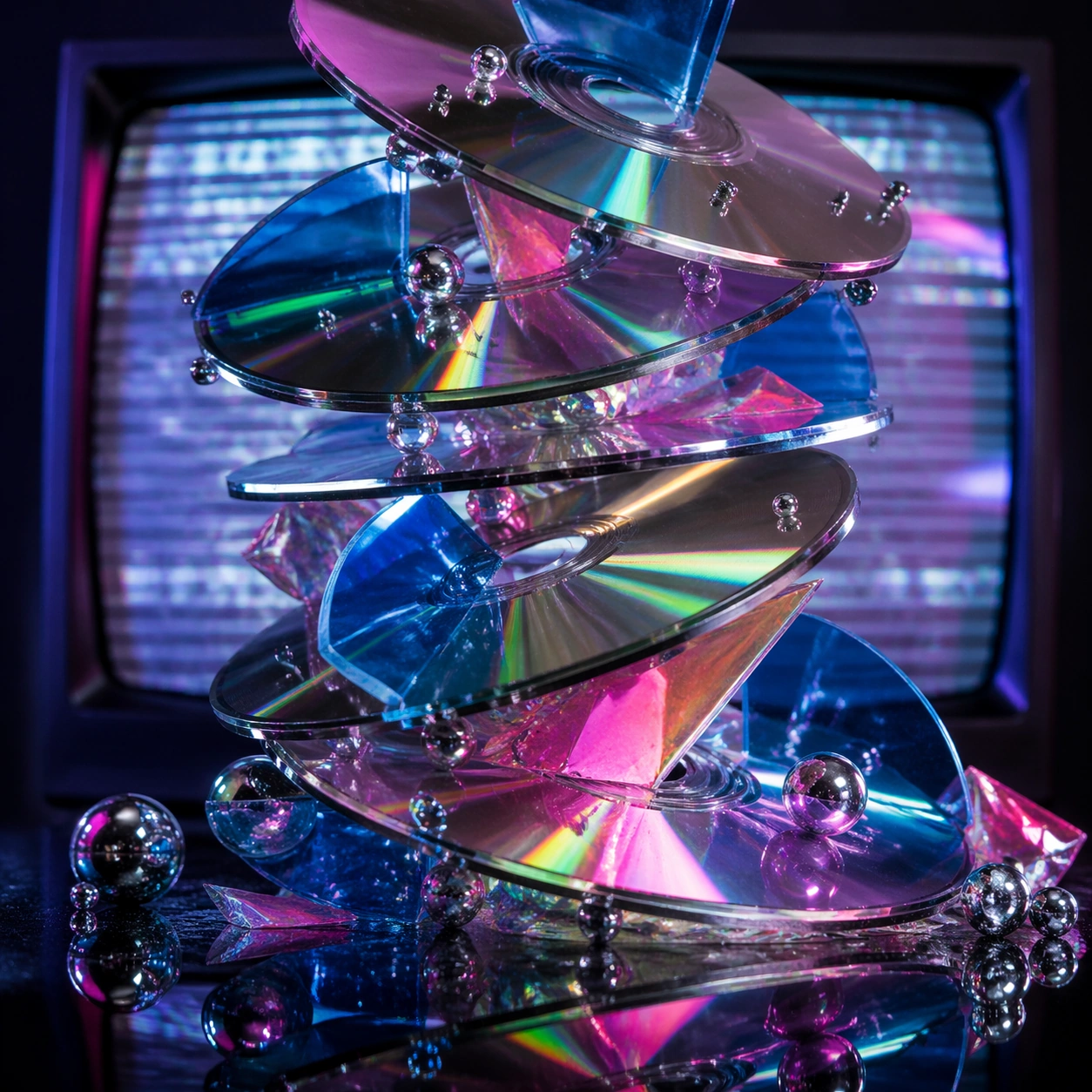
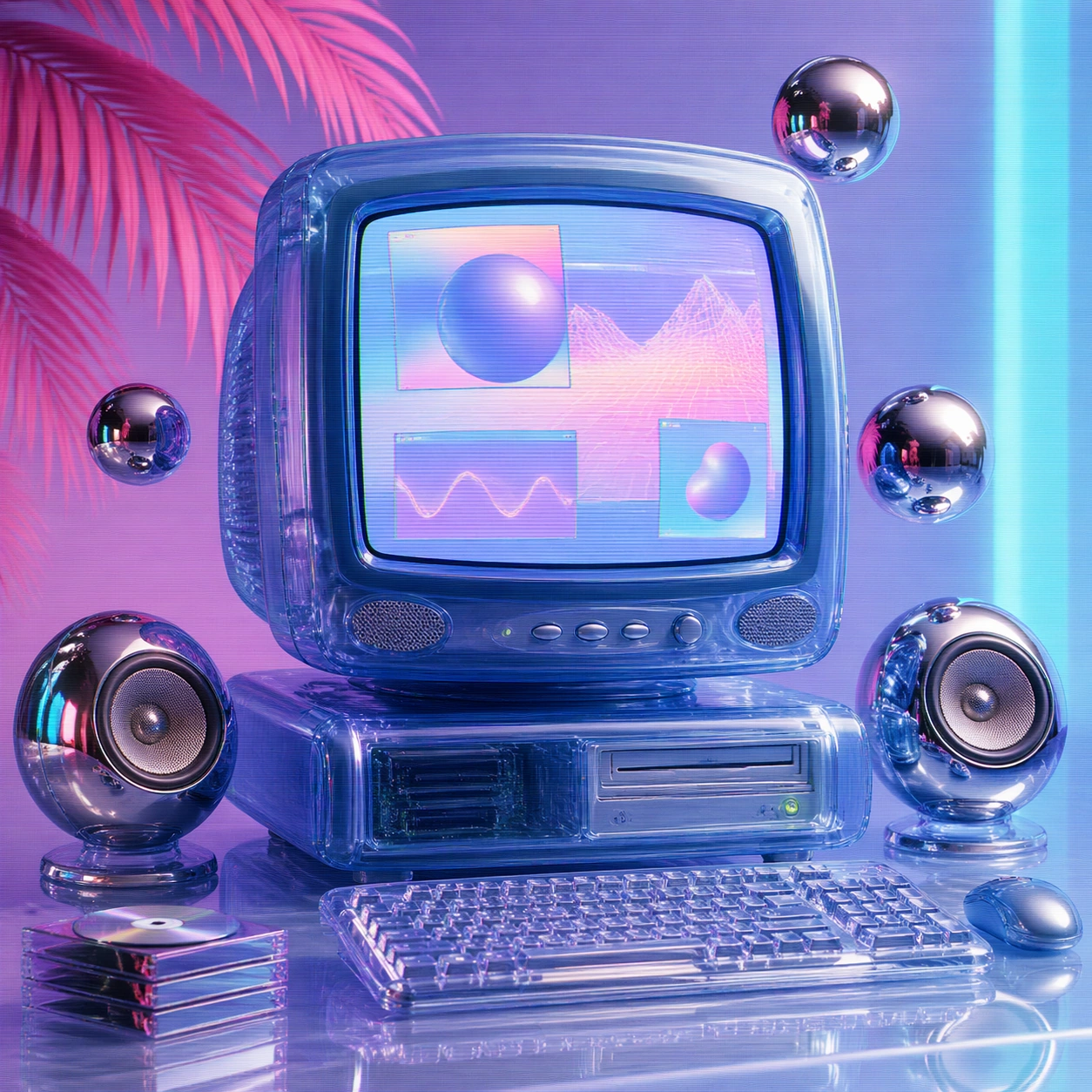
A square studio still life photographed like a premium late-1990s computer magazine cover, bright but slightly dreamy, with a lavender-to-aqua background and soft specular studio lights. The camera is straight-on at desk height, using a clean product-shot composition with shallow reflections on a glossy acrylic tabletop. Subtle CRT scanlines and mild RGB fringing should appear as if the image is being viewed through an old monitor, not pasted over randomly.

Subject:
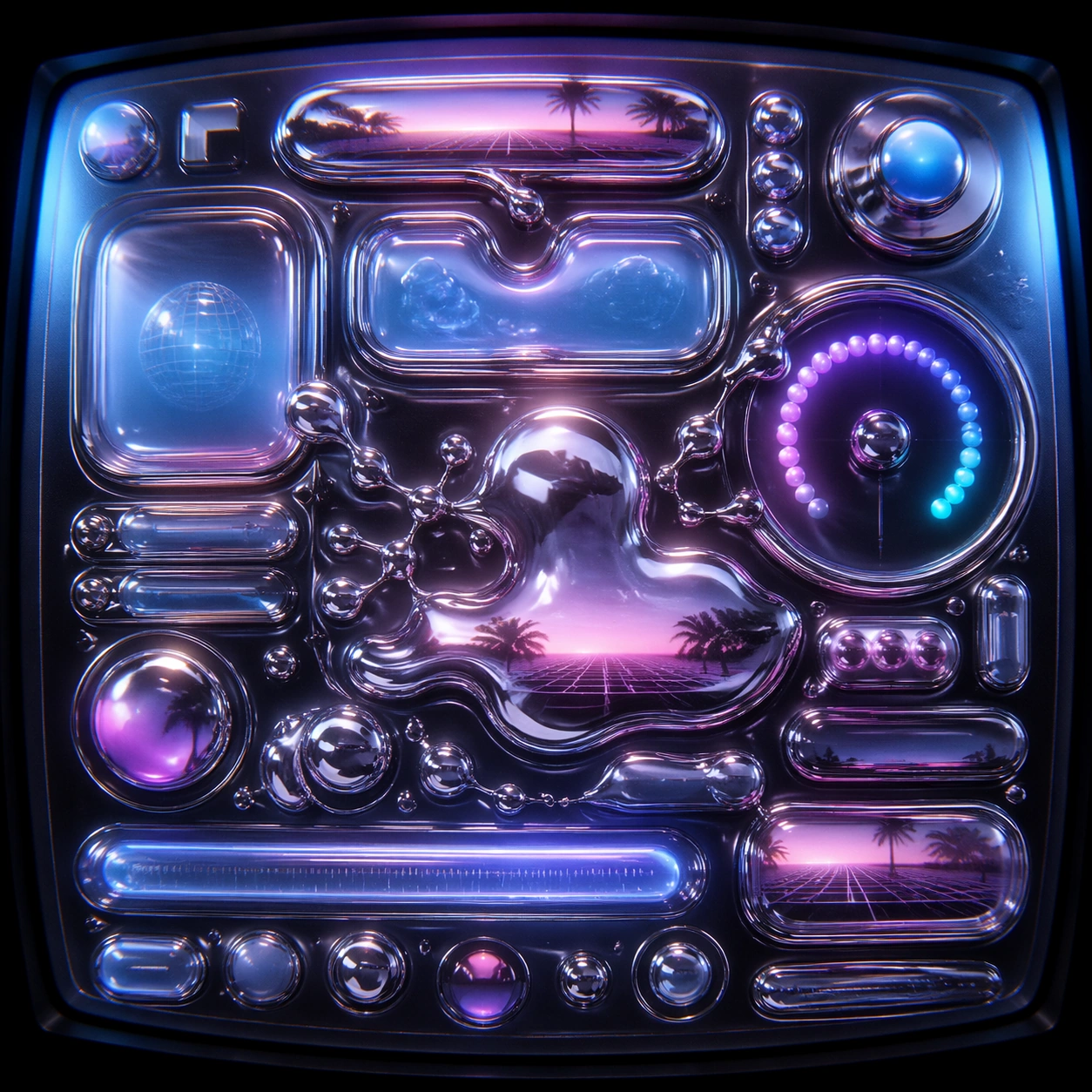
A fictional translucent desktop computer setup made from pearly blue plastic, chrome bubble speakers, a rounded CRT display, a clear keyboard, and a small stack of reflective mini discs. The monitor screen shows only abstract pastel windows, gradients, and waveform shapes with no readable interface text. Chrome spheres float close to the hardware, reflecting pink palms, cyan light bars, and the camera-facing product scene.

Important details:
The hard part is believable material physics: transparent plastic must reveal internal ribs and circuit silhouettes, chrome bubbles must reflect the environment with curved highlights, and the CRT glass must bow slightly with phosphor glow, scanline texture, and edge color separation. Preserve a Y2K optimism palette without making the scene look like a modern flat vector poster.

Use case:
Y2K Vaporwave CRT single study 1/8, testing iridescent hardware materials and nostalgic screen optics.

Constraints:
No readable text, no watermark, no logos, preserve exact 1:1 aspect ratio, no real brand design, no flat icon art, no illegible keyboard letters, no random glitch covering the main object.
Mode d’emploi
- Copiez le prompt original complet, paramètres compris.
- Adaptez le sujet, le texte et la composition à vos besoins.
- Utilisez un outil externe compatible ; vérifiez l’accès et le résultat.
Avant de commencer
- Vérifiez si une image de référence est nécessaire. La compatibilité ne prouve pas le modèle utilisé pour cet exemple.
- Vérifiez noms, chiffres et textes ; les versions du modèle peuvent produire des résultats différents.