Document original
GPT Image 2 · en
Scene:
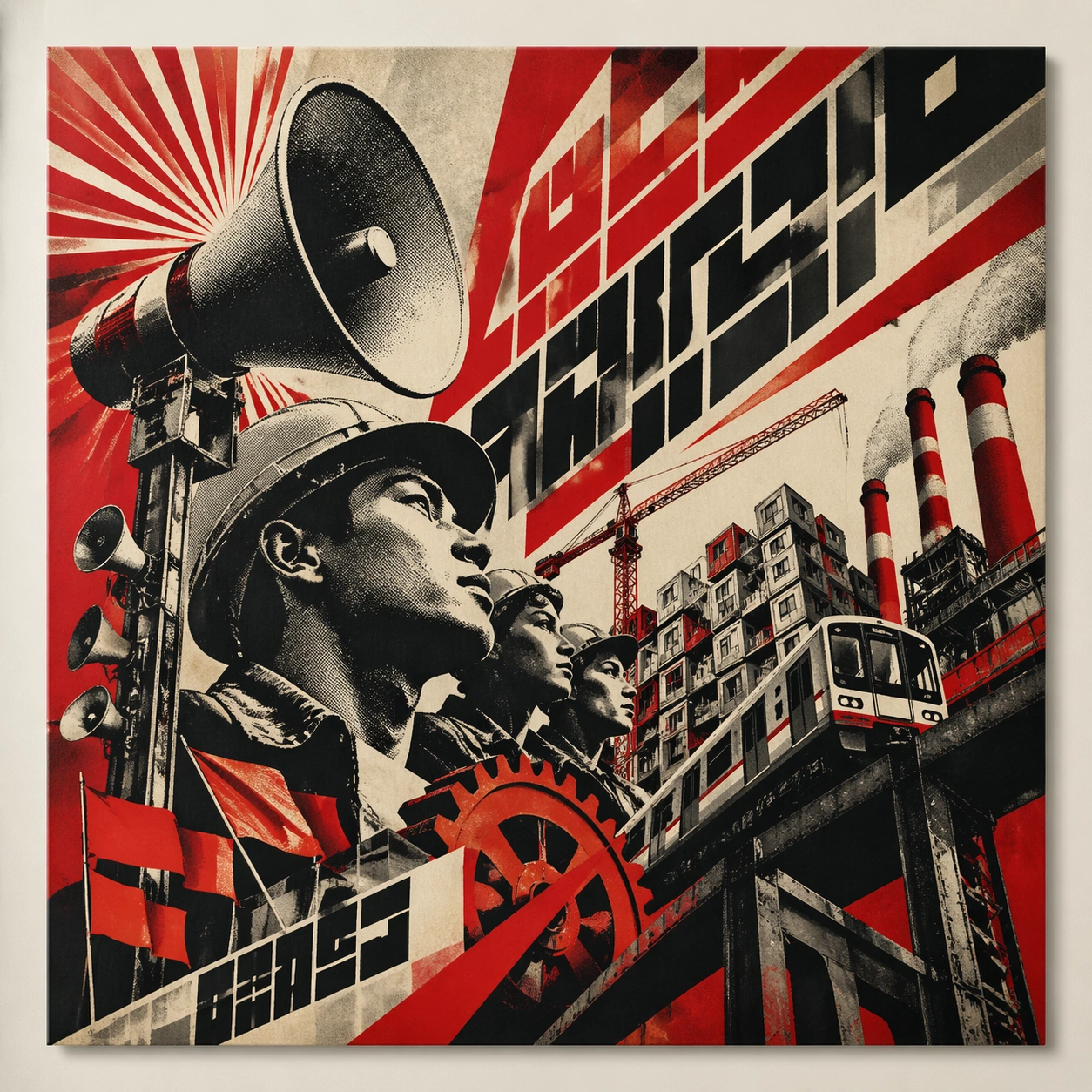
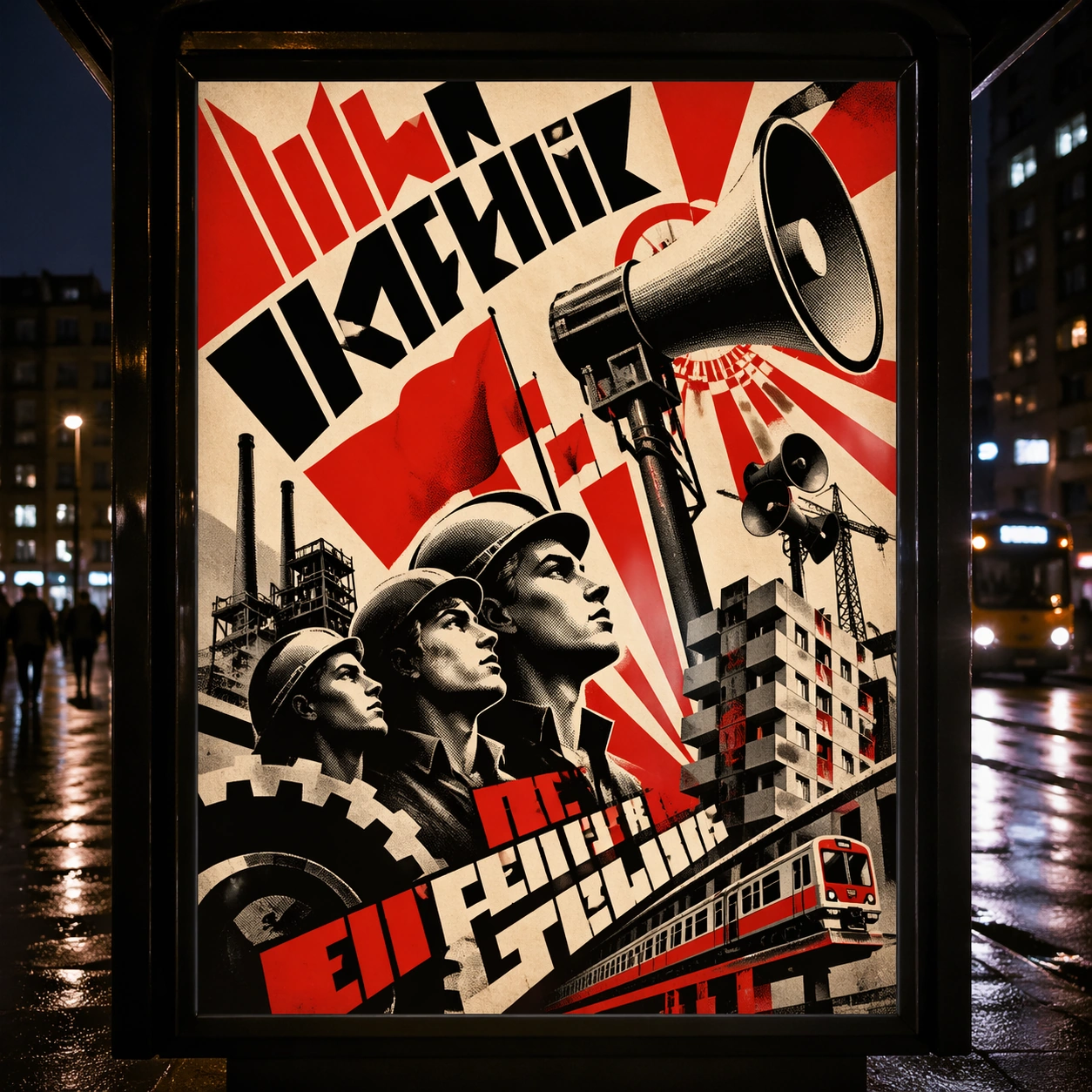
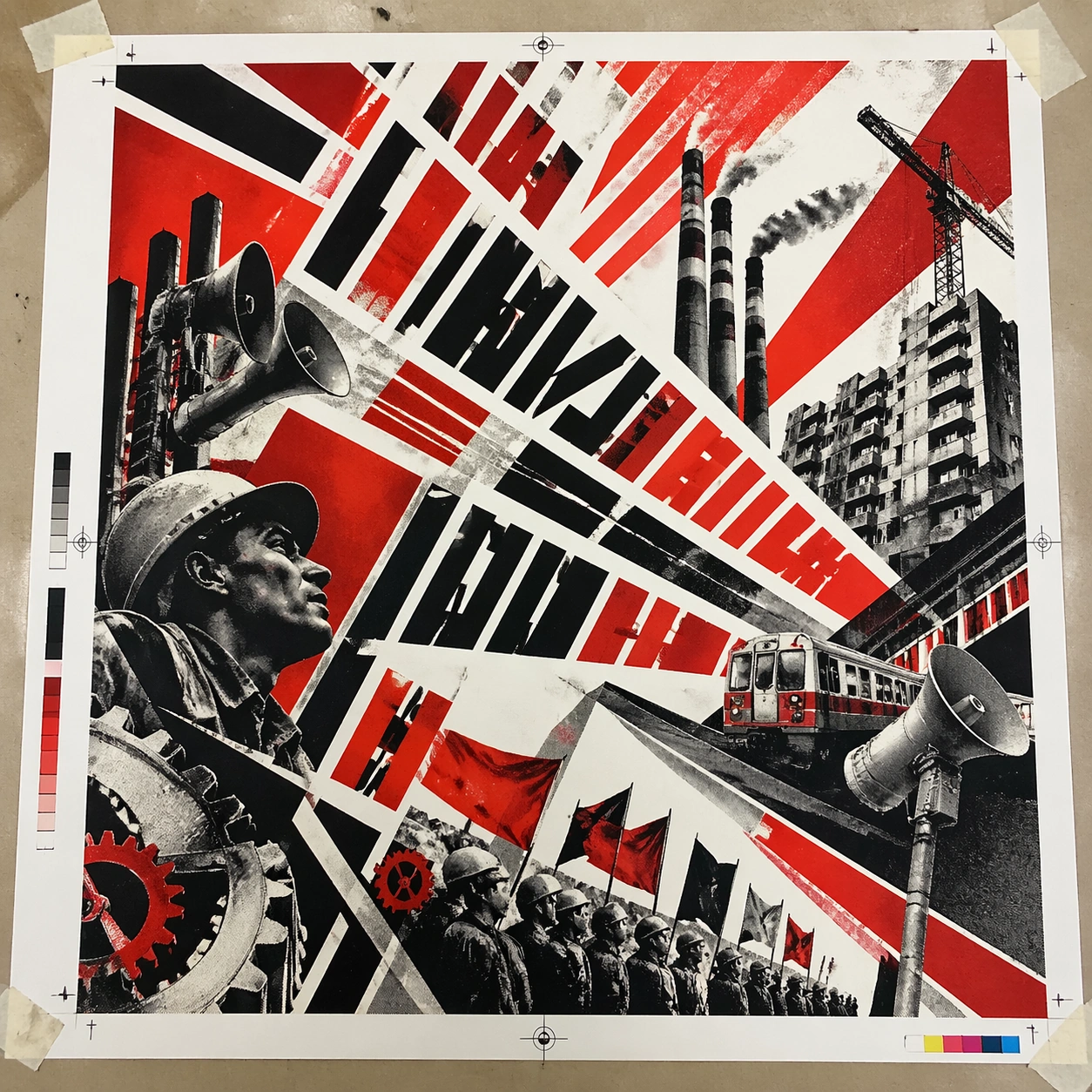
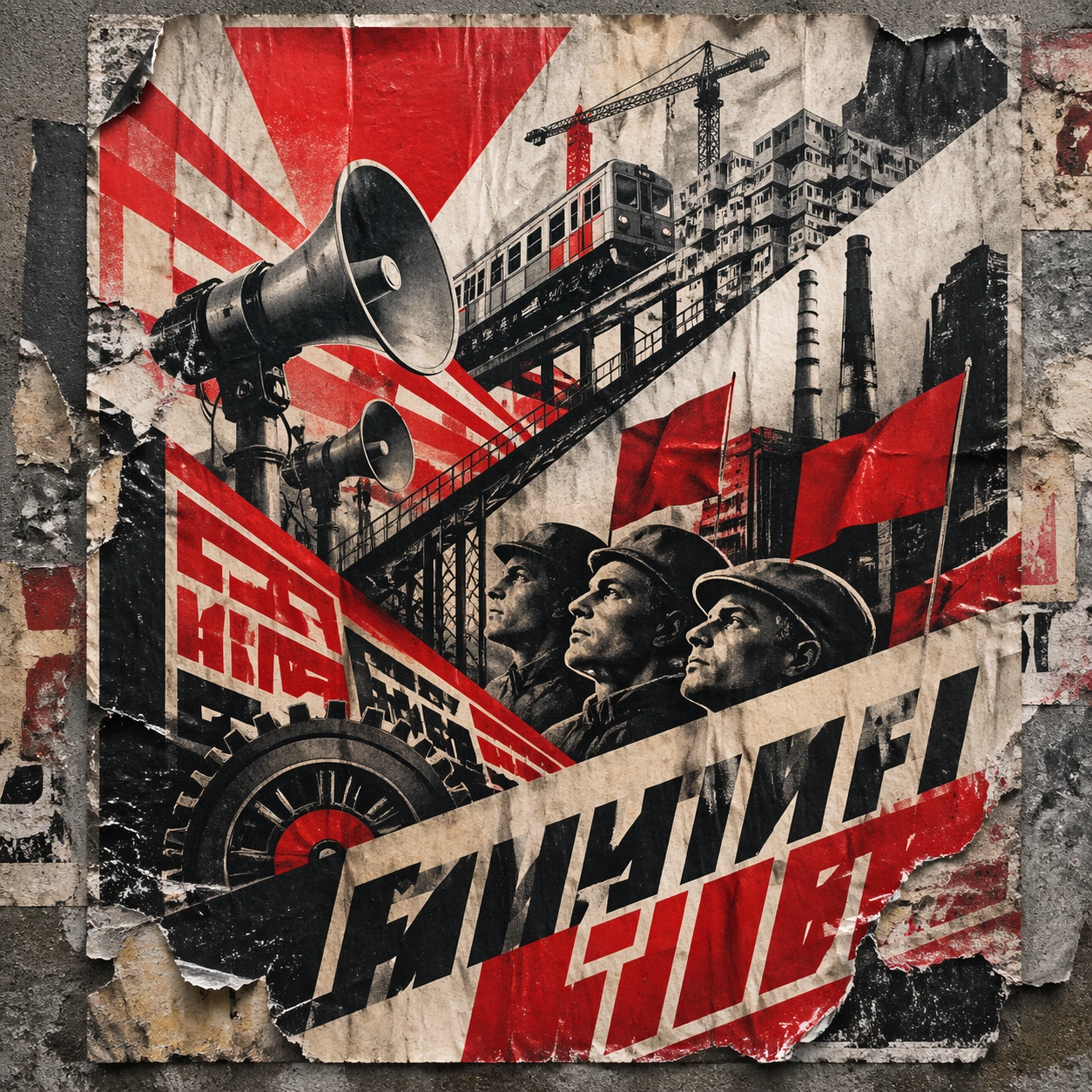
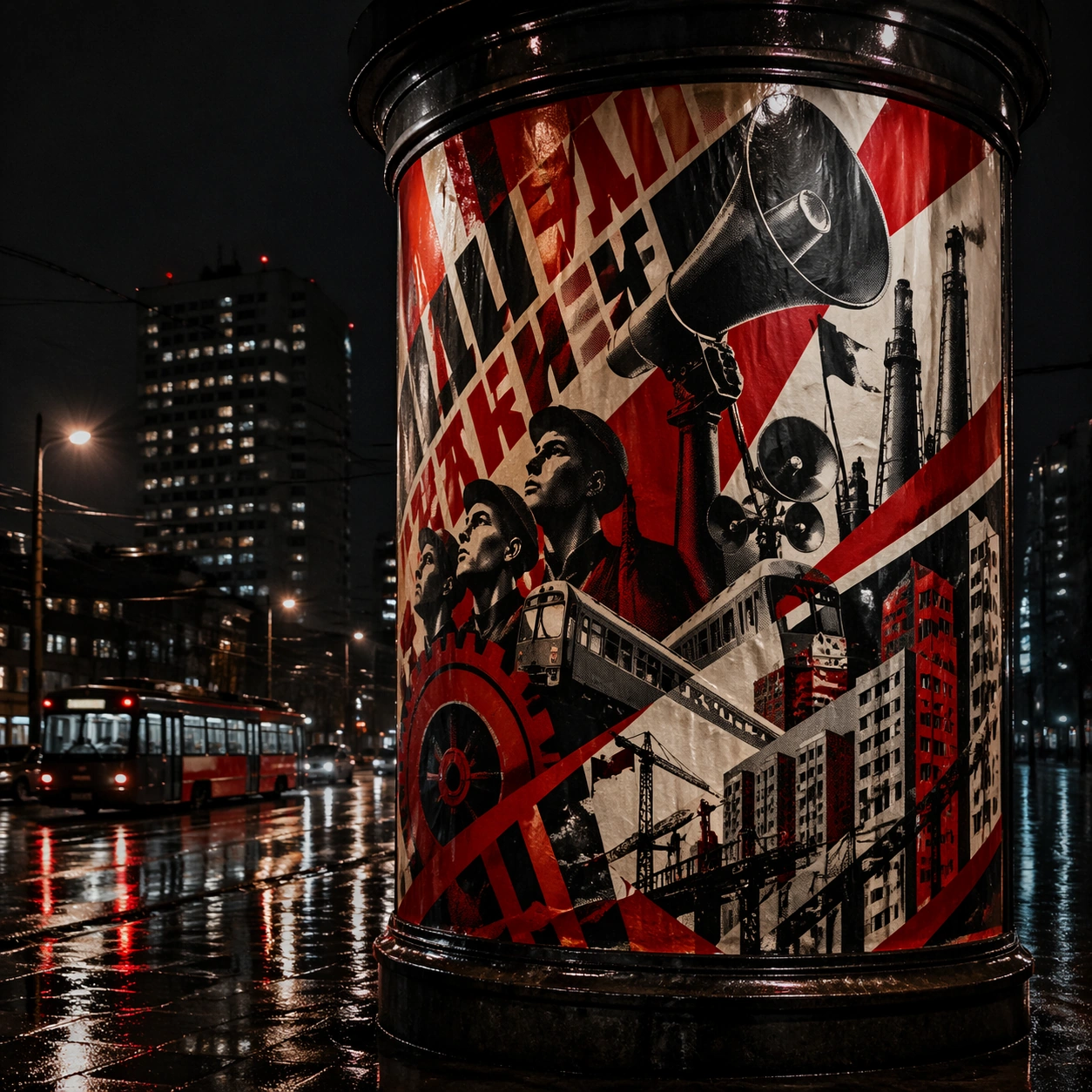
A square nighttime city view with the poster wrapping part of a cylindrical kiosk, wet pavement reflecting nearby light, and the composition holding together under moody urban illumination. The poster should express agitated constructivist geometry driven by diagonals, wedges, ray bursts, and halftone photomontage fragments, using revolutionary red, bone white, black, and steel gray with sharp contrast and a tactile surface appropriate to the medium.

Subject:
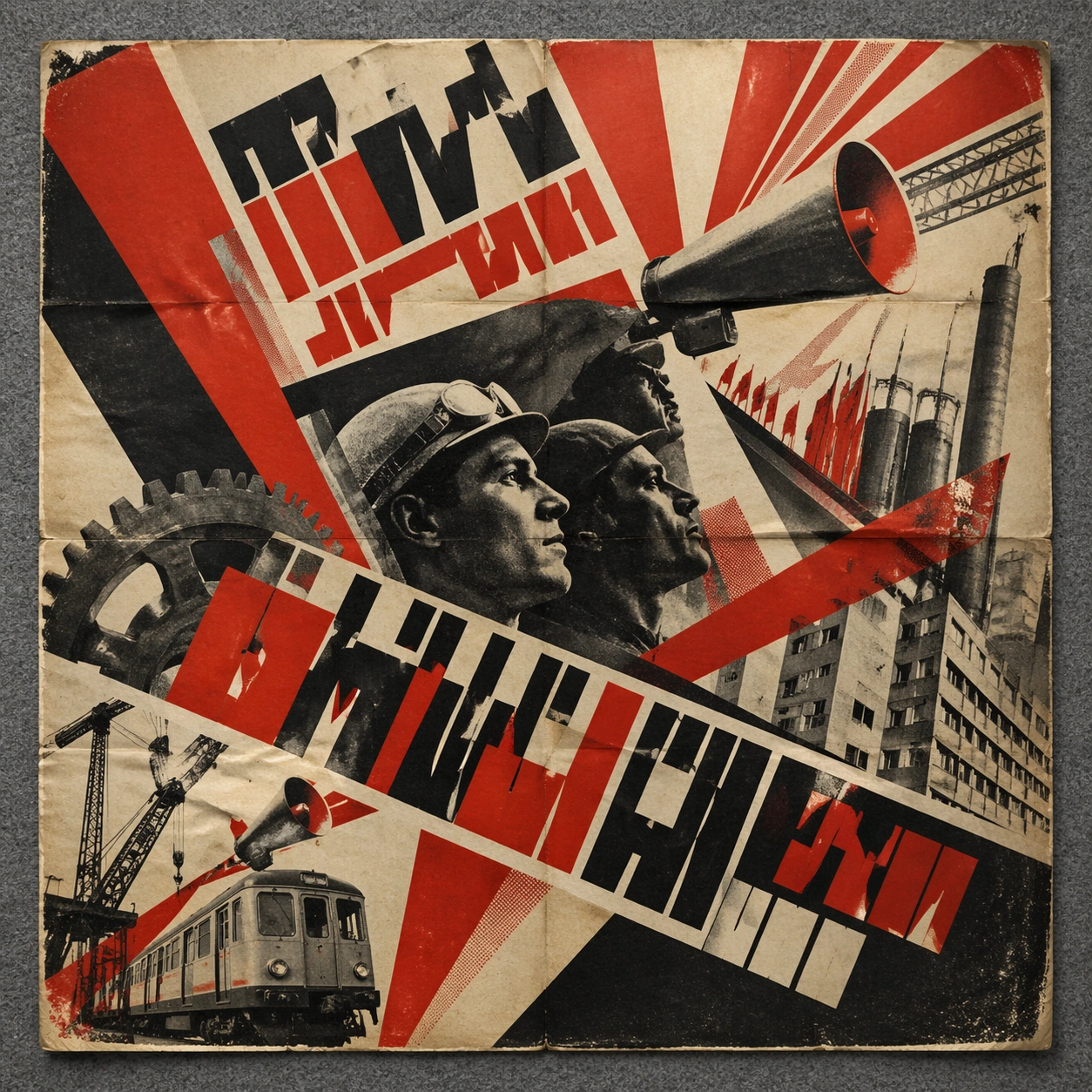
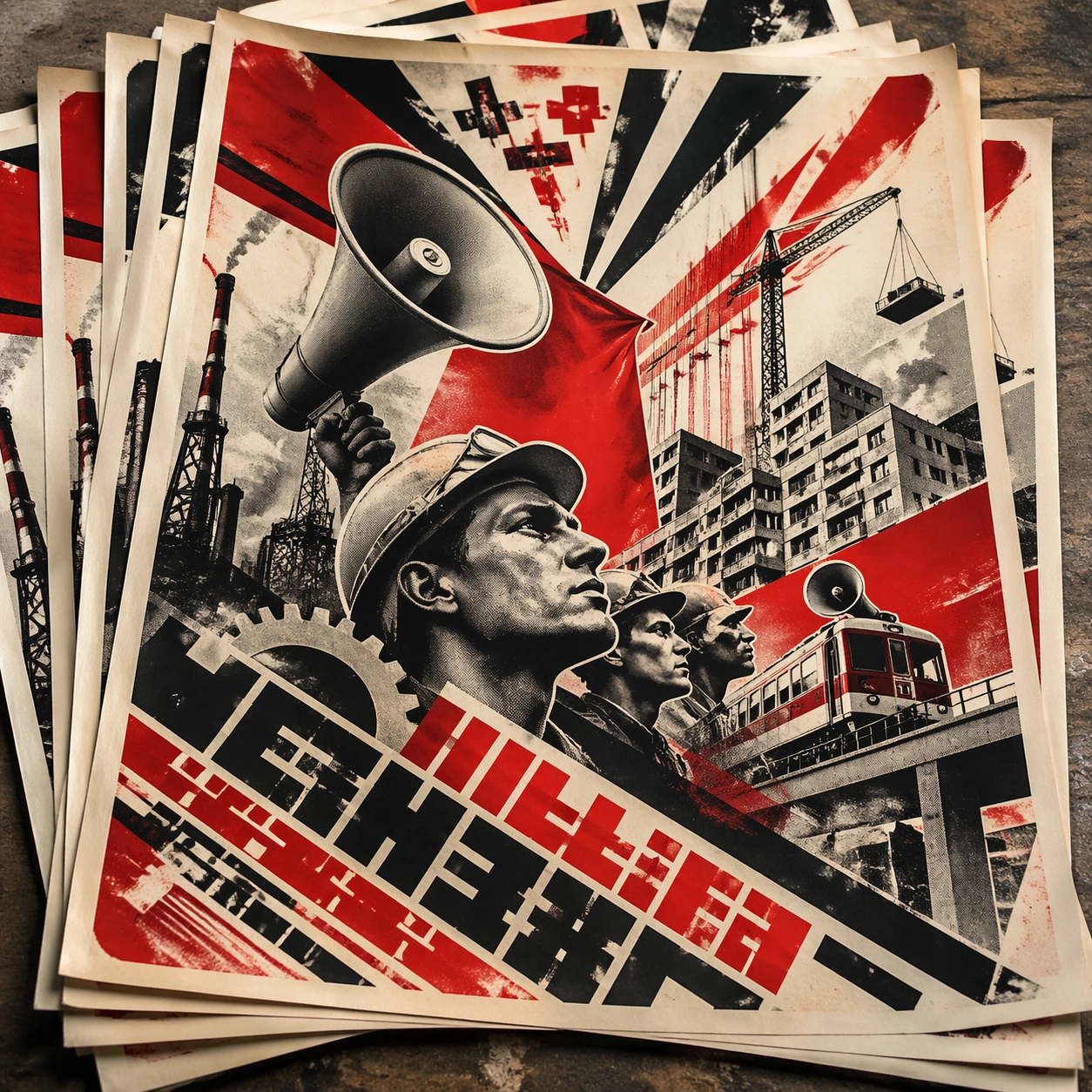
Reframe the design for a dramatic street-placement context, where the poster has to project style and mood through reflection, curvature, and surrounding darkness. Use megaphones, gears, worker profiles, factory towers, flags, and industrial beams as the main visual ingredients, and organize them with heavy angular pseudo-Cyrillic slogan blocks kept abstract and non-readable. For the contemporary-subject axis, thread in public transit megaphones, cranes, and modular housing blocks pushed into militant diagonal rhythm. The poster must feel like an original design object rather than a reproduction of any known work.

Important details:
The design should remain instantly recognizable despite the cylindrical wrap. Preserve major blocks, symbolic shapes, and abstract title forms so the style still feels authoritative at night. Preserve diagonal force, abrupt scale shifts, posterized cutout shadows, and coarse print grain. Keep every letterform abstract and non-readable, as if it were a typographic texture rather than language. Make the style unmistakable through composition, palette, surface behavior, and symbolic compression. no soft curves, no pastel palette, no decorative nostalgia, no polished luxury finish.

Use case:
Constructivist single study 8/9, testing atmospheric display under rain and glow.

Constraints:
No readable text, no watermark, no logos, preserve exact 1:1 aspect ratio, no copyrighted characters, no real brand marks, no QR codes, no interface chrome, no accidental gibberish lettering.
Mode d’emploi
- Copiez le prompt original complet, paramètres compris.
- Adaptez le sujet, le texte et la composition à vos besoins.
- Utilisez un outil externe compatible ; vérifiez l’accès et le résultat.
Avant de commencer
- Vérifiez si une image de référence est nécessaire. La compatibilité ne prouve pas le modèle utilisé pour cet exemple.
- Vérifiez noms, chiffres et textes ; les versions du modèle peuvent produire des résultats différents.