Document original
GPT Image 2 · en
Scene:
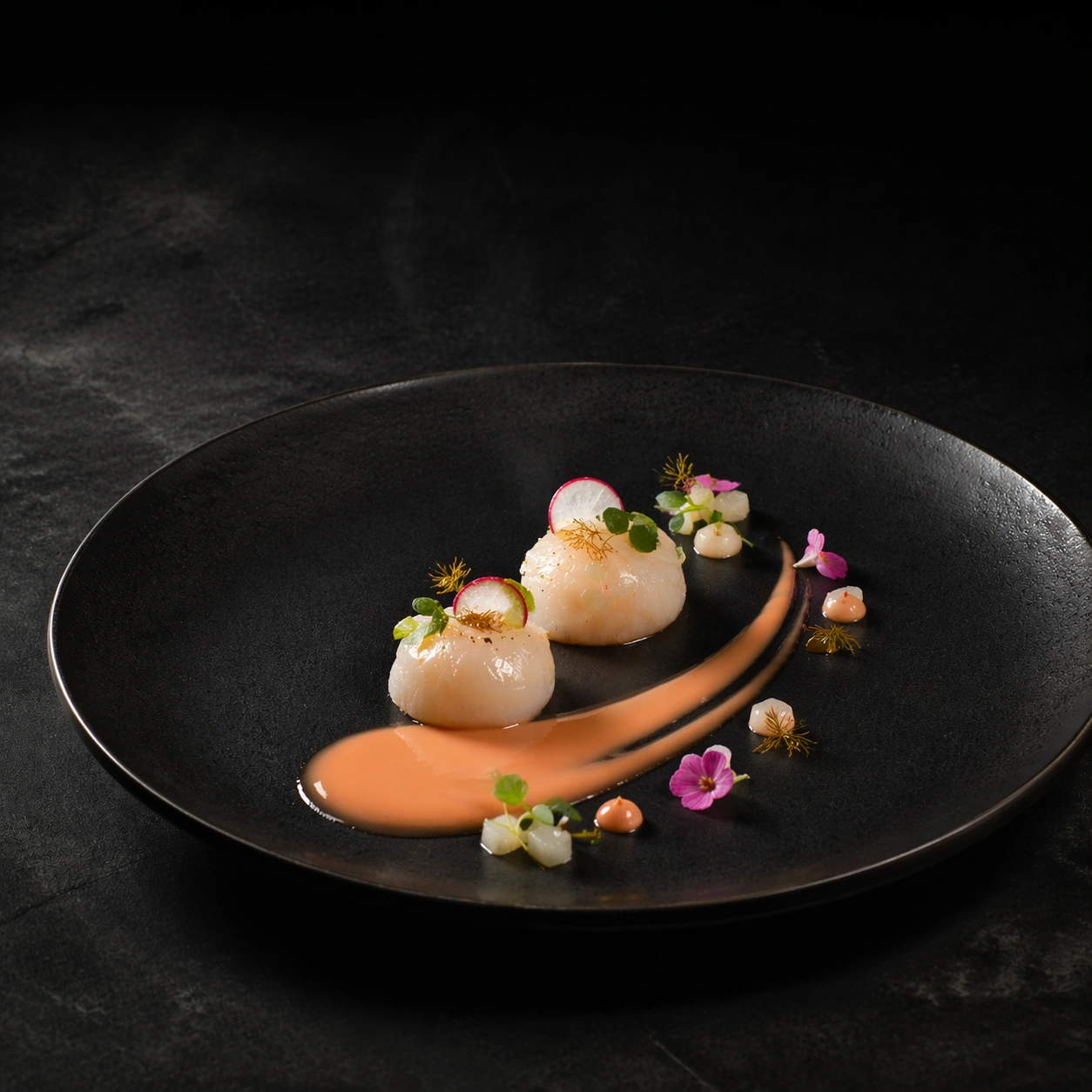
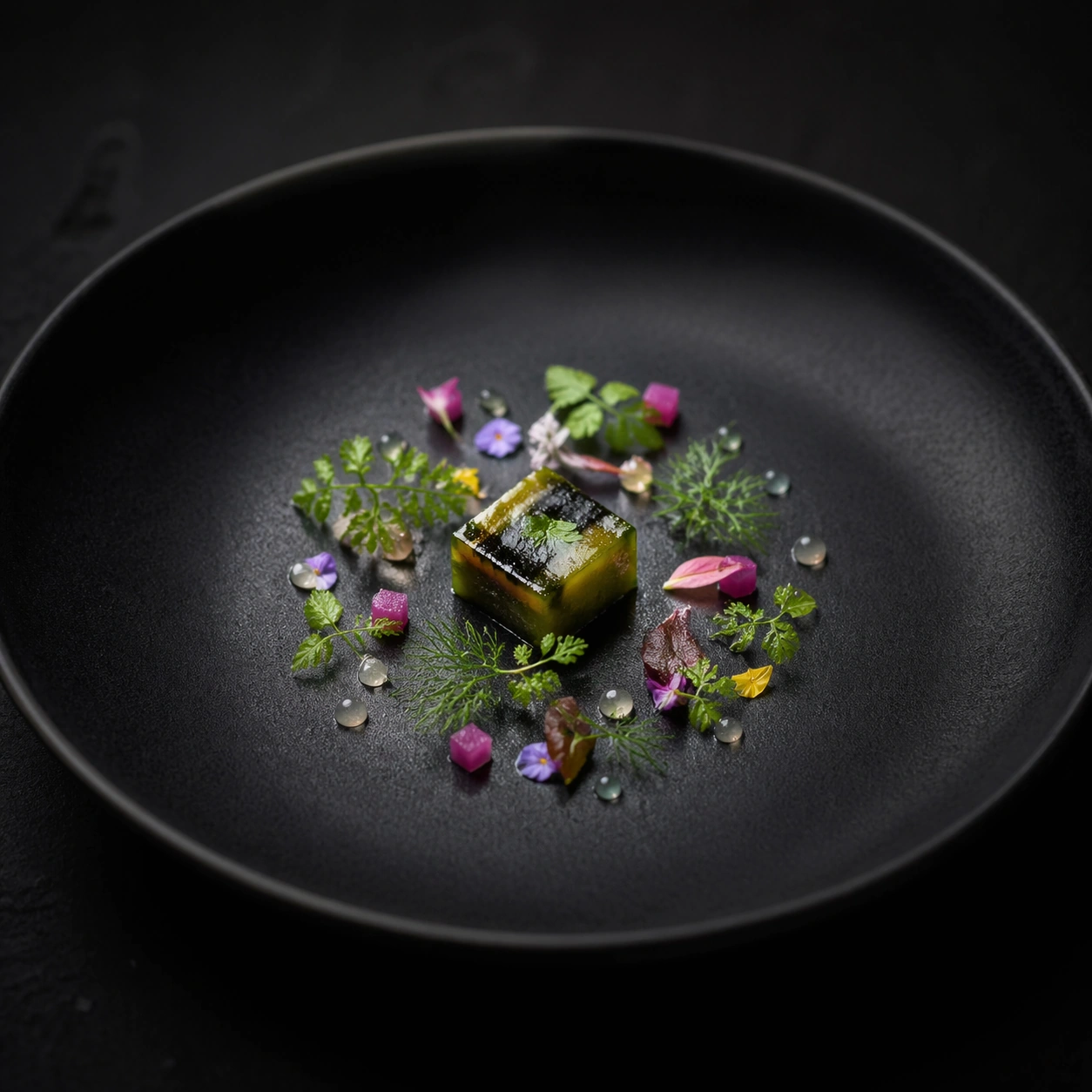
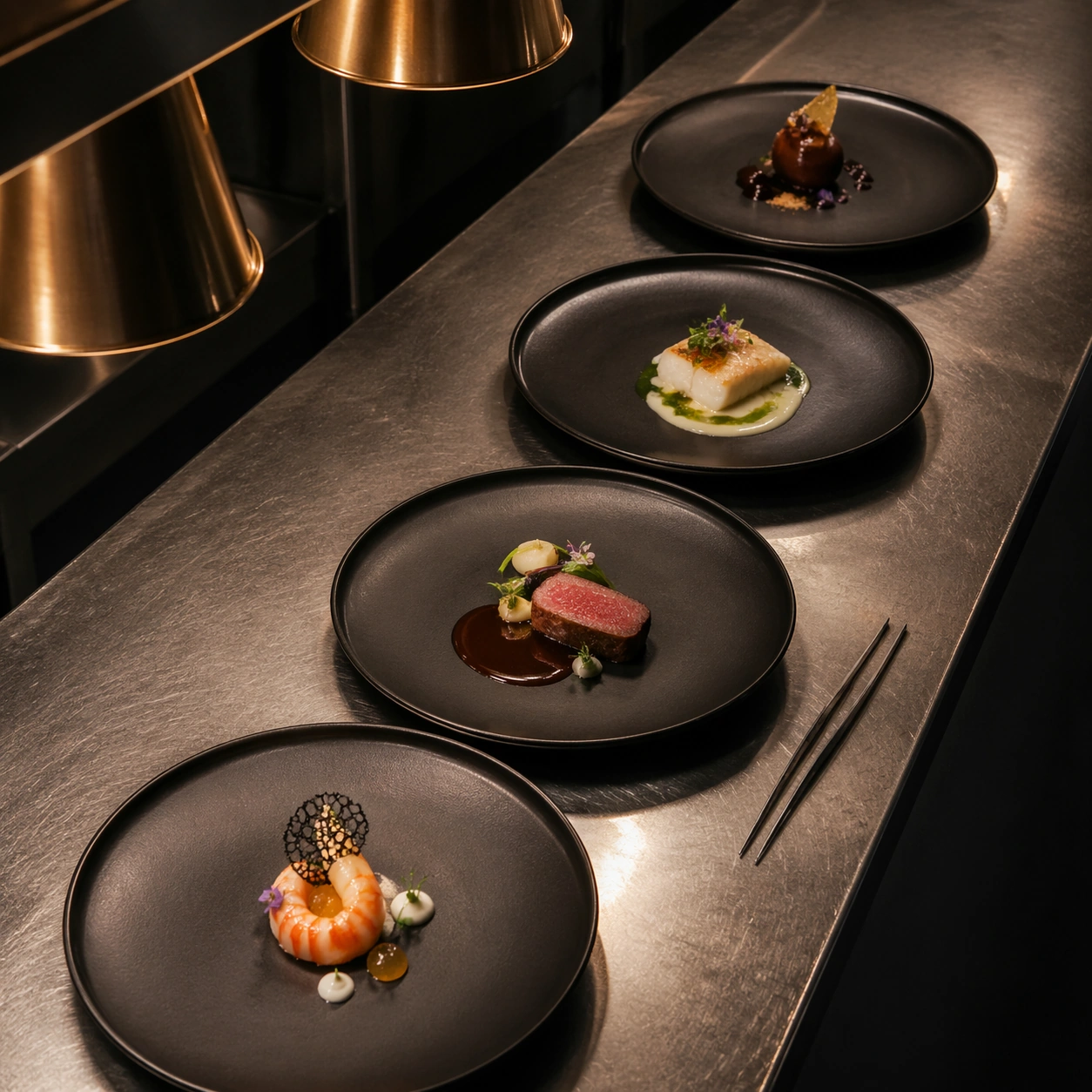
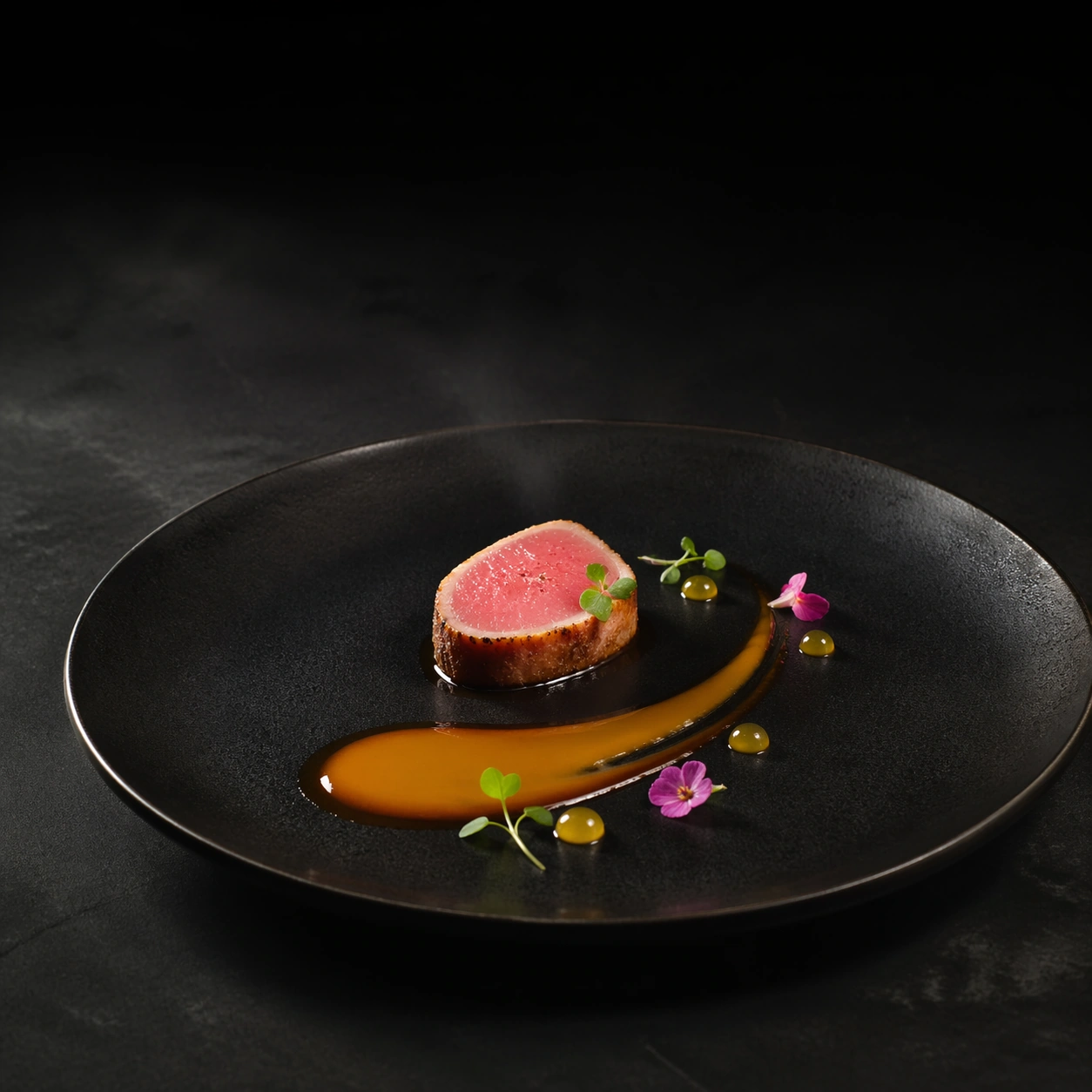
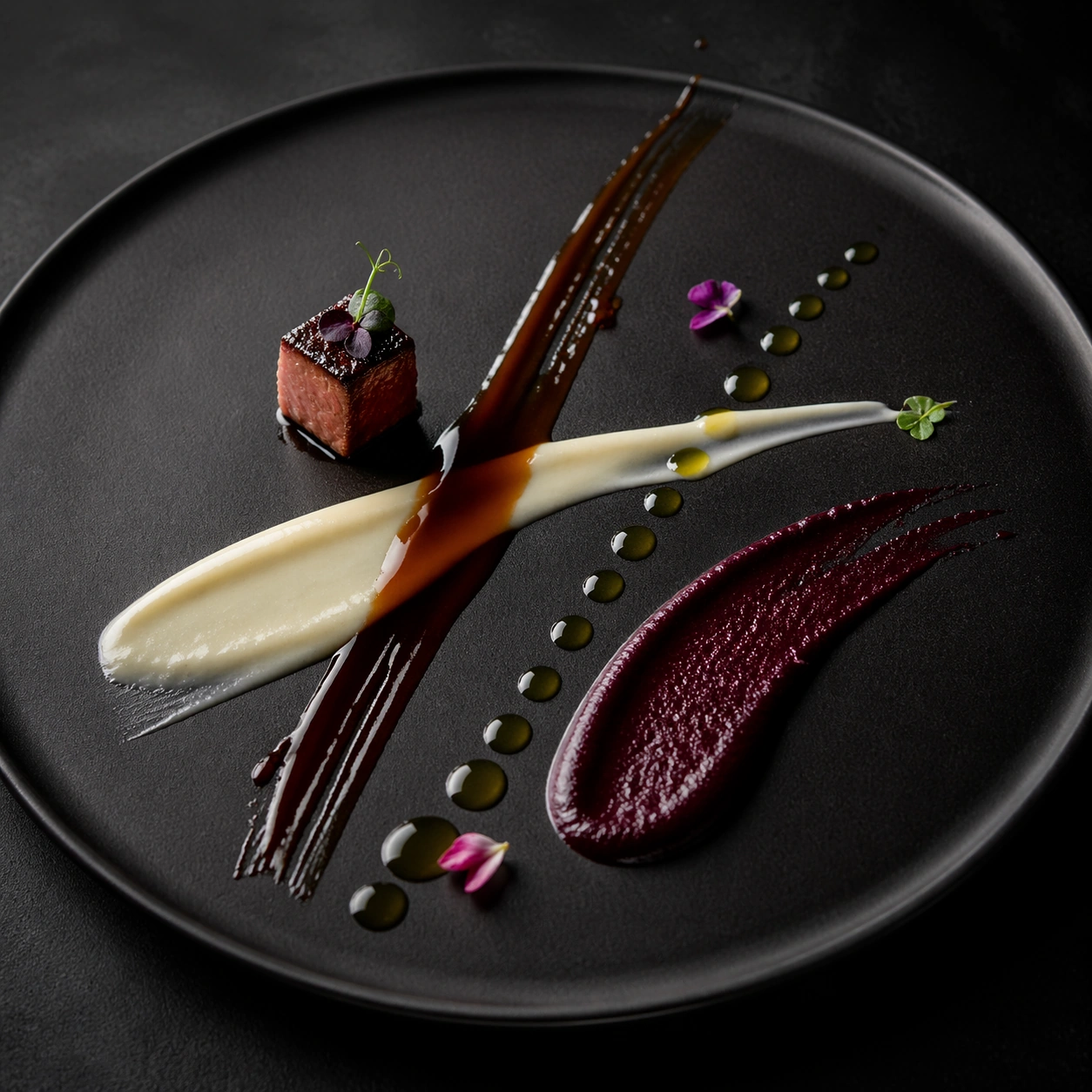
Create a square editorial food photograph built around a matte black ceramic plate resting on a charcoal surface, lit with a narrow overhead spotlight and a softer side fill that keeps the rim readable. The camera should sit between overhead and three-quarter view so the food has sculptural depth while the negative space still feels architectural. The surrounding darkness must stay controlled, velvety, and luxurious rather than flat or muddy. Use a square close-up composition on matte black ceramic with the frame tight enough to turn the surface into an abstract stage for sauce behavior. Soft grazing light should reveal thickness, gloss, and drag marks while keeping the overall mood clean and high-end rather than messy or process-oriented.

Subject:
Show four distinct sauce gestures crossing the plate at different angles: a glossy brown reduction, a pale cream stroke, a translucent herb oil bead line, and a dense fruit coulis smear. Add only a few micro garnishes and one tiny protein cube as scale anchors, so the focus remains on viscosity, taper, and edge quality. The gestures should read as intentional chef marks, not accidental spills.

Important details:
Treat every garnish as if it was placed with tweezers: micro herbs, tiny petals, translucent glaze, and faint steam must all feel physically credible. Keep the plate rim immaculate, the portion restrained, and the composition balanced so the dish reads as sculpture rather than comfort food. Luxury should come from precision, timing, and restraint instead of abundance. Make each sauce physically distinct through shine, opacity, drag resistance, and edge breakup. The negative space between marks matters as much as the marks themselves, and every accent should reinforce the idea that a chef is drawing with edible matter under exact control.

Use case:
Three-star plate art single study 6/9, isolating sauce behavior as the hero subject.

Constraints:
No readable text, no watermark, no logos, preserve exact 1:1 aspect ratio, no rustic mess, no oversized portions, no cutlery, no napkins, no casual dining props, no accidental symmetry that kills the chef-made feel, no splatter chaos, no thick puddles, no visible squeeze bottles.
Mode d’emploi
- Copiez le prompt original complet, paramètres compris.
- Adaptez le sujet, le texte et la composition à vos besoins.
- Utilisez un outil externe compatible ; vérifiez l’accès et le résultat.
Avant de commencer
- Vérifiez si une image de référence est nécessaire. La compatibilité ne prouve pas le modèle utilisé pour cet exemple.
- Vérifiez noms, chiffres et textes ; les versions du modèle peuvent produire des résultats différents.