Document original
GPT Image 2 · en
Scene:
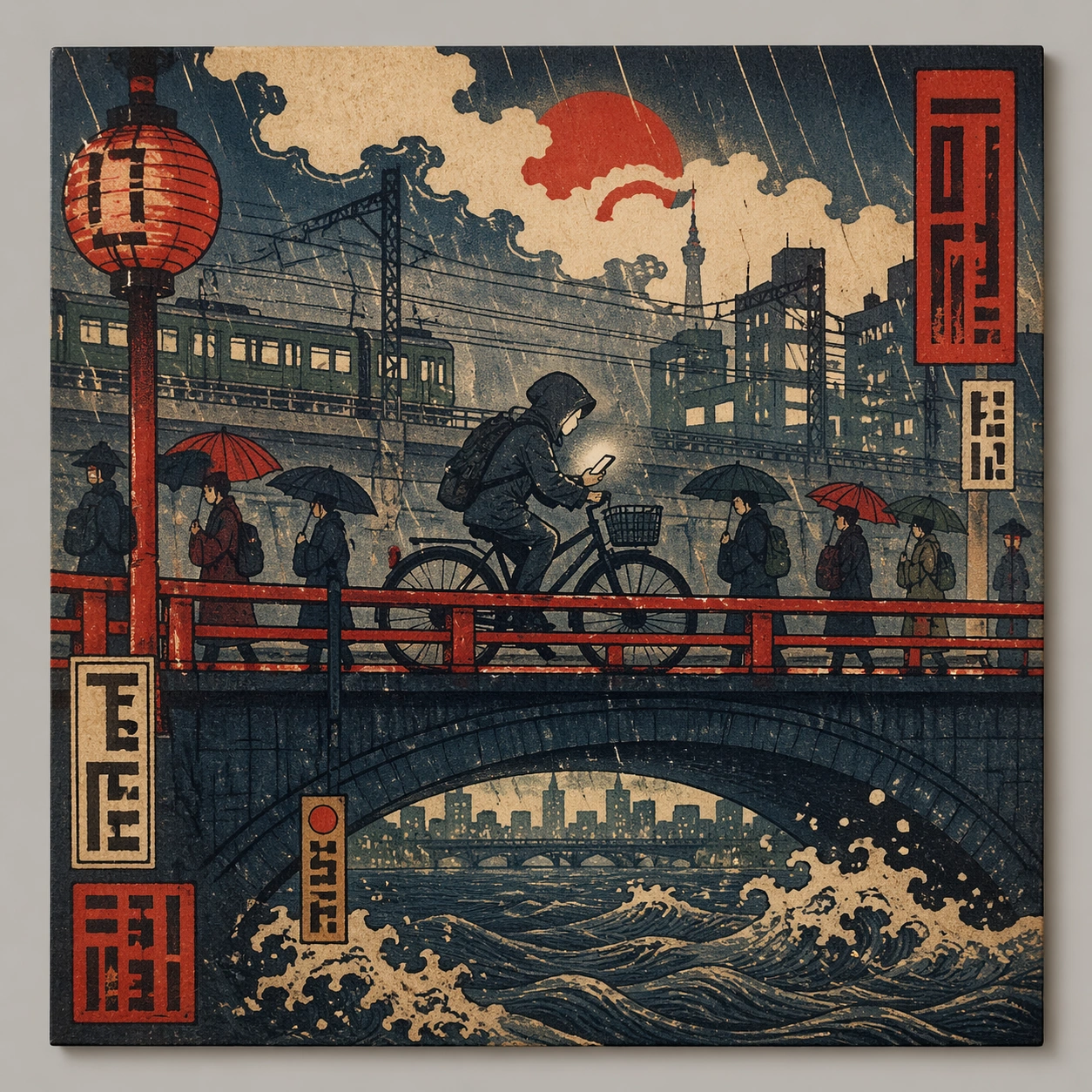
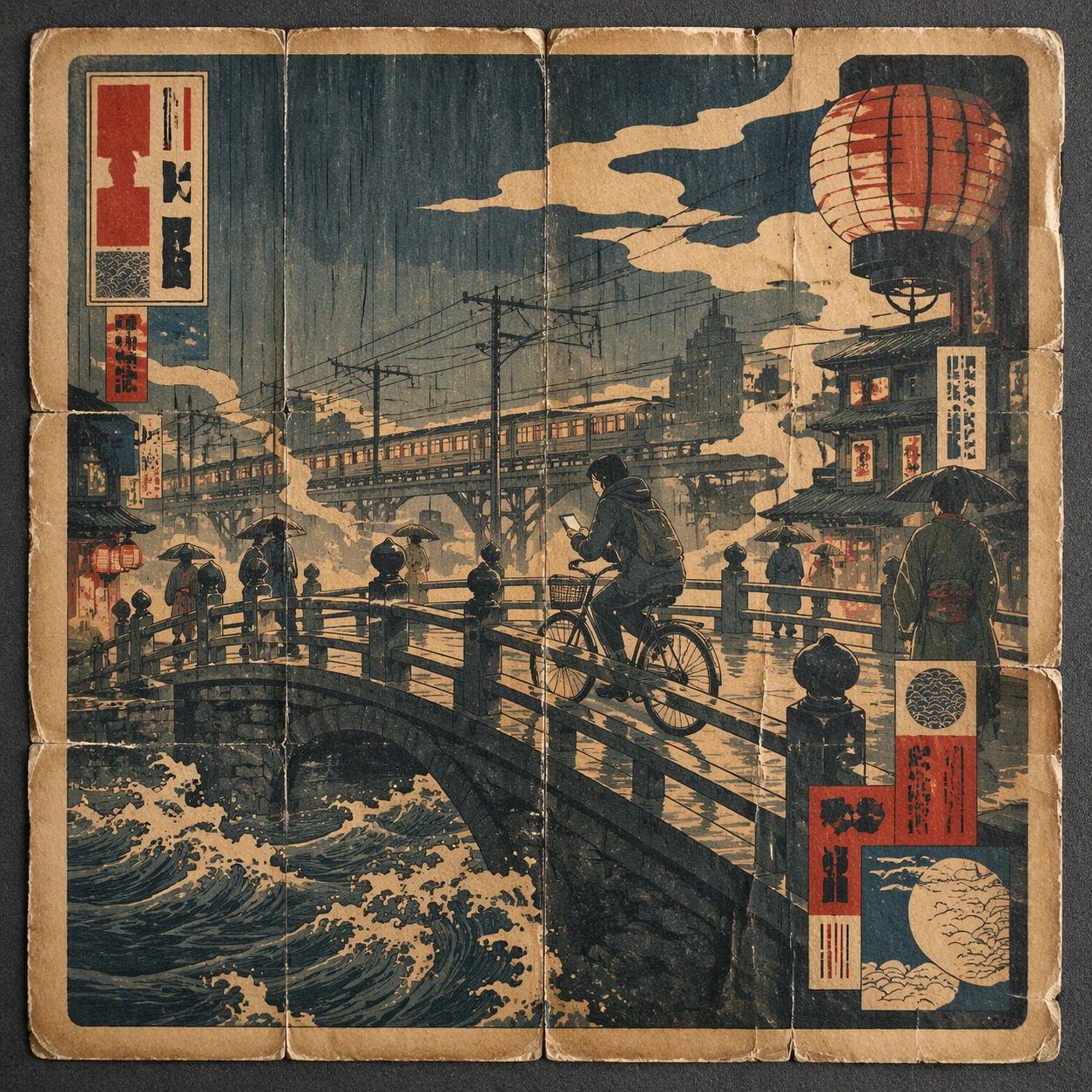
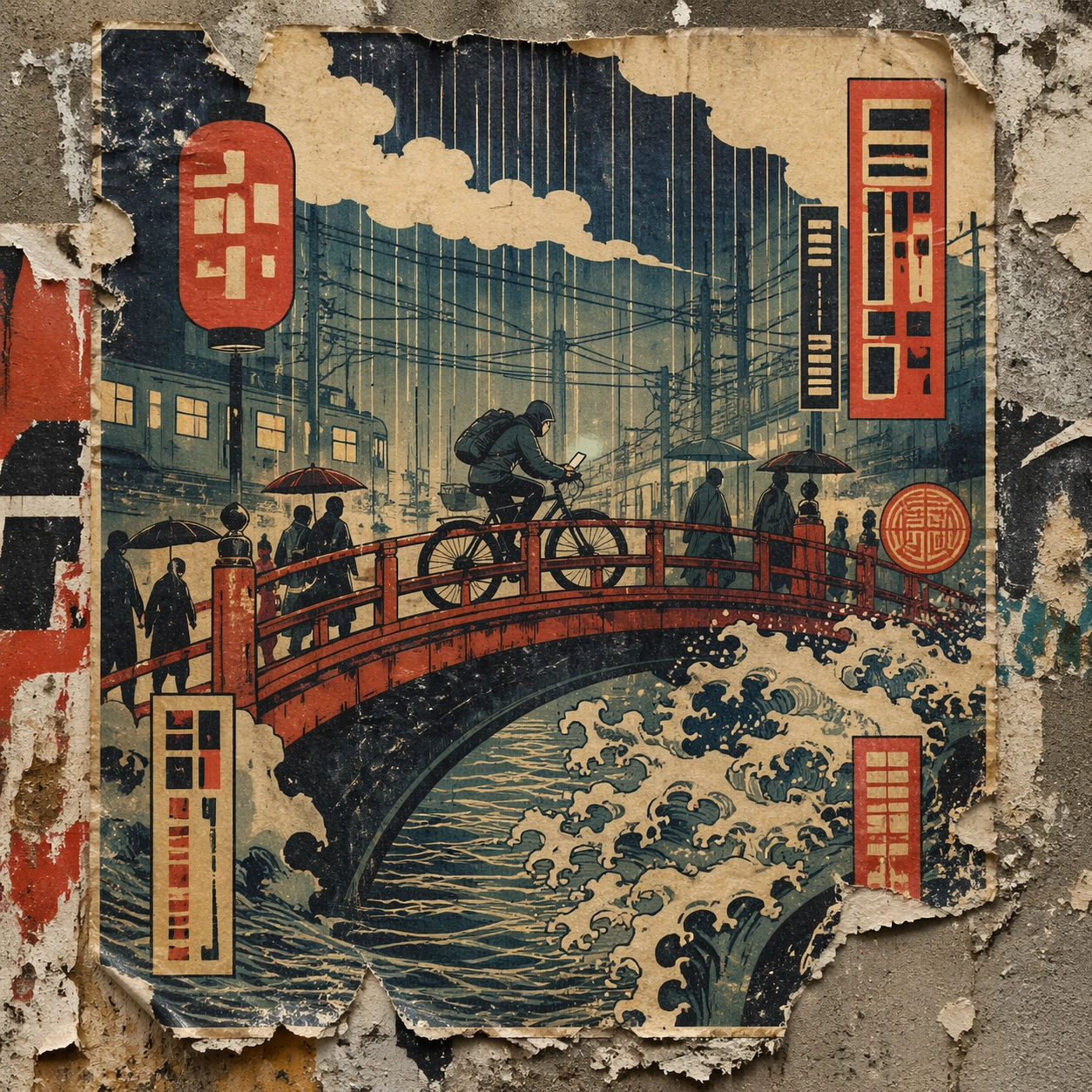
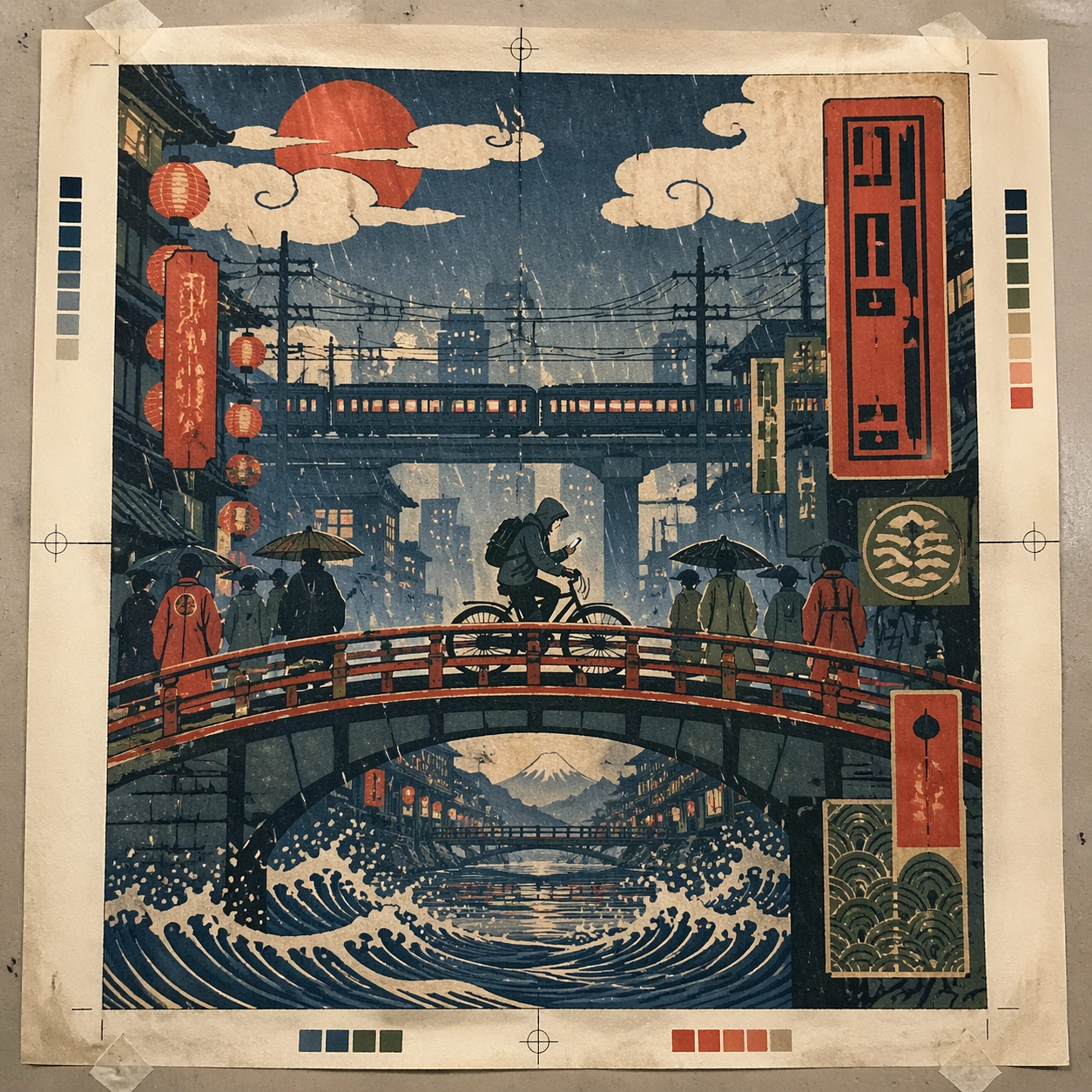
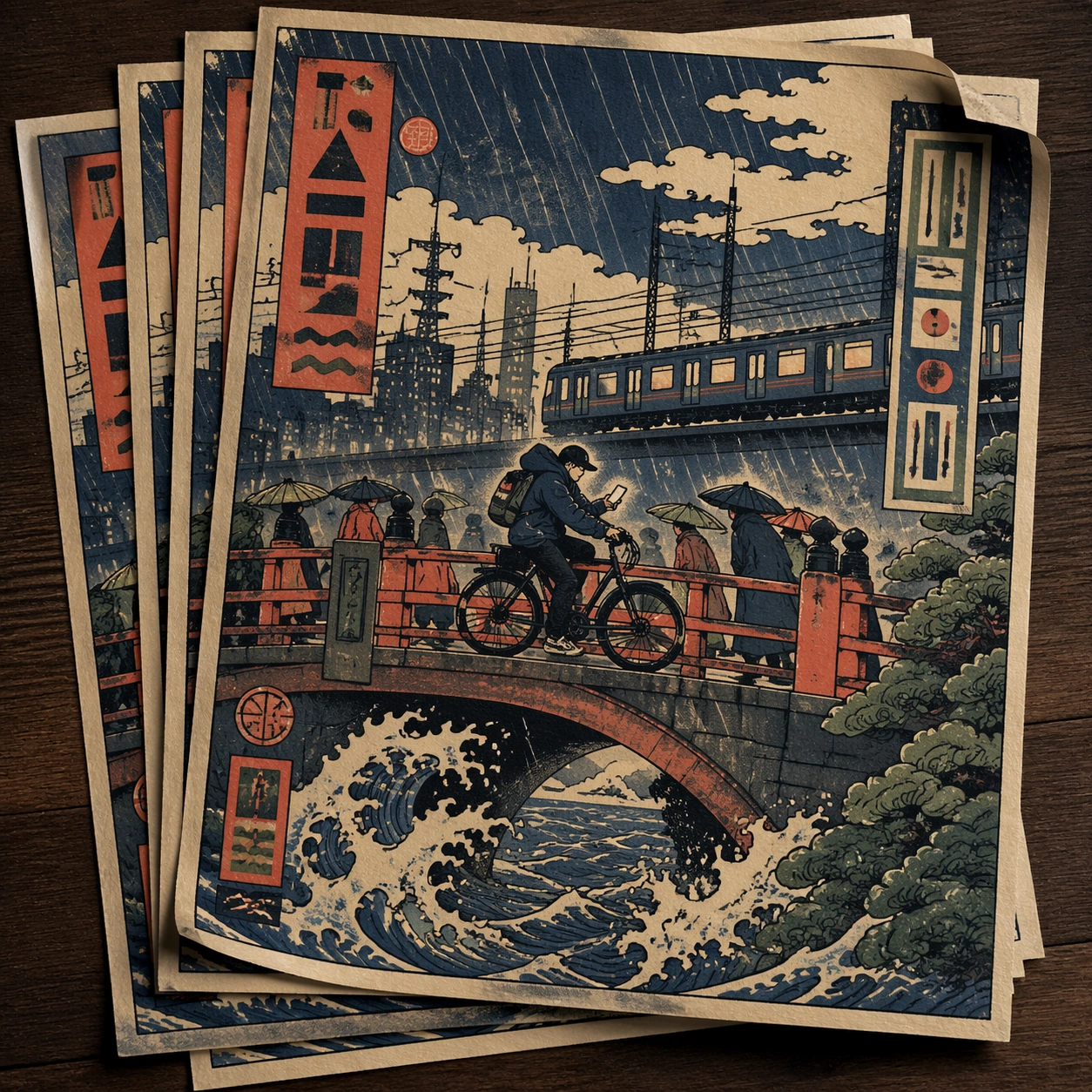
A square tabletop shot of several poster prints stacked and slightly fanned, with curled corners, offset edges, and soft directional light revealing paper thickness and ink behavior. The poster should express woodblock poster language with flat color planes, carved keylines, wave patterns, cloud voids, and compressed perspective, using indigo, vermilion, muted cream, smoky pine green, and weathered charcoal outlines and a tactile surface appropriate to the medium.

Subject:
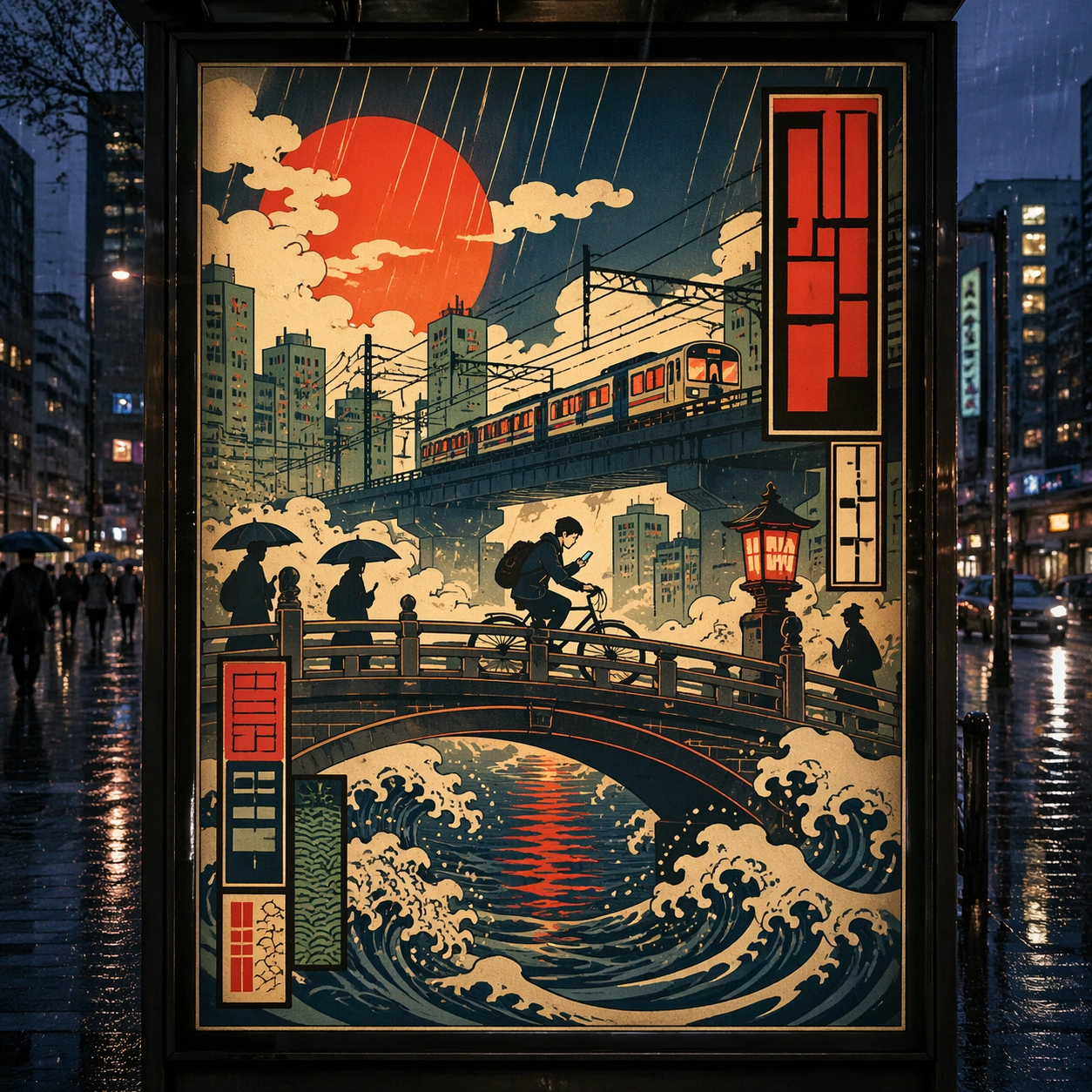
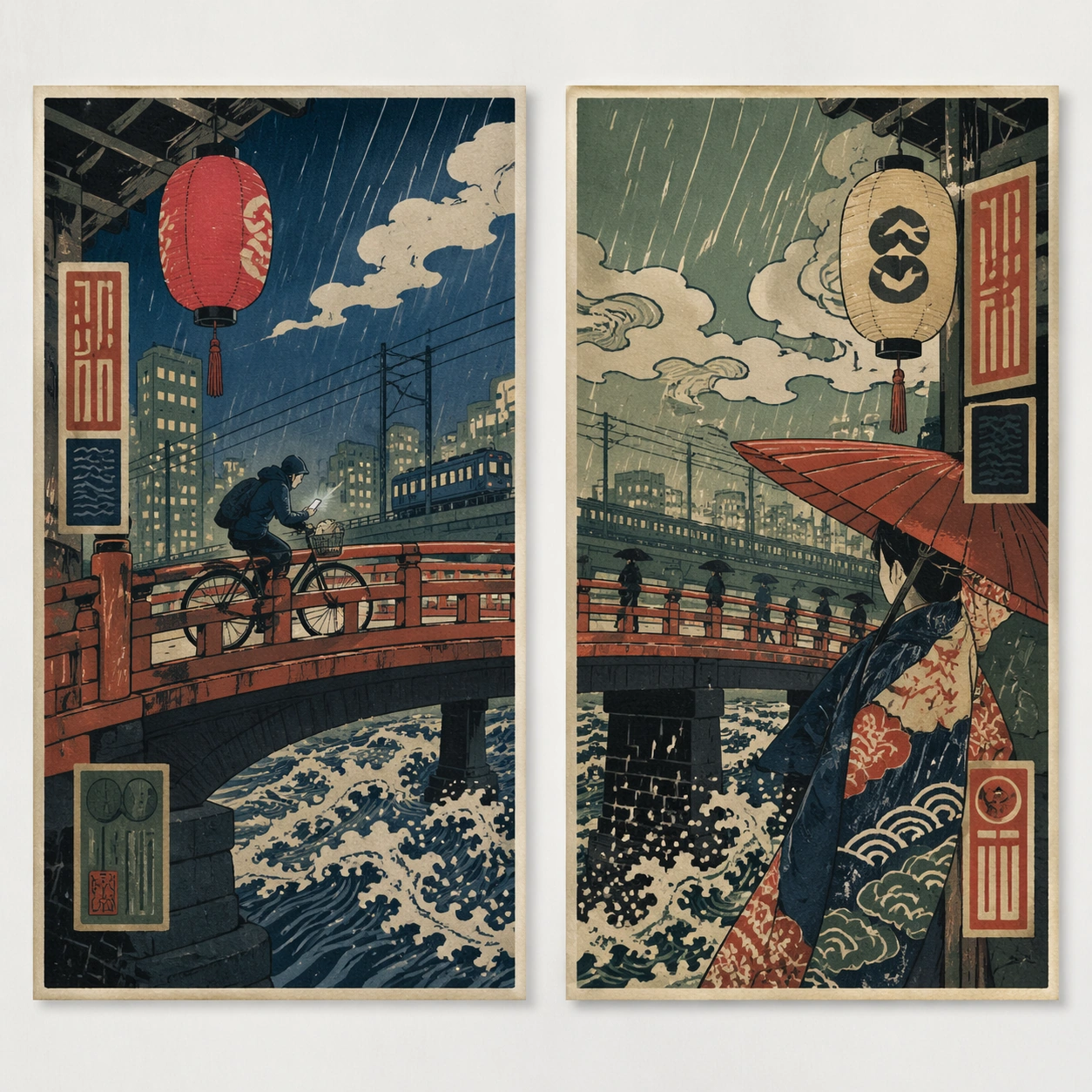
Design the top poster to dominate while nearby duplicate sheets echo the same composition, creating a tactile print-run scene rather than a single isolated sheet. Use bridges, river spray, layered robes, lantern shapes, rain bands, cloud scrolls, and urban commuters as the main visual ingredients, and organize them with cartouche-like title seals and vertical blocks rendered as abstract non-readable forms. For the contemporary-subject axis, thread in a city cyclist crossing a bridge in rain with phone light and train wires translated into woodblock logic. The poster must feel like an original design object rather than a reproduction of any known work.

Important details:
Use the stack to emphasize production character: edge shadows, repeated motifs peeking from beneath, and subtle misalignment should enrich the material reading without changing the core design. Preserve visible contour line discipline, flat depth stacking, patterned water, and rhythmic empty sky fields. Keep every letterform abstract and non-readable, as if it were a typographic texture rather than language. Make the style unmistakable through composition, palette, surface behavior, and symbolic compression. no glossy digital gradients, no lens blur, no hyperreal reflections, no cinematic depth-of-field.

Use case:
Ukiyo-e Remix single study 7/9, testing print-run tactility and repeat presence.

Constraints:
No readable text, no watermark, no logos, preserve exact 1:1 aspect ratio, no copyrighted characters, no real brand marks, no QR codes, no interface chrome, no accidental gibberish lettering.
Mode d’emploi
- Copiez le prompt original complet, paramètres compris.
- Adaptez le sujet, le texte et la composition à vos besoins.
- Utilisez un outil externe compatible ; vérifiez l’accès et le résultat.
Avant de commencer
- Vérifiez si une image de référence est nécessaire. La compatibilité ne prouve pas le modèle utilisé pour cet exemple.
- Vérifiez noms, chiffres et textes ; les versions du modèle peuvent produire des résultats différents.