
Document original
GPT Image 2 · en
Scene:
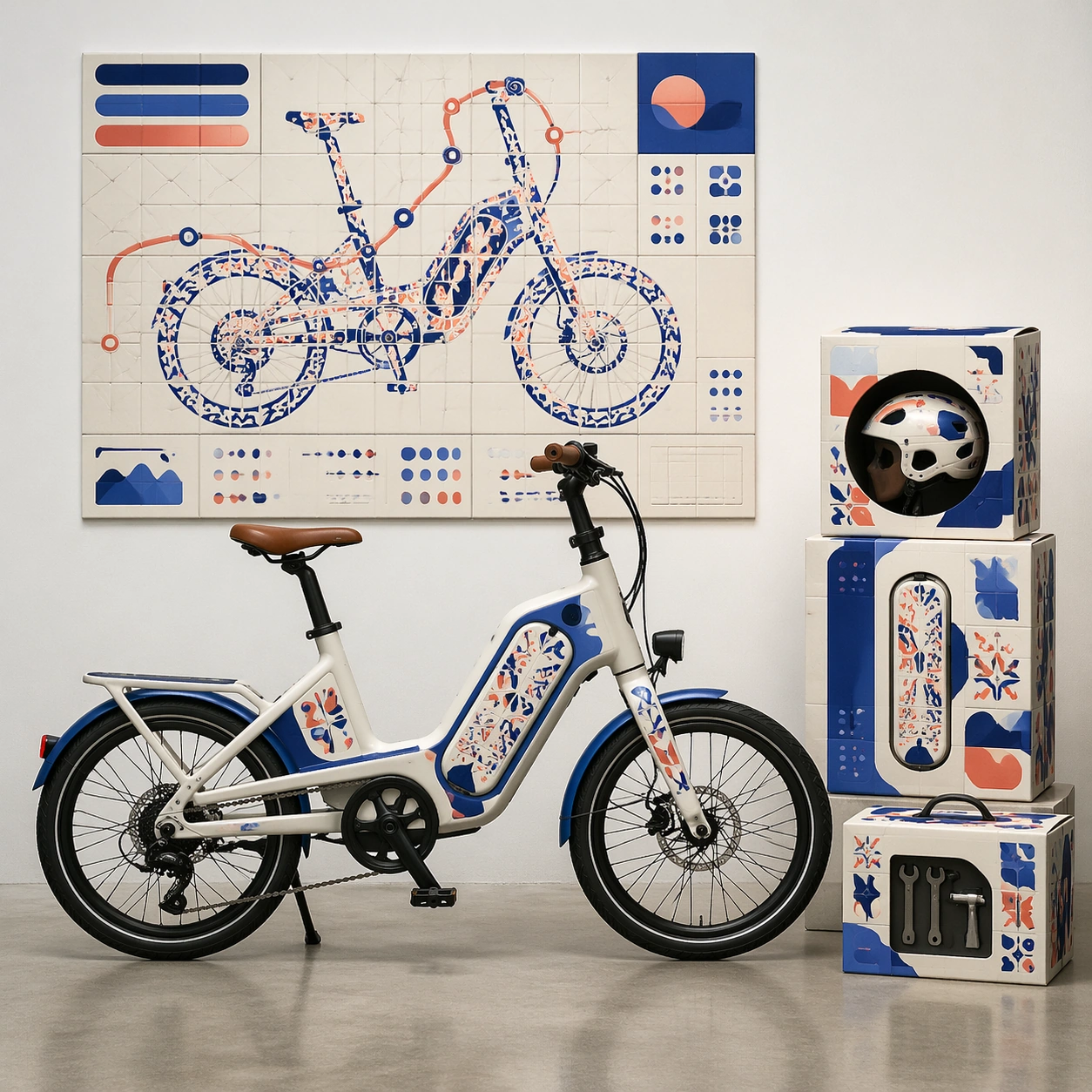
A square urban mobility showroom mockup with a compact electric bike displayed beside its shipping accessory kit and a wall-mounted campaign poster. The camera is straight-on at waist height, using a polished concrete floor, white wall, and crisp dealership lighting. The composition is structured as a product launch display: bike across the lower half, packaging modules stacked to one side, poster panel above and behind.

Subject:
A fictional electric bicycle collaboration with a ceramic-pop sculptor language. The bike frame is matte porcelain white with glossy cobalt and coral inlays, rounded modular battery casing, and hand-painted tile-like pattern panels. The accessory packaging consists of a helmet box, battery sleeve, and small toolkit carton with matching ceramic glaze motifs. The poster turns the bike silhouette into a tiled city route map, with abstract non-readable headline bars and small catalog glyphs arranged on a precise grid.

Important details:
The bicycle must be mechanically plausible: round wheels, aligned fork, visible chain or belt path, pedals, brakes, battery housing, and correct contact points on the floor. The ceramic-inspired art should look like glazed inlay and painted tile, not stickers slapped randomly on metal. Packaging must have believable flaps, seams, labels, and printed surface texture. Keep the layout clean enough for a mobility brand deck while showing a complete collaboration system.

Use case:
Brand Artist Collab Mockup single study 7/8, focused on a mobility product system with sculptural ceramic-pop surface design.

Constraints:
No readable text, no watermark, no logos, preserve exact 1:1 aspect ratio, no real bike brand, no real artist signature, no impossible wheel geometry, no floating bike, no showroom people, no overpacked accessory clutter.
Mode d’emploi
- Copiez le prompt original complet, paramètres compris.
- Adaptez le sujet, le texte et la composition à vos besoins.
- Utilisez un outil externe compatible ; vérifiez l’accès et le résultat.
Avant de commencer
- Vérifiez si une image de référence est nécessaire. La compatibilité ne prouve pas le modèle utilisé pour cet exemple.
- Vérifiez noms, chiffres et textes ; les versions du modèle peuvent produire des résultats différents.