
Document original
GPT Image 2 · en
Scene:
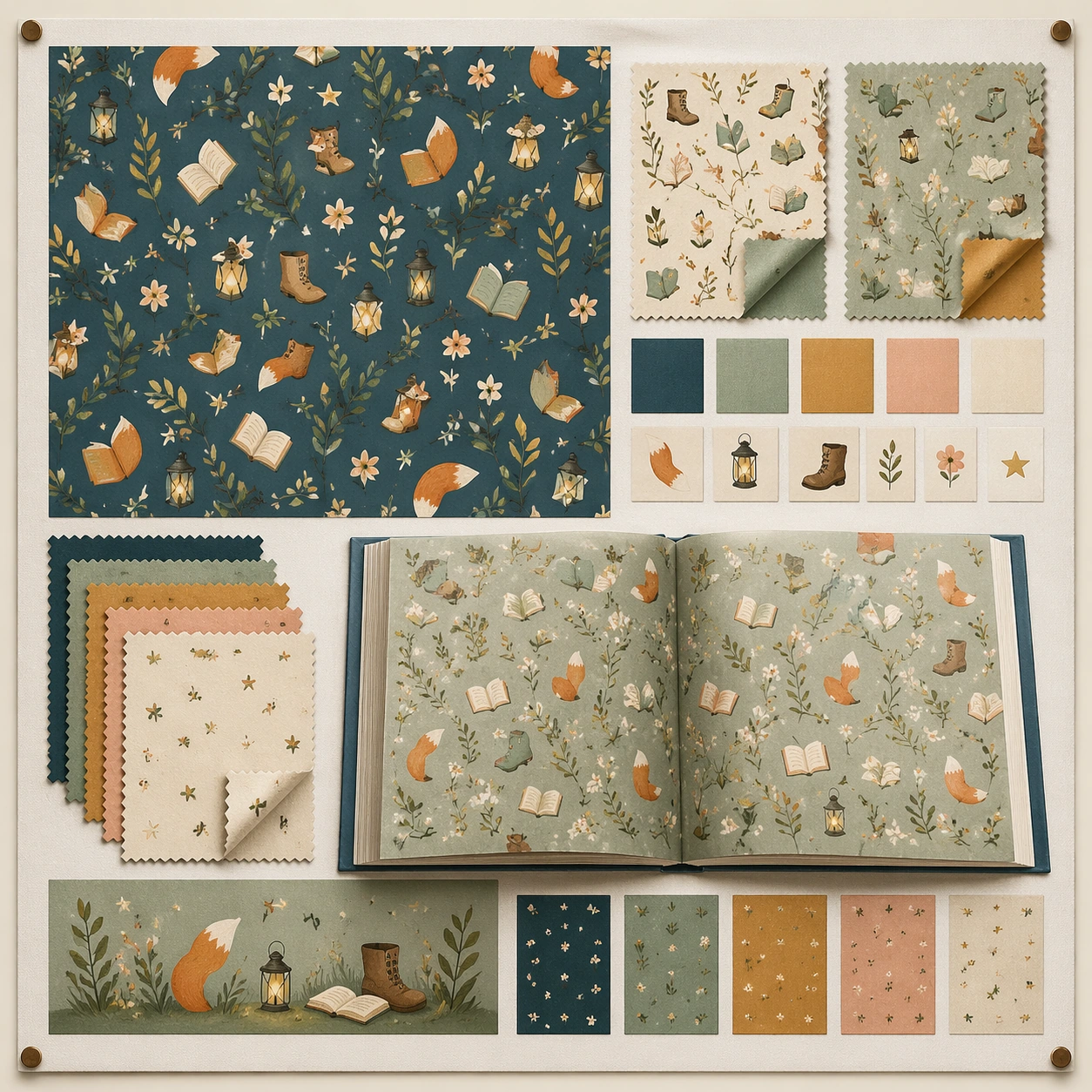
Render a square pattern-board presentation as if pinned in a publishing design review, with printed swatches, folded corner samples, and soft neutral lighting. The composition should feel like an editorial materials board for a picture-book package. Keep the square frame balanced, calm, and production-ready so the asset can serve gallery review, research comparison, and real educational delivery at the same time.

Subject:
Use repeating motifs from a gentle story world such as fox tails, leaves, stars, boots, flowers, books, and lanterns, arranged into a seamless but characterful pattern. Include a few larger sample patches and one open book showing how the pattern could live on endpapers. The subject arrangement should feel complete and self-contained, able to stand alone as a real supporting deliverable inside the same education business line.

Important details:
Keep the pattern sophisticated enough for real publishing design while remaining friendly for children. The system should feel like a companion surface to story pages, not a separate decorative style. Keep the visual hierarchy modular, commercially believable, and clearly tied to a real educational use case rather than a generic mood board.

Use case:
Children Storybook Scene Page System single study 4/5, endpaper pattern.

Constraints:
No readable text, no watermark, no logos, preserve exact 1:1 aspect ratio, no readable text, no logos, no harsh realism, no licensed character resemblance, no cluttered scrapbook styling, no horror elements.
Mode d’emploi
- Copiez le prompt original complet, paramètres compris.
- Adaptez le sujet, le texte et la composition à vos besoins.
- Utilisez un outil externe compatible ; vérifiez l’accès et le résultat.
Avant de commencer
- Vérifiez si une image de référence est nécessaire. La compatibilité ne prouve pas le modèle utilisé pour cet exemple.
- Vérifiez noms, chiffres et textes ; les versions du modèle peuvent produire des résultats différents.