
Documento originale
GPT Image 2 · en
Scene:
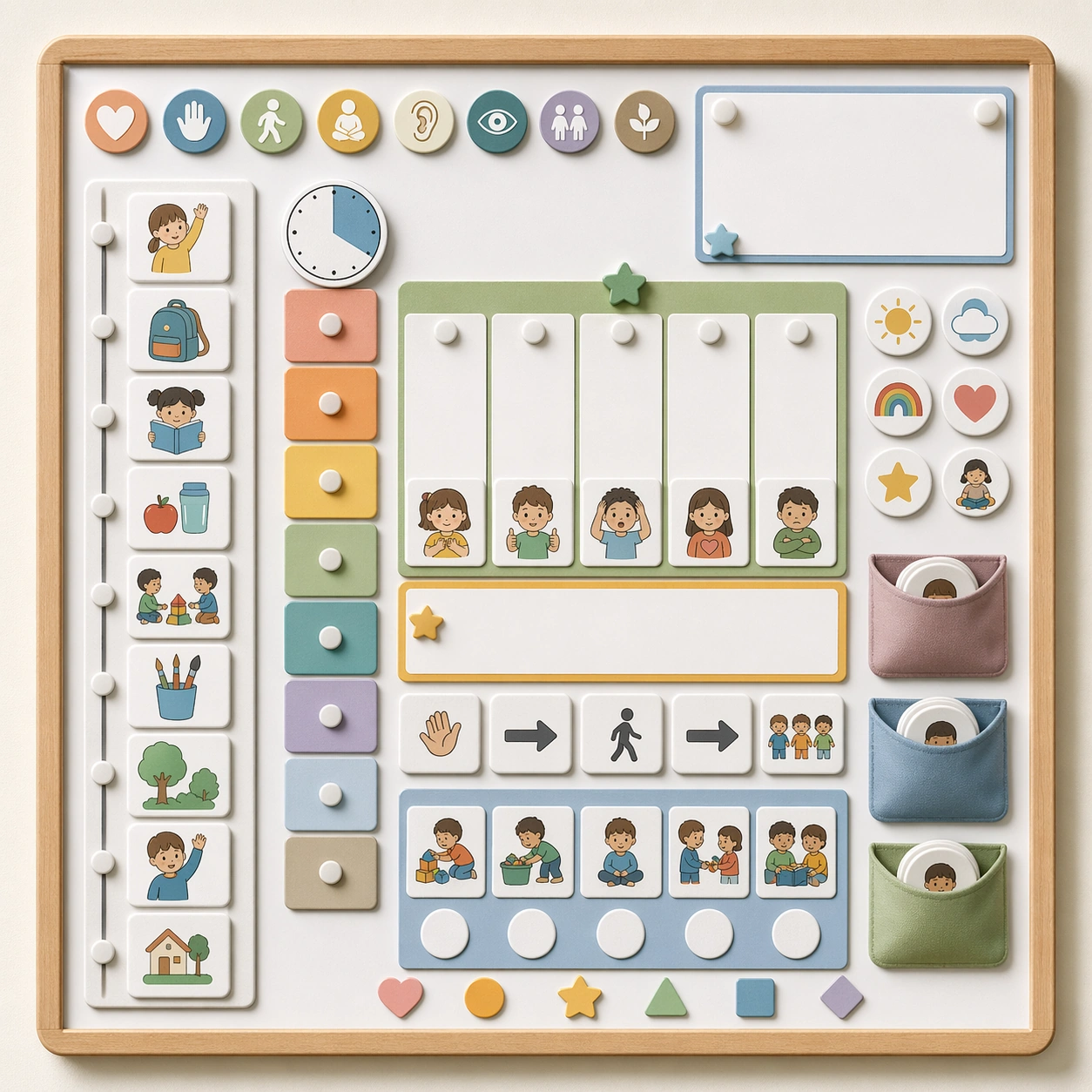
Create a square editorial board pinned on a neutral wall with mini visual cues, schedule tokens, and magnetic pieces arranged under crisp light. The image should feel like a planning-tool surface from a thoughtfully designed classroom-management system. Keep the square frame balanced, calm, and production-ready so the asset can serve gallery review, research comparison, and real educational delivery at the same time.

Subject:
Show reusable icons, blank quick-reference panels, transition symbols, and gentle behavior cues that help adults coordinate routines consistently. The design should look specific to early-childhood education, not corporate office planning. The subject arrangement should feel complete and self-contained, able to stand alone as a real supporting deliverable inside the same education business line.

Important details:
Keep the layout modular, spacious, and genuinely useful. The board should prove the rule system supports adults behind the scenes as well as children in the room. Keep the visual hierarchy modular, commercially believable, and clearly tied to a real educational use case rather than a generic mood board.

Use case:
Classroom Routine and Rule Visual Set single study 4/5, teacher support board.

Constraints:
No readable text, no watermark, no logos, preserve exact 1:1 aspect ratio, no readable text, no logos, no scary warning symbols, no chaotic wall clutter, no generic stock classroom mess, no adult office styling.
Come usare
- Copia tutto il prompt originale, inclusi i parametri.
- Adatta soggetto, testo e composizione alle tue esigenze.
- Usa uno strumento esterno compatibile; verifica accesso e risultato.
Prima di iniziare
- Controlla se serve un’immagine di riferimento. La compatibilità non prova il modello usato per l’esempio.
- Verifica nomi, numeri e testi; i risultati cambiano con le versioni del modello.