
Documento originale
GPT Image 2 · en
Scene:
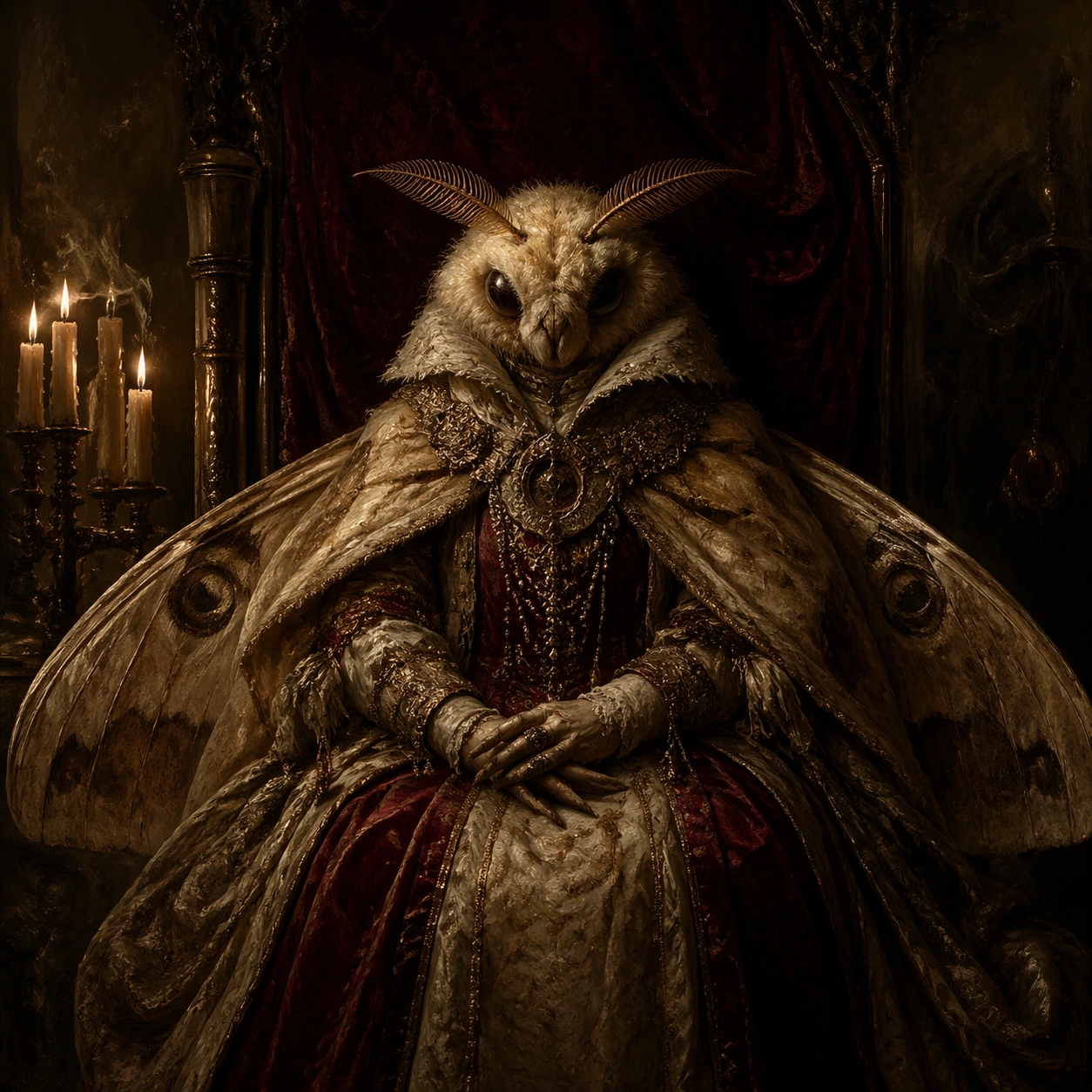
A square portrait staged in a dark chamber lit by candles, embers, or a single hidden lantern, with heavy shadows, warm ochre skin tones, black velvet darkness, and a painterly yet physically believable material presence. The frame should feel ceremonial, intimate, and heavy with air, fabric, and oil-rich color. Close on a throne alcove with deep burgundy cloth, one central candle cluster, and ash drifting through the darkness.

Subject:
The subject is a fantastical humanoid beast presented with aristocratic gravity: horned, feathered, scaled, furred, or antlered, dressed in ornate garments and posed as if for an old court portrait. The creature should feel specific, dignified, and psychologically readable rather than monstrous chaos. A moth-faced empress with powdery wings folded like a mantle sits frontally in richly stitched robes, projecting soft but absolute authority.

Important details:
The visual law is baroque portrait discipline fused with invented natural history. Preserve luxurious fabric folds, worn metal embroidery, candle smoke, skin texture, fur detail, and solemn hand placement. Avoid cartoon exaggeration, playful fantasy tropes, or bright modern polish. Keep the wings velvety and fragile, with the face lit enough to reveal expression without flattening the mystery.

Use case:
Baroque Bestiary Candlelight single study 9/9.

Constraints:
No readable text, no watermark, no logos, preserve exact 1:1 aspect ratio, no crowns copied from real regalia, no readable heraldic text, no slapstick fantasy, no modern makeup styling, no glossy digital sheen, no broken anatomy, no low-detail background, no accidental text fragments.
Come usare
- Copia tutto il prompt originale, inclusi i parametri.
- Adatta soggetto, testo e composizione alle tue esigenze.
- Usa uno strumento esterno compatibile; verifica accesso e risultato.
Prima di iniziare
- Controlla se serve un’immagine di riferimento. La compatibilità non prova il modello usato per l’esempio.
- Verifica nomi, numeri e testi; i risultati cambiano con le versioni del modello.