Documento originale
GPT Image 2 · en
Scene:
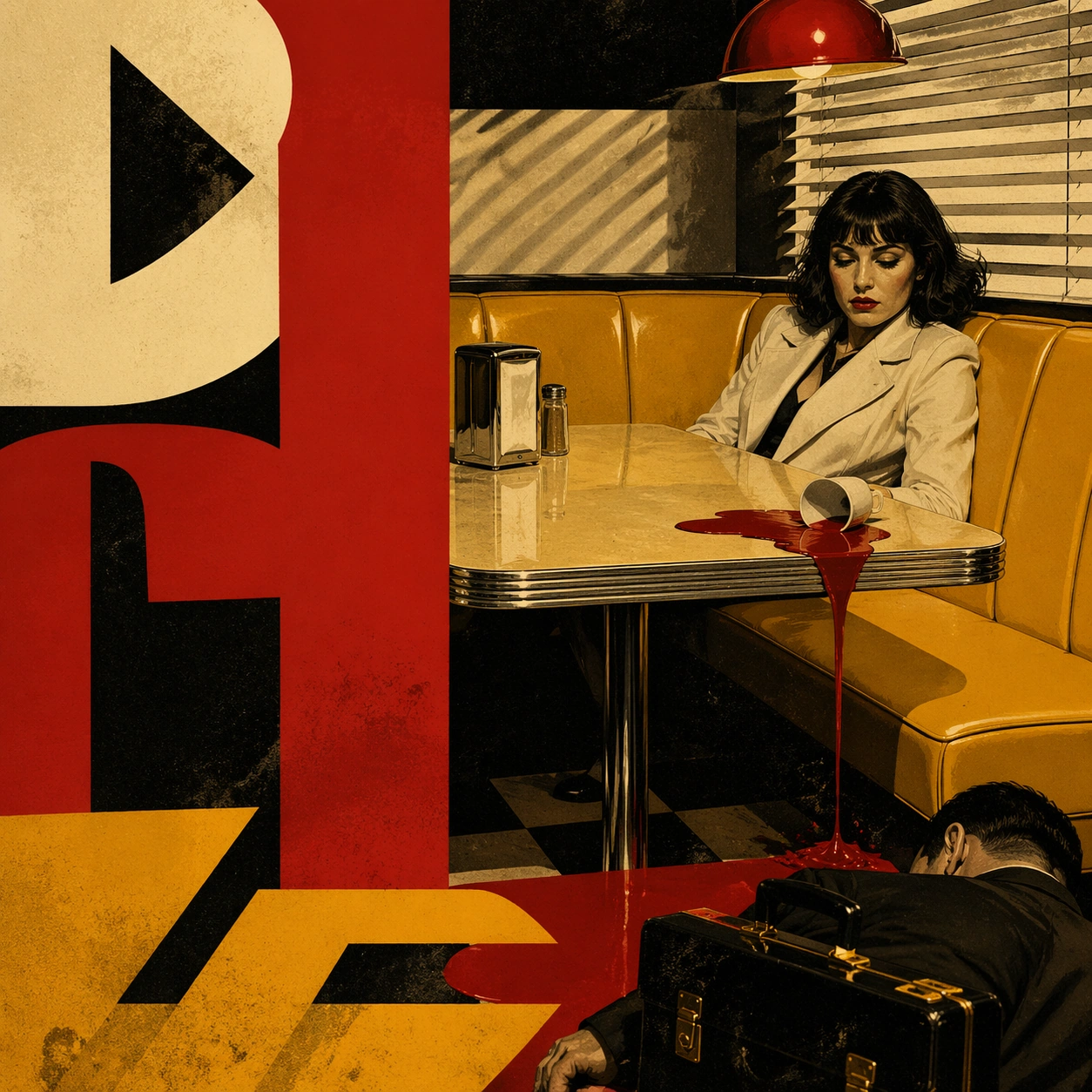
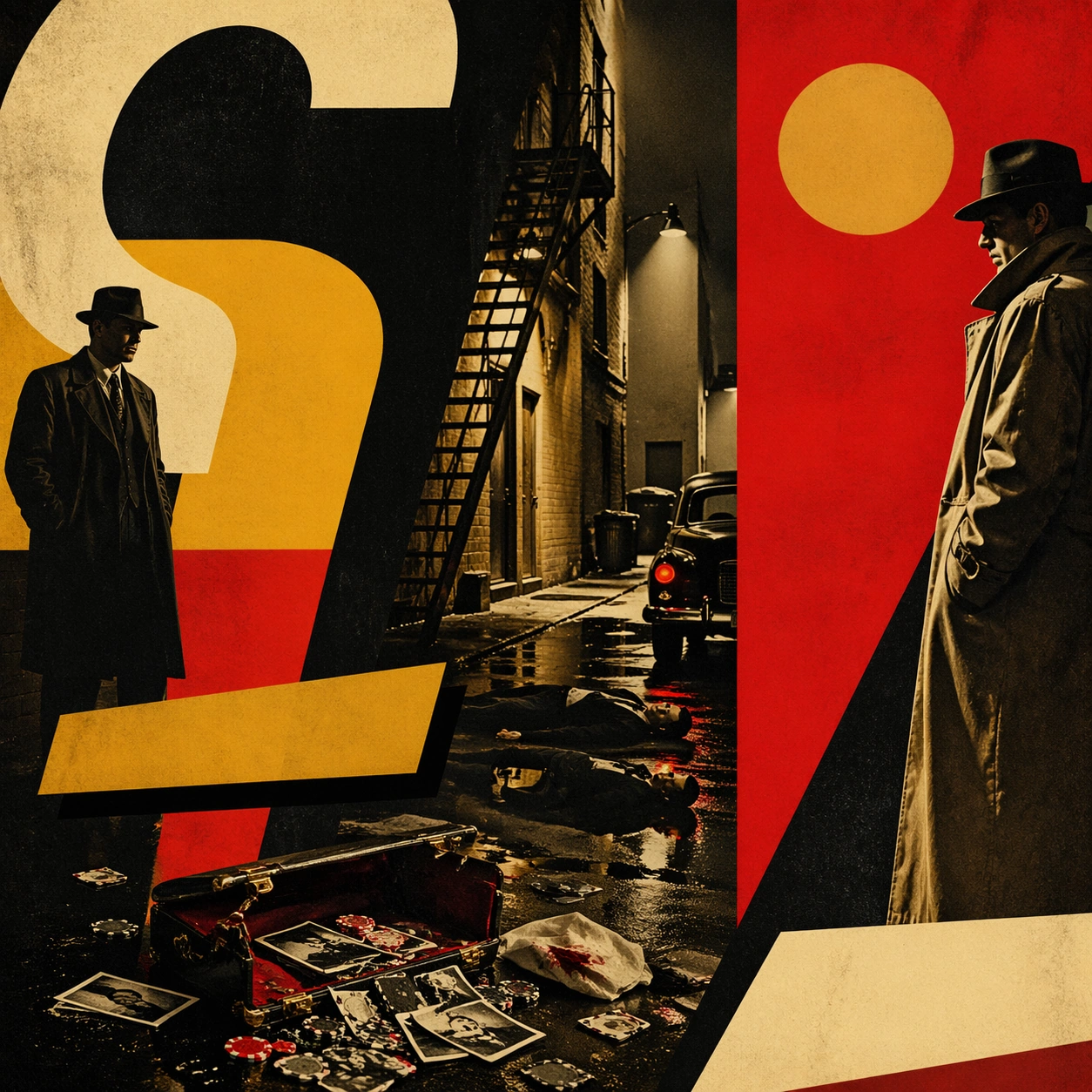
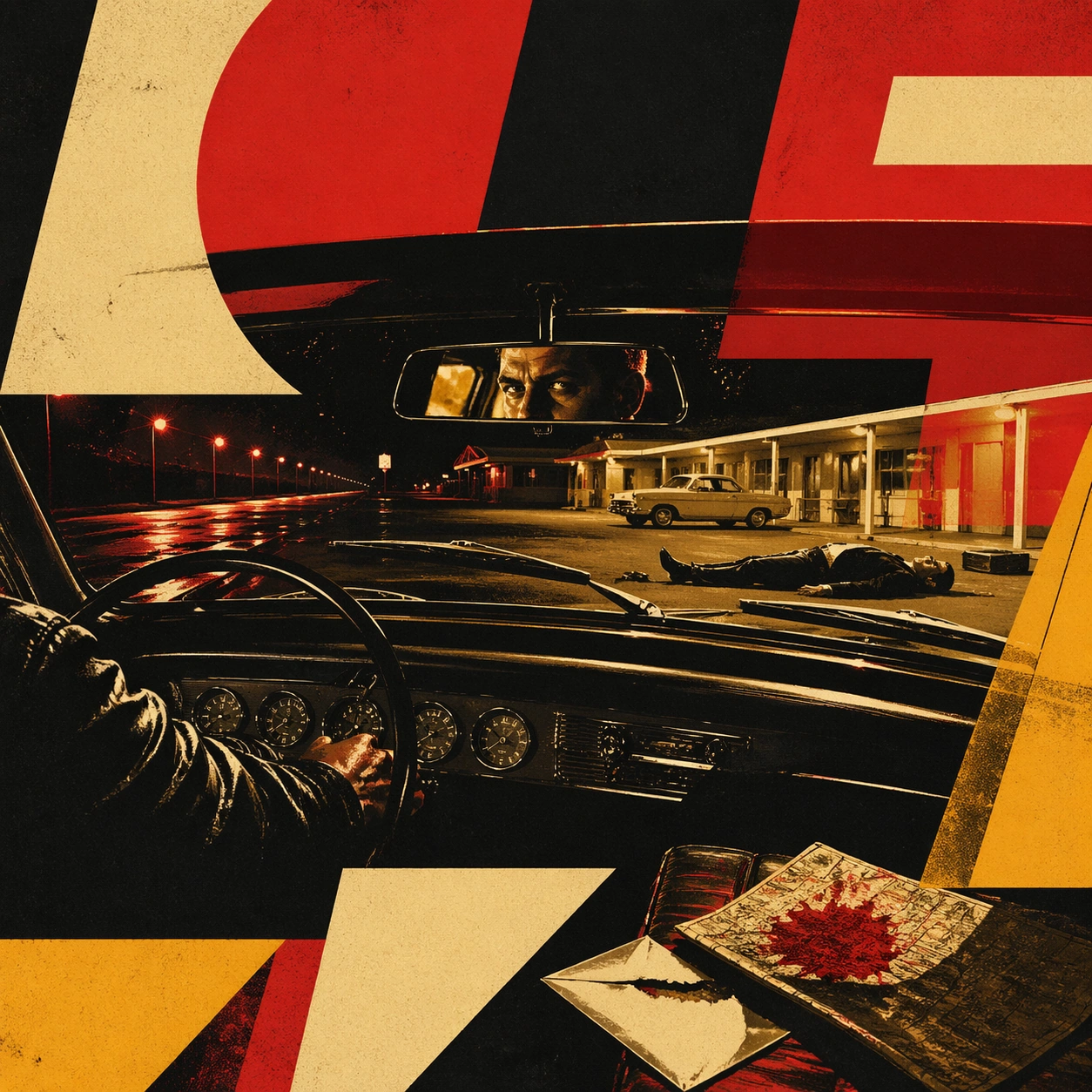
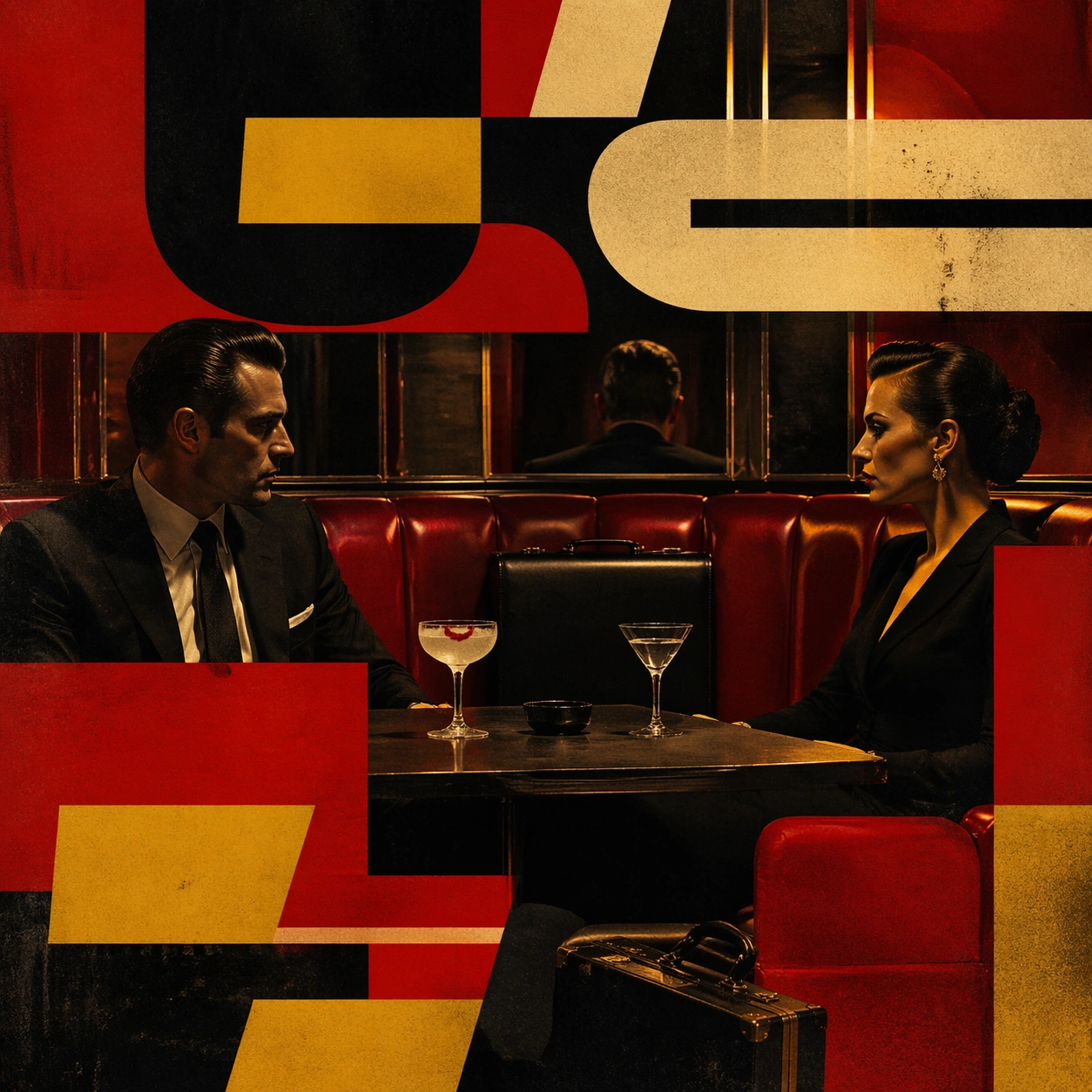
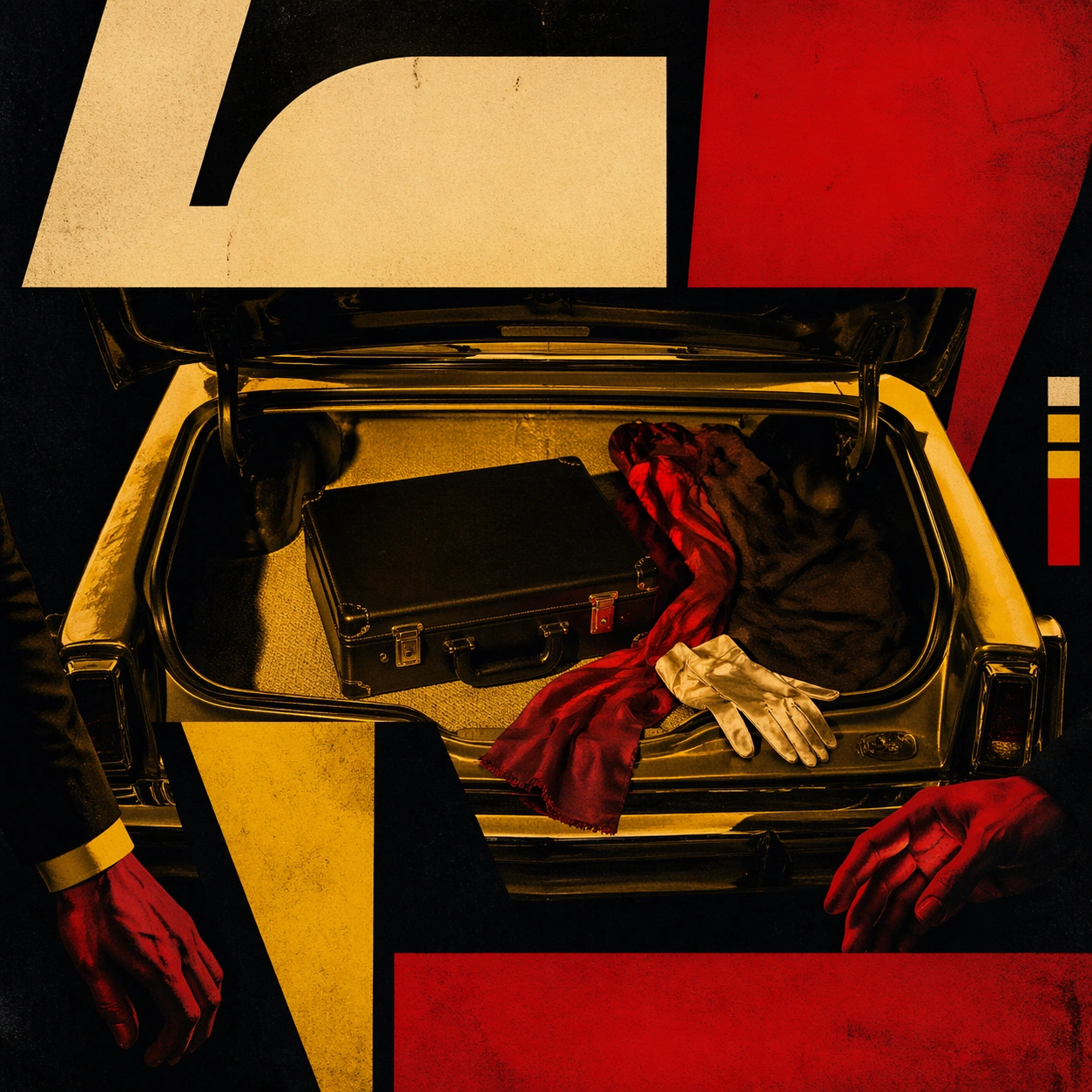
A square poster-like composition with loud red, tobacco yellow, nicotine cream, and deep black arranged in flat graphic blocks over a staged crime tableau. The lighting should feel hard and directional, but the overall image should still read as a designed print object rather than a literal movie still. Frame an open car trunk from slightly above so the rectangular lid becomes part of the poster geometry, with deep black surrounding a hot yellow light source.

Subject:
Focus on an implied act of violence or aftermath through frozen props, bodies held in stiff poses, diner booths, cheap motel details, briefcases, dashboard reflections, or nightclub furniture. The people should feel iconic and deadpan, with tension communicated through placement and color rather than explicit gore. A briefcase, satin gloves, and a crimson scarf sit inside the trunk while two hands hover just outside the edge of the frame.

Important details:
The crucial visual rule is the collision of graphic poster language and static pulp staging. Use oversized non-readable letterform-like shapes, caption bars, drop-shadow slabs, and paper-print textures without introducing actual words. Preserve bold silhouette hierarchy, cropped tension, and cynical cool. Make every object feel loaded with narrative, but keep the layout static and graphically controlled rather than frantic.

Use case:
Pulpy Typography Over Violent Tableau single study 3/9.

Constraints:
No readable text, no watermark, no logos, preserve exact 1:1 aspect ratio, no readable text, no logos, no explicit gore, no dismemberment, no recognizable brand packaging, no comic speech balloons, no broken anatomy, no low-detail background, no accidental text fragments.
Come usare
- Copia tutto il prompt originale, inclusi i parametri.
- Adatta soggetto, testo e composizione alle tue esigenze.
- Usa uno strumento esterno compatibile; verifica accesso e risultato.
Prima di iniziare
- Controlla se serve un’immagine di riferimento. La compatibilità non prova il modello usato per l’esempio.
- Verifica nomi, numeri e testi; i risultati cambiano con le versioni del modello.