Documento originale
GPT Image 2 · en
Scene:
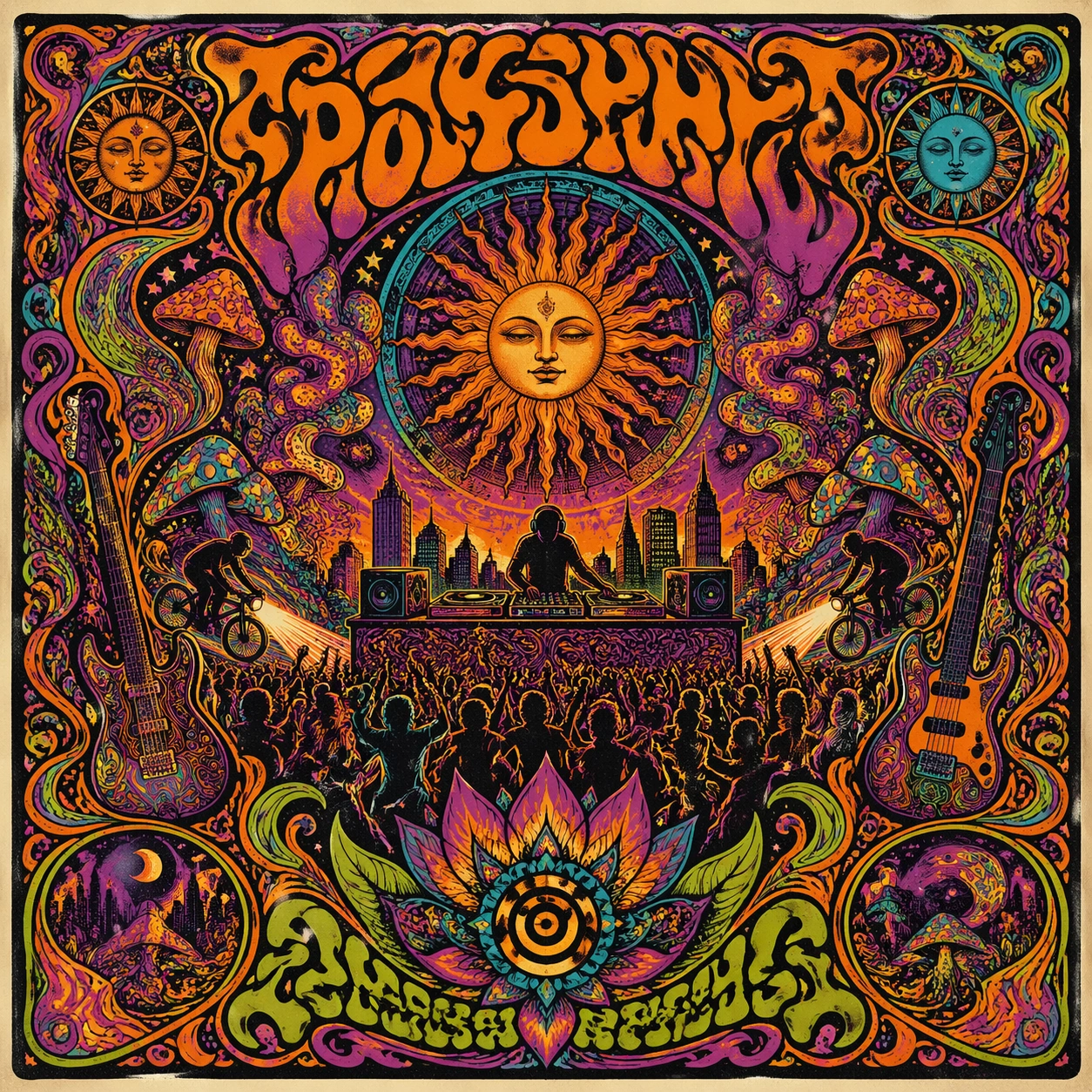
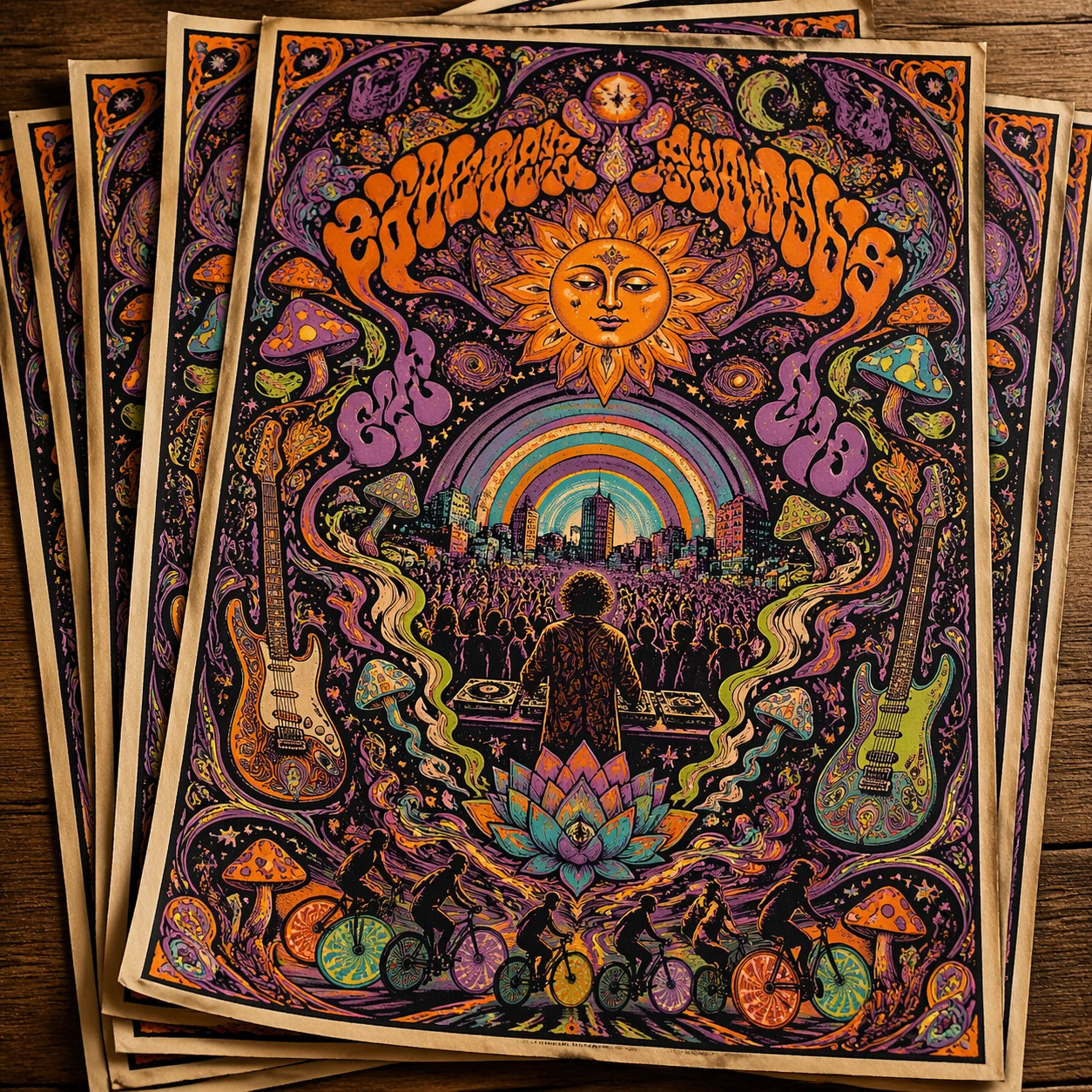
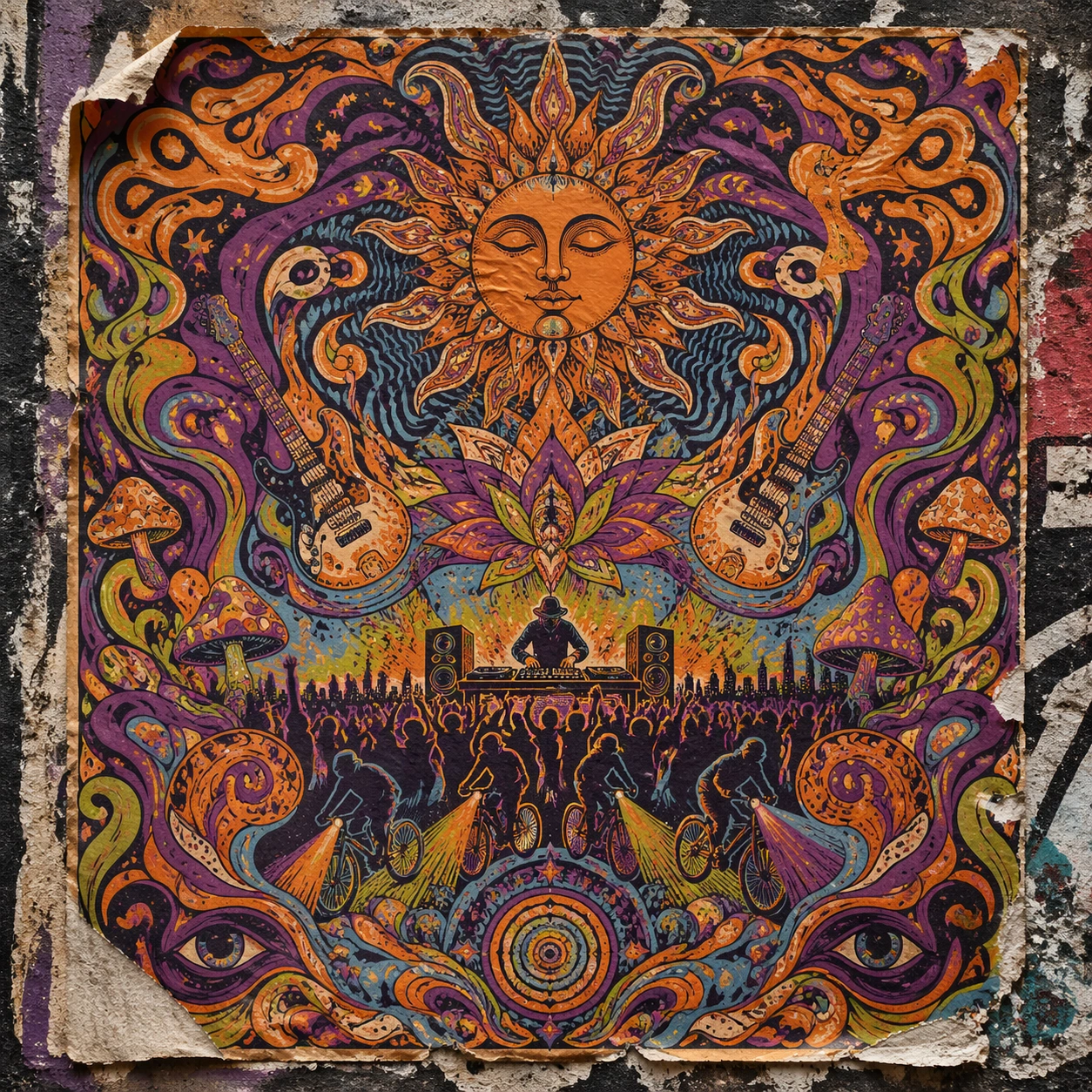
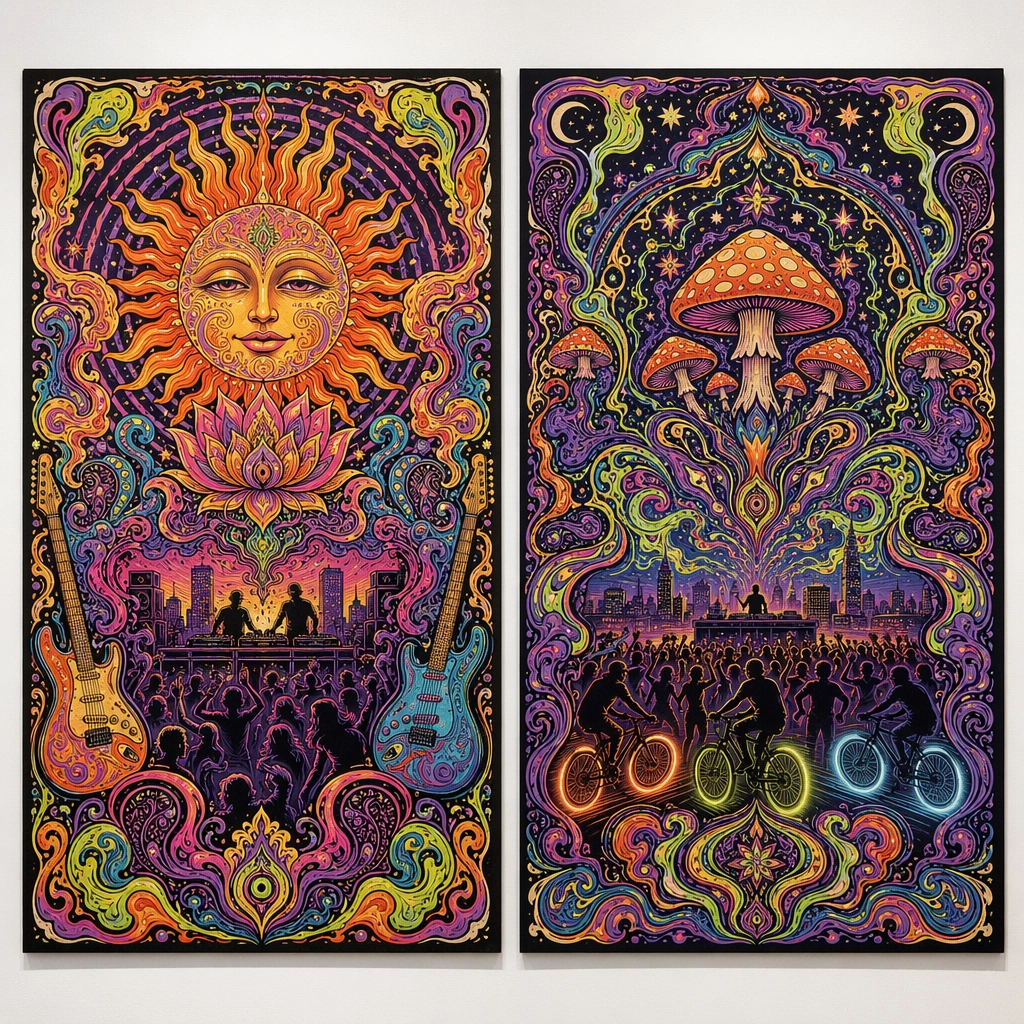
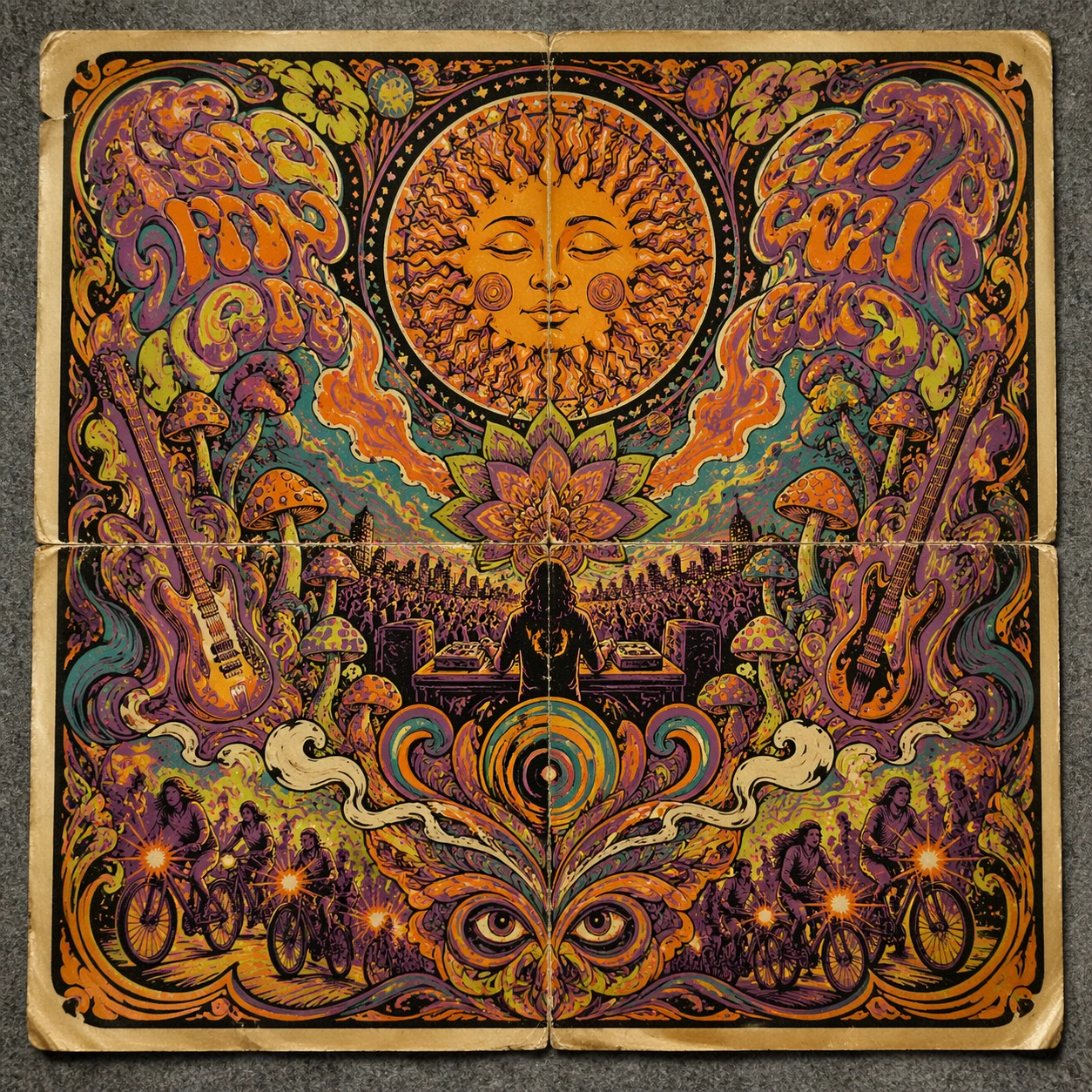
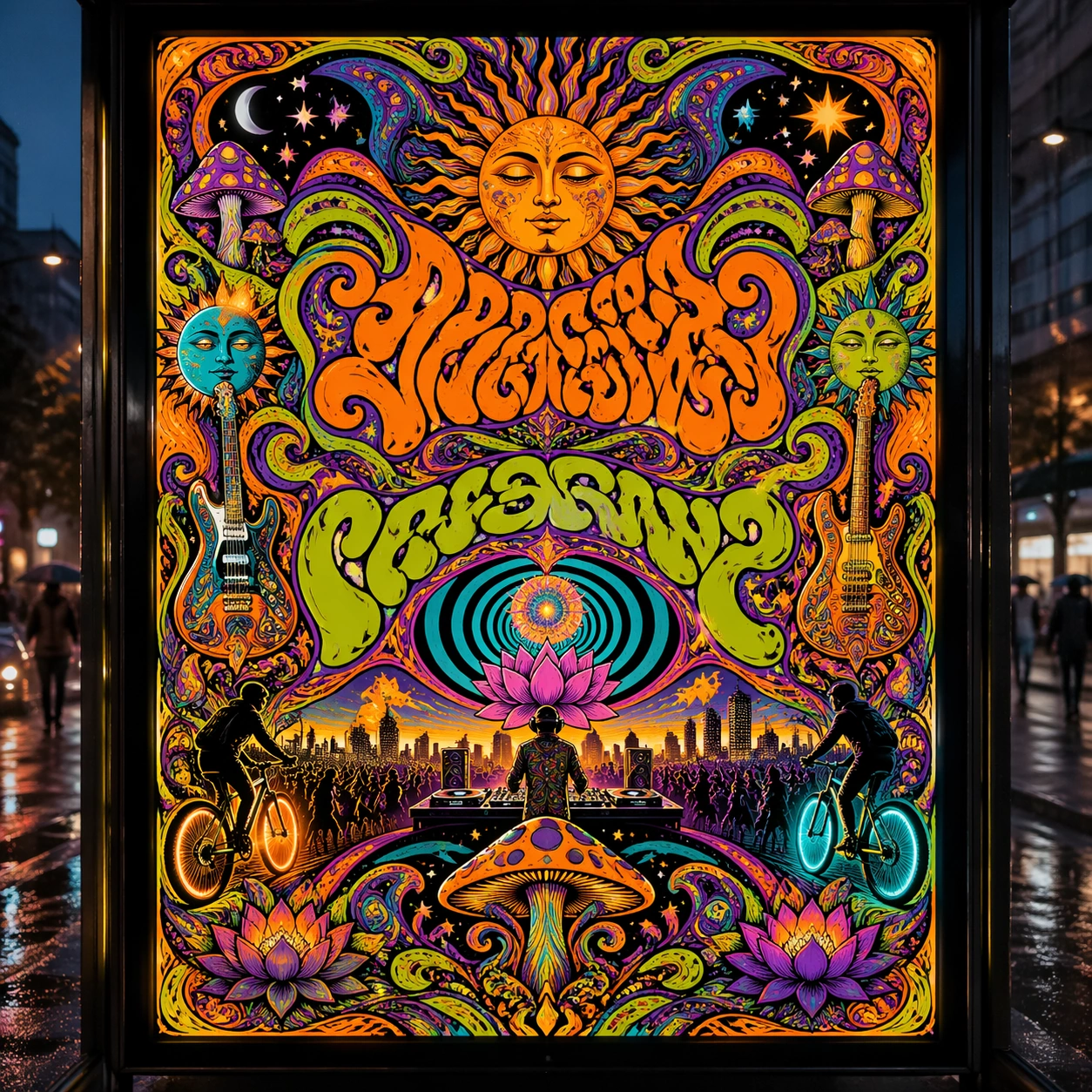
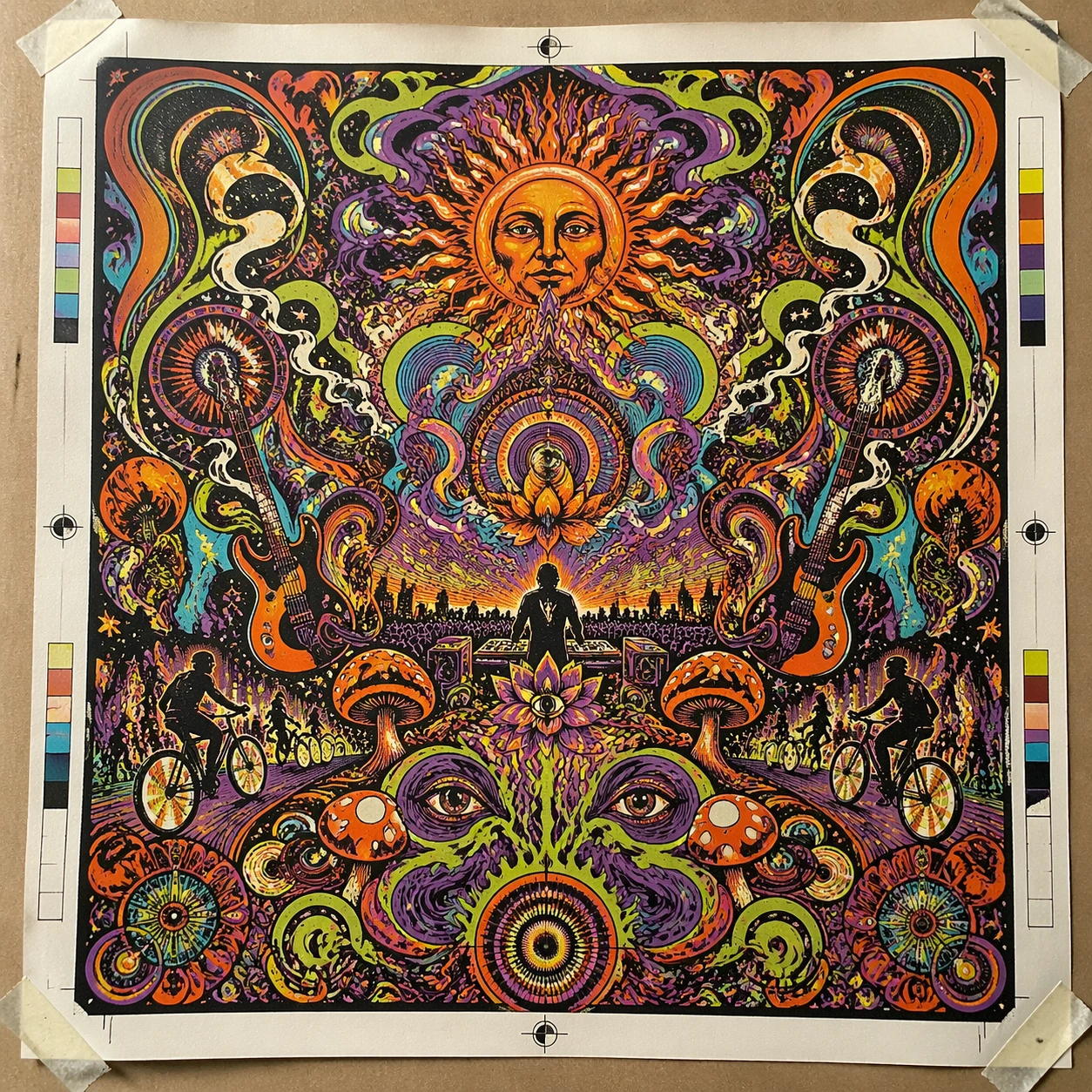
A square overhead tabletop photograph of a fresh poster proof on neutral worktable paper, lit by cool daylight, with crop marks, tape tabs, and slight paper bow visible around the sheet. The poster should express late-1960s psychedelic poster language with liquid swirls, floral mandala density, vibrating contours, and molten ornamental framing, using acid orange, violet, lime, cyan, cream, and deep black and a tactile surface appropriate to the medium.

Subject:
Design the poster as a print-shop proof, preserving the same poster language while allowing production clues such as edge trims, registration targets, and process marks to frame the composition. Use sun faces, paisley smoke, guitars, mushrooms, stars, lotus petals, and concentric wave rings as the main visual ingredients, and organize them with ornamental pseudo-lettering that feels lavish and tangled while remaining unreadable. For the contemporary-subject axis, thread in a rooftop electronic set, bike lights, and crowd motion translated into a hallucinatory hand-drawn poster field. The poster must feel like an original design object rather than a reproduction of any known work.

Important details:
The image must still read as a finished poster concept, but it should carry believable print-process evidence and material tactility instead of gallery-wall perfection. Preserve dense symmetry, nested curves, optical vibration, and saturated color friction across the whole sheet. Keep every letterform abstract and non-readable, as if it were a typographic texture rather than language. Make the style unmistakable through composition, palette, surface behavior, and symbolic compression. no plain corporate layout, no dead empty zones, no restrained minimalist spacing, no clean sans-serif blocks.

Use case:
Psychedelic 60s single study 2/9, testing production realism and process evidence.

Constraints:
No readable text, no watermark, no logos, preserve exact 1:1 aspect ratio, no copyrighted characters, no real brand marks, no QR codes, no interface chrome, no accidental gibberish lettering.
Come usare
- Copia tutto il prompt originale, inclusi i parametri.
- Adatta soggetto, testo e composizione alle tue esigenze.
- Usa uno strumento esterno compatibile; verifica accesso e risultato.
Prima di iniziare
- Controlla se serve un’immagine di riferimento. La compatibilità non prova il modello usato per l’esempio.
- Verifica nomi, numeri e testi; i risultati cambiano con le versioni del modello.