Documento originale
GPT Image 2 · en
Scene:
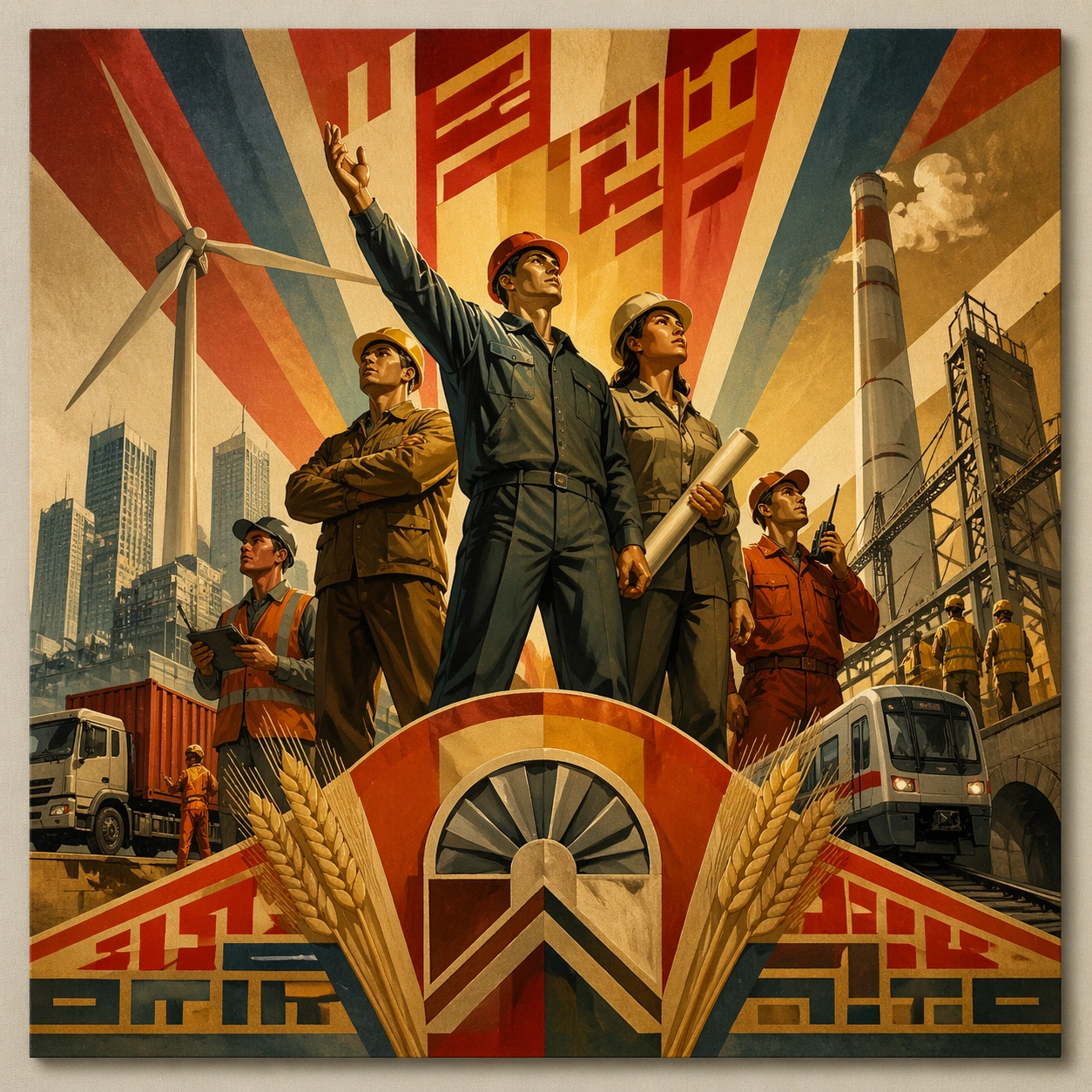
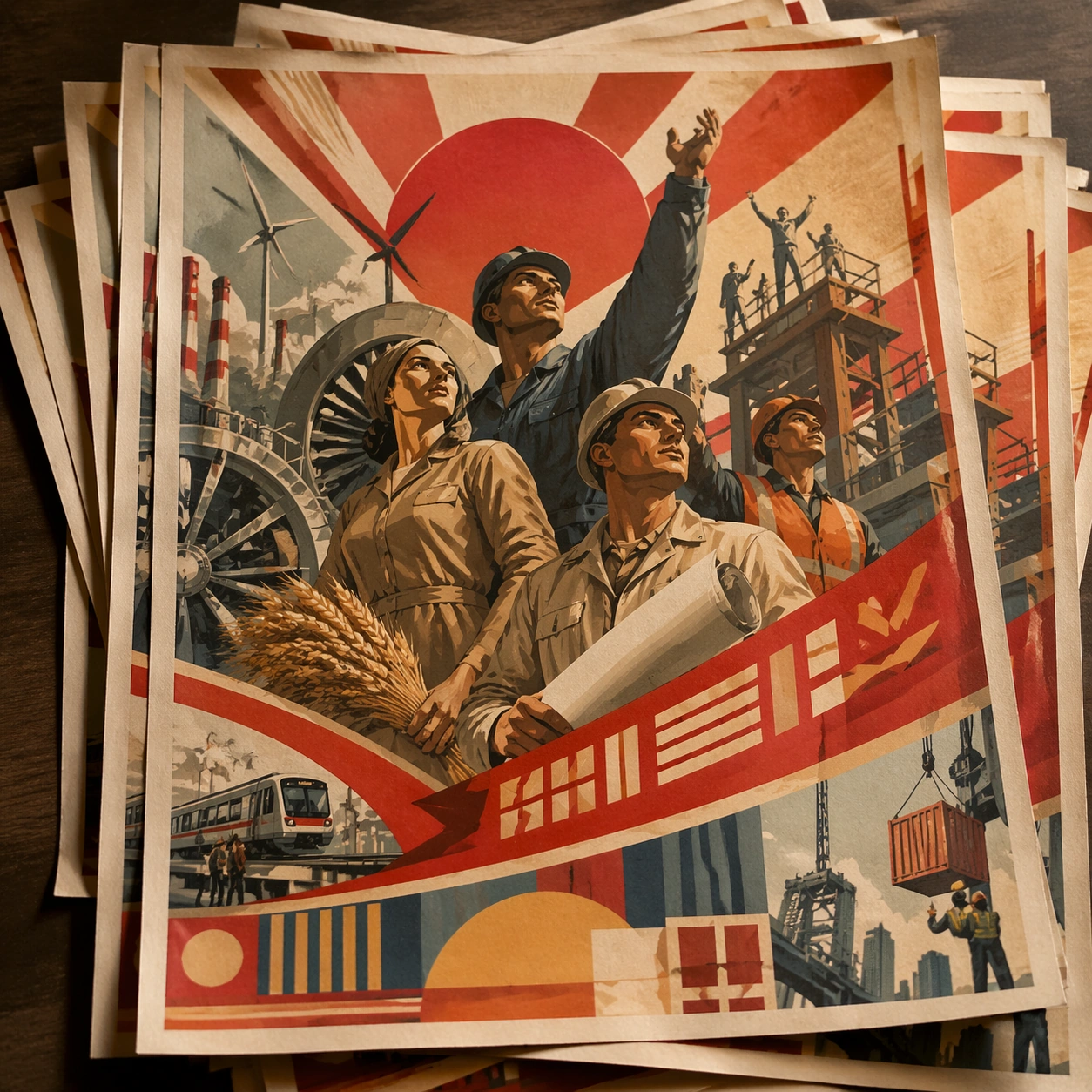
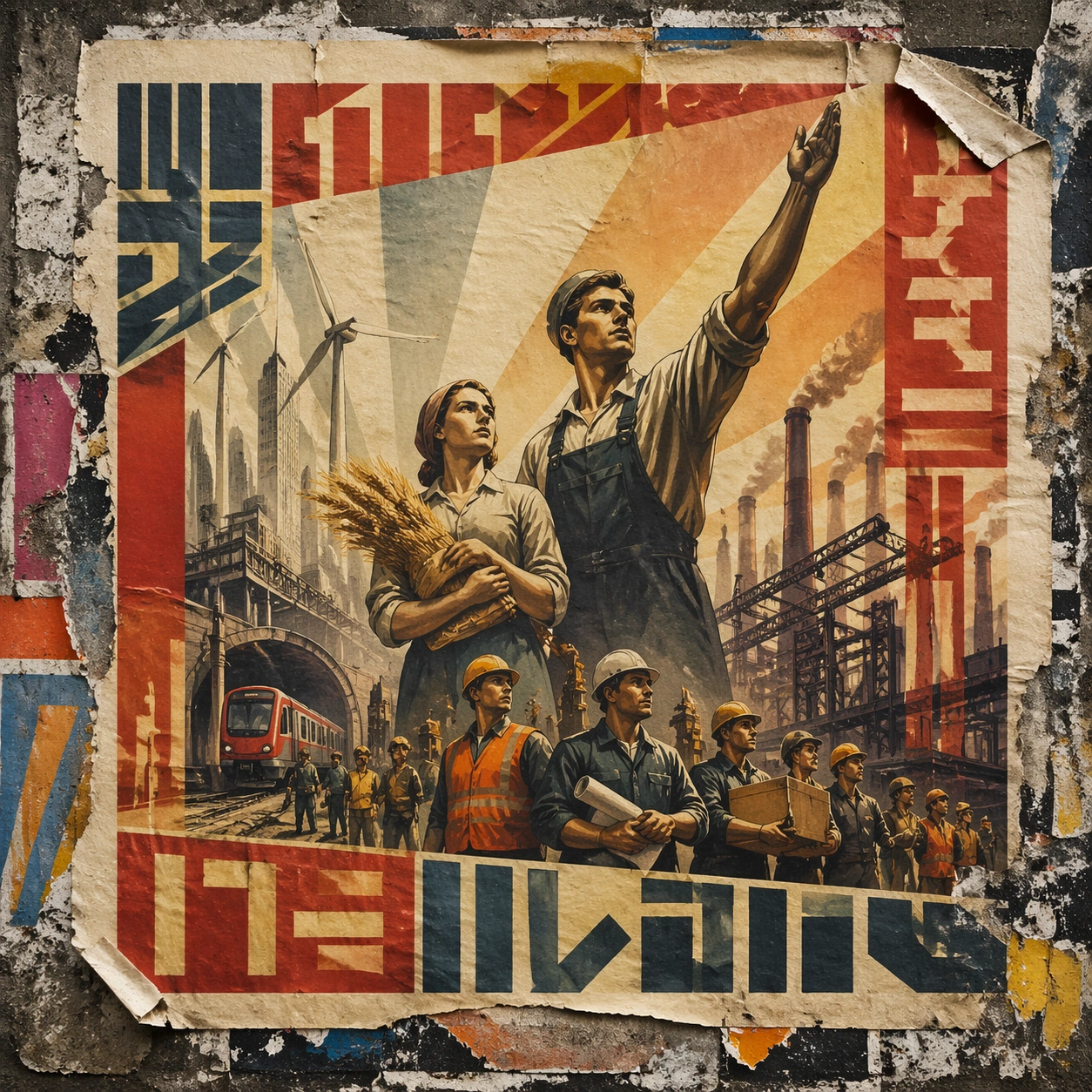
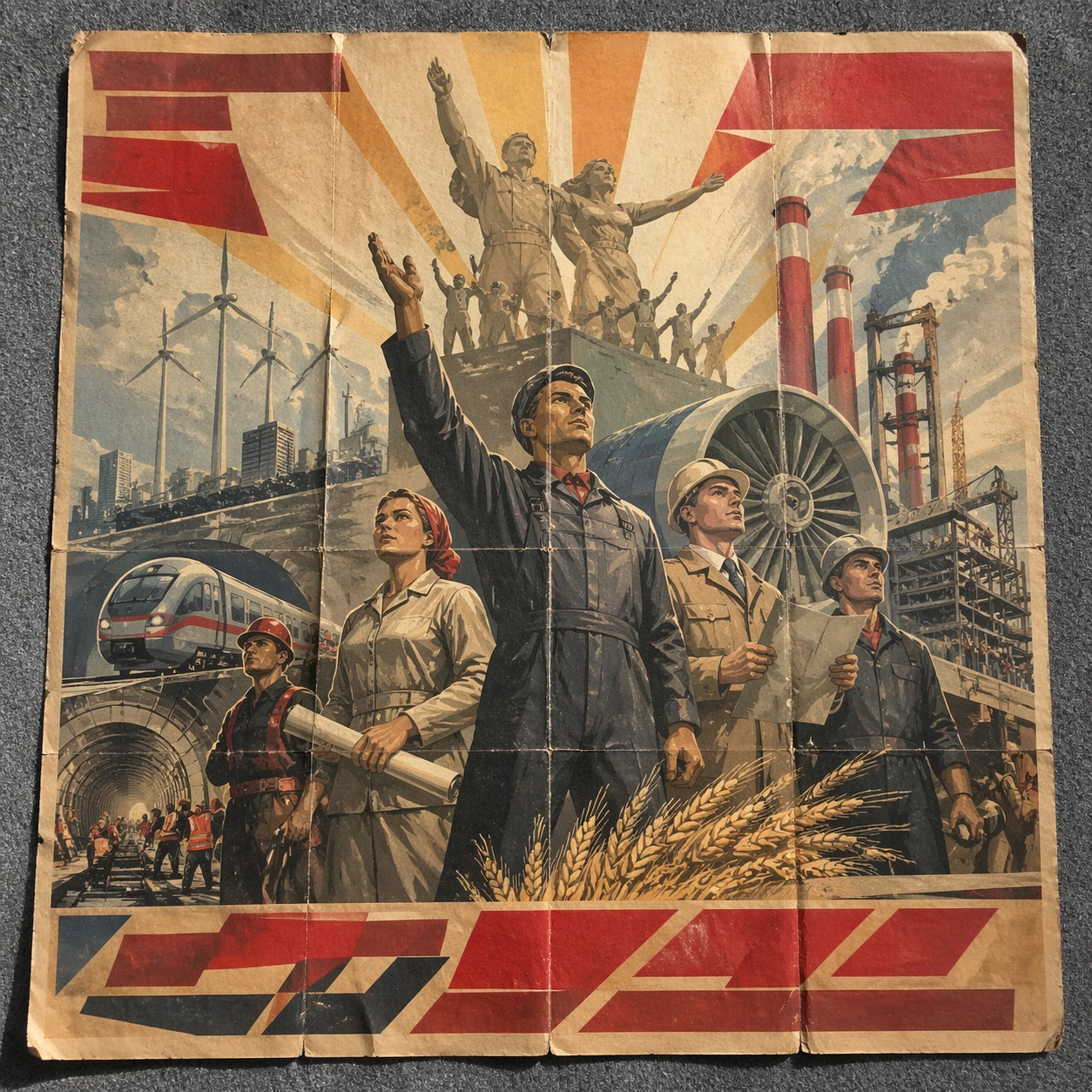
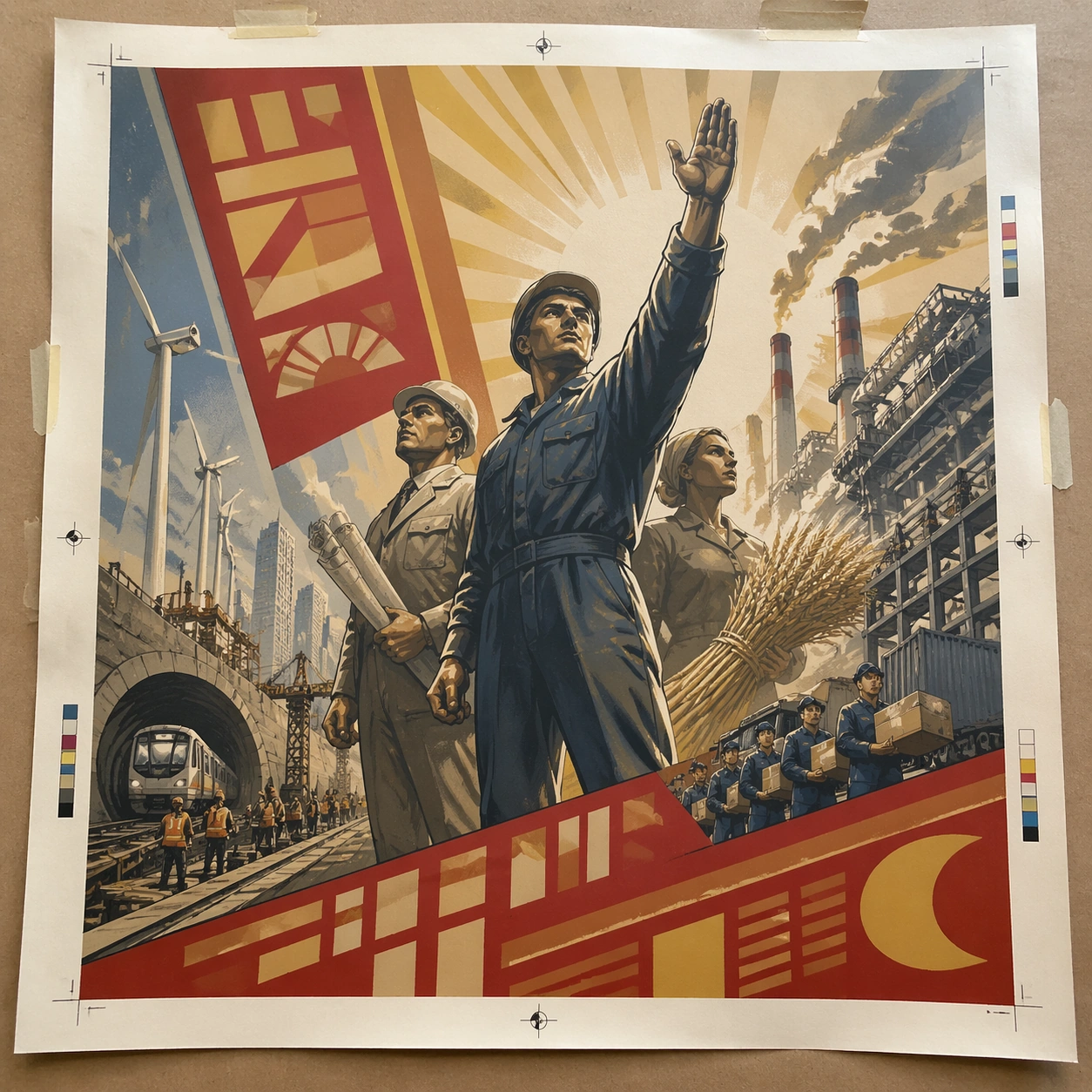
A square overhead tabletop photograph of a fresh poster proof on neutral worktable paper, lit by cool daylight, with crop marks, tape tabs, and slight paper bow visible around the sheet. The poster should express heroic monumental realism with low-angle figures, sunrise shafts, sculptural drapery, and industrial optimism, using red, ochre, cream, steel blue, and warm industrial smoke gray and a tactile surface appropriate to the medium.

Subject:
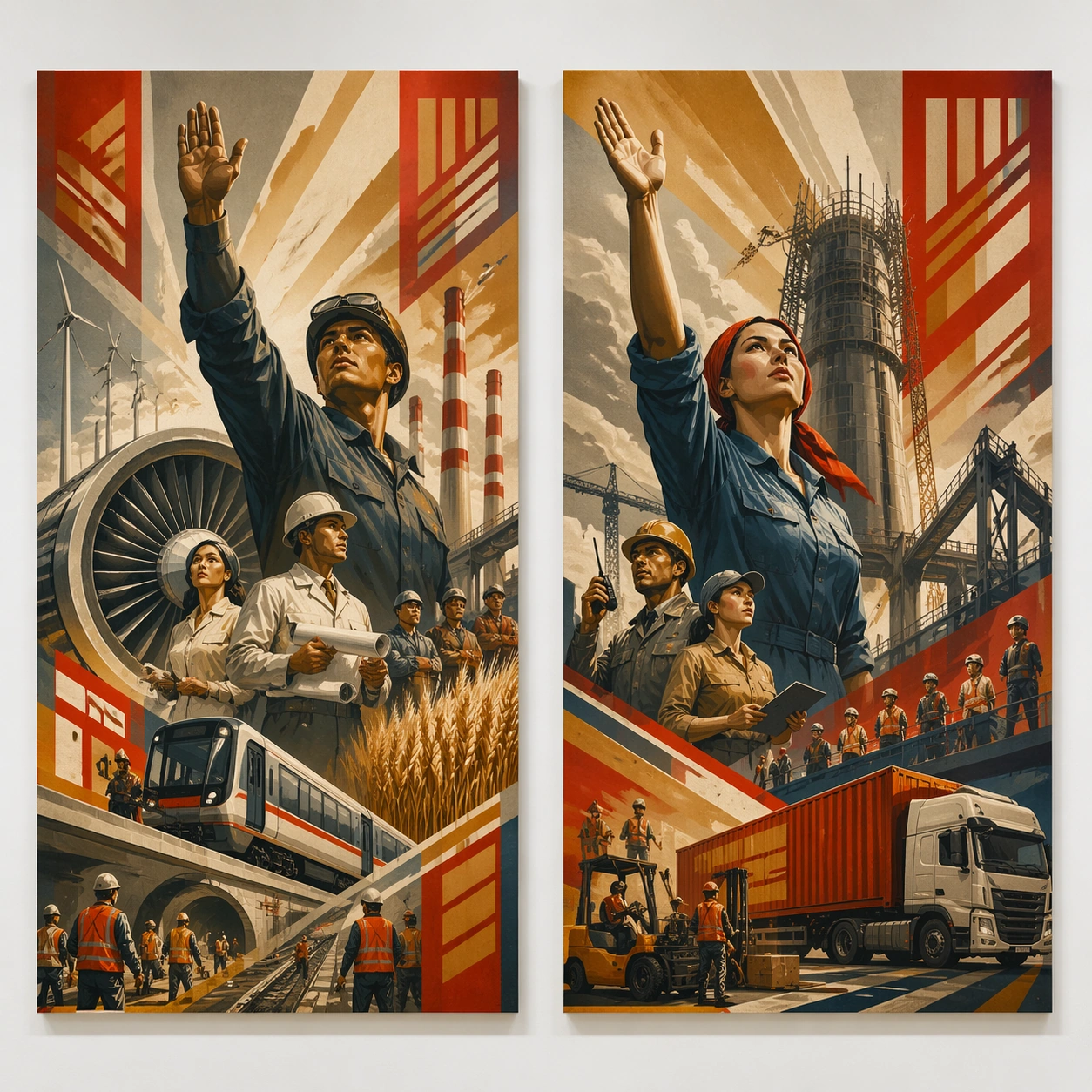
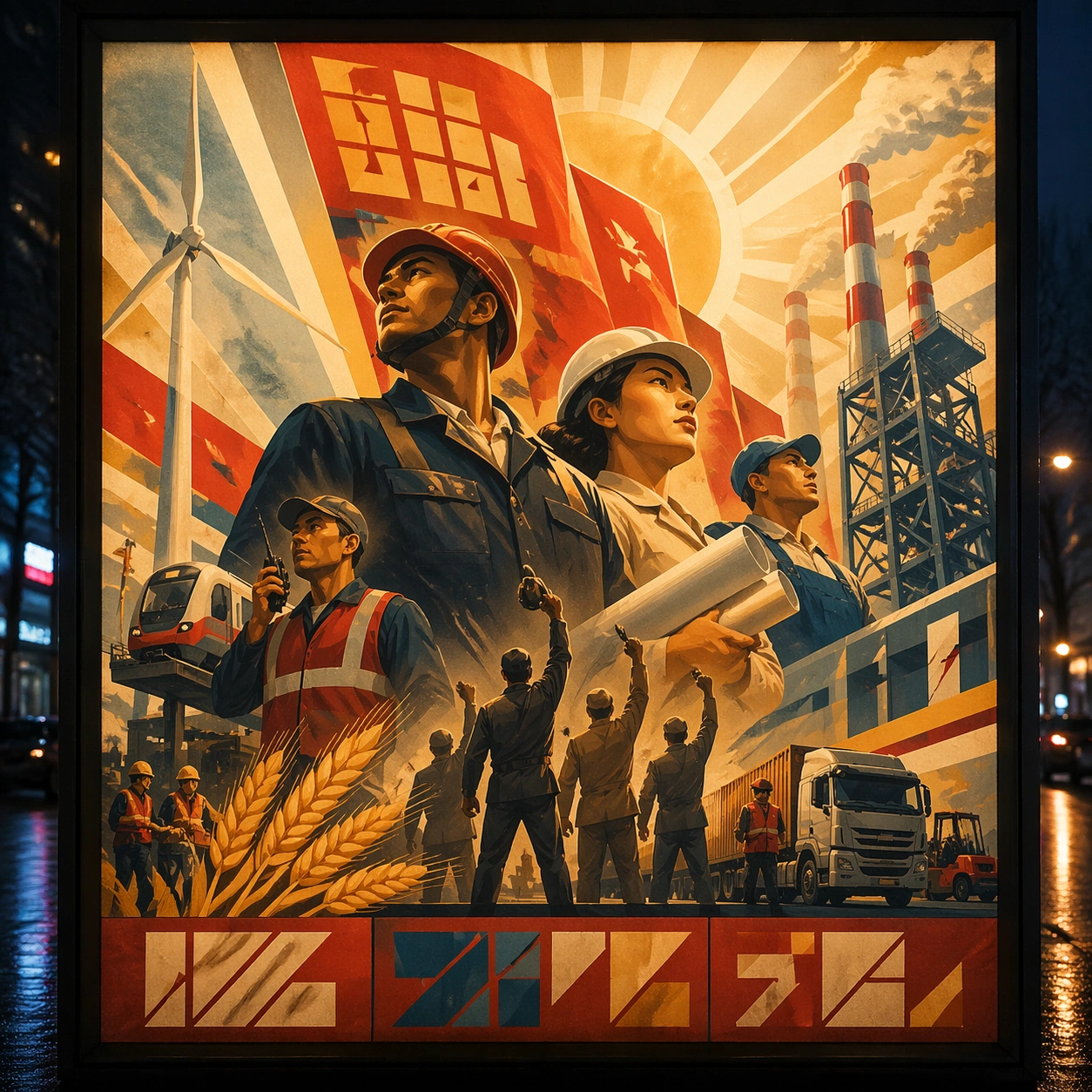
Design the poster as a print-shop proof, preserving the same poster language while allowing production clues such as edge trims, registration targets, and process marks to frame the composition. Use workers, engineers, turbines, wheat, chimneys, steel beams, and raised-arm silhouettes as the main visual ingredients, and organize them with bold banner-like glyph panels used as abstract propaganda blocks without readable wording. For the contemporary-subject axis, thread in renewable-energy towers, metro construction, and logistics workers recast through monumental heroic framing. The poster must feel like an original design object rather than a reproduction of any known work.

Important details:
The image must still read as a finished poster concept, but it should carry believable print-process evidence and material tactility instead of gallery-wall perfection. Preserve upward gaze, idealized anatomy, broad light geometry, and poster clarity at large scale. Keep every letterform abstract and non-readable, as if it were a typographic texture rather than language. Make the style unmistakable through composition, palette, surface behavior, and symbolic compression. no specific leaders, no state emblems, no satire, no gritty collapse imagery.

Use case:
Soviet Monumental single study 2/9, testing production realism and process evidence.

Constraints:
No readable text, no watermark, no logos, preserve exact 1:1 aspect ratio, no copyrighted characters, no real brand marks, no QR codes, no interface chrome, no accidental gibberish lettering.
Come usare
- Copia tutto il prompt originale, inclusi i parametri.
- Adatta soggetto, testo e composizione alle tue esigenze.
- Usa uno strumento esterno compatibile; verifica accesso e risultato.
Prima di iniziare
- Controlla se serve un’immagine di riferimento. La compatibilità non prova il modello usato per l’esempio.
- Verifica nomi, numeri e testi; i risultati cambiano con le versioni del modello.