Documento originale
GPT Image 2 · en
Scene:
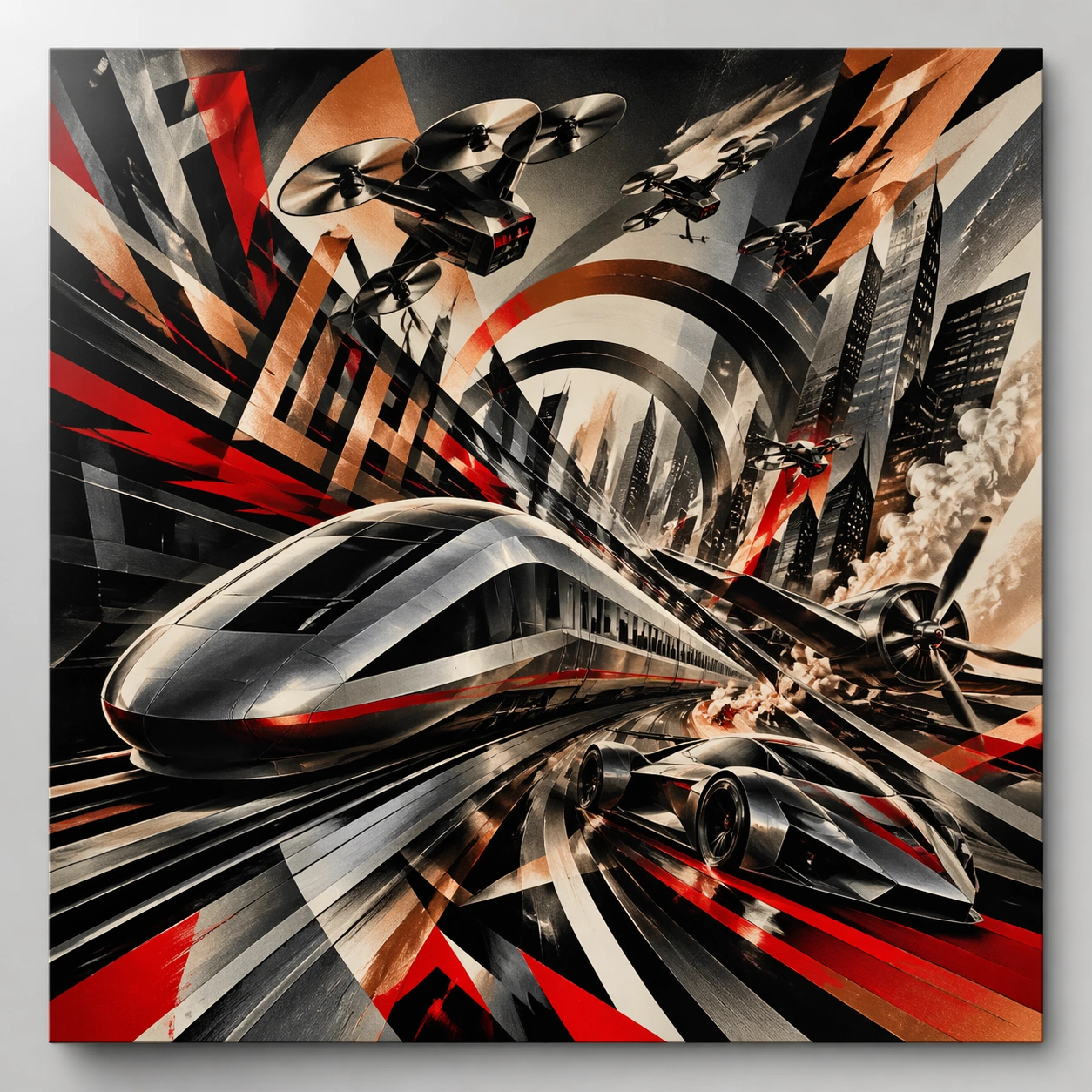
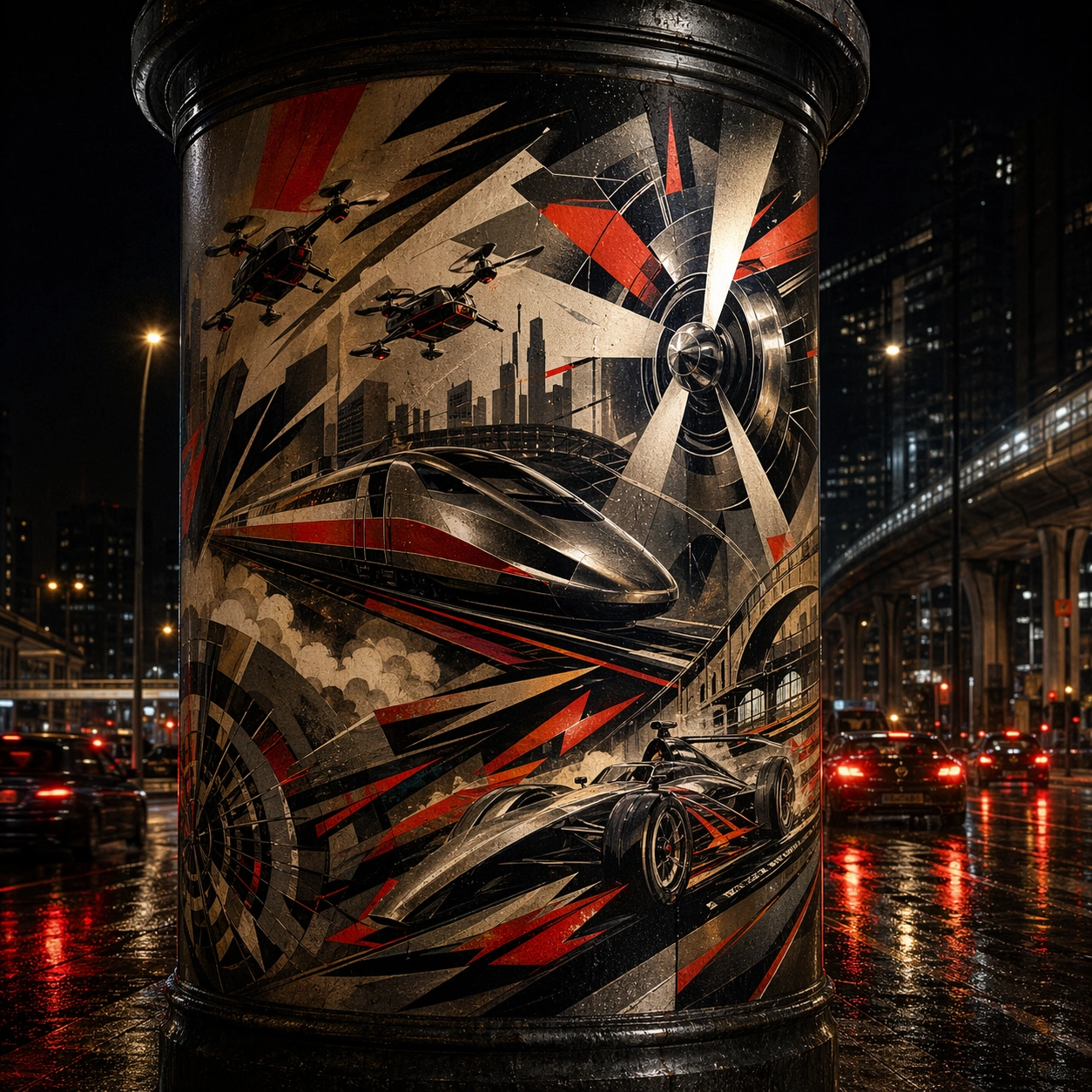
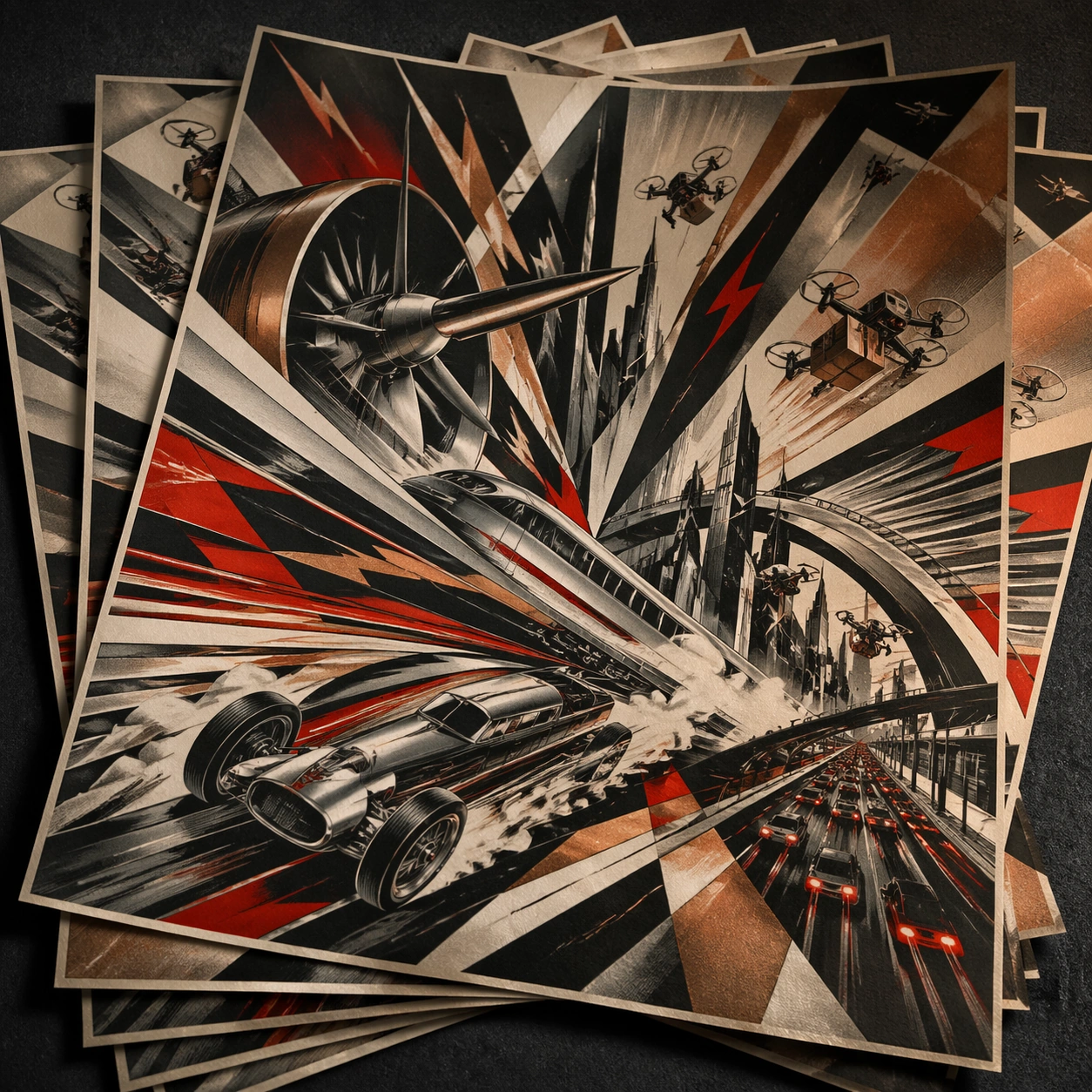
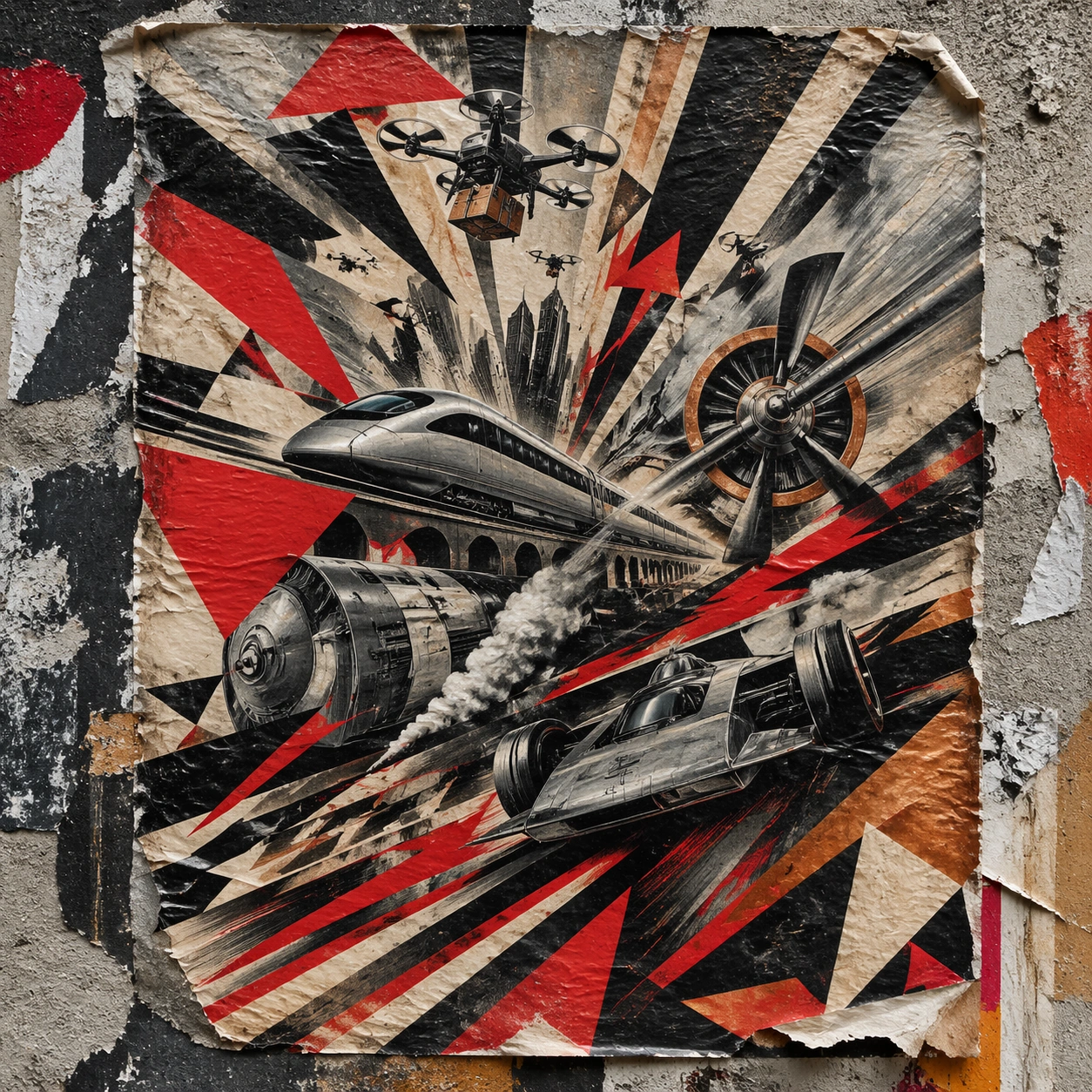
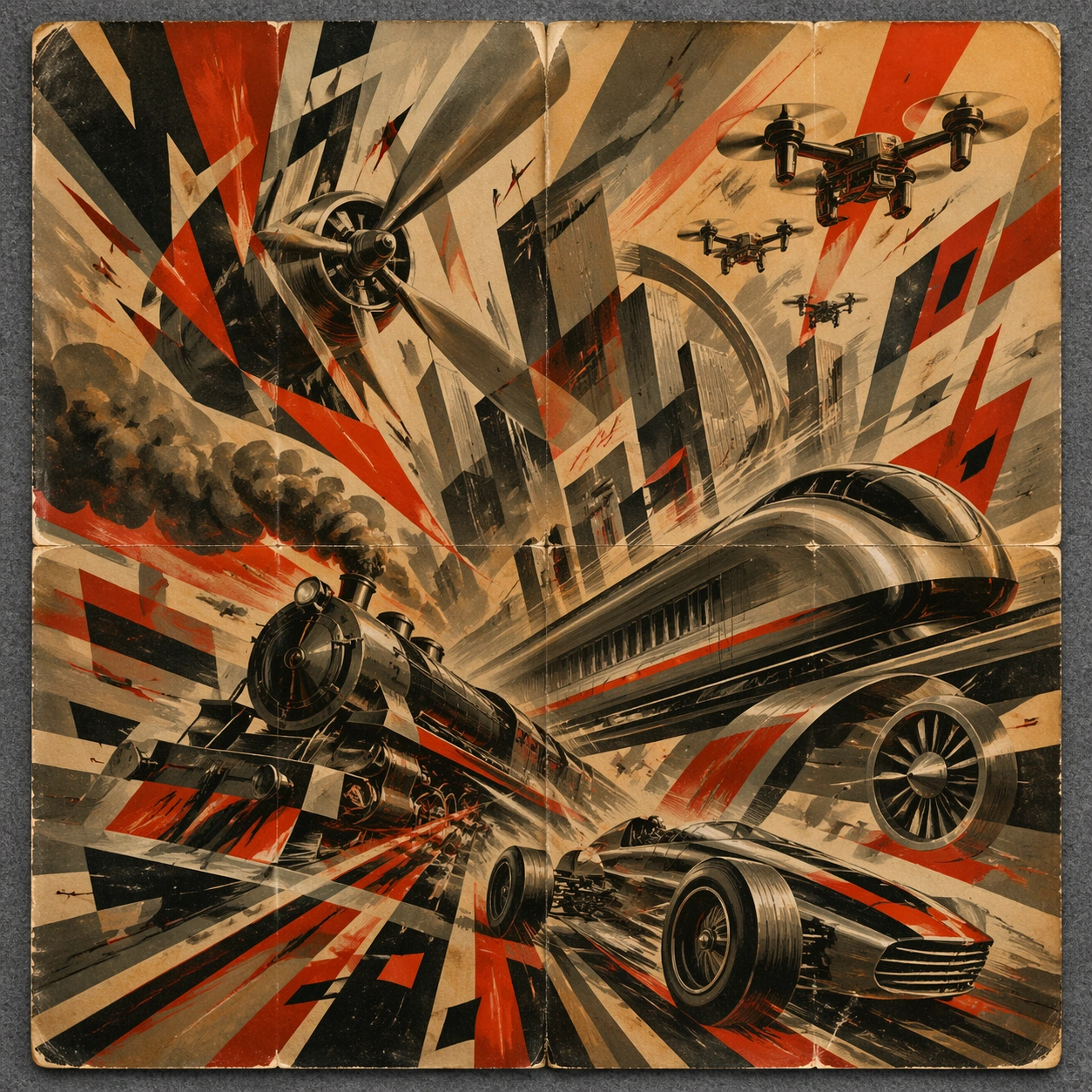
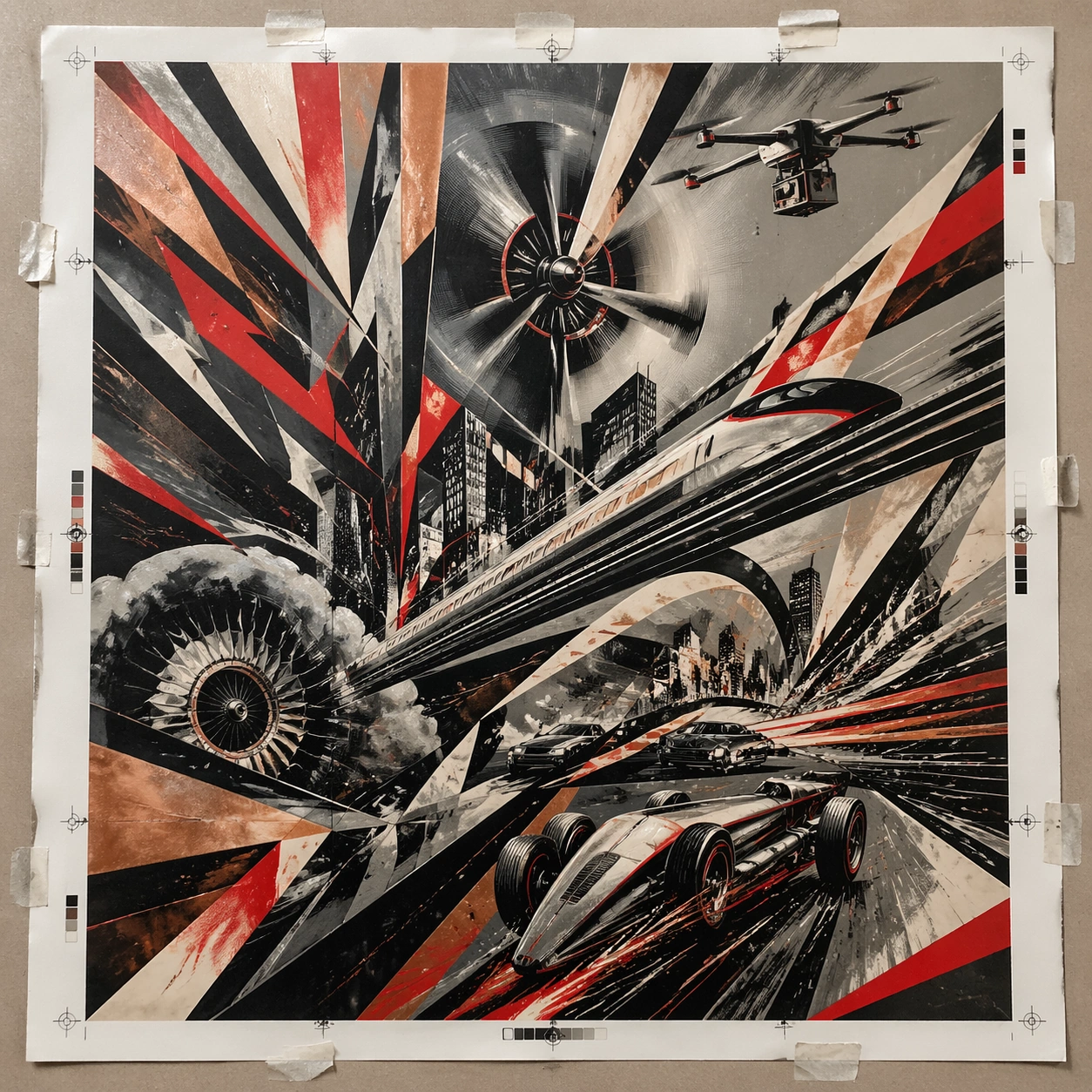
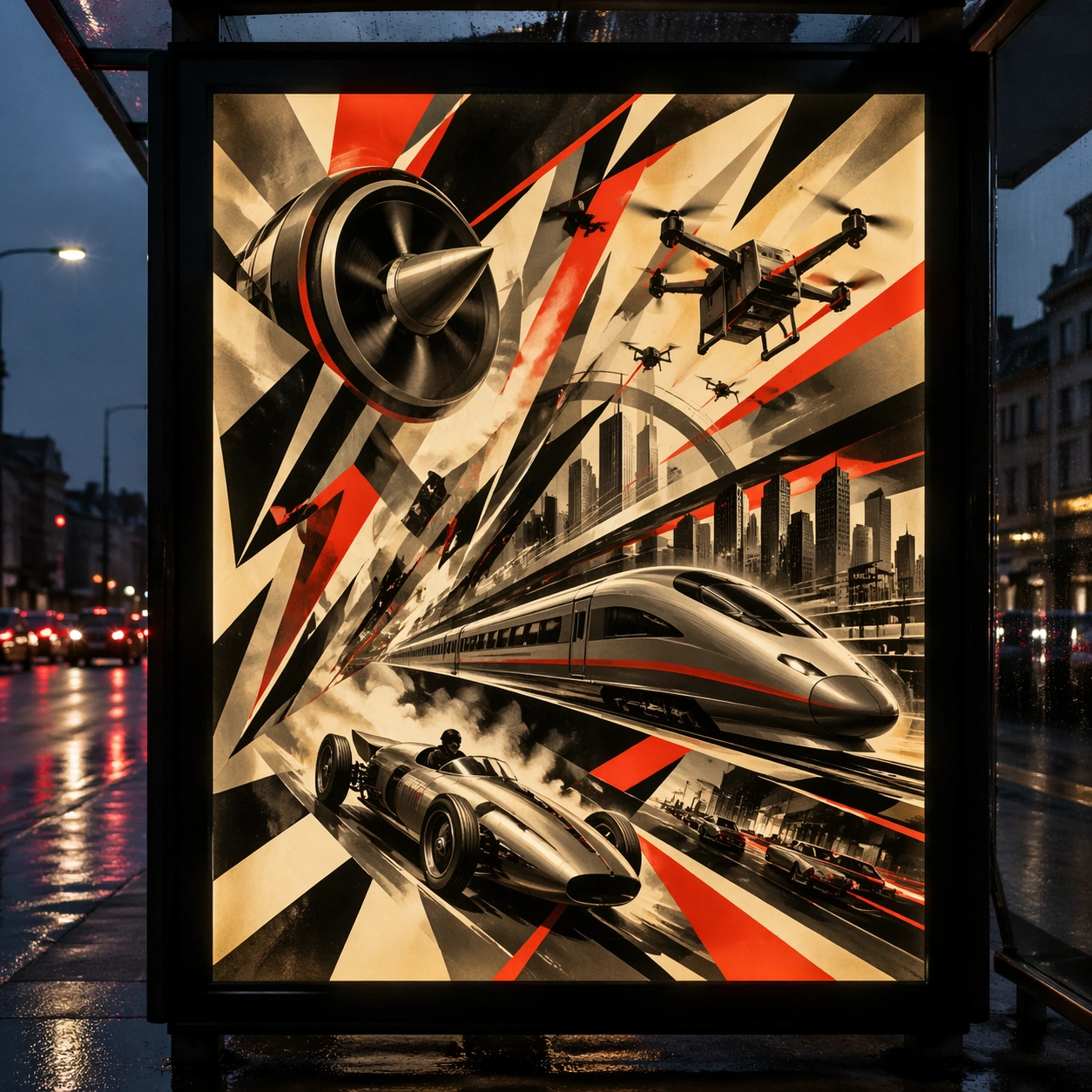
A square dusk street photograph of a backlit transit poster glowing inside glass, with faint rain reflections, soft city blur in the distance, and the poster remaining fully legible as a composition. The poster should express machine-age futurist poster language with fractured motion, metallic planes, angular overlaps, and speed-worshiping thrust, using gunmetal silver, copper, cream, black, and electric red accents and a tactile surface appropriate to the medium.

Subject:
Adapt the poster into a public-facing lightbox version that still honors the original style grammar while feeling bold enough to stop a passerby from several meters away. Use trains, propellers, racing cars, turbines, smoke trails, city arcs, and explosive speed lines as the main visual ingredients, and organize them with chopped angular typographic shards used as non-readable motion accents. For the contemporary-subject axis, thread in high-speed rail, delivery drones, and urban night traffic translated into ecstatic machine momentum. The poster must feel like an original design object rather than a reproduction of any known work.

Important details:
Let the style survive the illumination test: color blocking, silhouette contrast, and abstract lettering should stay controlled under bright internal light and reflective glass. Preserve dynamic rotation, vector thrust, hard overlaps, metallic sheen restraint, and aggressive directional rhythm. Keep every letterform abstract and non-readable, as if it were a typographic texture rather than language. Make the style unmistakable through composition, palette, surface behavior, and symbolic compression. no static composition, no soft nostalgic brushwork, no pastoral calm, no rounded playful forms.

Use case:
Italian Futurism single study 3/9, testing distance readability in public display.

Constraints:
No readable text, no watermark, no logos, preserve exact 1:1 aspect ratio, no copyrighted characters, no real brand marks, no QR codes, no interface chrome, no accidental gibberish lettering.
Come usare
- Copia tutto il prompt originale, inclusi i parametri.
- Adatta soggetto, testo e composizione alle tue esigenze.
- Usa uno strumento esterno compatibile; verifica accesso e risultato.
Prima di iniziare
- Controlla se serve un’immagine di riferimento. La compatibilità non prova il modello usato per l’esempio.
- Verifica nomi, numeri e testi; i risultati cambiano con le versioni del modello.