Documento originale
GPT Image 2 · en
Scene:
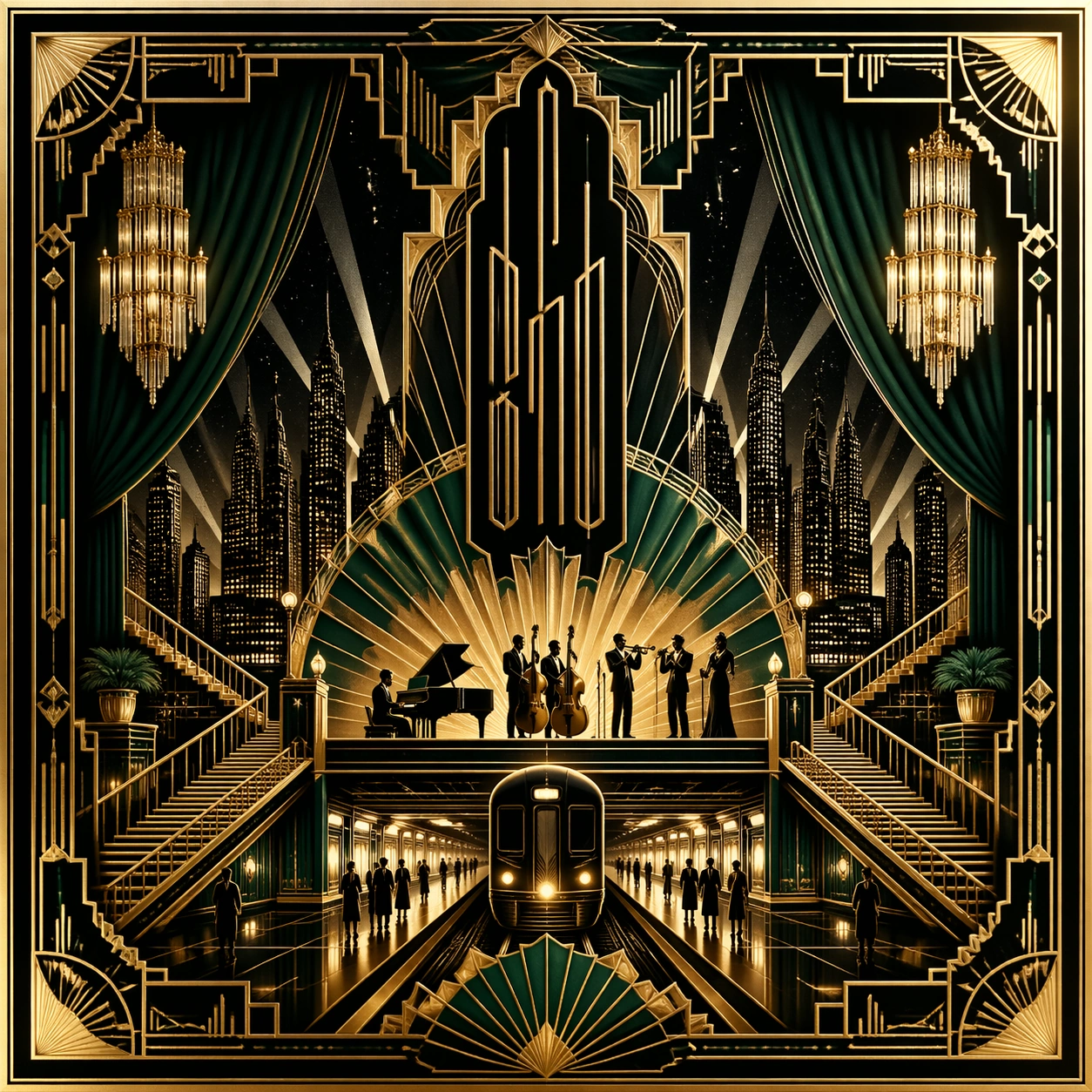
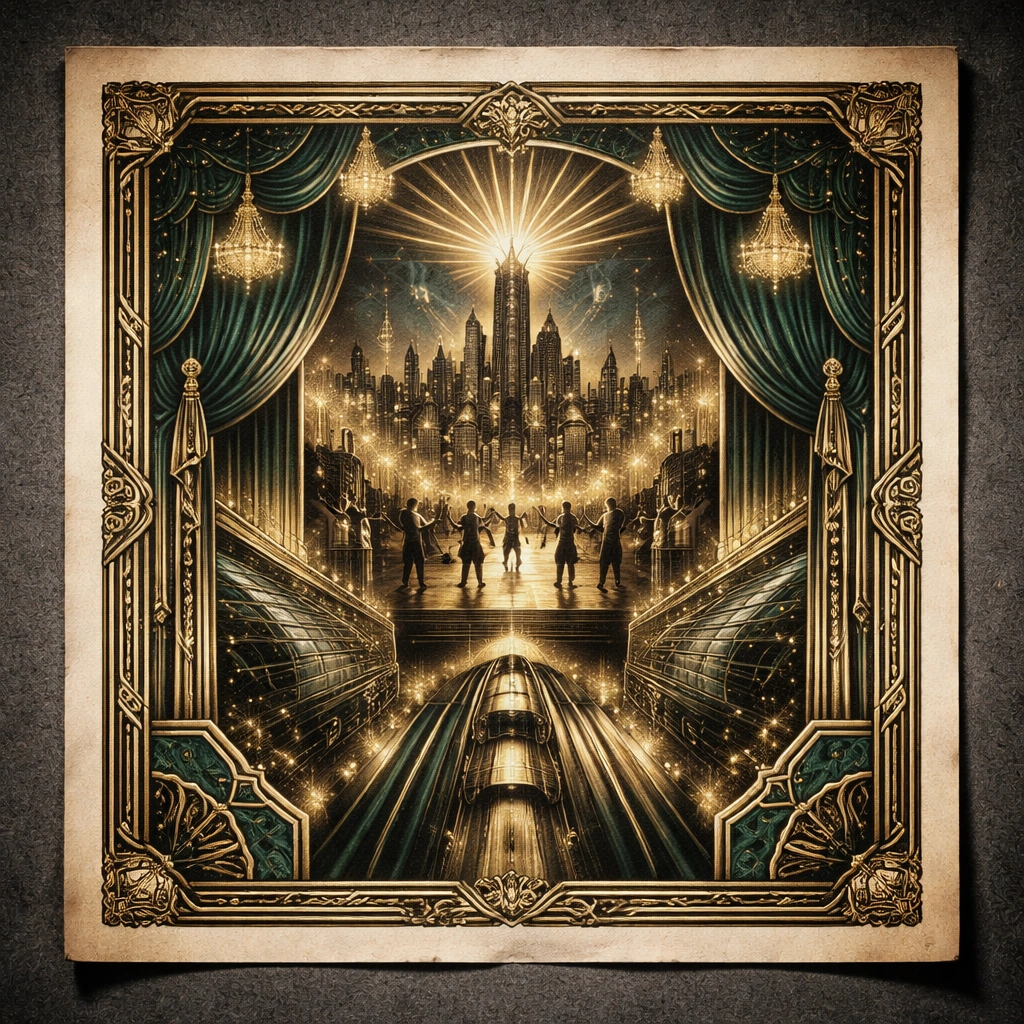
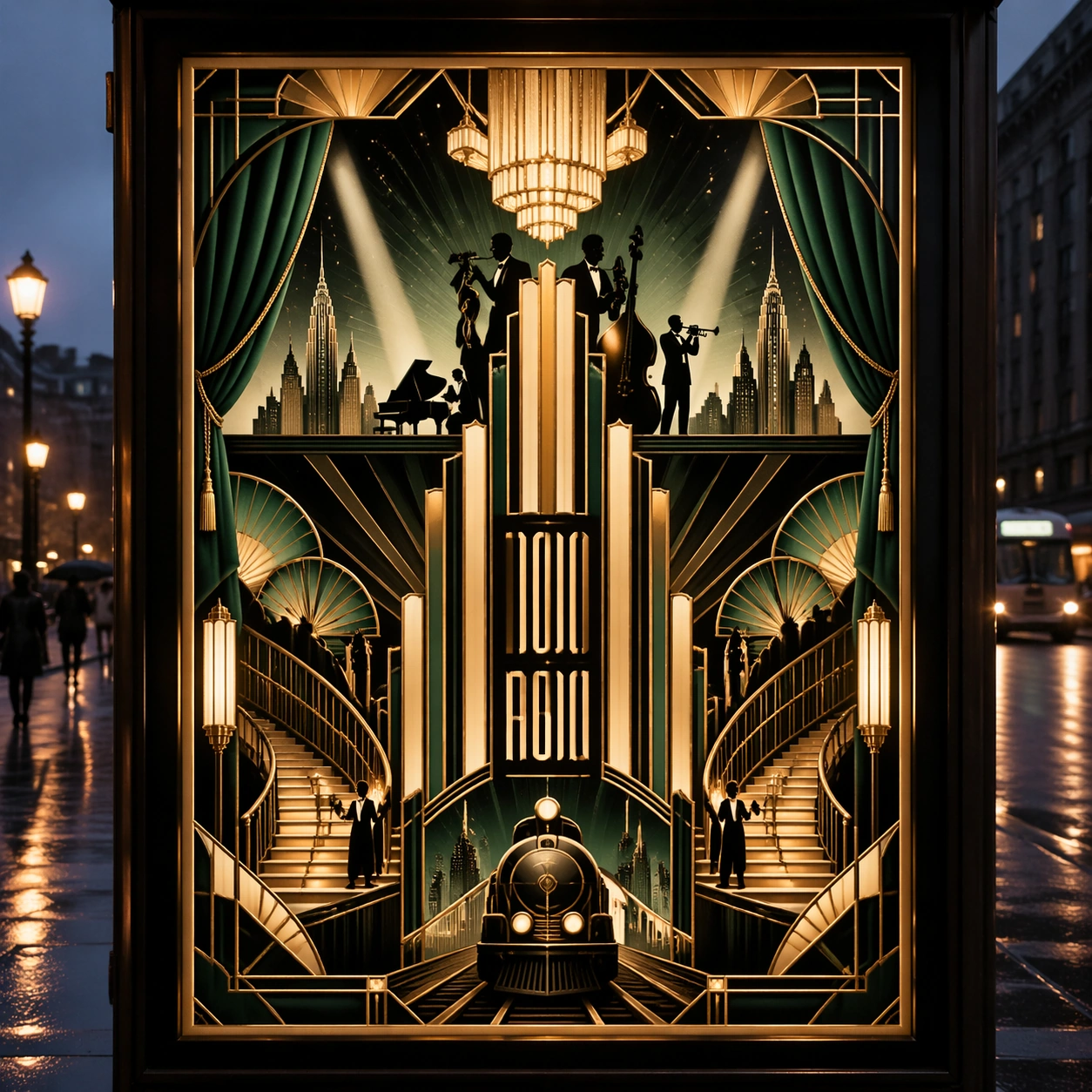
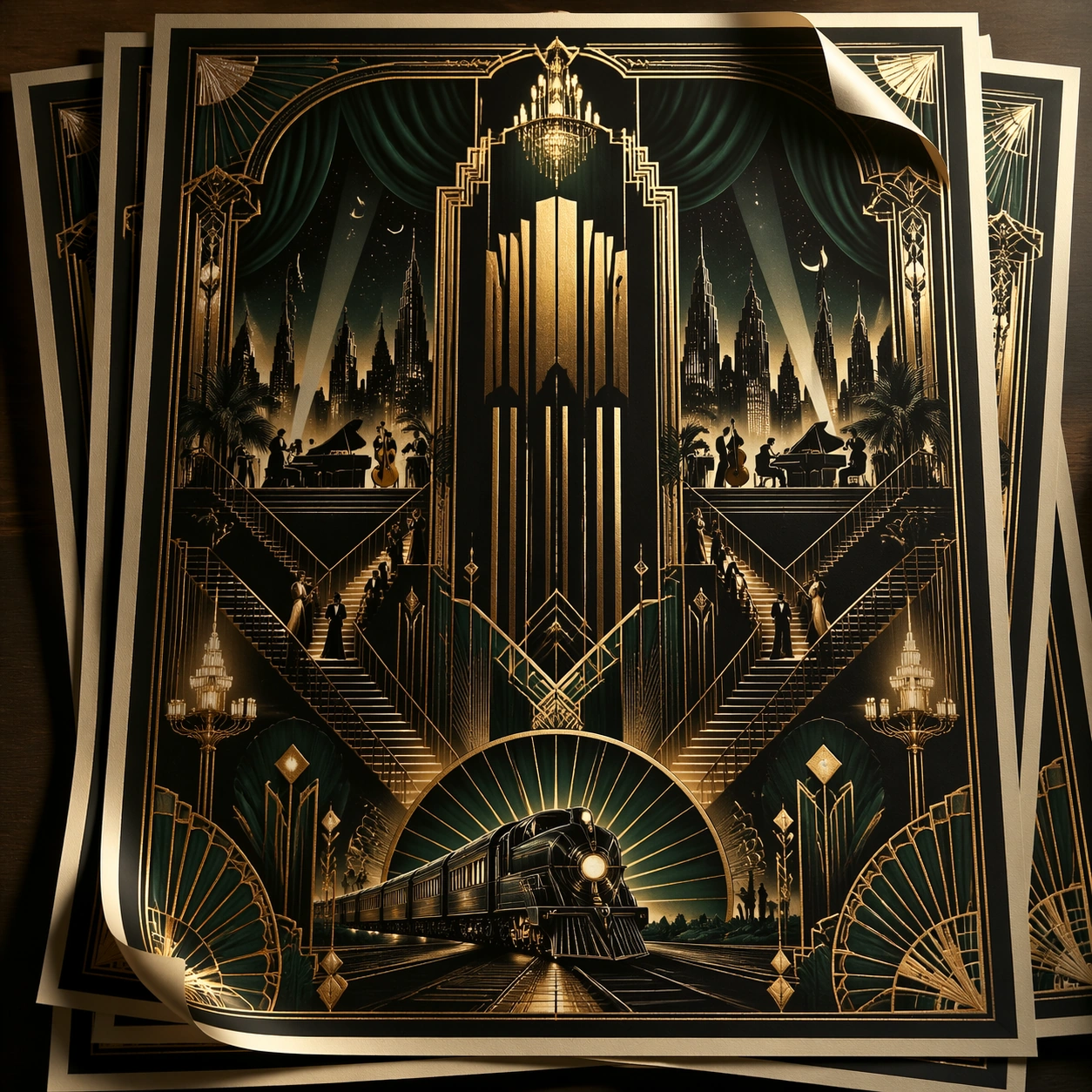
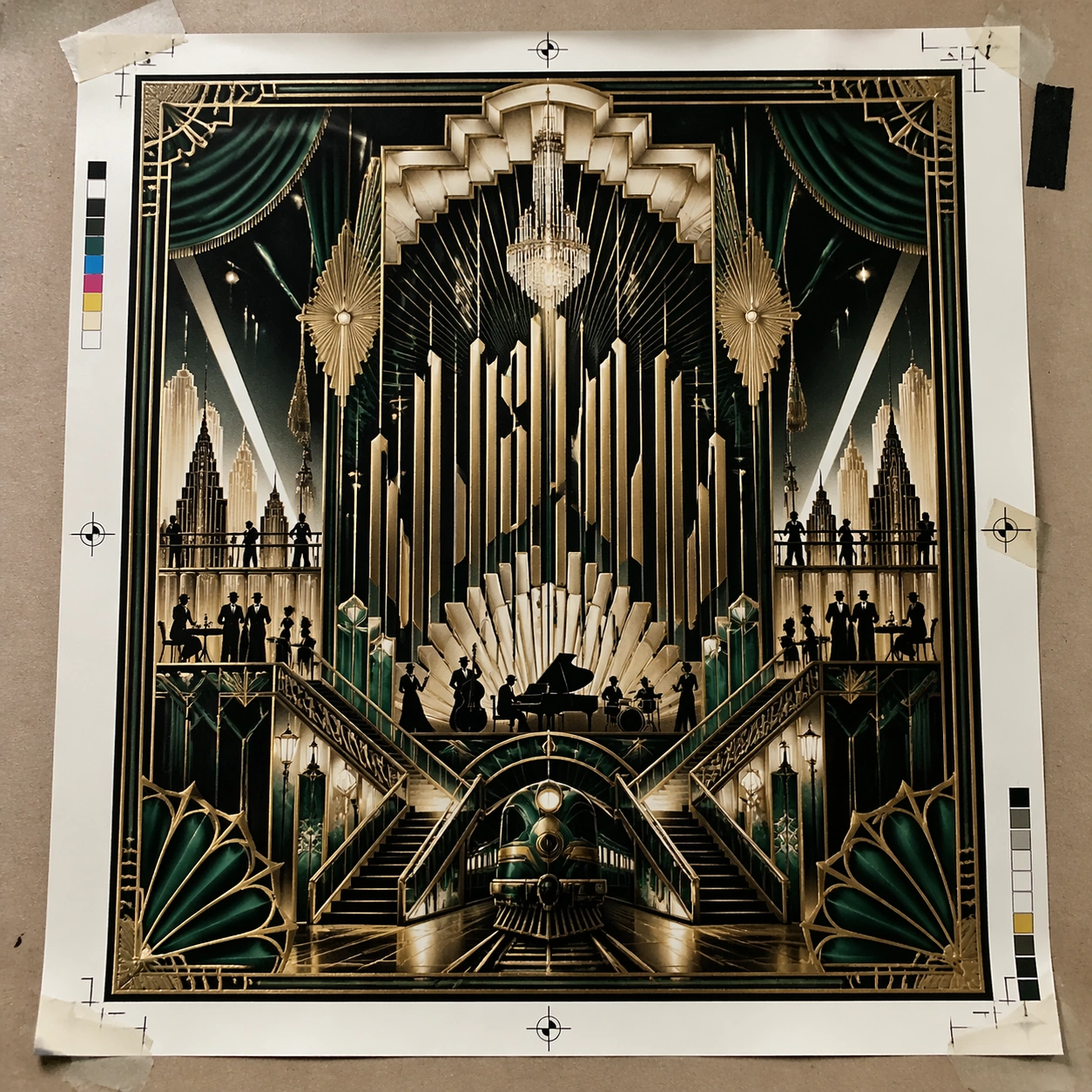
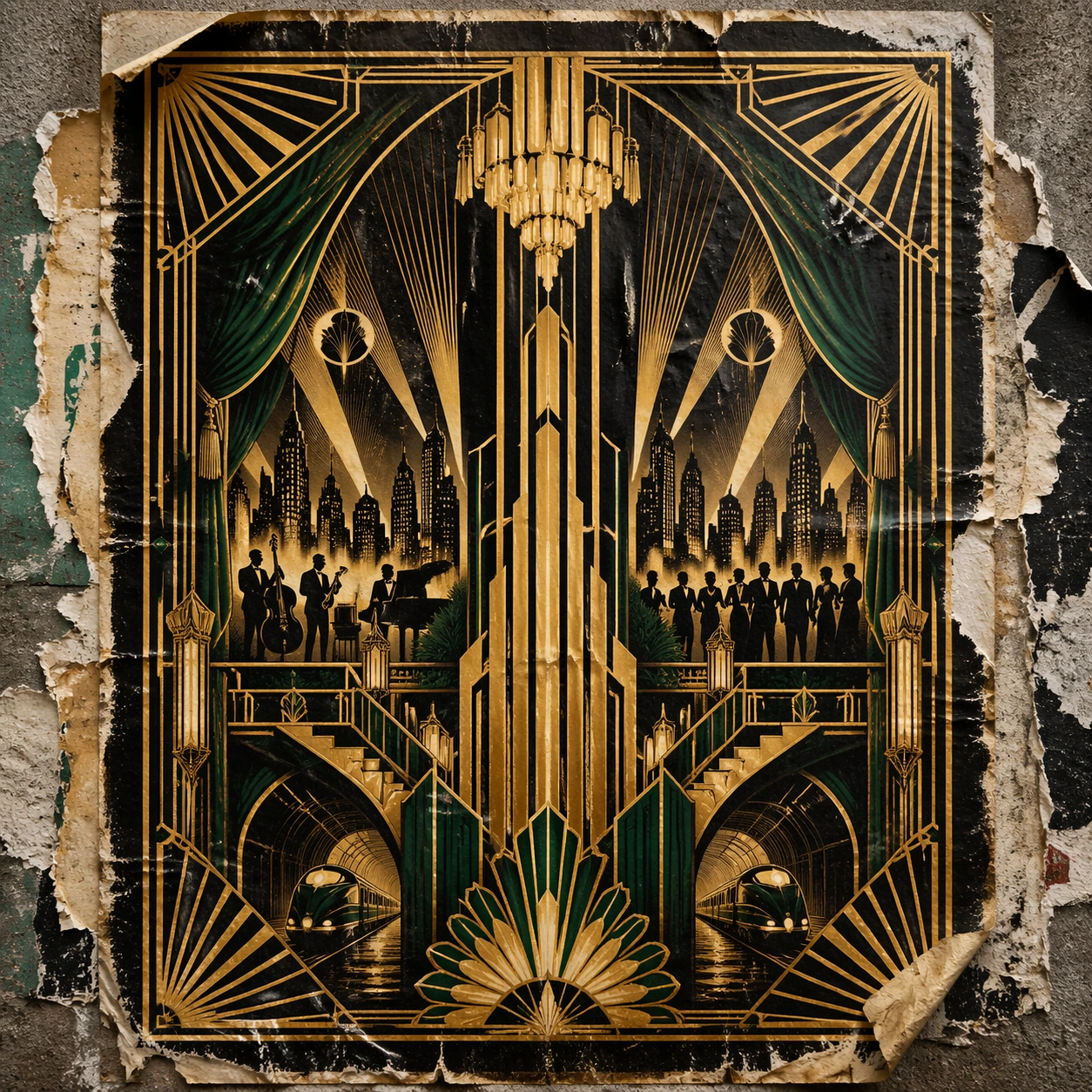
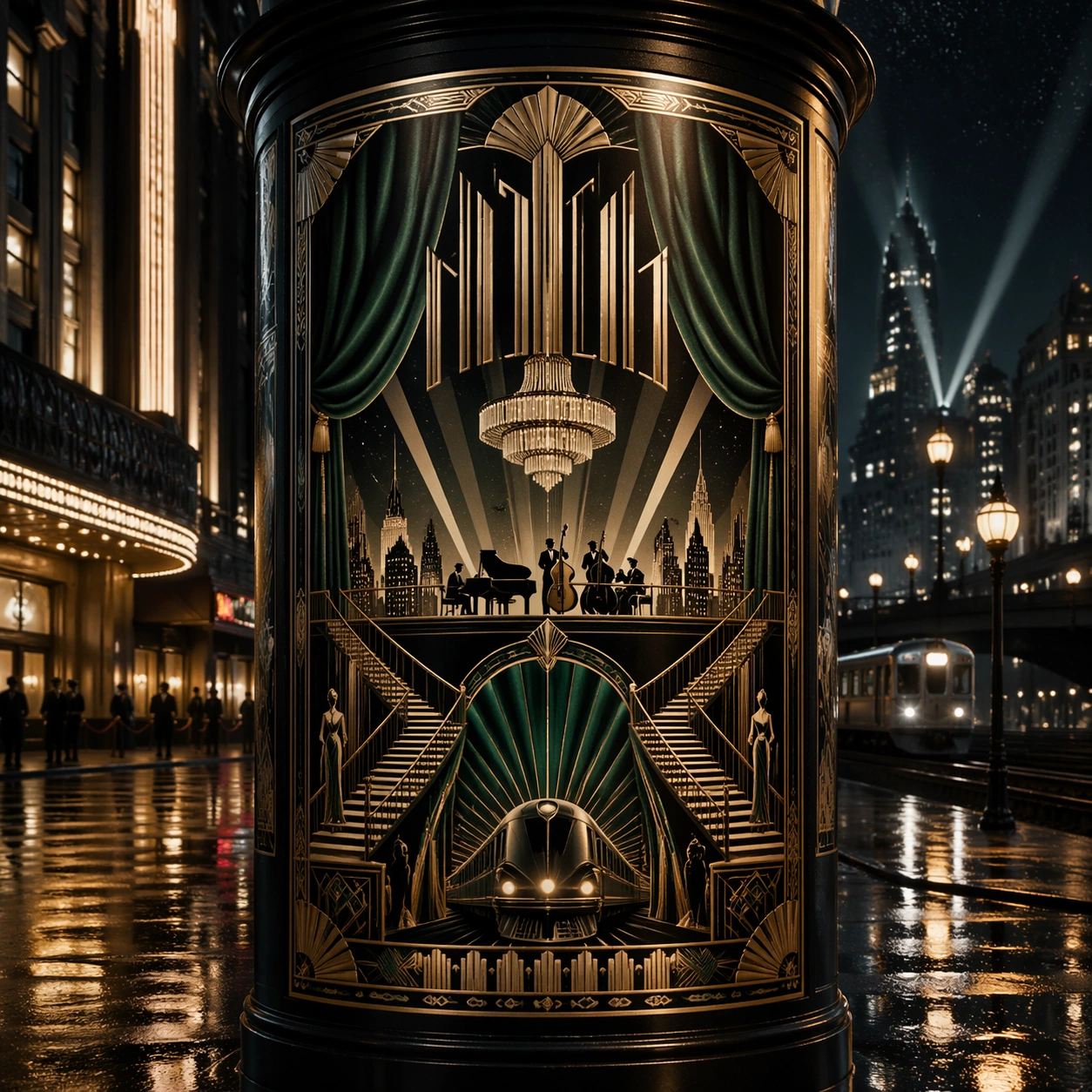
A square nighttime city view with the poster wrapping part of a cylindrical kiosk, wet pavement reflecting nearby light, and the composition holding together under moody urban illumination. The poster should express luxury theatre-era deco symmetry with stepped arches, fan motifs, sunbursts, and jewel-like border framing, using metallic gold, deep black, emerald green, ivory, and restrained champagne highlights and a tactile surface appropriate to the medium.

Subject:
Reframe the design for a dramatic street-placement context, where the poster has to project style and mood through reflection, curvature, and surrounding darkness. Use velvet curtains, skyline silhouettes, chandeliers, mirrored staircases, stage spotlights, and fan-shaped rays as the main visual ingredients, and organize them with tall condensed deco glyph blocks kept ornamental and non-readable. For the contemporary-subject axis, thread in a nocturnal rooftop jazz gala and sleek city train arrival absorbed into deco glamour. The poster must feel like an original design object rather than a reproduction of any known work.

Important details:
The design should remain instantly recognizable despite the cylindrical wrap. Preserve major blocks, symbolic shapes, and abstract title forms so the style still feels authoritative at night. Preserve mirror symmetry, thin metallic linework, precise ornament pacing, and elegant vertical emphasis. Keep every letterform abstract and non-readable, as if it were a typographic texture rather than language. Make the style unmistakable through composition, palette, surface behavior, and symbolic compression. no cheap glitter, no modern interface chrome, no casual streetwear, no cartoon softness.

Use case:
Art Deco Theatre single study 8/9, testing atmospheric display under rain and glow.

Constraints:
No readable text, no watermark, no logos, preserve exact 1:1 aspect ratio, no copyrighted characters, no real brand marks, no QR codes, no interface chrome, no accidental gibberish lettering.
Come usare
- Copia tutto il prompt originale, inclusi i parametri.
- Adatta soggetto, testo e composizione alle tue esigenze.
- Usa uno strumento esterno compatibile; verifica accesso e risultato.
Prima di iniziare
- Controlla se serve un’immagine di riferimento. La compatibilità non prova il modello usato per l’esempio.
- Verifica nomi, numeri e testi; i risultati cambiano con le versioni del modello.