Documento originale
GPT Image 2 · en
Scene:
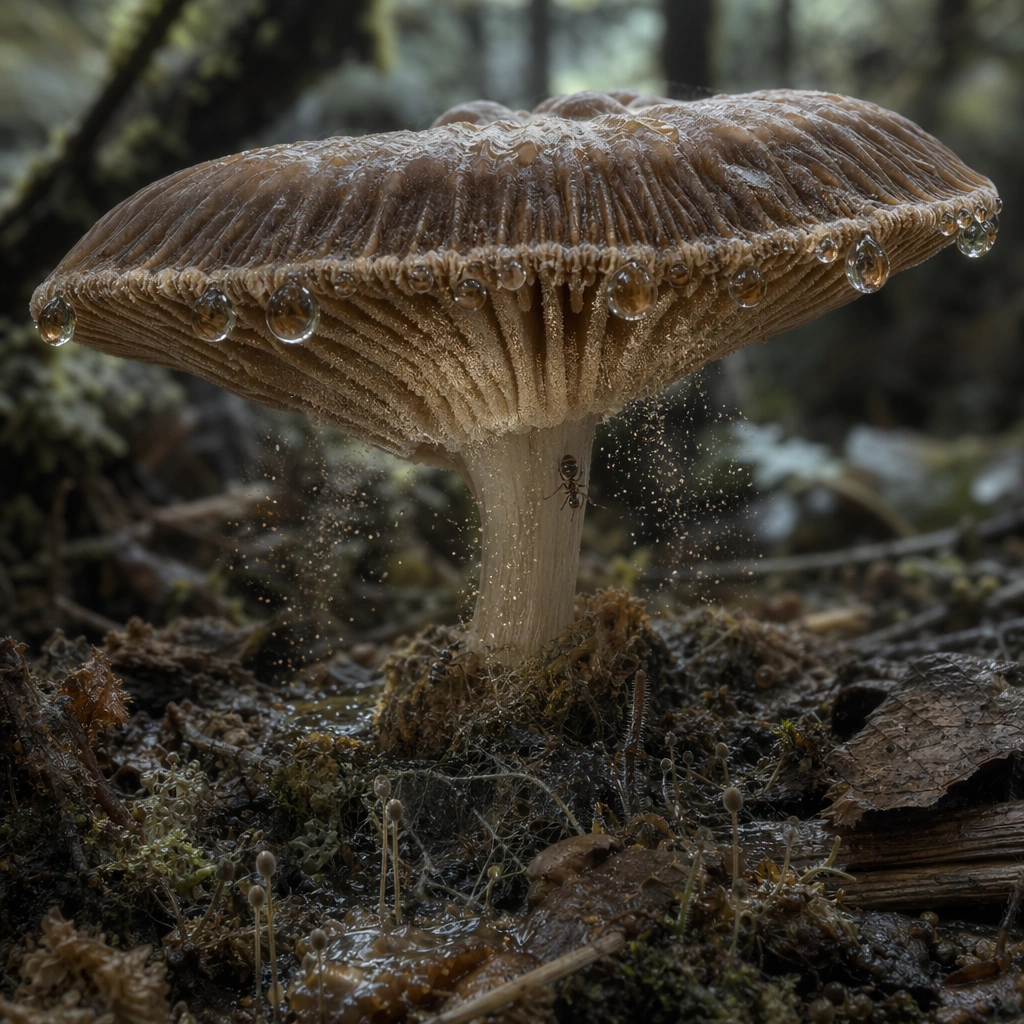
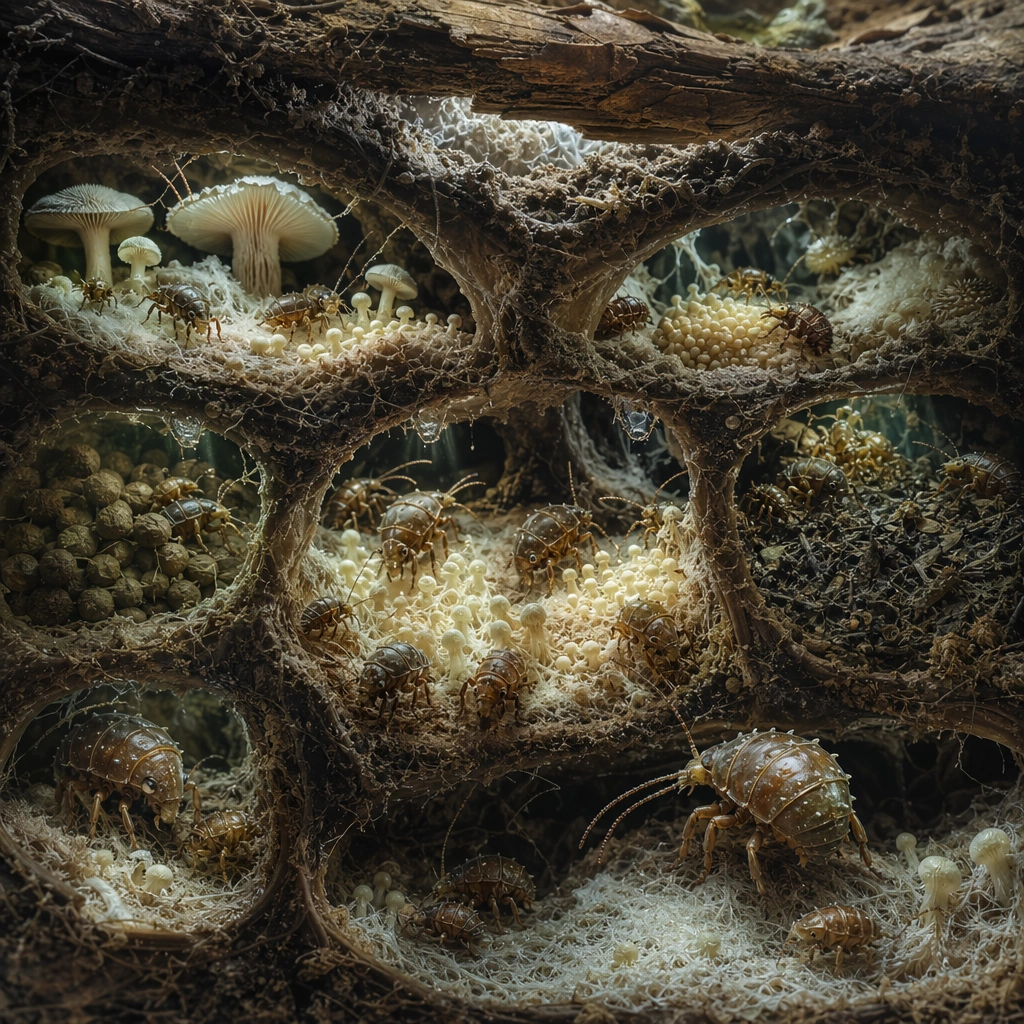
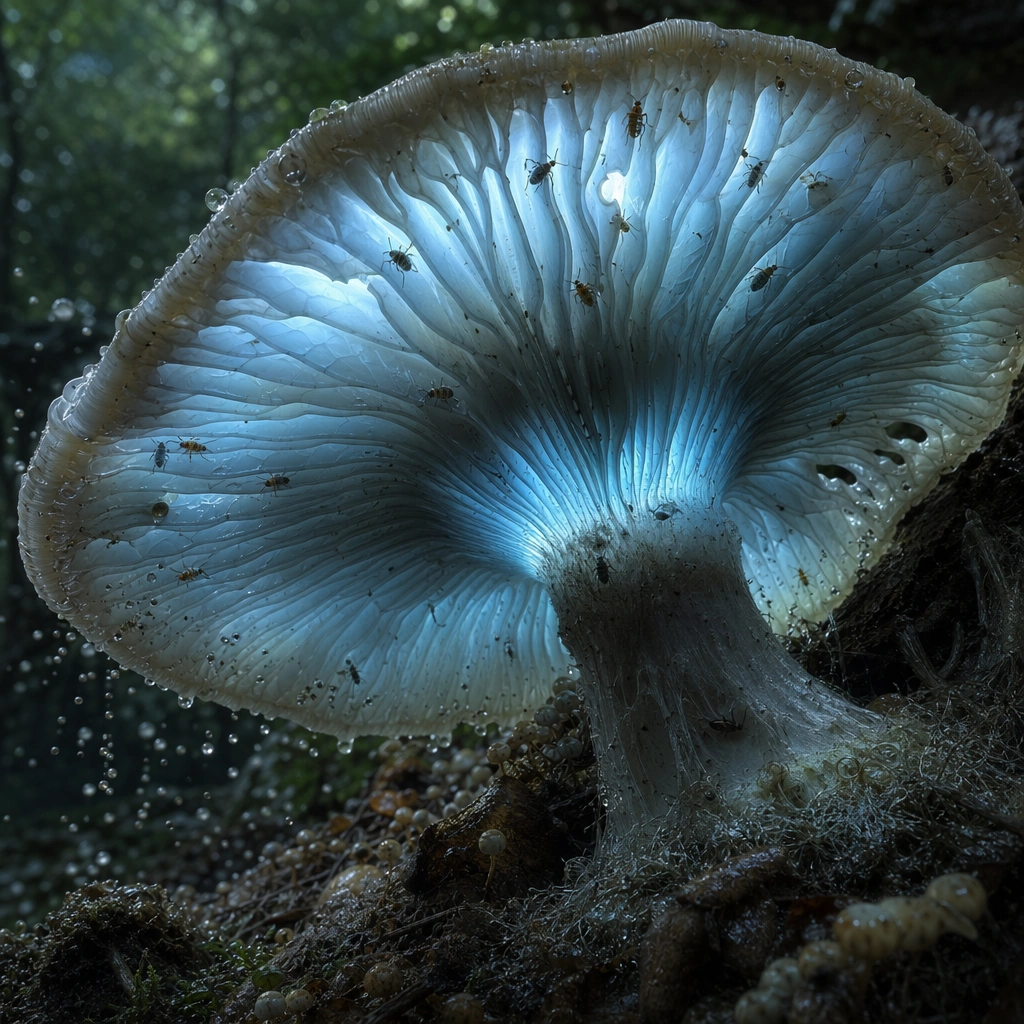
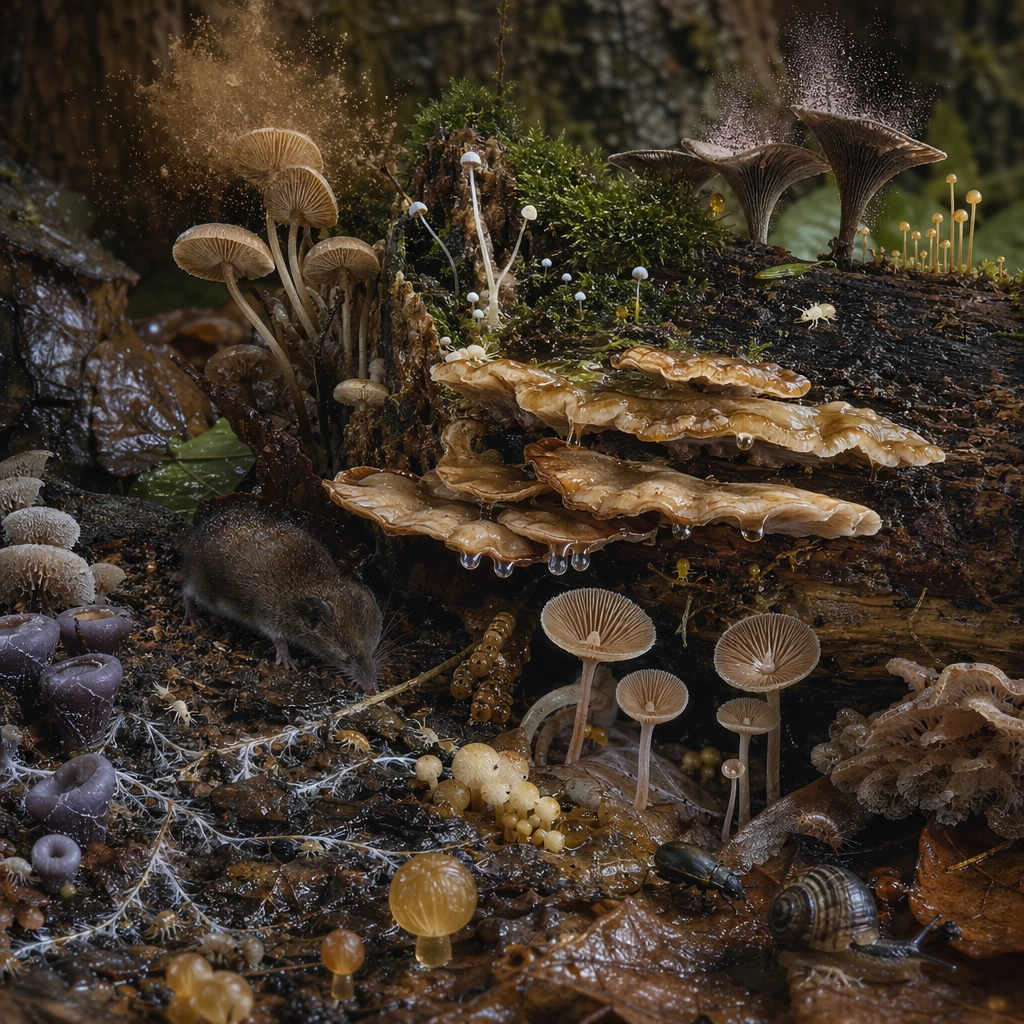
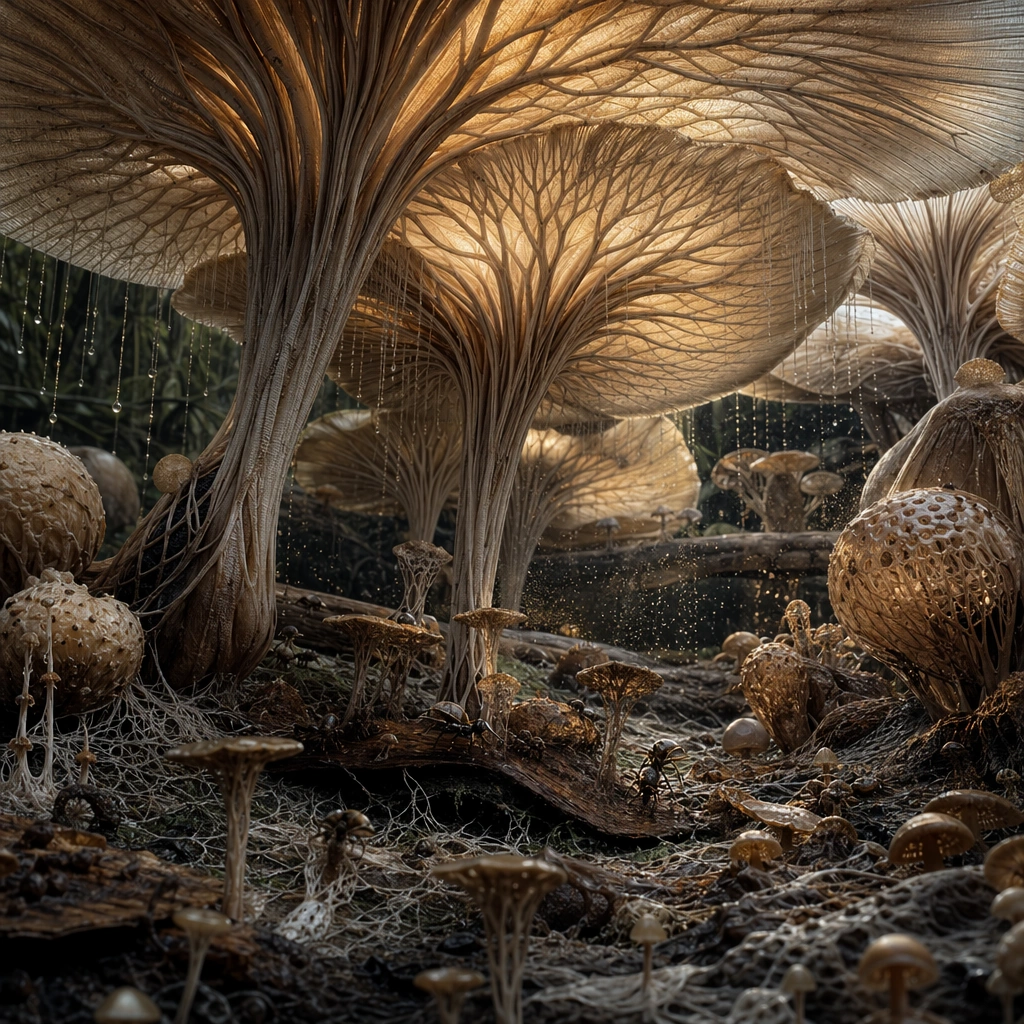
Create a low-angle view beneath a cluster of towering translucent caps whose undersides turn the forest floor into a pale amber and ivory chamber. Moist air, thin spores, and dew threads should give the square frame a humid sacred stillness without becoming fantasy architecture. Build the frame as a square natural history study with disciplined composition, believable lighting, and enough environmental evidence to explain how this organism or system functions without any caption. Keep the image polished, observational, and suitable for a research gallery rather than pulp fantasy spectacle.

Subject:
Focus on the canopy effect created by layered caps, semi-transparent ribs, and dangling condensation organs that release spores in slow pulses. Smaller understory fungi and cautious insects should occupy the shadow zone beneath the caps, demonstrating how one species engineers habitat for others. Show the anatomy, habitat interaction, and scale cues clearly so the viewer can infer locomotion, feeding, reproduction, or ecological role from the visual alone. Every visible structure should feel evolved for a purpose, with layered foreground, midground, and background information that rewards close inspection.

Important details:
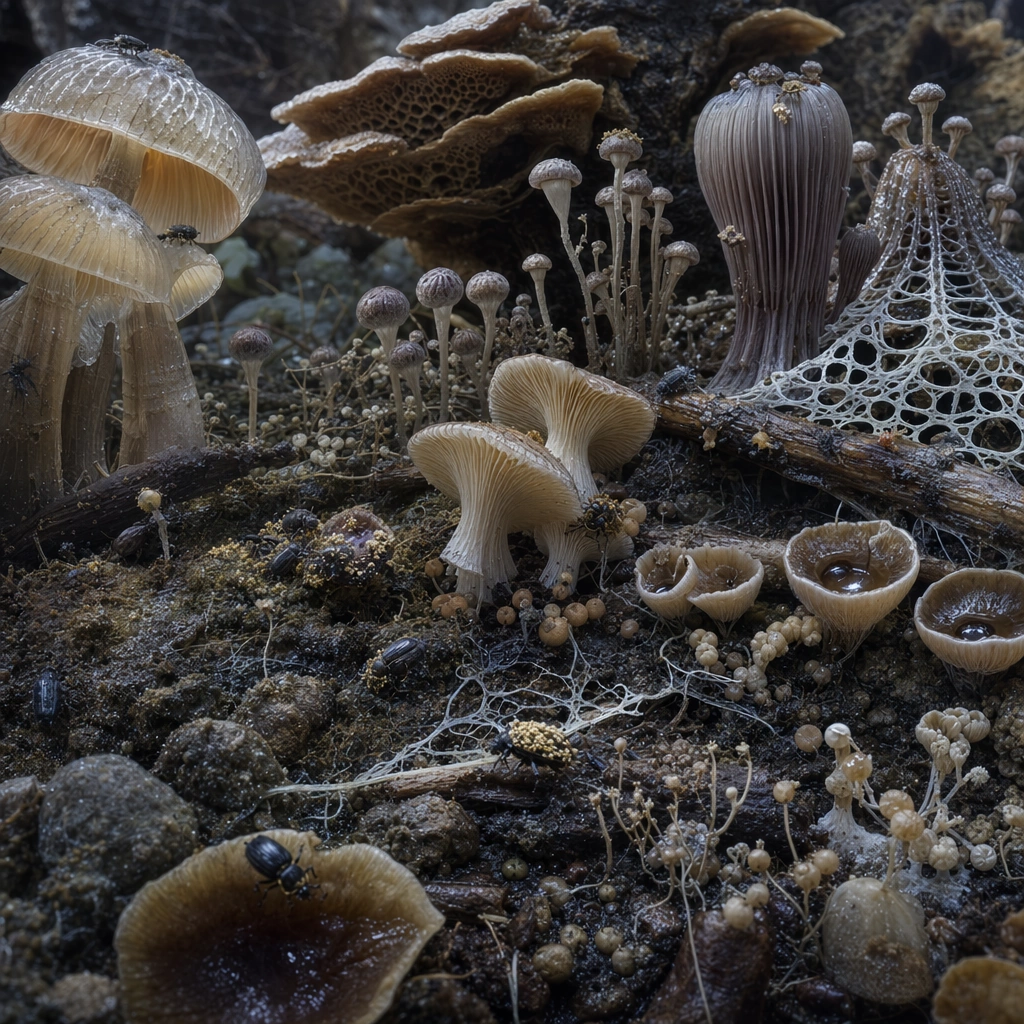
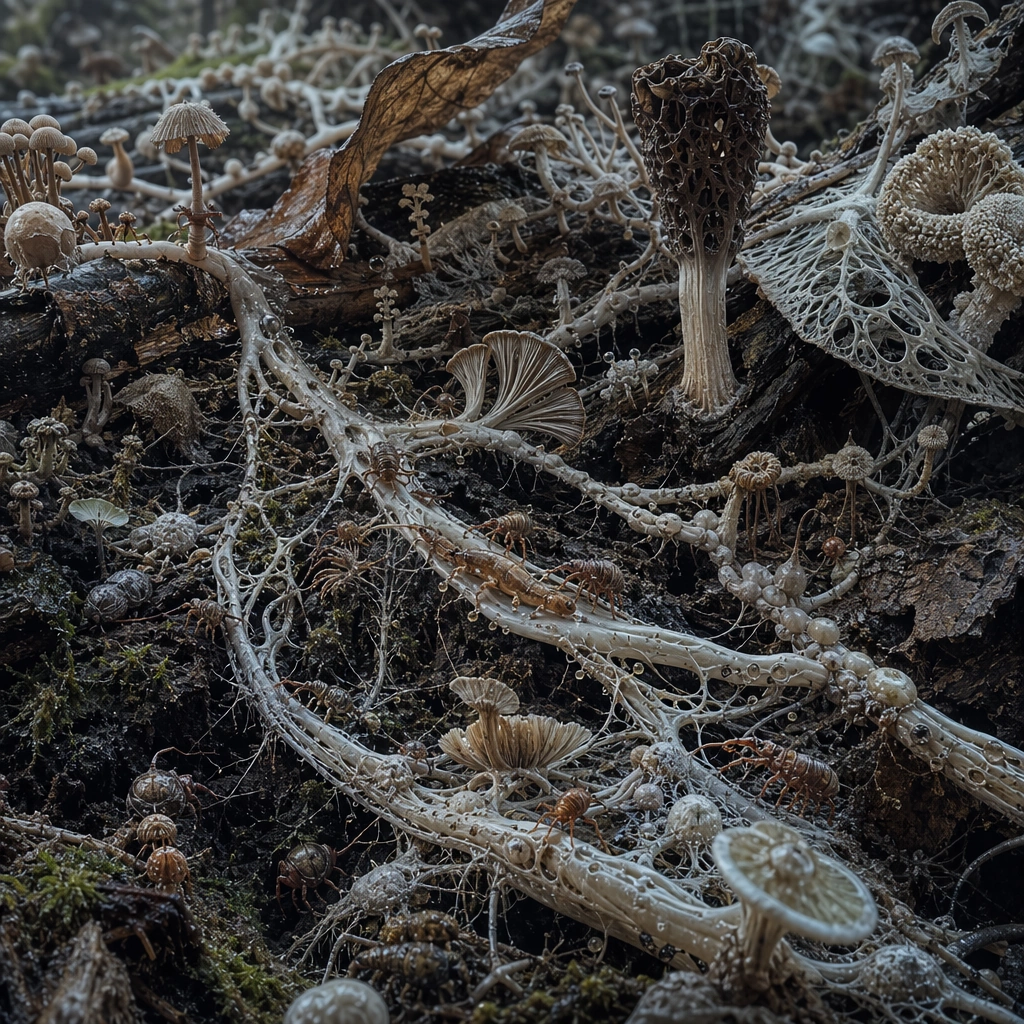
Treat the forest floor as a dense biological city where moisture, decay, and spore traffic drive form. Caps, gills, stalks, hyphal mats, and insect partnerships should all look evolved to manage shade, humidity, nutrient exchange, and reproduction. Keep the anatomy fungal rather than floral: membrane veining, gill branching, and support stalk tension should all feel mechanically plausible. The beauty of the image should come from structure, moisture, and filtered light, not from arbitrary ornament. Favor coherent biology over decorative excess: tissues, shells, membranes, spores, tendrils, fins, silica lattices, or atmospheric sacs should all follow one material logic. Preserve a convincing relationship between the environment and the body plan, use restrained color hierarchy, and make the image feel like a serious speculative field record rather than a random monster concept.

Use case:
Fungal Kingdom Microcosm single study 2/9.

Constraints:
No readable text, no watermark, no logos, preserve exact 1:1 aspect ratio, no church windows, no human candles, no fantasy runes, no plastic-looking translucency, no accidental brand resemblance, no direct copy of known terrestrial species, no cartoon simplification.
Come usare
- Copia tutto il prompt originale, inclusi i parametri.
- Adatta soggetto, testo e composizione alle tue esigenze.
- Usa uno strumento esterno compatibile; verifica accesso e risultato.
Prima di iniziare
- Controlla se serve un’immagine di riferimento. La compatibilità non prova il modello usato per l’esempio.
- Verifica nomi, numeri e testi; i risultati cambiano con le versioni del modello.