Documento originale
GPT Image 2 · en
Scene:
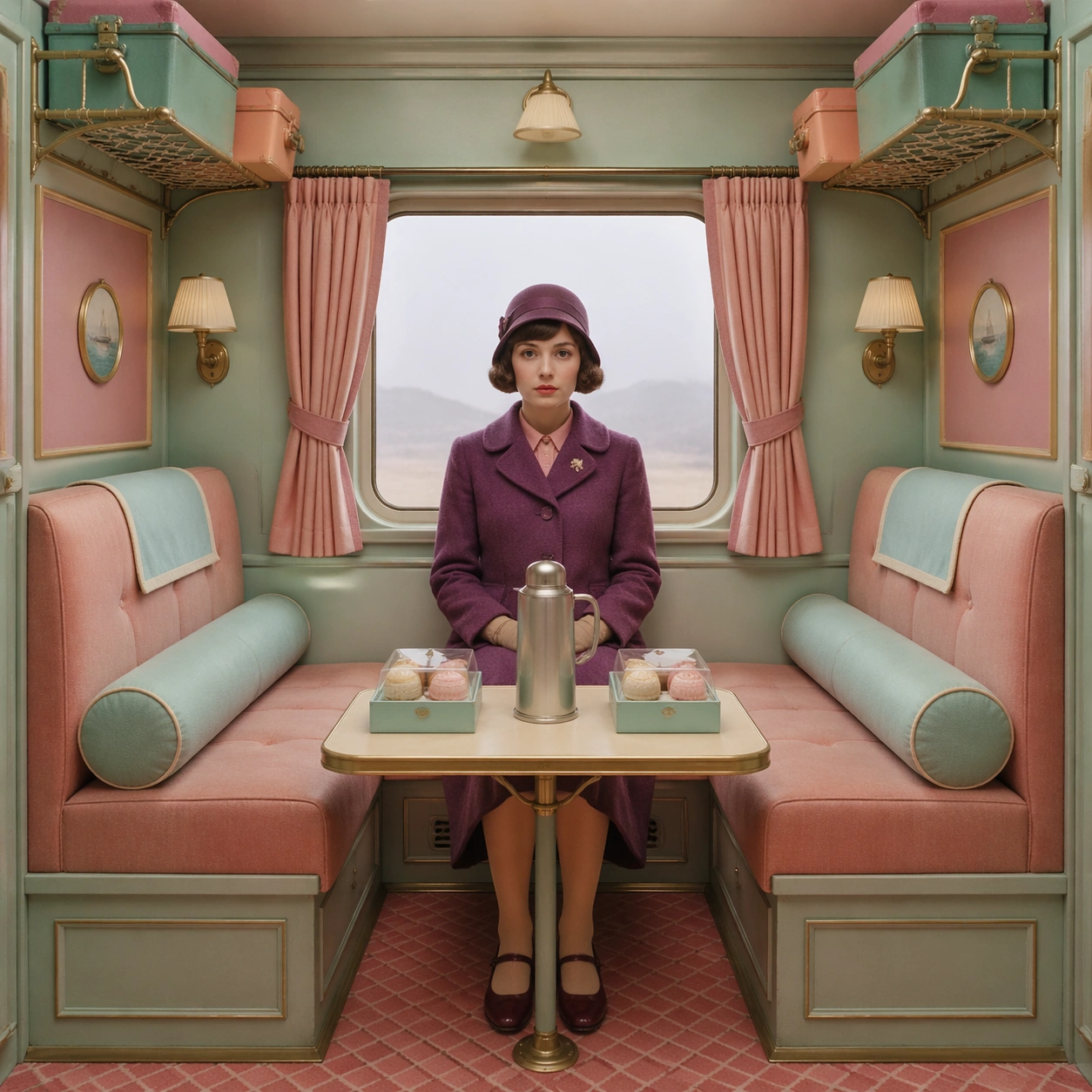
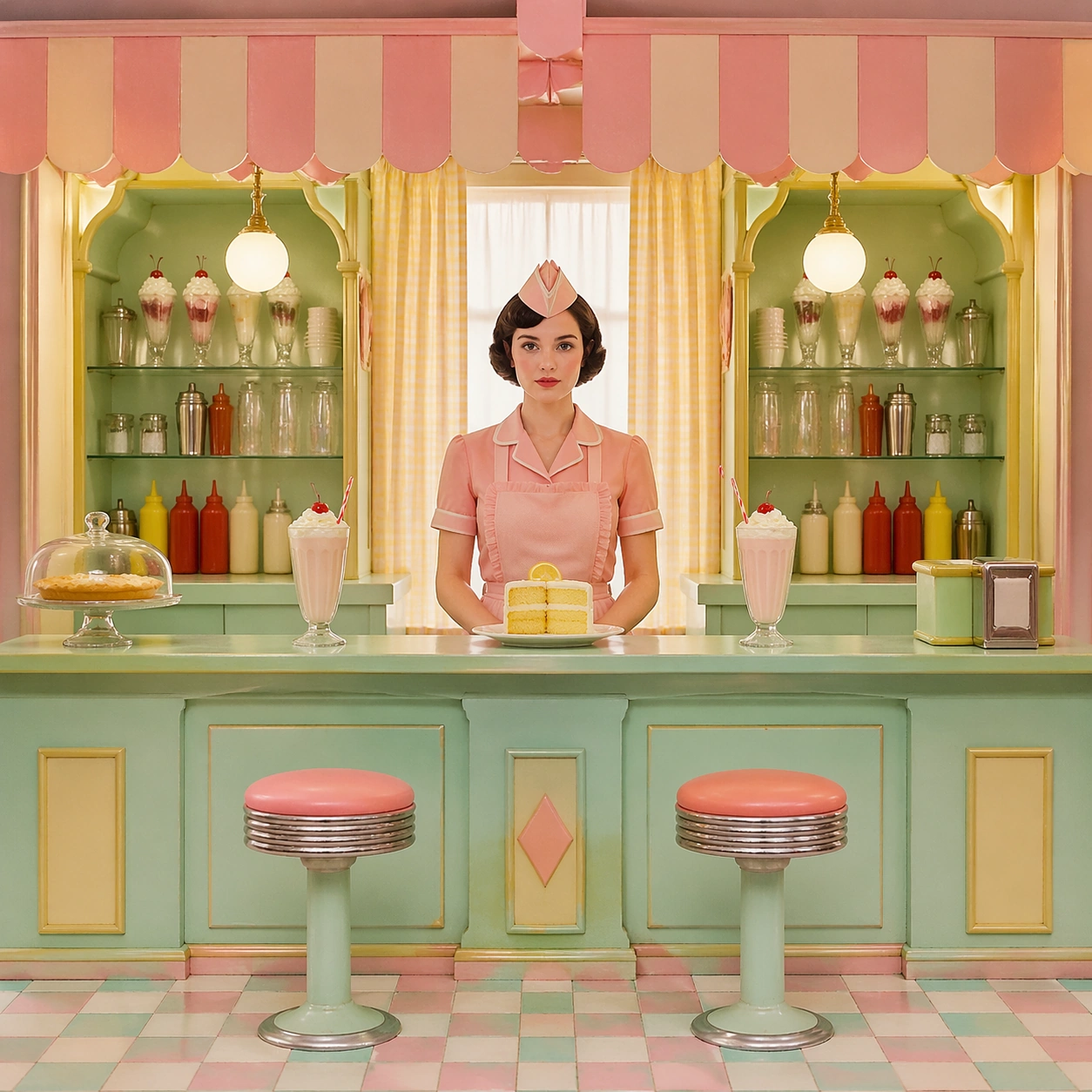
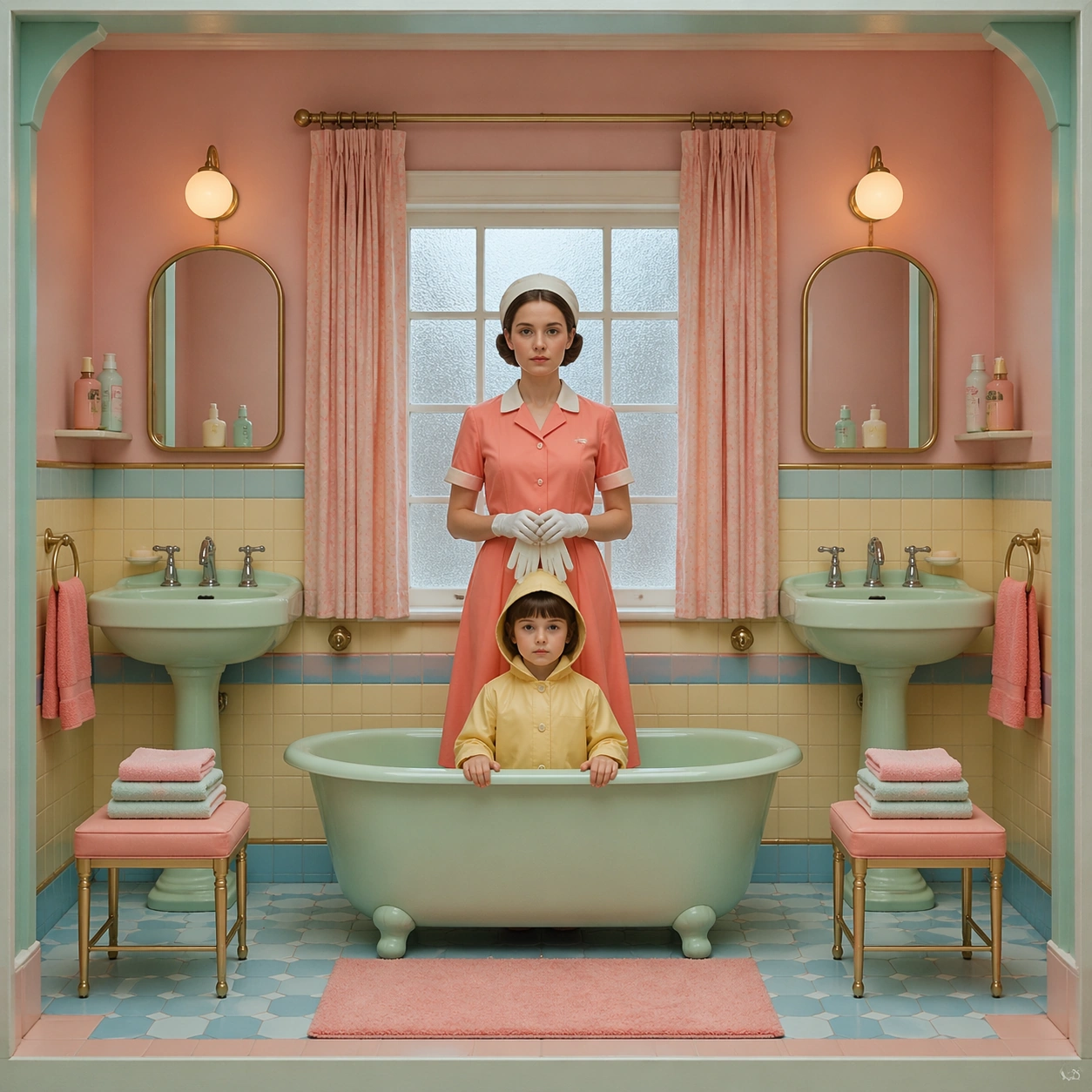
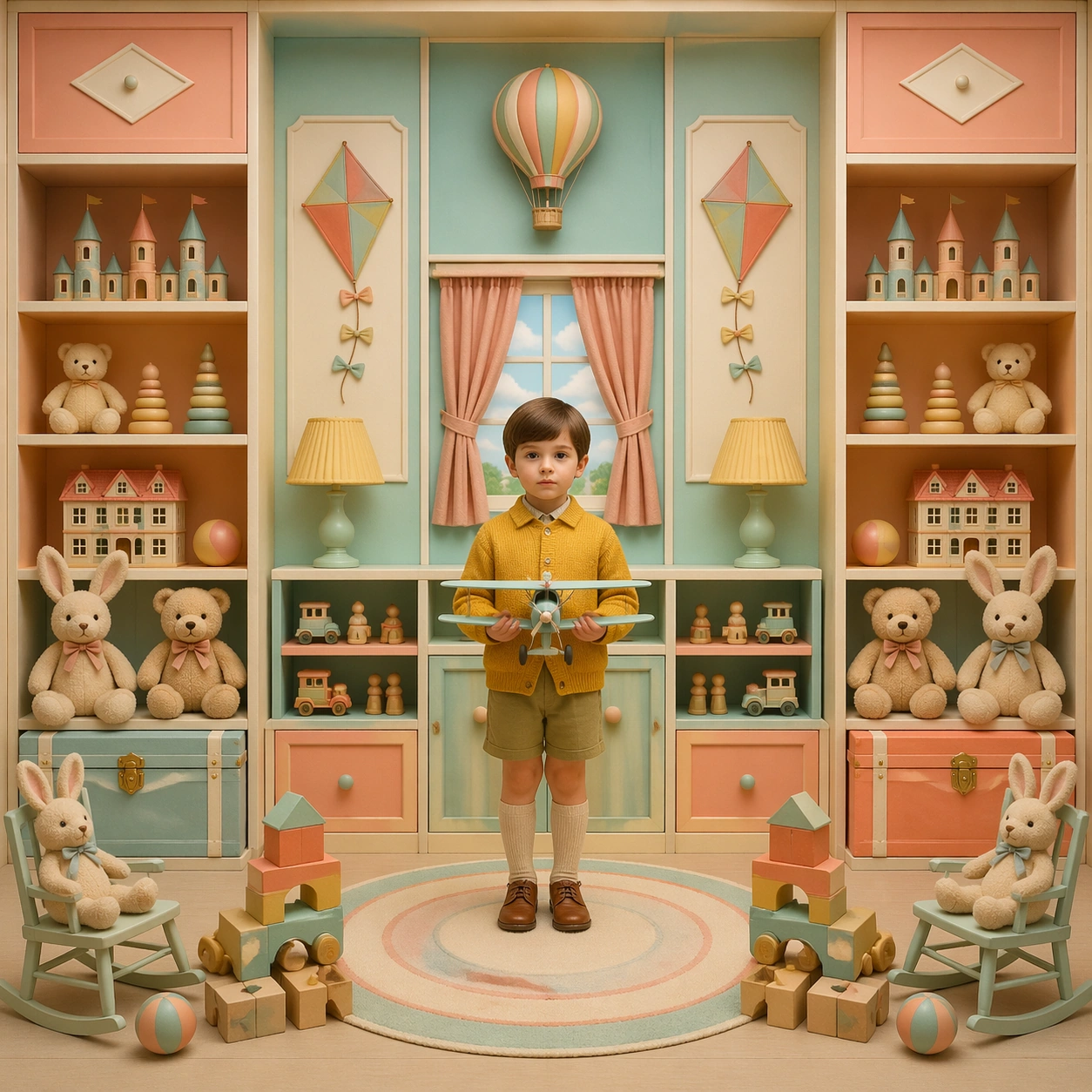
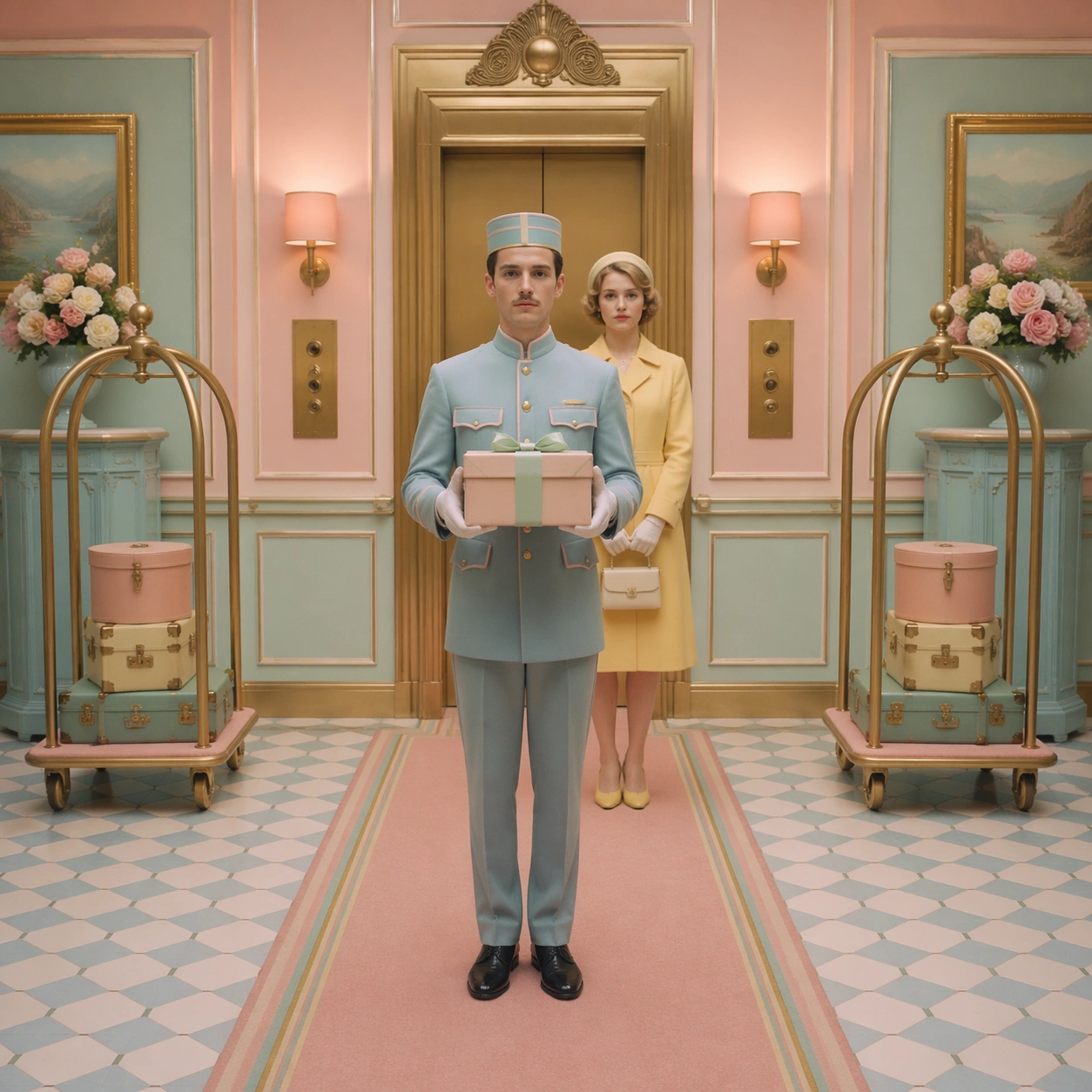
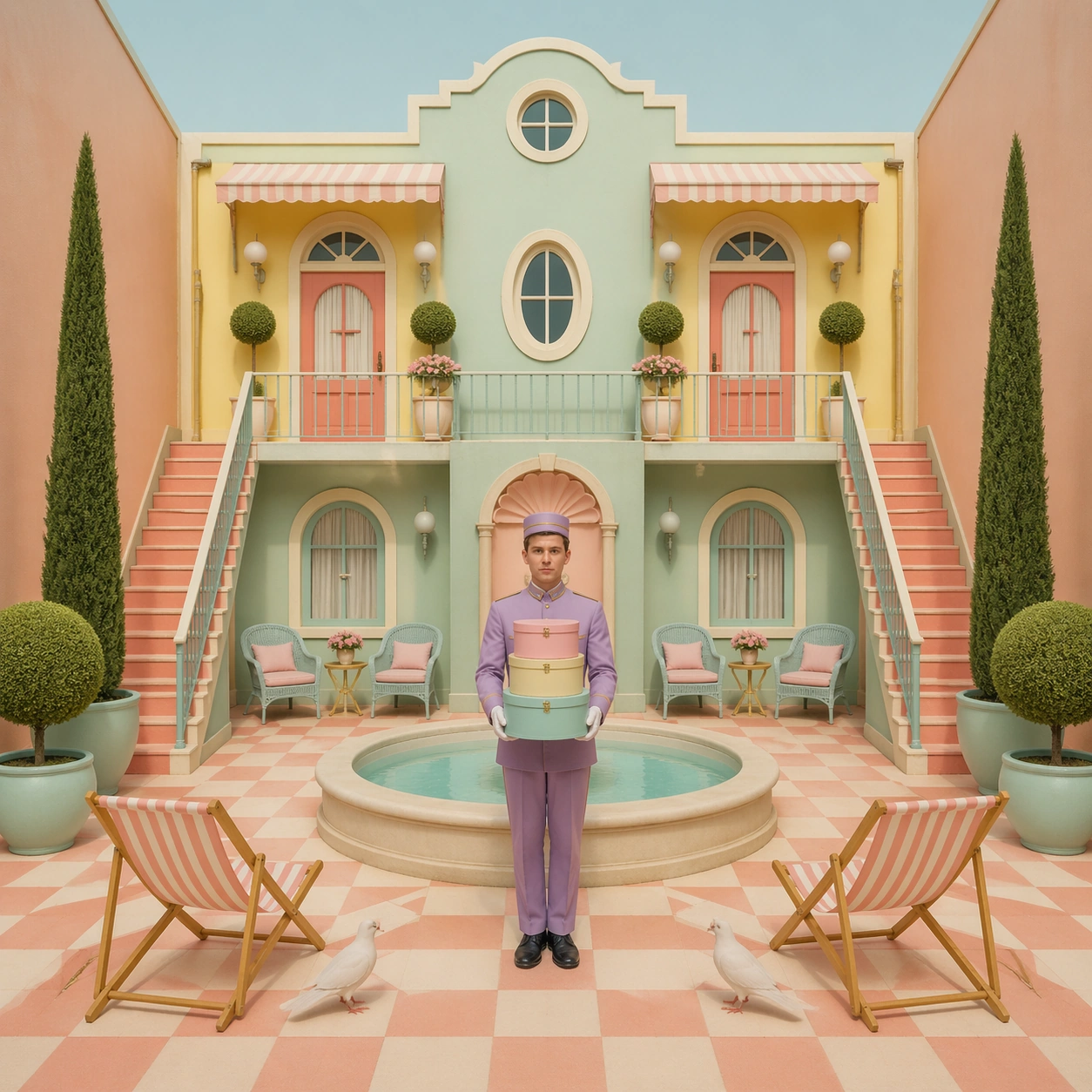
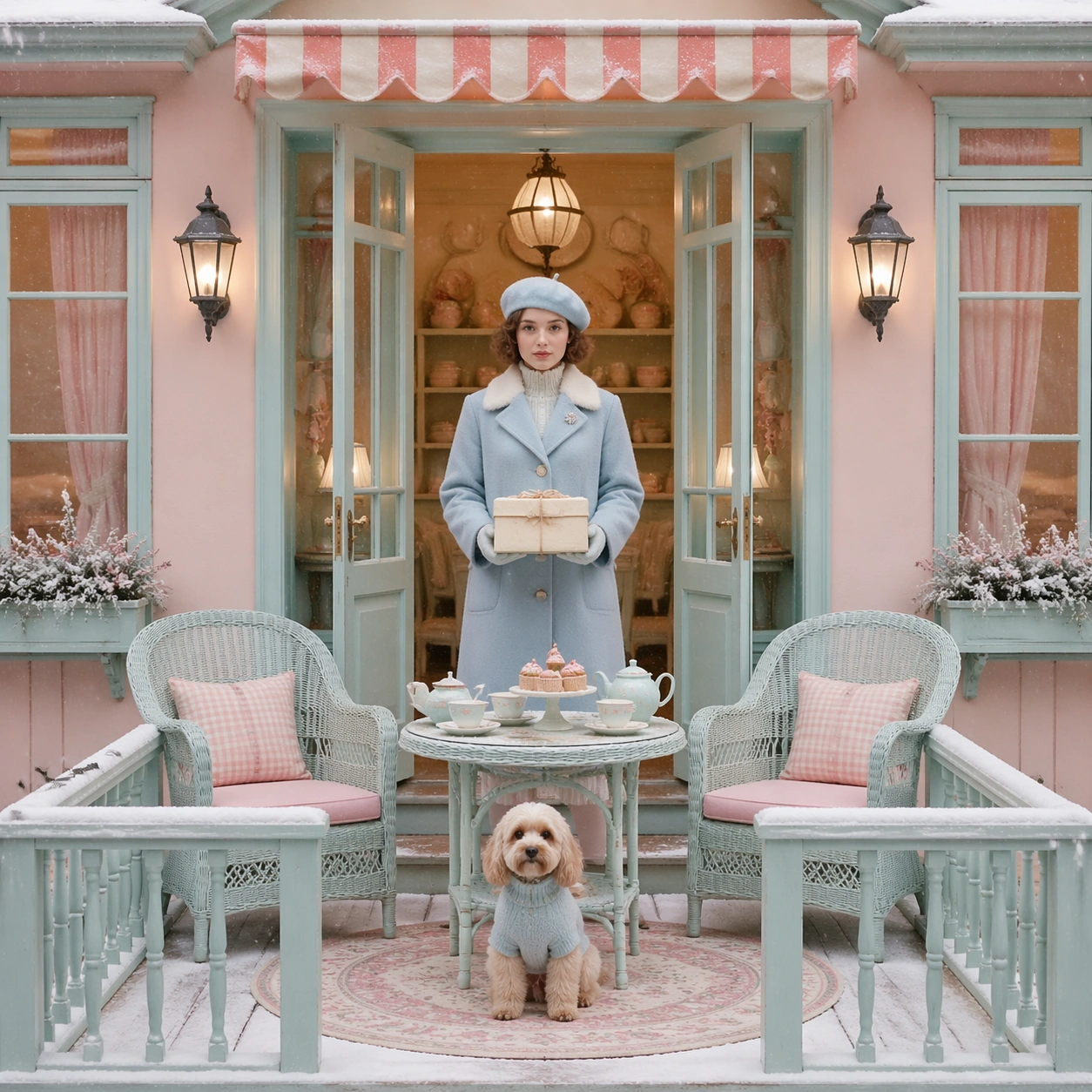
A square cinematic frame built with absolute left-right symmetry and a straight-on camera at human height. The palette is powder pink, mint, butter yellow, pale blue, and faded coral, with soft daylight and a miniature dollhouse clarity. The architecture should feel handcrafted, tidy, slightly theatrical, and emotionally precise rather than casual or naturalistic. Use a snow-dusted balcony facade with double doors, paired lanterns, and matching wicker chairs facing inward toward a centered tea table under cold pastel morning light.

Subject:
Place one or two front-facing figures exactly on the central axis, with costumes, props, and furnishings arranged like curated museum pieces. The people should feel composed and deadpan, never candid, and the room must read as a cutaway stage set where every shelf, lamp, chair, and curtain participates in the symmetry. A woman in a pale blue coat stands in the middle holding a boxed pastry string-tied in cream paper, while a small dog sits exactly on the rug medallion below her feet.

Important details:
The signature rules are central balance, flat frontal staging, pastel temperature control, crisp prop spacing, and a charming handmade scale. Preserve clean rectangles, color-coded rooms, disciplined eye-line, and the sense that the camera is respectfully observing an invented world. Avoid messy realism, loose camera motion, asymmetrical clutter, and dramatic lens distortion. Keep the snow gentle and graphic, the balcony rails evenly spaced, and the palette restrained so the image feels elegant, wistful, and composed instead of dramatic.

Use case:
Symmetrical Pastel Dollhouse Cinematography single study 7/9.

Constraints:
No readable text, no watermark, no logos, preserve exact 1:1 aspect ratio, no dutch angle, no chaotic crowd, no gritty grime, no harsh neon, no visible brand packaging, no broken anatomy, no low-detail background, no accidental text fragments.
Come usare
- Copia tutto il prompt originale, inclusi i parametri.
- Adatta soggetto, testo e composizione alle tue esigenze.
- Usa uno strumento esterno compatibile; verifica accesso e risultato.
Prima di iniziare
- Controlla se serve un’immagine di riferimento. La compatibilità non prova il modello usato per l’esempio.
- Verifica nomi, numeri e testi; i risultati cambiano con le versioni del modello.