Documento originale
GPT Image 2 · en
Scene:
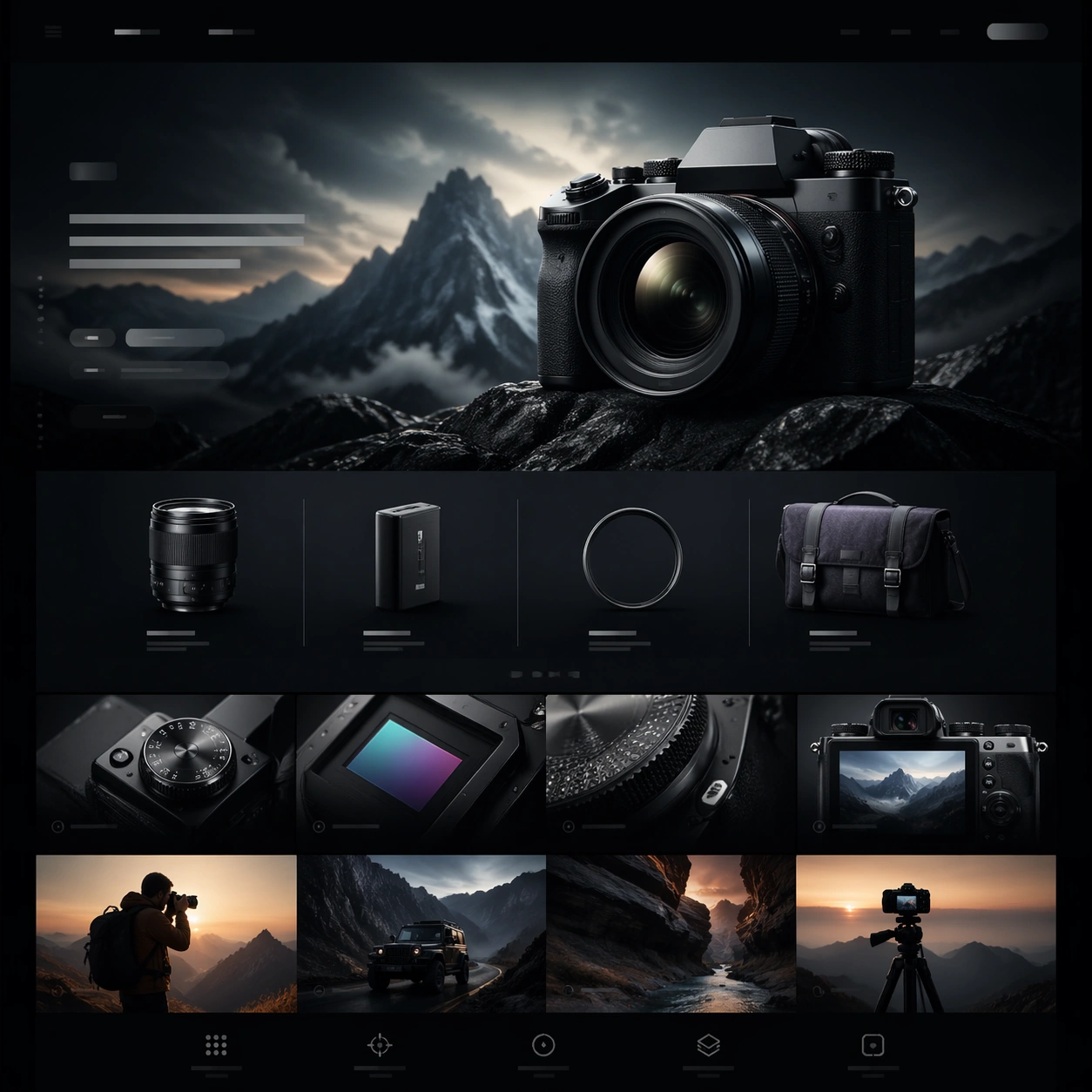
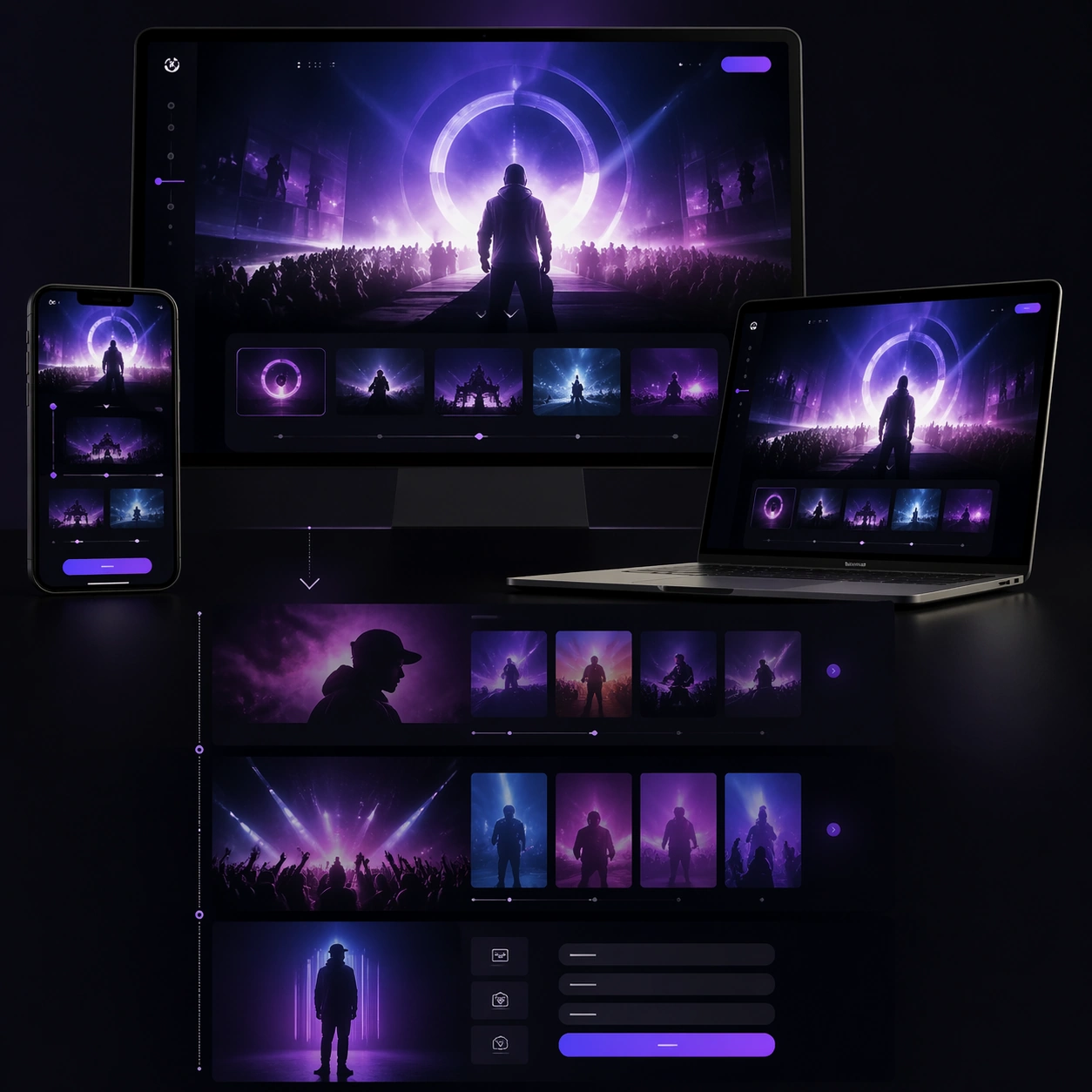
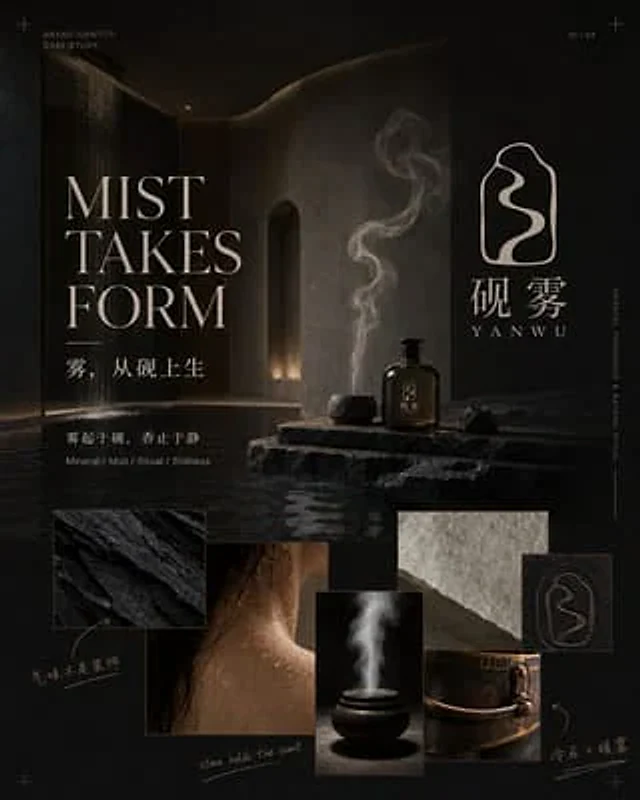
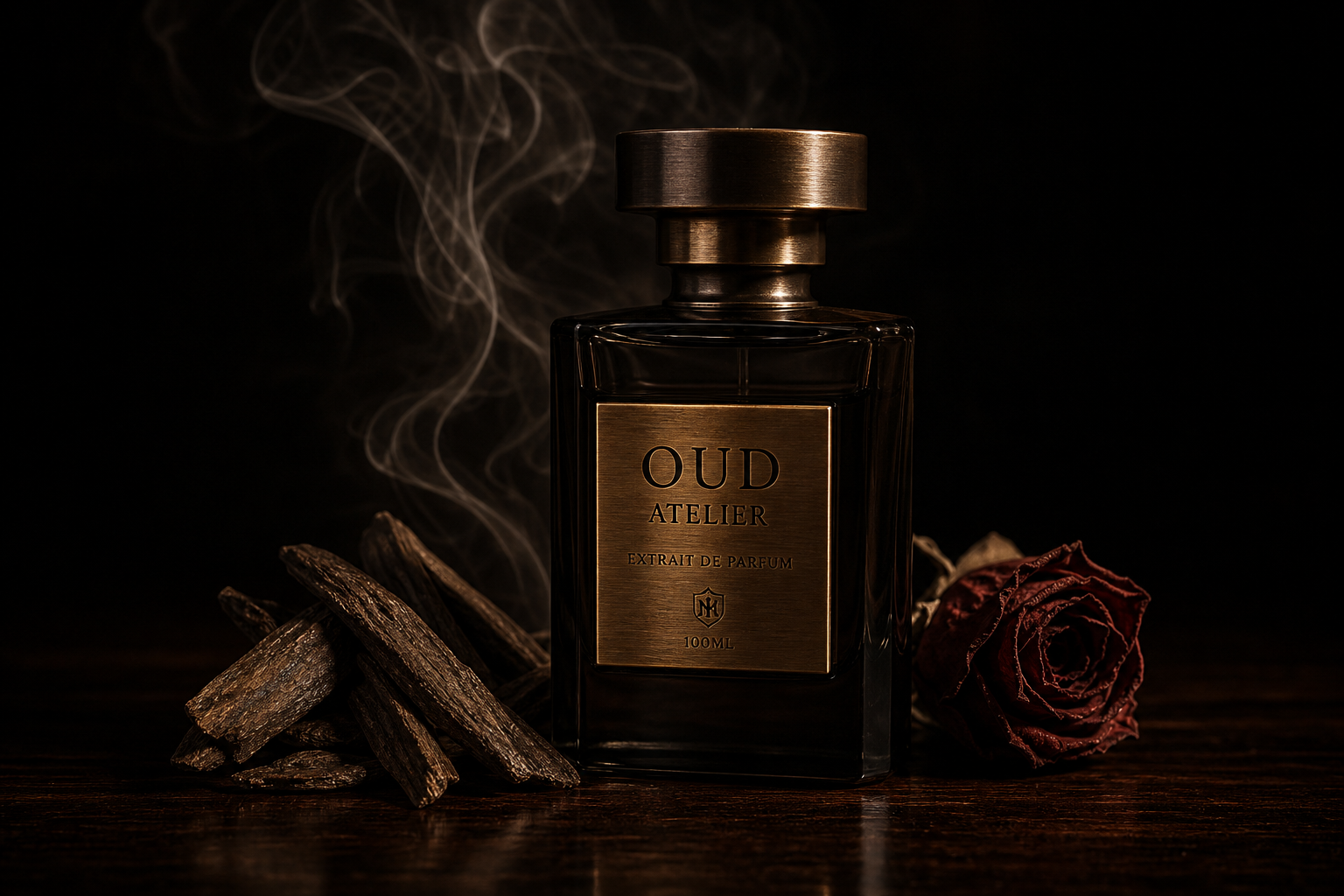
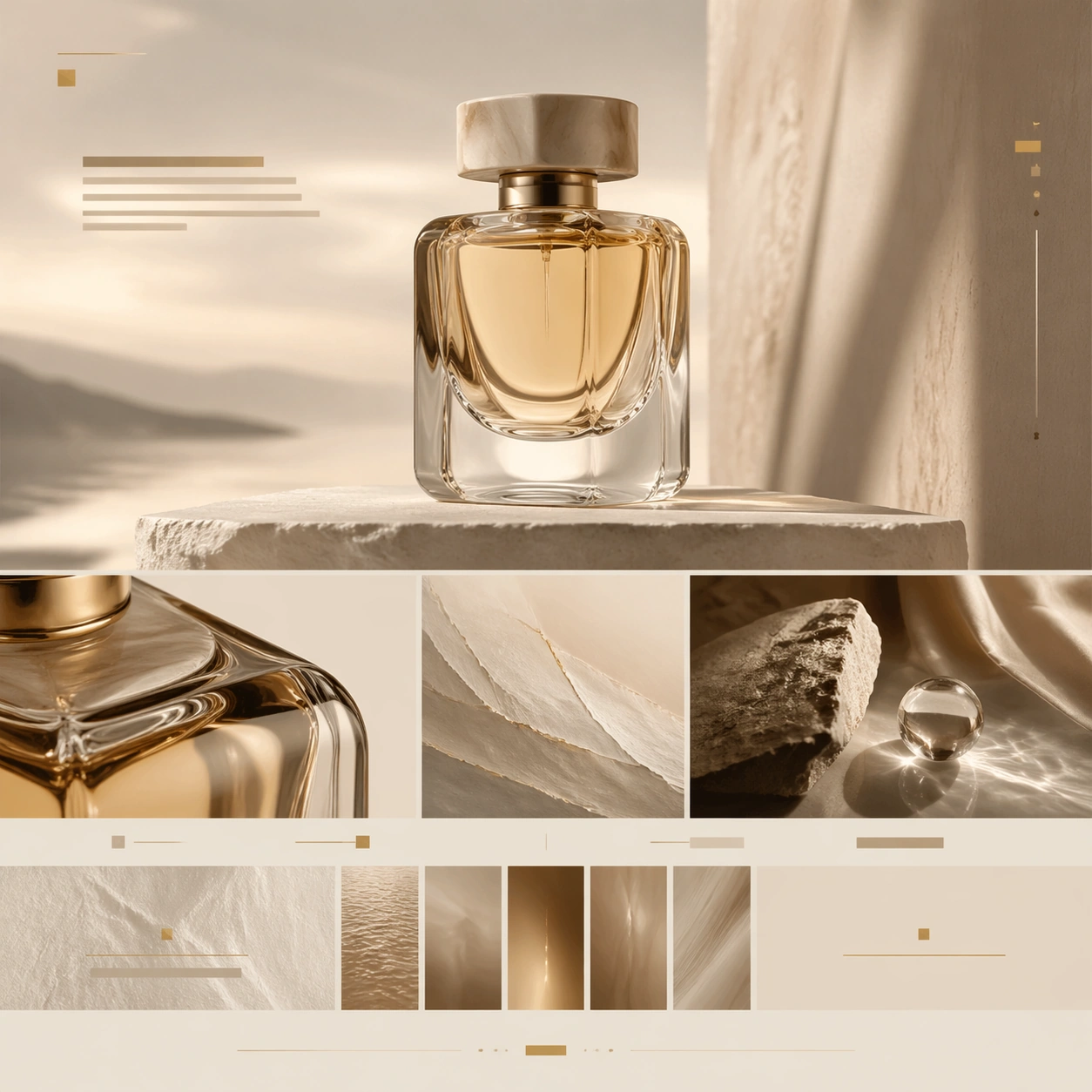
A square luxury brand-story page still for a sculptural fragrance launch, presented like an elegant maison website chapter. The page is front-on, spacious, and editorial, using ivory, pale stone, smoky amber, and faint gold-beige tones. The top half should feel like an atmospheric hero spread while the lower half transitions into refined storytelling modules, material close-ups, and subtle chapter dividers. Lighting is soft, luminous, and perfume-advertisement polished.

Subject:
Center a sculpted glass fragrance bottle with thick translucent walls, a heavy cap, and liquid tinted like pale amber. Around it, construct a believable brand-story page using abstract headline bars, chapter blocks, ingredient-inspired visual panels, and refined content bands that suggest origin, craft, and collection identity without readable copy. Include one macro crop of the bottle shoulder and glass thickness, and one supporting still-life panel with stone, fabric, and reflected light that implies olfactory mood rather than literal ingredients.

Important details:
The composition must feel like a luxury maison narrative, not an ecommerce product card. Emphasize tactile materials, quiet prestige, and a flow from hero object to craft story to collection context to understated CTA. Glass weight, reflections, cap fit, and liquid level should feel credible. Keep the page restrained, elegant, and expensive, with generous margins and careful chapter rhythm.

Use case:
Luxury Brand Story Page single study 1/9, testing fragrance storytelling, tactile material close-up, and maison-style chapter pacing.

Constraints:
No readable text, no watermark, no logos, preserve exact 1:1 aspect ratio, no browser chrome, no loud beauty-ad copy, no flowers exploding around the bottle, no cheap sparkles, no retail shelf scene, no distorted bottle symmetry.
Come usare
- Copia tutto il prompt originale, inclusi i parametri.
- Adatta soggetto, testo e composizione alle tue esigenze.
- Usa uno strumento esterno compatibile; verifica accesso e risultato.
Prima di iniziare
- Controlla se serve un’immagine di riferimento. La compatibilità non prova il modello usato per l’esempio.
- Verifica nomi, numeri e testi; i risultati cambiano con le versioni del modello.