
Documento originale
GPT Image 2 · en
Scene:
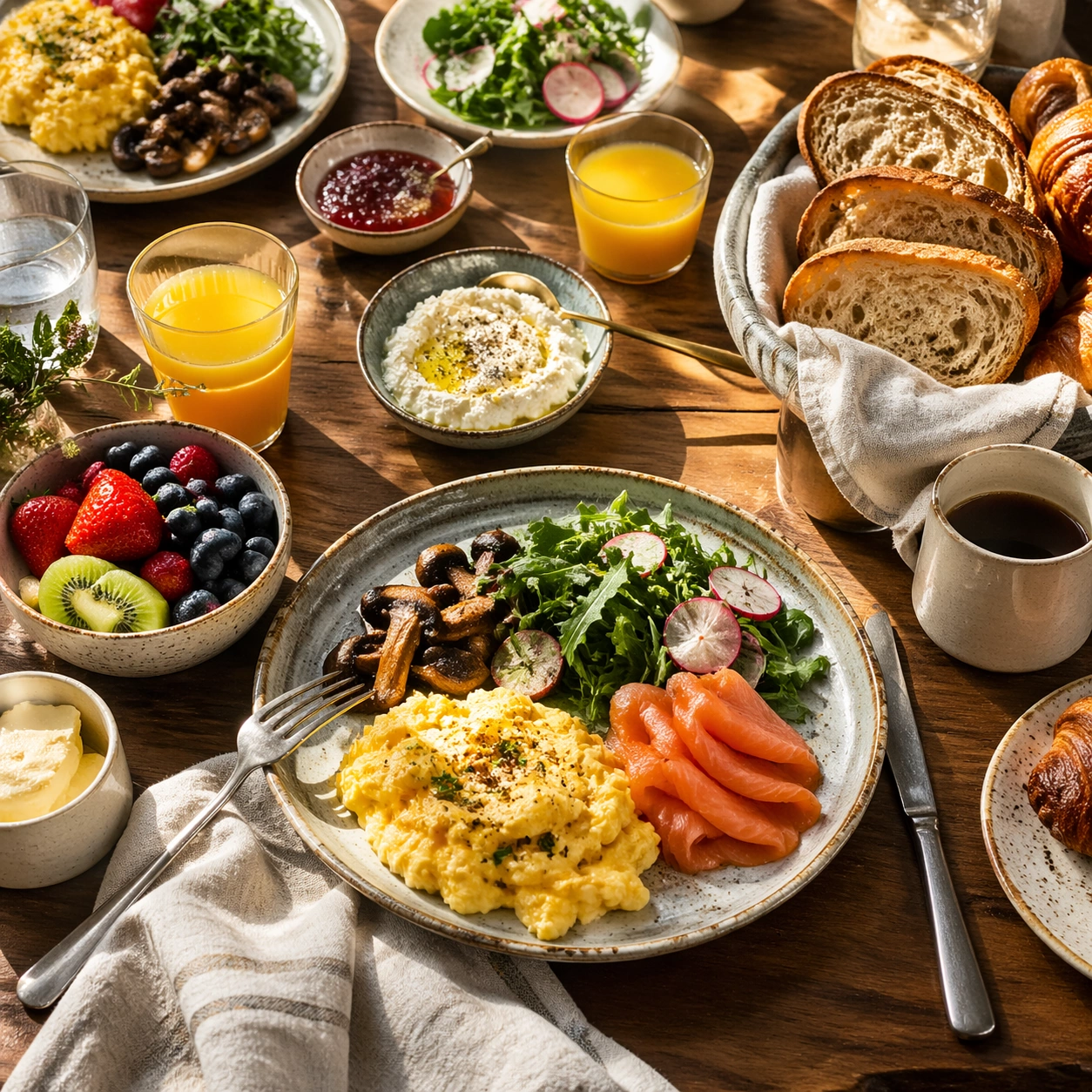
Compose a square brunch tabletop image with layered tableware, generous daylight, and a sense of weekend abundance that still feels organized enough for real hospitality and publishing use. The scene should balance multiple objects without losing the hero focal point, making table choreography and dish relationships a core part of the image. Use natural weekend daylight from the side, with a large table partially visible in square crop and soft shadows that keep the surface lively and dimensional.

Subject:
The food must look fresh, warm, and genuinely shareable: eggs, breads, fruit, spreads, juices, and plated brunch mains should feel cooked and plated for service, not arranged as fake prop food. Center one hero brunch plate surrounded by secondary glasses, bread, and fruit cues that suggest a shareable table without turning the frame into a buffet.

Important details:
Table logic matters. Plates, glasses, linens, and serving utensils need believable spacing, overlap, and hierarchy so the image can support menus, social assets, and campaign layouts. Make the abundance feel intentional rather than chaotic, with appetizing textures and natural daylight carrying the mood. This image establishes the reference system for the series, including camera height, tabletop discipline, prop family, and color control that later images must inherit. This image must establish the brunch system for the series: mixed ceramics, warm bread texture, polished cutlery restraint, and easy but intentional weekend hospitality.

Use case:
Brunch Tabletop series study 1/9, built for Prompt Atlas coverage of a food and beverage commercial visual system.

Constraints:
No readable text, no watermark, no logos, preserve exact 1:1 aspect ratio, no buffet chaos, no greasy diner styling unless specifically implied, no visible phone screens, no plastic takeaway packaging, no fake stock-family posing, no unreadable signage, no crowded people, no buffet hotel trays, no greasy fast-food look.
Come usare
- Copia tutto il prompt originale, inclusi i parametri.
- Adatta soggetto, testo e composizione alle tue esigenze.
- Usa uno strumento esterno compatibile; verifica accesso e risultato.
Prima di iniziare
- Controlla se serve un’immagine di riferimento. La compatibilità non prova il modello usato per l’esempio.
- Verifica nomi, numeri e testi; i risultati cambiano con le versioni del modello.