Documento originale
GPT Image 2 · en
Scene:
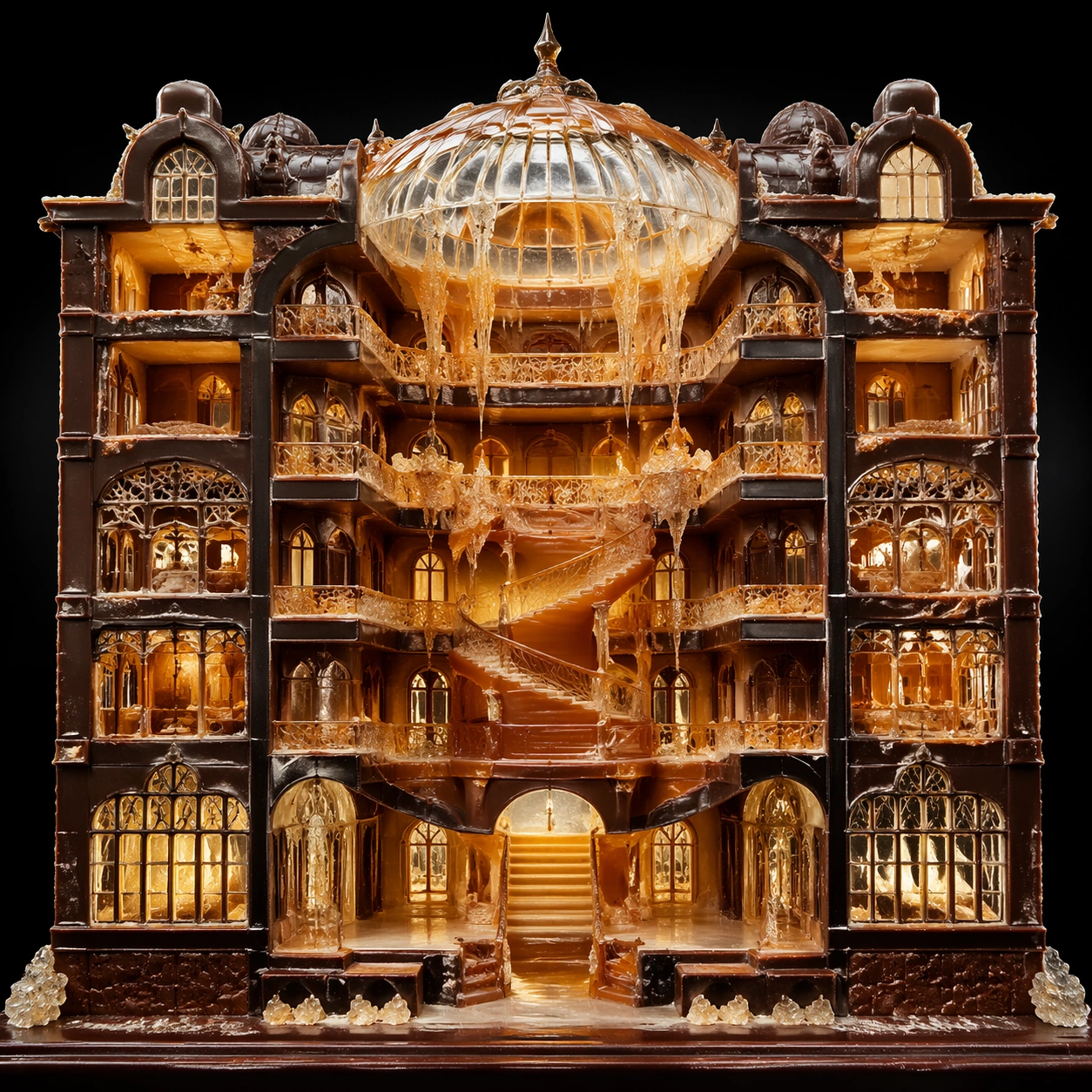
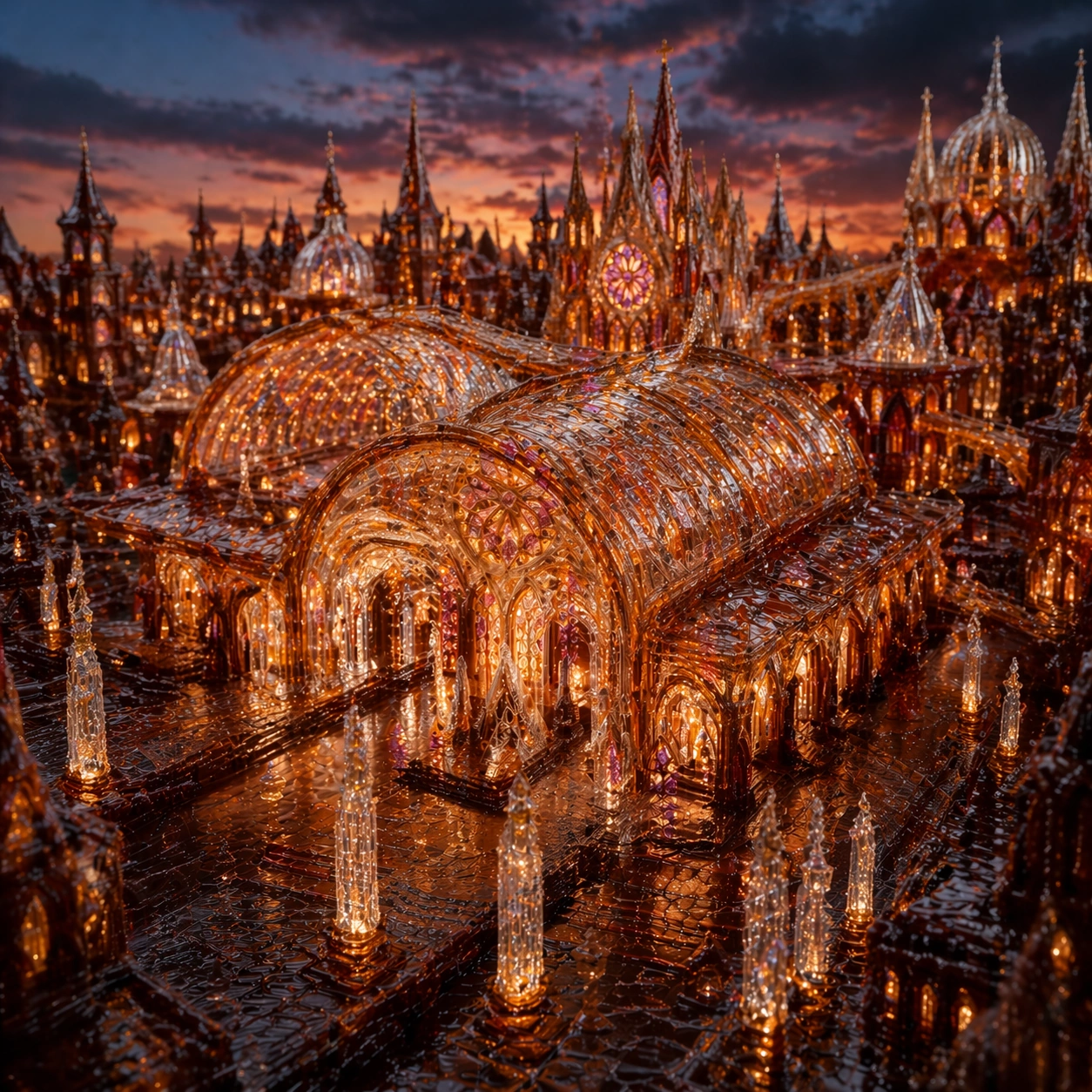
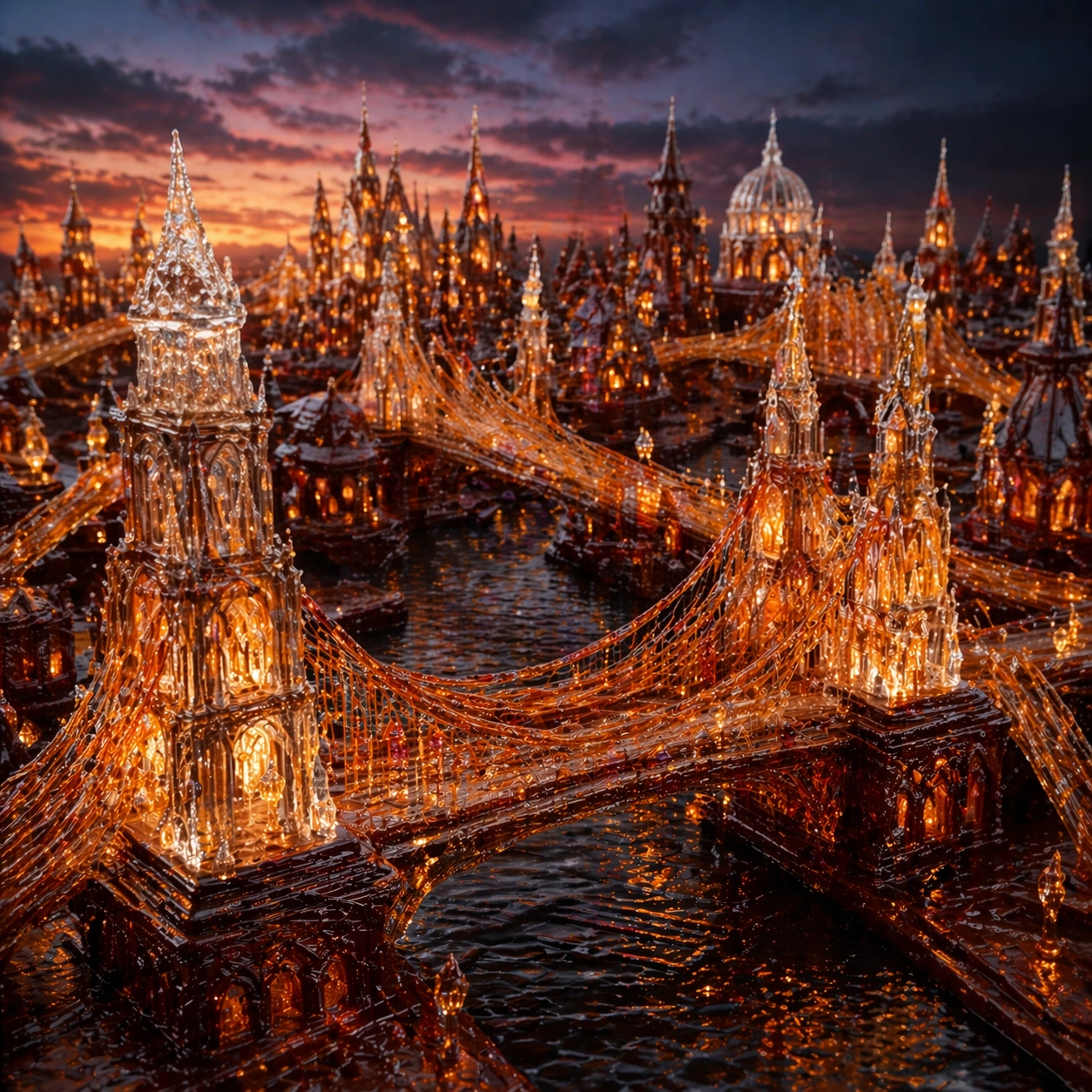
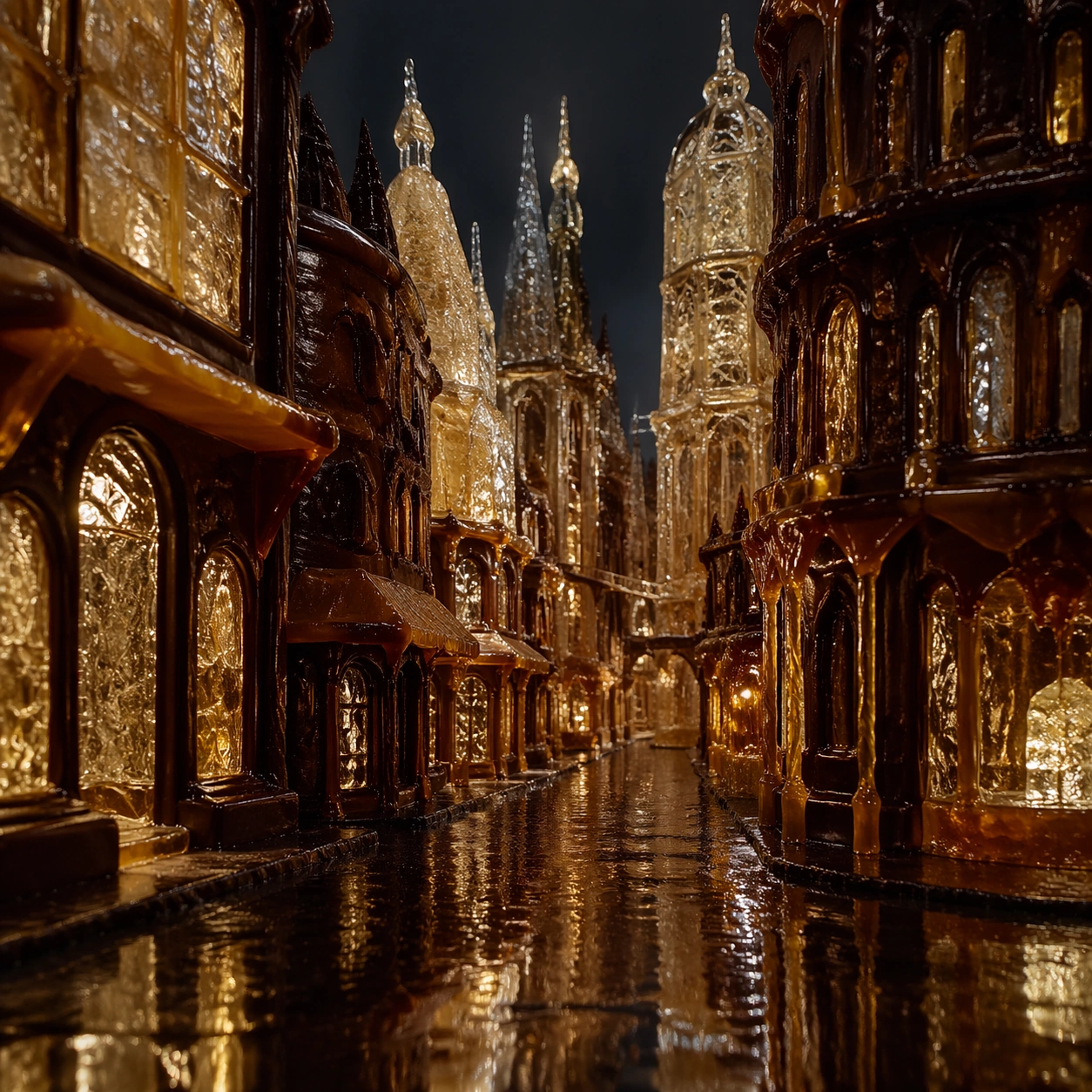
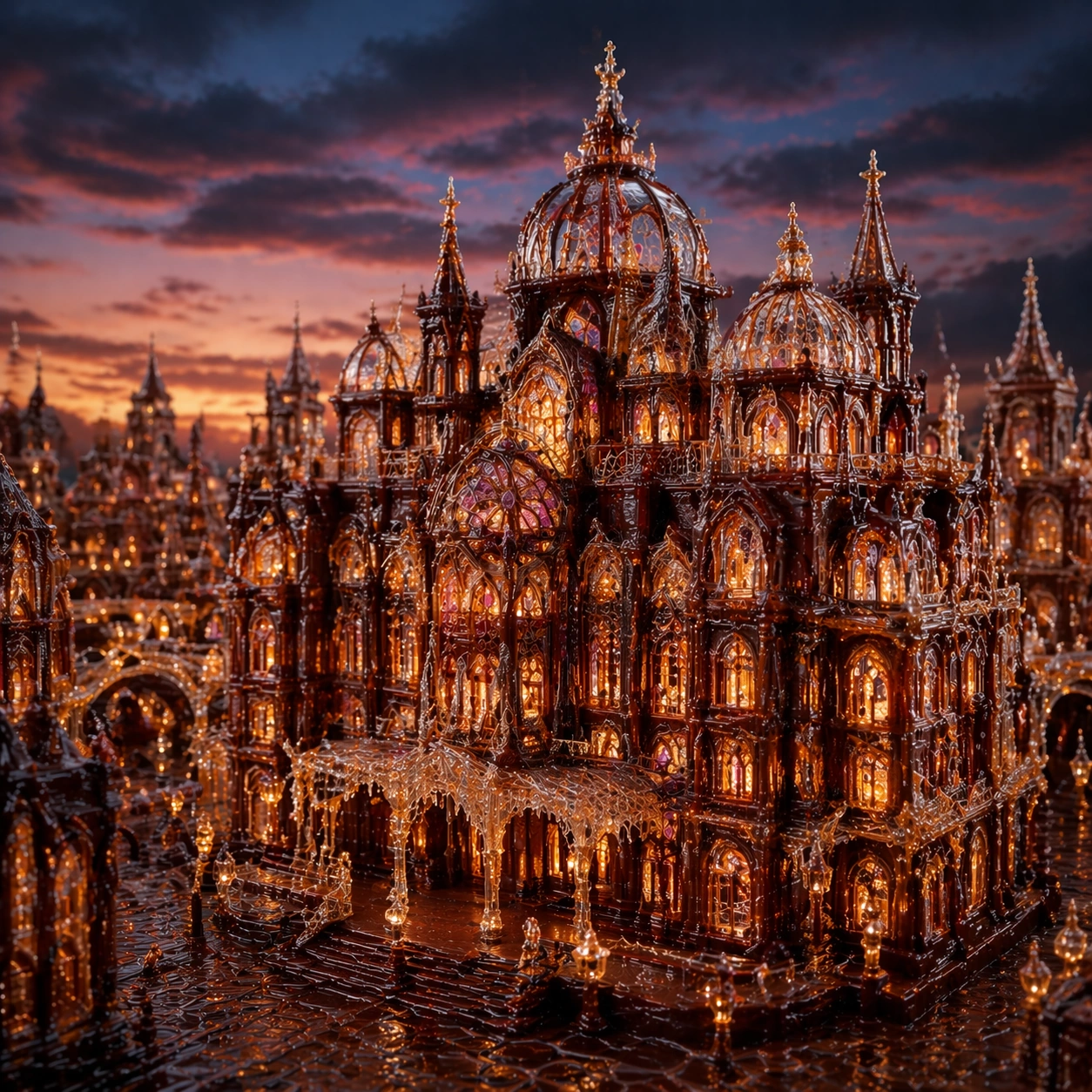
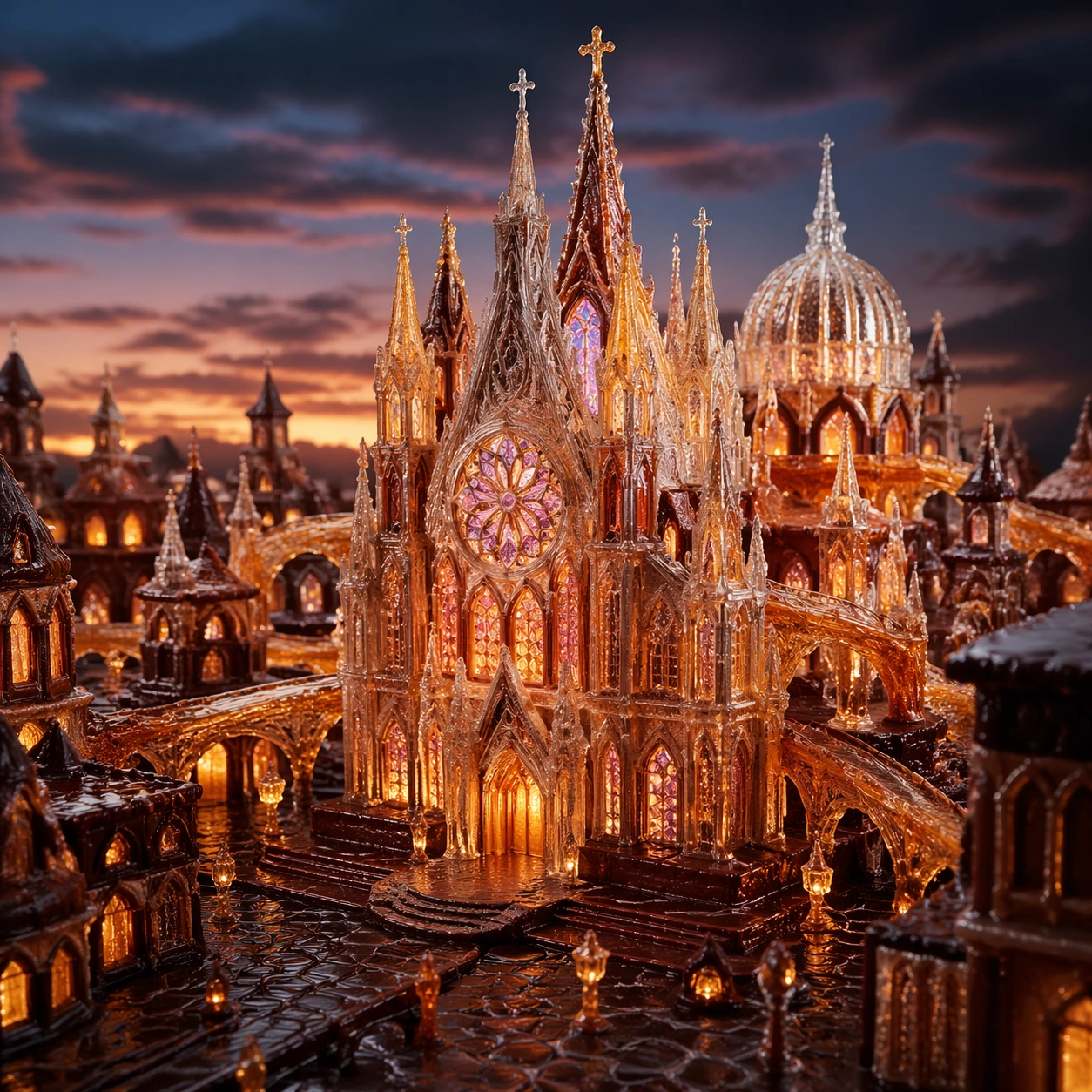
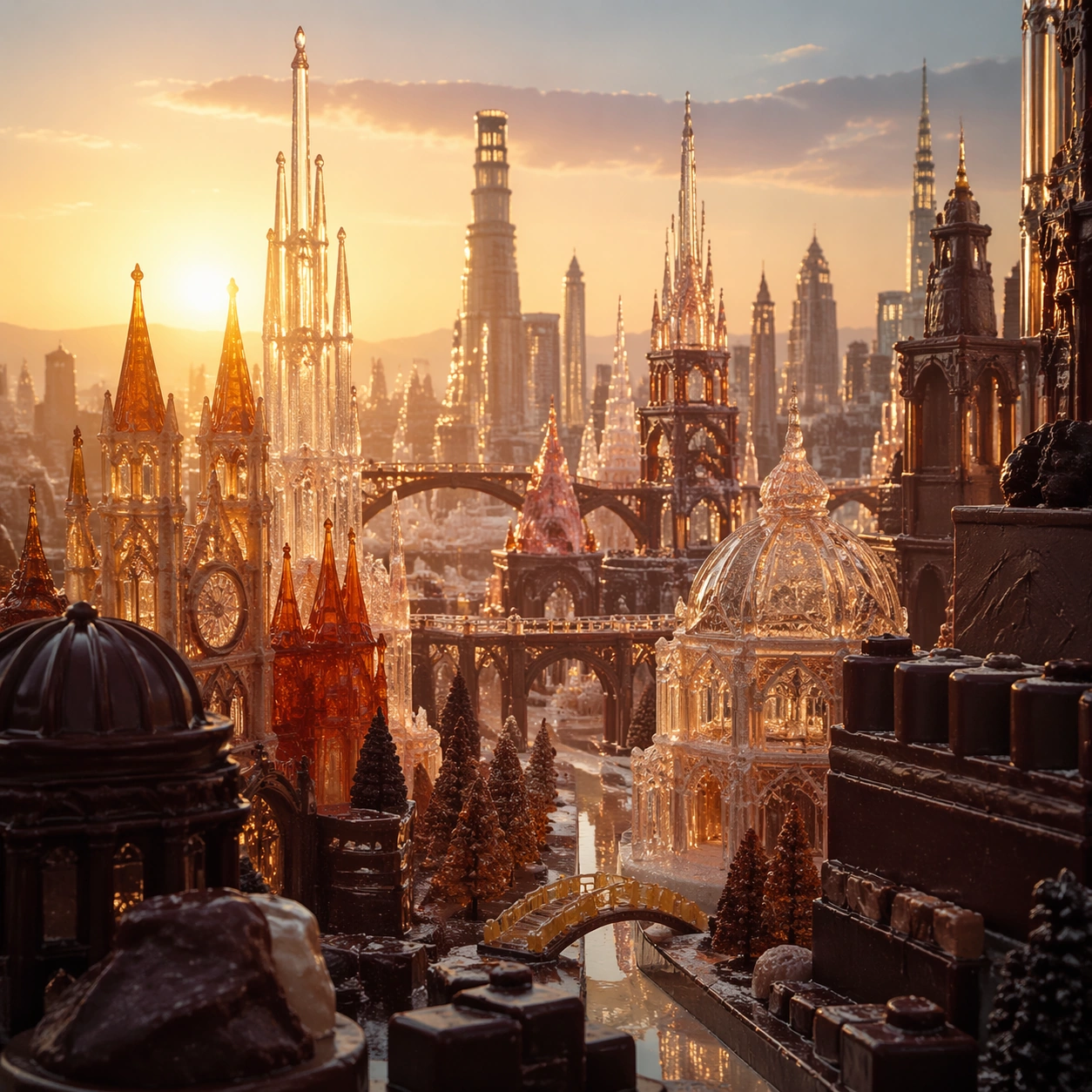
Create a square architectural photograph of an edible miniature city built from sugar and chocolate, lit like a serious built-environment hero shot rather than a whimsical craft display. The composition should imply scale through streets, openings, and tiny pathways while keeping the material identity unmistakably confectionary. Light must reveal translucency, lacework, caramel tension, and crystal sparkle without flattening the forms. Use a square panoramic-feeling skyline composition at sunrise, with low warm light passing through sugar towers and catching the edges of chocolate masses. The frame should feel serene, monumental, and professionally photographed.

Subject:
Present a layered skyline of cathedral spires, crystalline halls, caramel bridges, and darker chocolate blocks receding into atmospheric haze. The materials should remain clearly edible, but the city silhouette must read as coherent urban design rather than novelty sculpture. The sunrise should feel calm and expensive, not fantastical in a cartoon way.

Important details:
Treat the city as structurally plausible even when the materials are fantastical. Blown sugar should refract like fragile glass, pulled caramel should show tension and stretch, and dark chocolate should carry matte-to-satin variation where appropriate. The image should balance wonder with discipline, as if photographed for an architecture journal about impossible edible construction. The key is silhouette discipline: each edible tower and span needs a readable role in the skyline. Warm light through sugar and cool shadow on chocolate should create believable material contrast across the city.

Use case:
Candy architecture single study 8/9, turning the edible metropolis into a sunrise skyline photograph.

Constraints:
No readable text, no watermark, no logos, preserve exact 1:1 aspect ratio, no candy wrappers, no toy-town props, no gingerbread-house cliches, no cartoon palette overload, no readable signage, no flying candy pieces, no fireworks, no theme-park mood.
Come usare
- Copia tutto il prompt originale, inclusi i parametri.
- Adatta soggetto, testo e composizione alle tue esigenze.
- Usa uno strumento esterno compatibile; verifica accesso e risultato.
Prima di iniziare
- Controlla se serve un’immagine di riferimento. La compatibilità non prova il modello usato per l’esempio.
- Verifica nomi, numeri e testi; i risultati cambiano con le versioni del modello.