
Documento originale
GPT Image 2 · en
Scene:
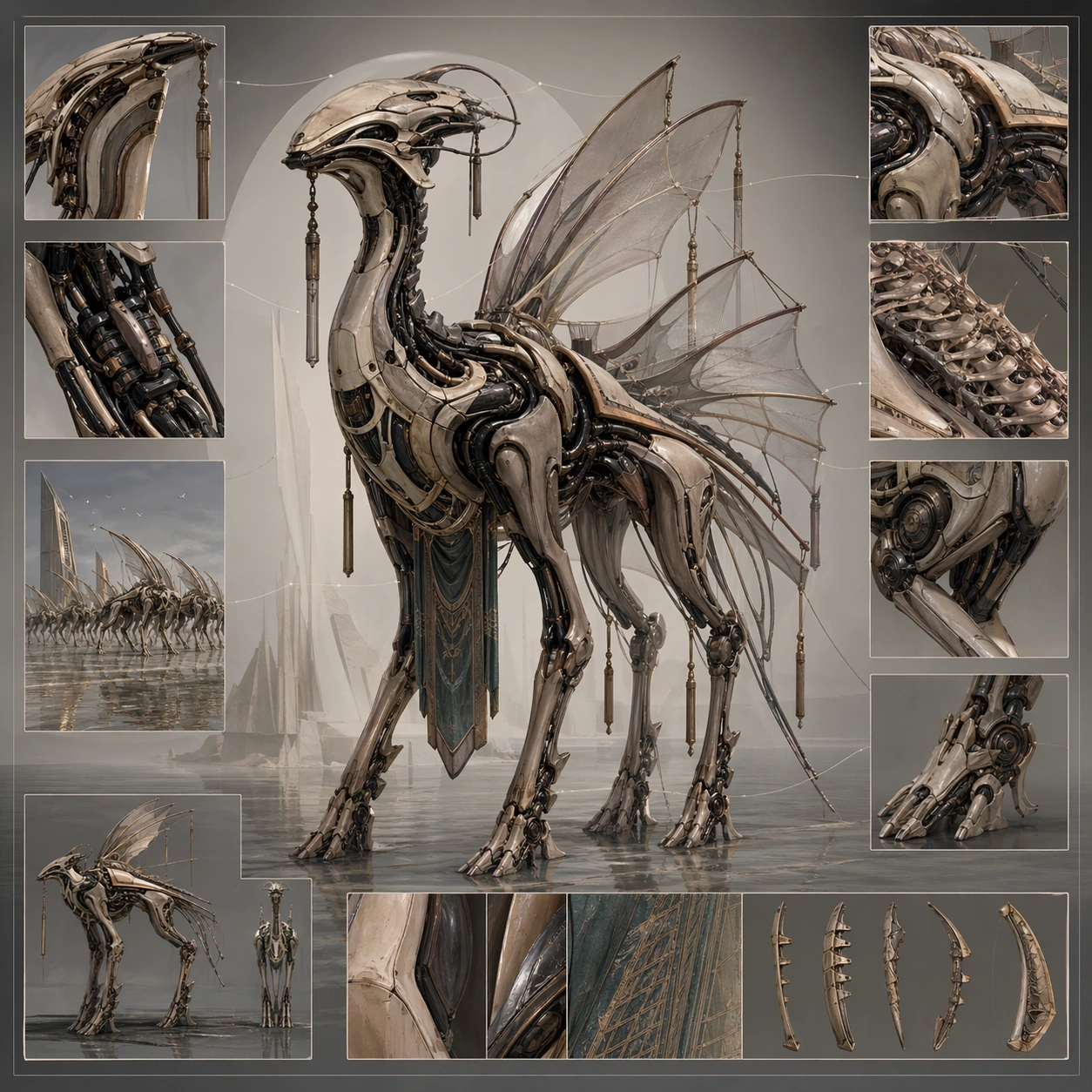
Design a square biomechanical concept plate that reads clearly from a distance and rewards close inspection. Use one strong main pose or view supported by carefully placed detail windows, component callouts, or environment cues. Design a polished concept board for a ceremonial chassis with controlled pose, display appendages, and layered material detail windows.

Subject:
Show a complete biomechanical entity or subsystem with clear task identity: guard, carrier, swimmer, scout, ritual host, or similar. The fusion between body logic and engineering should feel intentional and load-bearing. The entity should feel built for procession or social meaning, but still obey clear biomechanics and assembly logic.

Important details:
Favor anatomical structure, movement plausibility, and material discipline over surface noise. The result should feel buildable within its fictional world, not like a random accumulation of tubes and spikes. Use ornament sparingly as a structural extension, not as decorative clutter hiding the body plan. Preserve readable biomechanics so joints, muscles, shells, and machines all seem to cooperate under one functional design logic.

Use case:
Biomech Board single study 5/5, designed as a self-contained support image for this topic.

Constraints:
No readable text, no watermark, no logos, preserve exact 1:1 aspect ratio, no horror torture imagery, no generic robot soldier clichés, no comic-book posing, no logo insignia, no crown-and-scepter fantasy royalty.
Come usare
- Copia tutto il prompt originale, inclusi i parametri.
- Adatta soggetto, testo e composizione alle tue esigenze.
- Usa uno strumento esterno compatibile; verifica accesso e risultato.
Prima di iniziare
- Controlla se serve un’immagine di riferimento. La compatibilità non prova il modello usato per l’esempio.
- Verifica nomi, numeri e testi; i risultati cambiano con le versioni del modello.