Documento originale
GPT Image 2 · en
Scene:
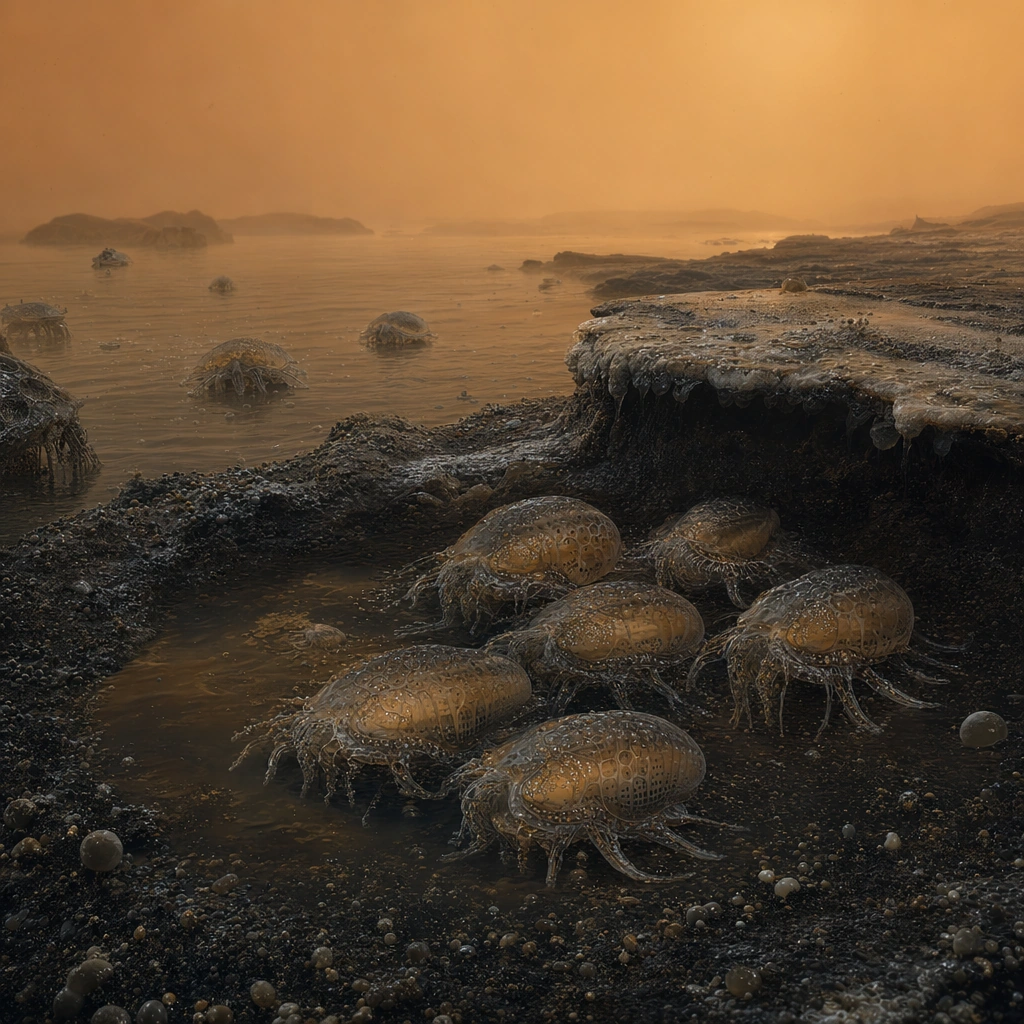
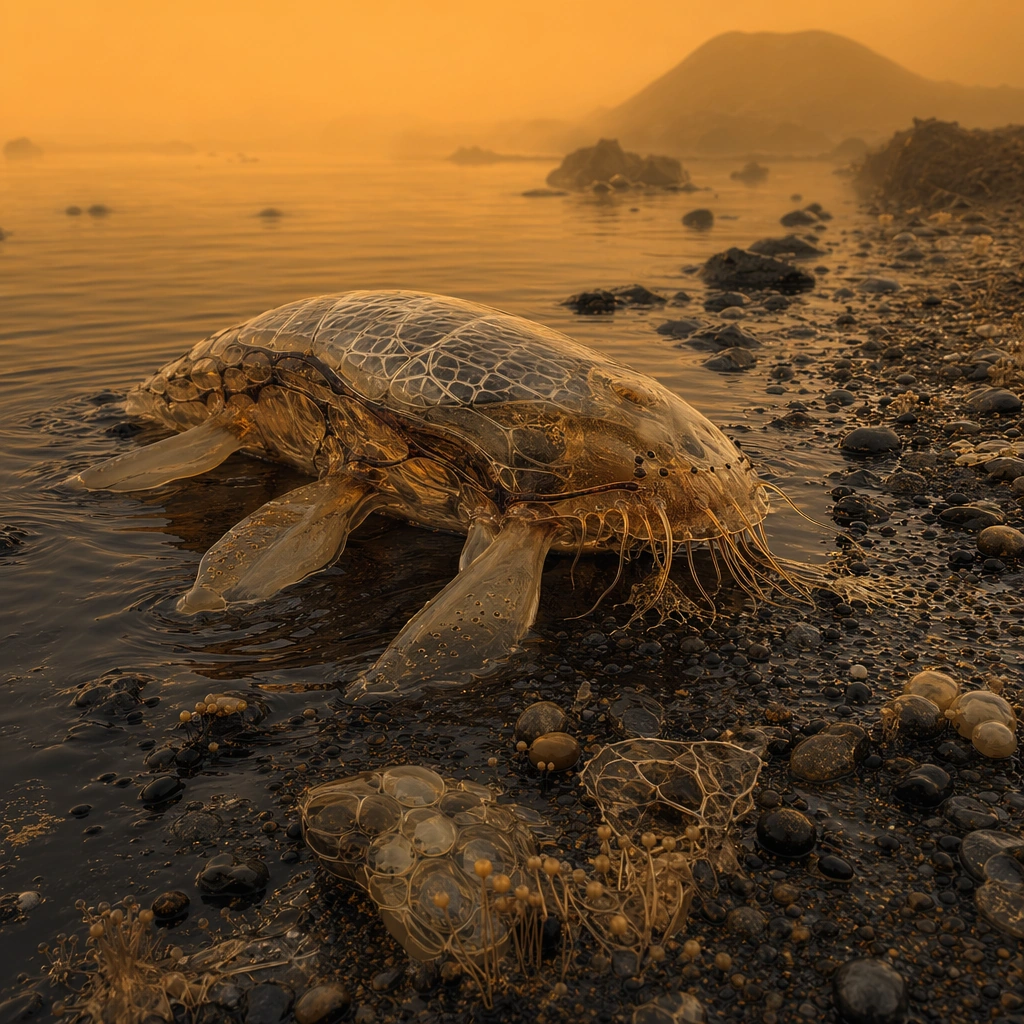
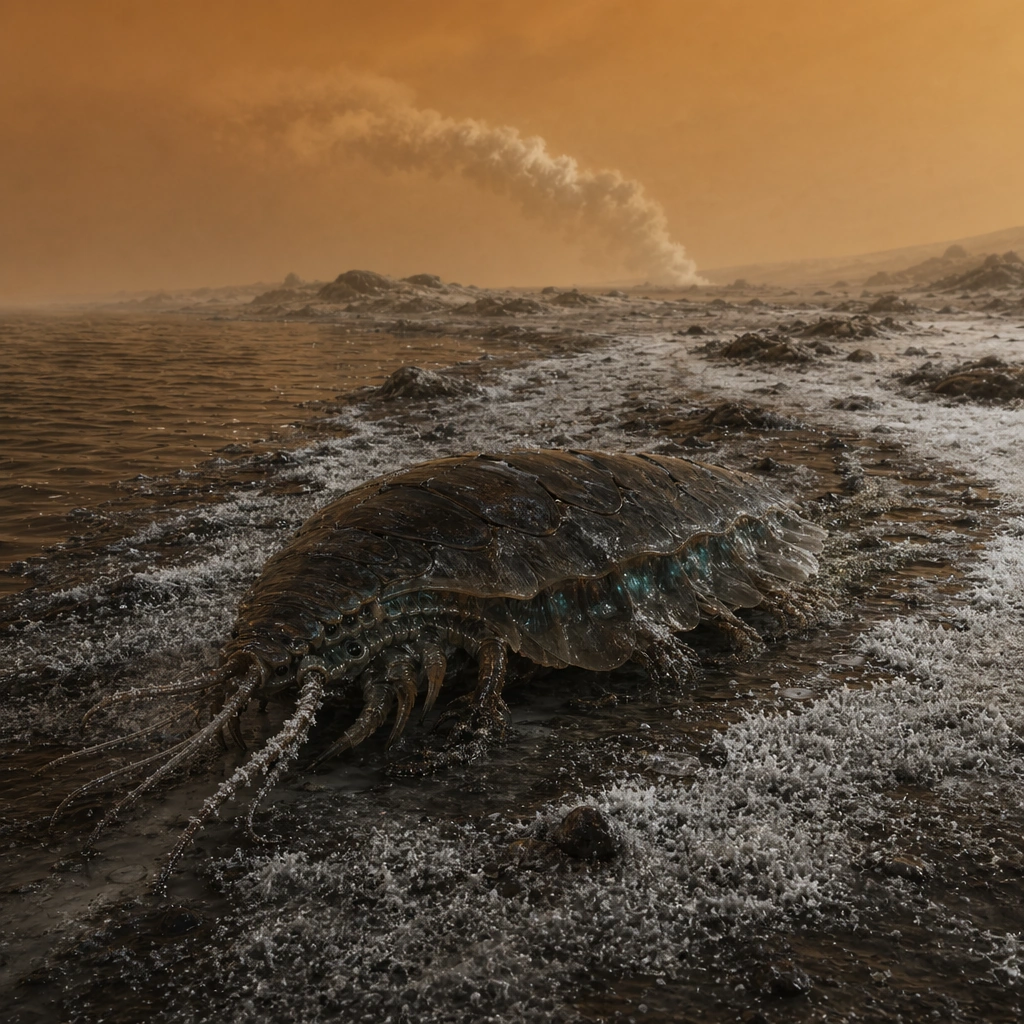
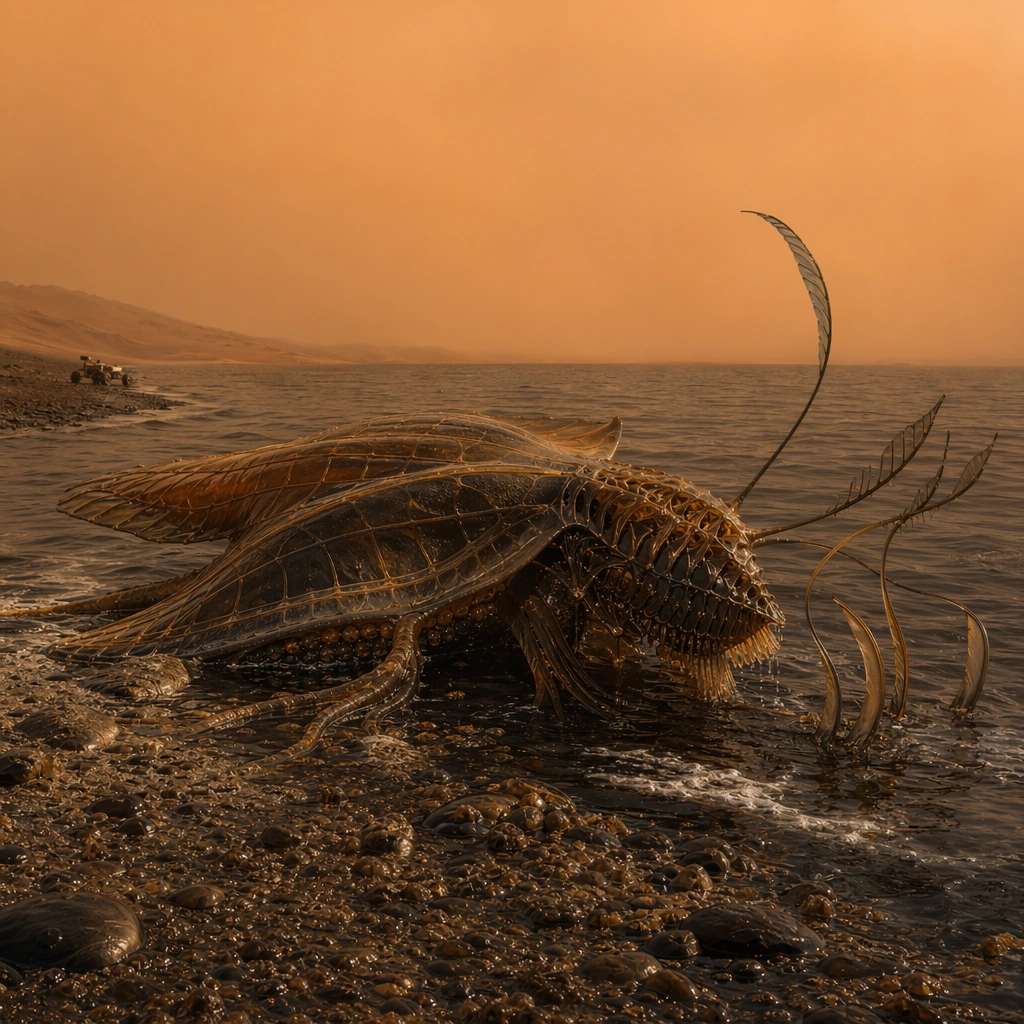
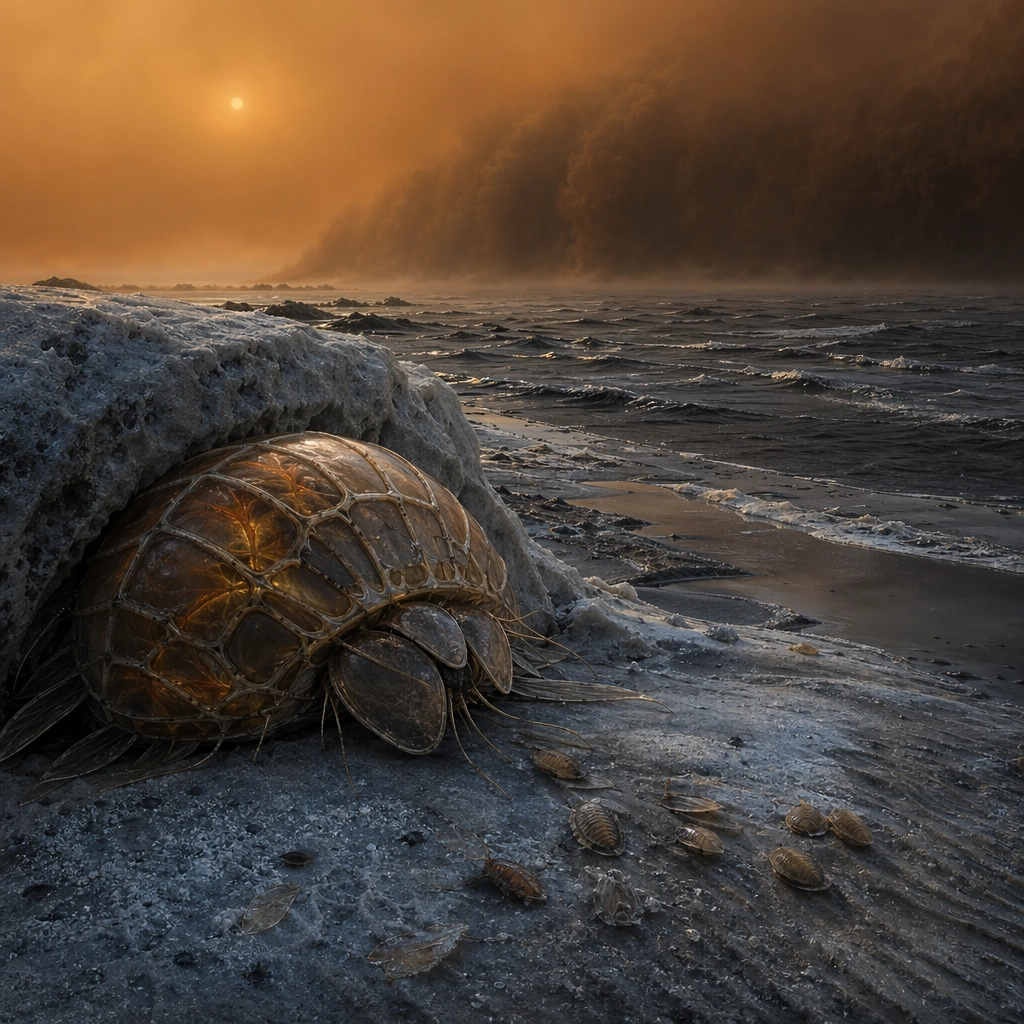
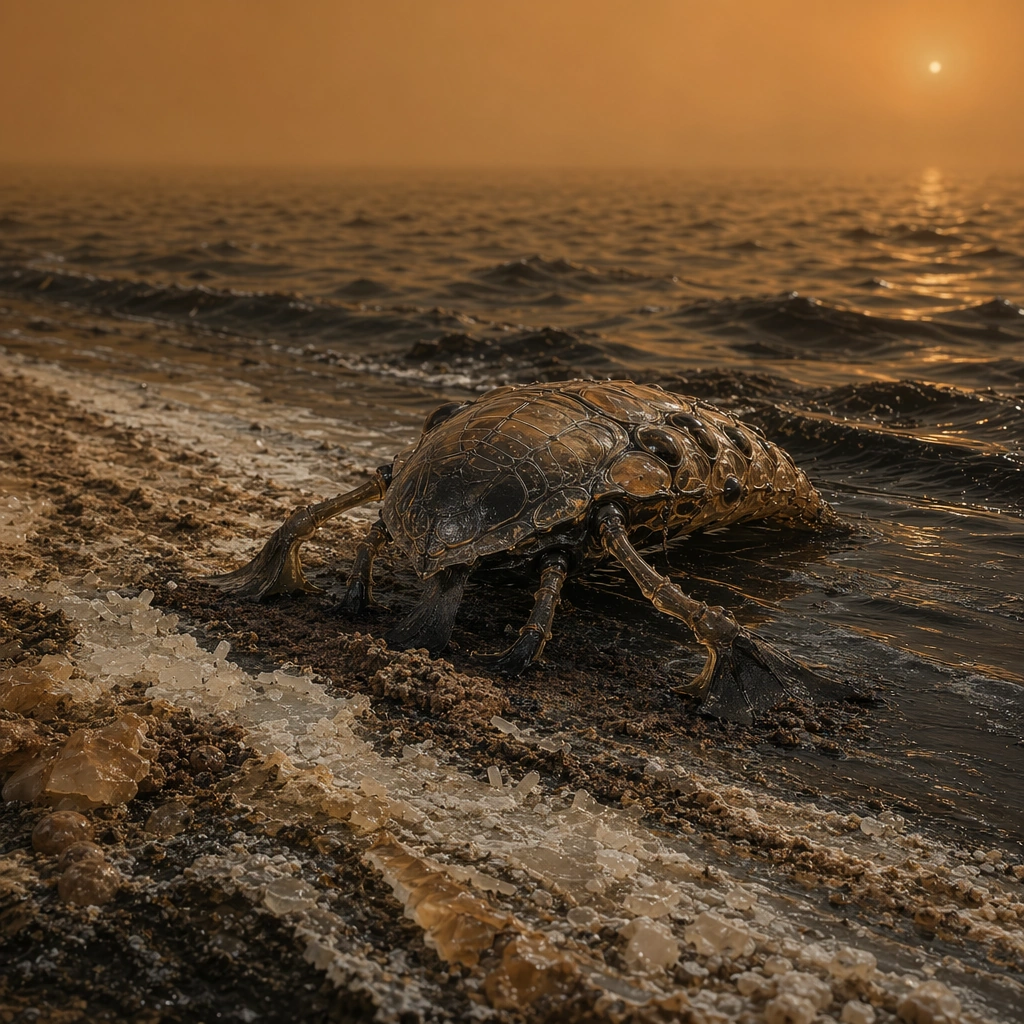
Set the image along a gently rippled methane shoreline where incoming dark waves leave bands of frosted residue and organic slush. The atmosphere should stay dim and orange, with faint wind texture visible across the liquid surface. Build the frame as a square natural history study with disciplined composition, believable lighting, and enough environmental evidence to explain how this organism or system functions without any caption. Keep the image polished, observational, and suitable for a research gallery rather than pulp fantasy spectacle.

Subject:
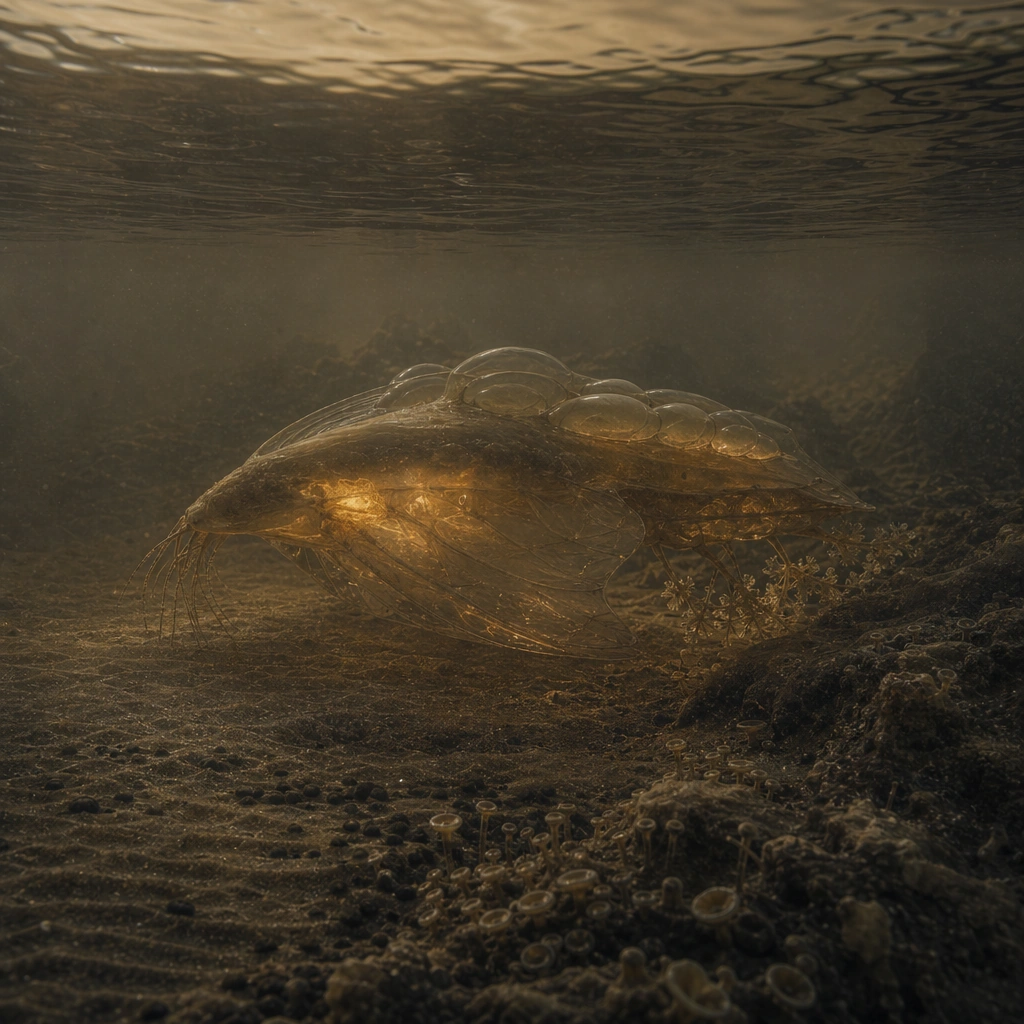
Show the organism probing deposited material with chemical sensors, unfolding feeding membranes, or rasping nutrient films from the shore. Its posture should communicate energy thrift and careful adaptation to a cold, slow world. Show the anatomy, habitat interaction, and scale cues clearly so the viewer can infer locomotion, feeding, reproduction, or ecological role from the visual alone. Every visible structure should feel evolved for a purpose, with layered foreground, midground, and background information that rewards close inspection.

Important details:
Assume the organism lives in hydrocarbon seas at extreme cold. Tissues, circulation, buoyancy, and sensory structures should reflect cryogenic chemistry, heavy haze, weak sunlight, and a shoreline shaped by methane waves and hydrocarbon sediment. The feeding behavior must fit the setting. Shoreline chemistry, sediment texture, and body mechanics should all reinforce a non-water ecosystem driven by hydrocarbon transport and sparse resources. Favor coherent biology over decorative excess: tissues, shells, membranes, spores, tendrils, fins, silica lattices, or atmospheric sacs should all follow one material logic. Preserve a convincing relationship between the environment and the body plan, use restrained color hierarchy, and make the image feel like a serious speculative field record rather than a random monster concept.

Use case:
Methane Sea Creature of Titan single study 3/9.

Constraints:
No readable text, no watermark, no logos, preserve exact 1:1 aspect ratio, no beach-surf imagery, no fish-copy feeding pose, no bright foam, no terrestrial seaweed, no accidental brand resemblance, no direct copy of known terrestrial species, no cartoon simplification.
Come usare
- Copia tutto il prompt originale, inclusi i parametri.
- Adatta soggetto, testo e composizione alle tue esigenze.
- Usa uno strumento esterno compatibile; verifica accesso e risultato.
Prima di iniziare
- Controlla se serve un’immagine di riferimento. La compatibilità non prova il modello usato per l’esempio.
- Verifica nomi, numeri e testi; i risultati cambiano con le versioni del modello.