Documento originale
GPT Image 2 · en
Scene:
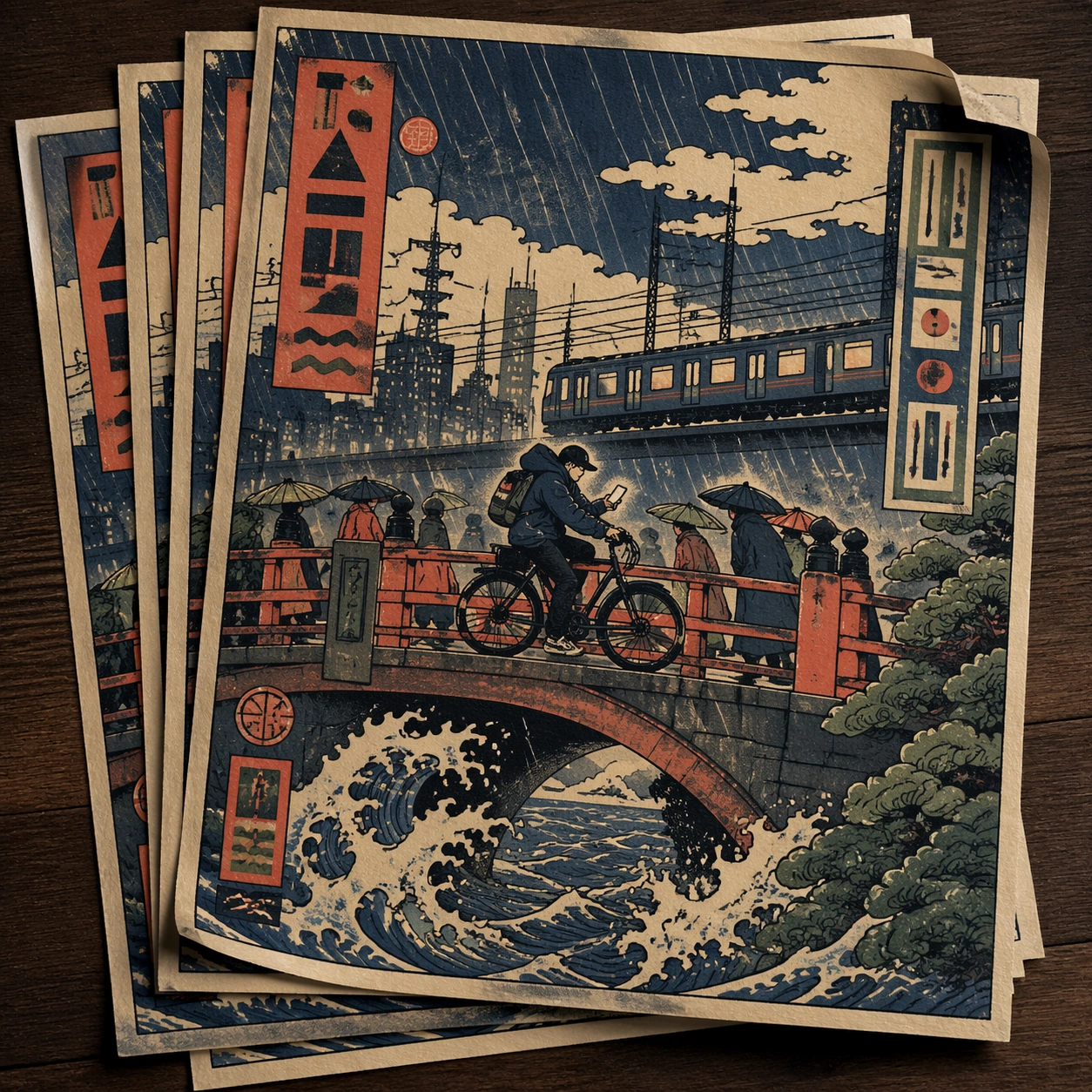
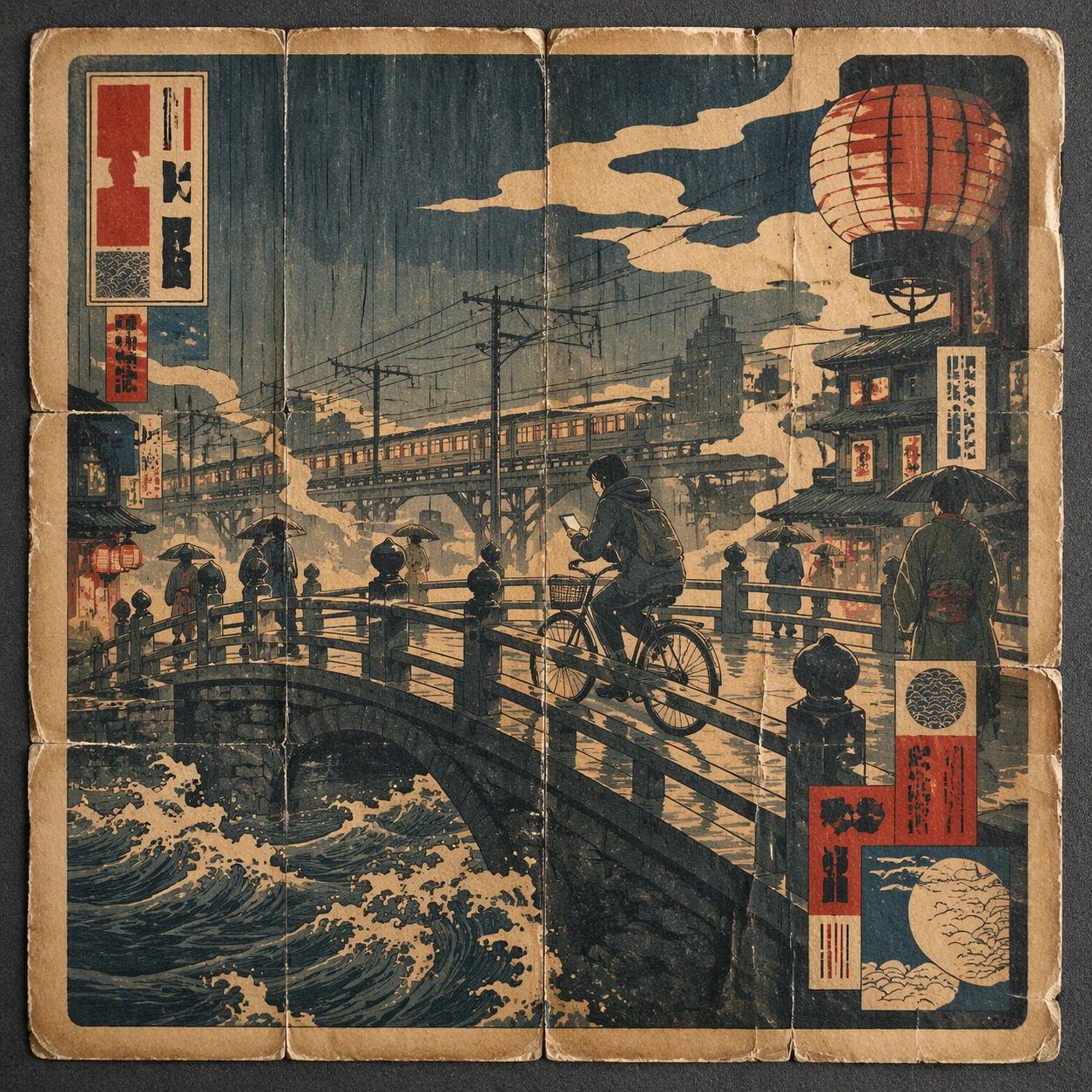
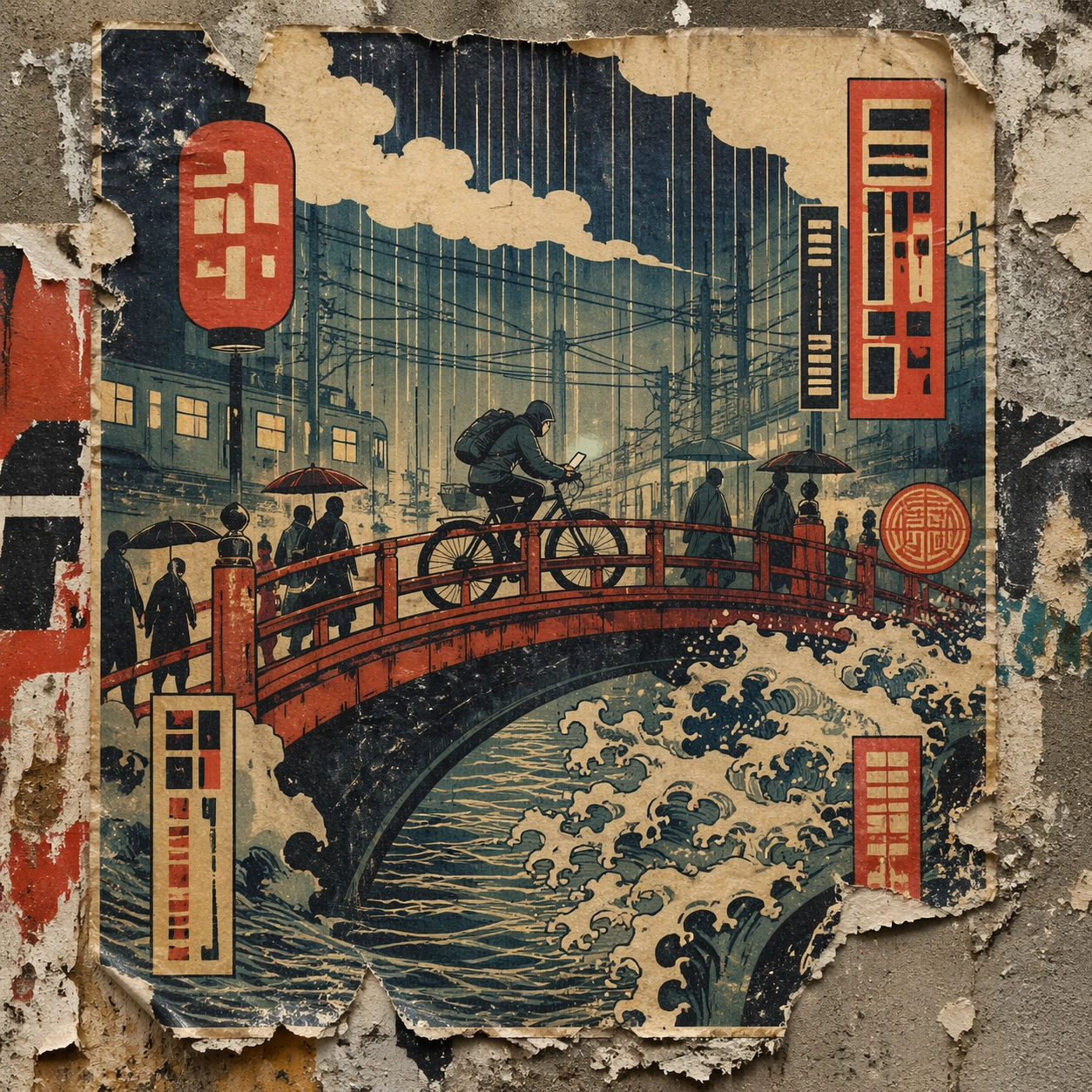
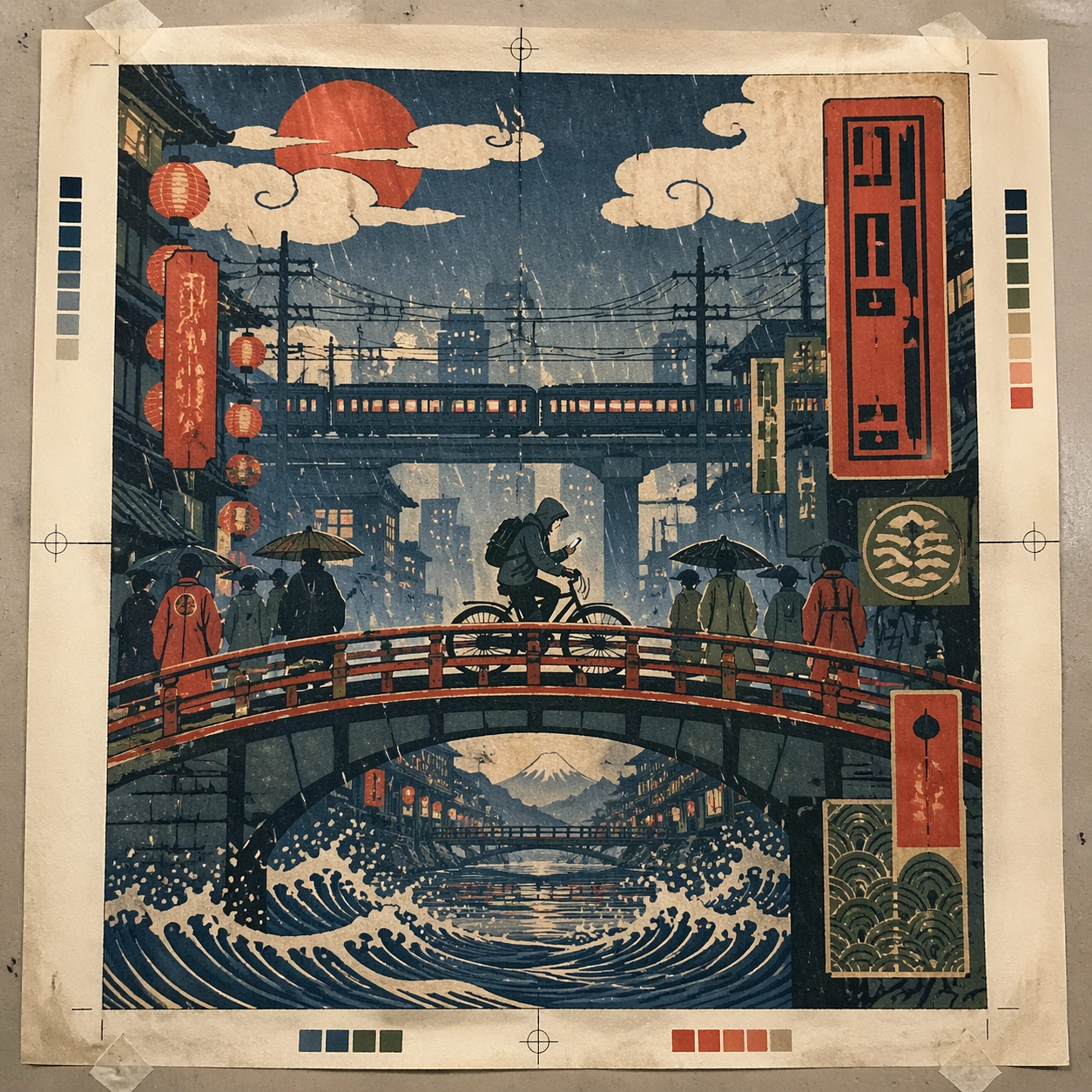
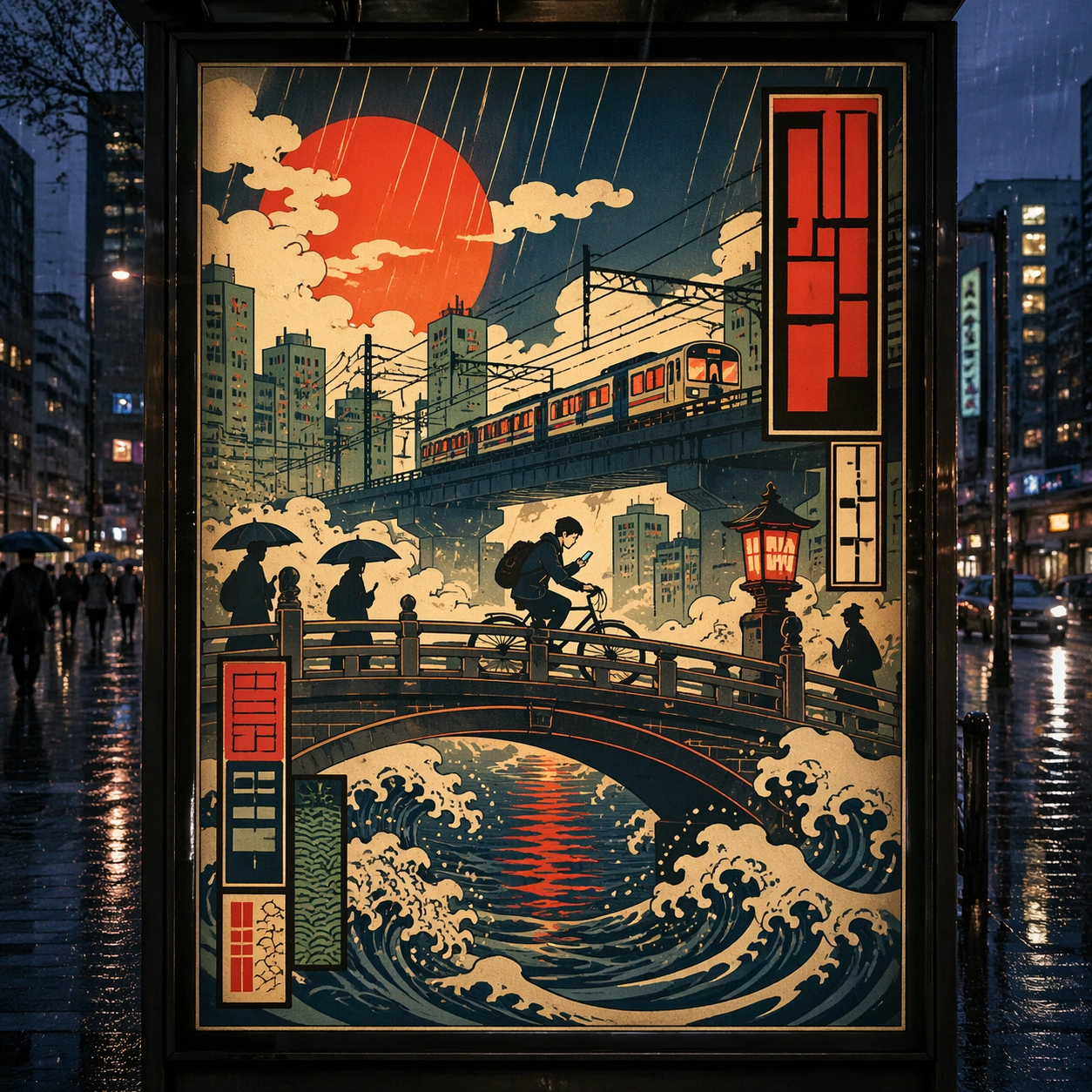
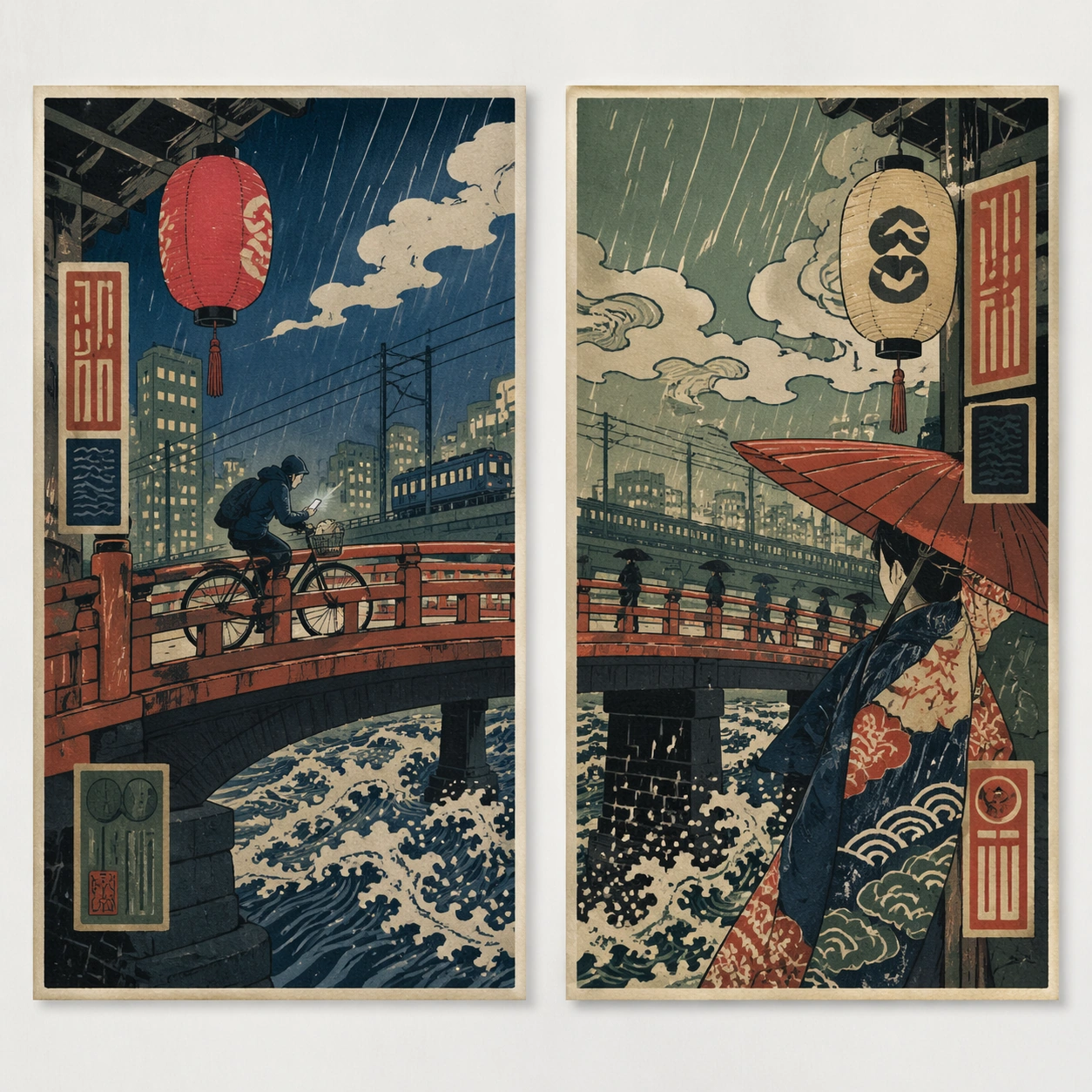
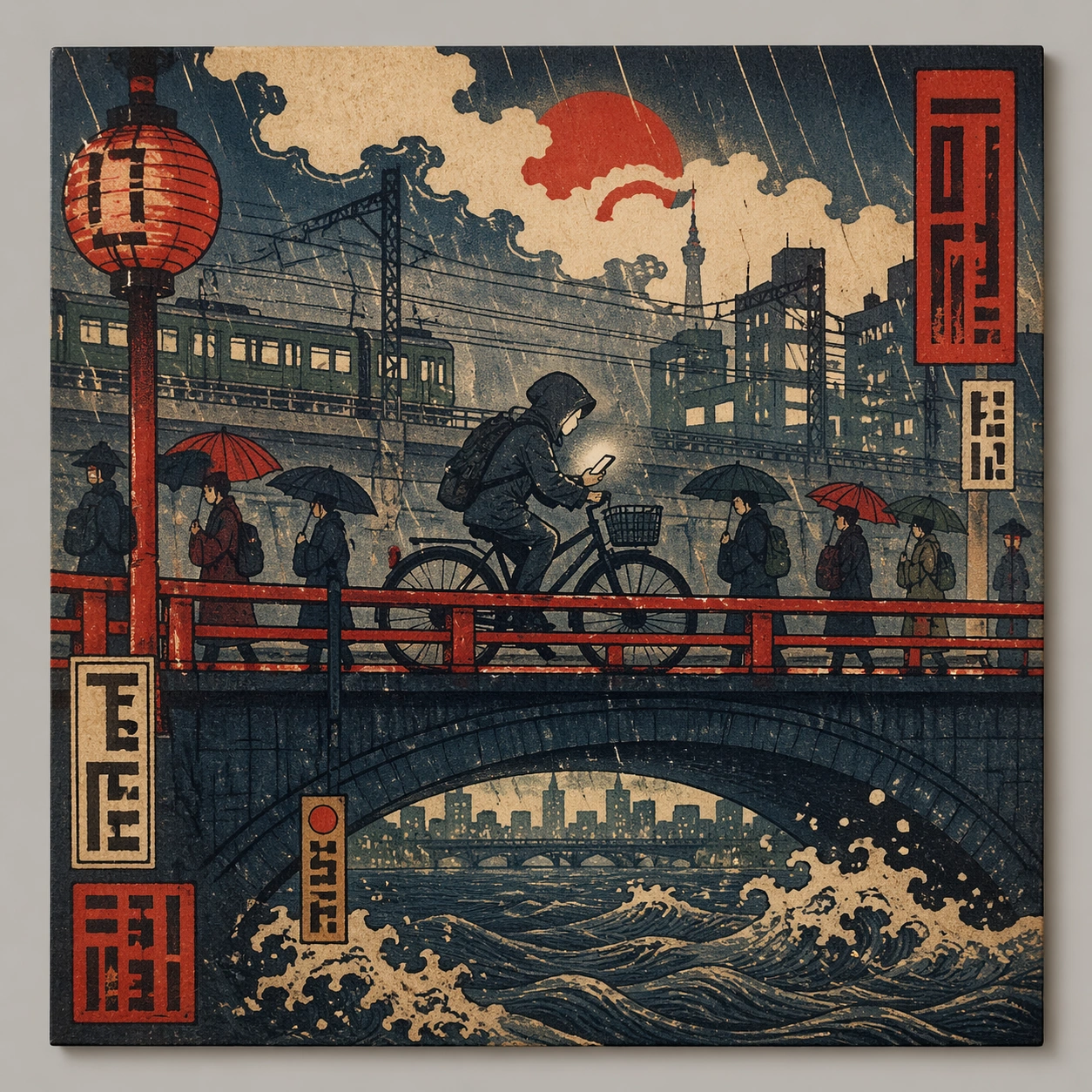
A square front-facing poster presentation on a clean neutral wall, lit like a premium print test, with crisp edges and a polished but still tactile finish appropriate to the style. The poster should express woodblock poster language with flat color planes, carved keylines, wave patterns, cloud voids, and compressed perspective, using indigo, vermilion, muted cream, smoky pine green, and weathered charcoal outlines and a tactile surface appropriate to the medium.

Subject:
Apply the historical poster language to a contemporary urban subject so the old visual grammar proves it can carry present-day themes without losing authenticity or formal discipline. Use bridges, river spray, layered robes, lantern shapes, rain bands, cloud scrolls, and urban commuters as the main visual ingredients, and organize them with cartouche-like title seals and vertical blocks rendered as abstract non-readable forms. For the contemporary-subject axis, thread in a city cyclist crossing a bridge in rain with phone light and train wires translated into woodblock logic. The poster must feel like an original design object rather than a reproduction of any known work.

Important details:
This is not parody. The contemporary subject should feel genuinely absorbed into the style through palette, composition, symbolic compression, and non-readable lettering treatment. Preserve visible contour line discipline, flat depth stacking, patterned water, and rhythmic empty sky fields. Keep every letterform abstract and non-readable, as if it were a typographic texture rather than language. Make the style unmistakable through composition, palette, surface behavior, and symbolic compression. no glossy digital gradients, no lens blur, no hyperreal reflections, no cinematic depth-of-field.

Use case:
Ukiyo-e Remix single study 9/9, testing historical grammar on a present-day subject.

Constraints:
No readable text, no watermark, no logos, preserve exact 1:1 aspect ratio, no copyrighted characters, no real brand marks, no QR codes, no interface chrome, no accidental gibberish lettering.
Come usare
- Copia tutto il prompt originale, inclusi i parametri.
- Adatta soggetto, testo e composizione alle tue esigenze.
- Usa uno strumento esterno compatibile; verifica accesso e risultato.
Prima di iniziare
- Controlla se serve un’immagine di riferimento. La compatibilità non prova il modello usato per l’esempio.
- Verifica nomi, numeri e testi; i risultati cambiano con le versioni del modello.