原文
GPT Image 2 · en
Scene:
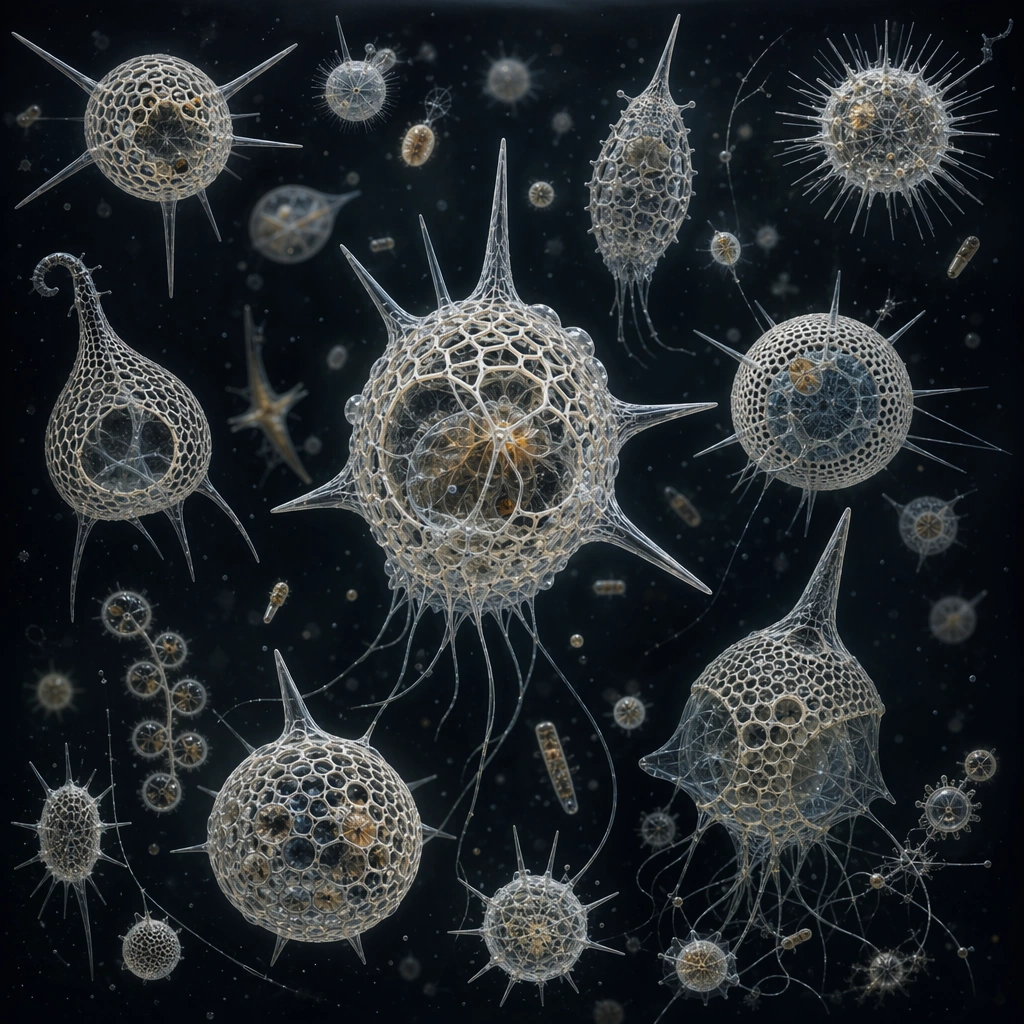
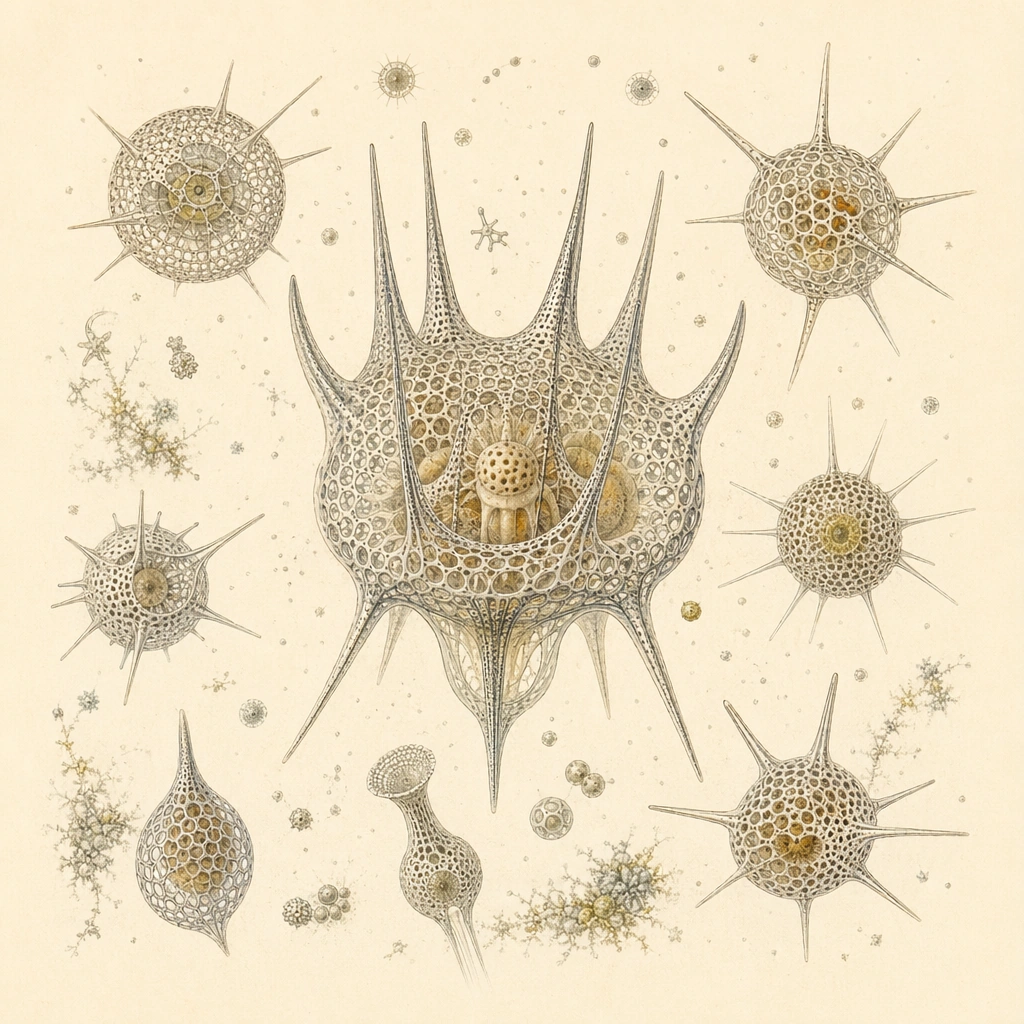
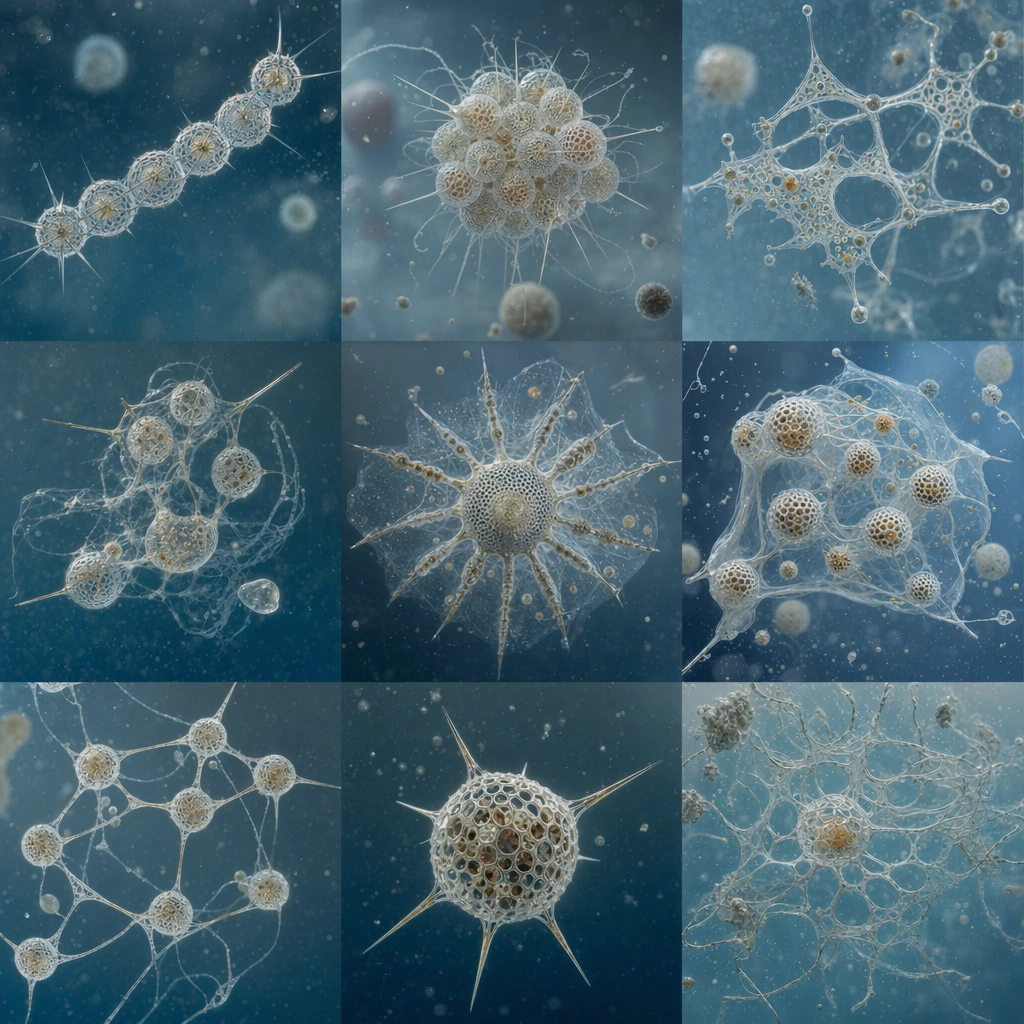
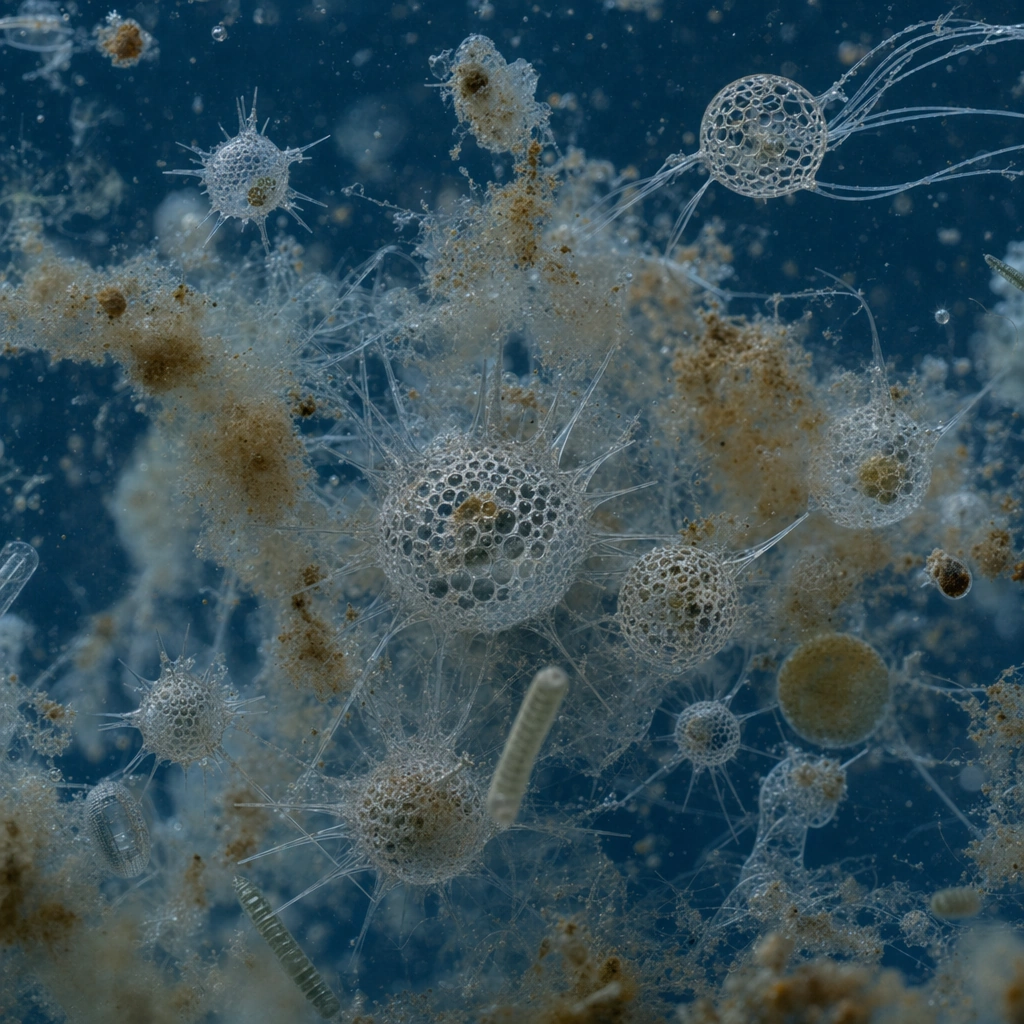
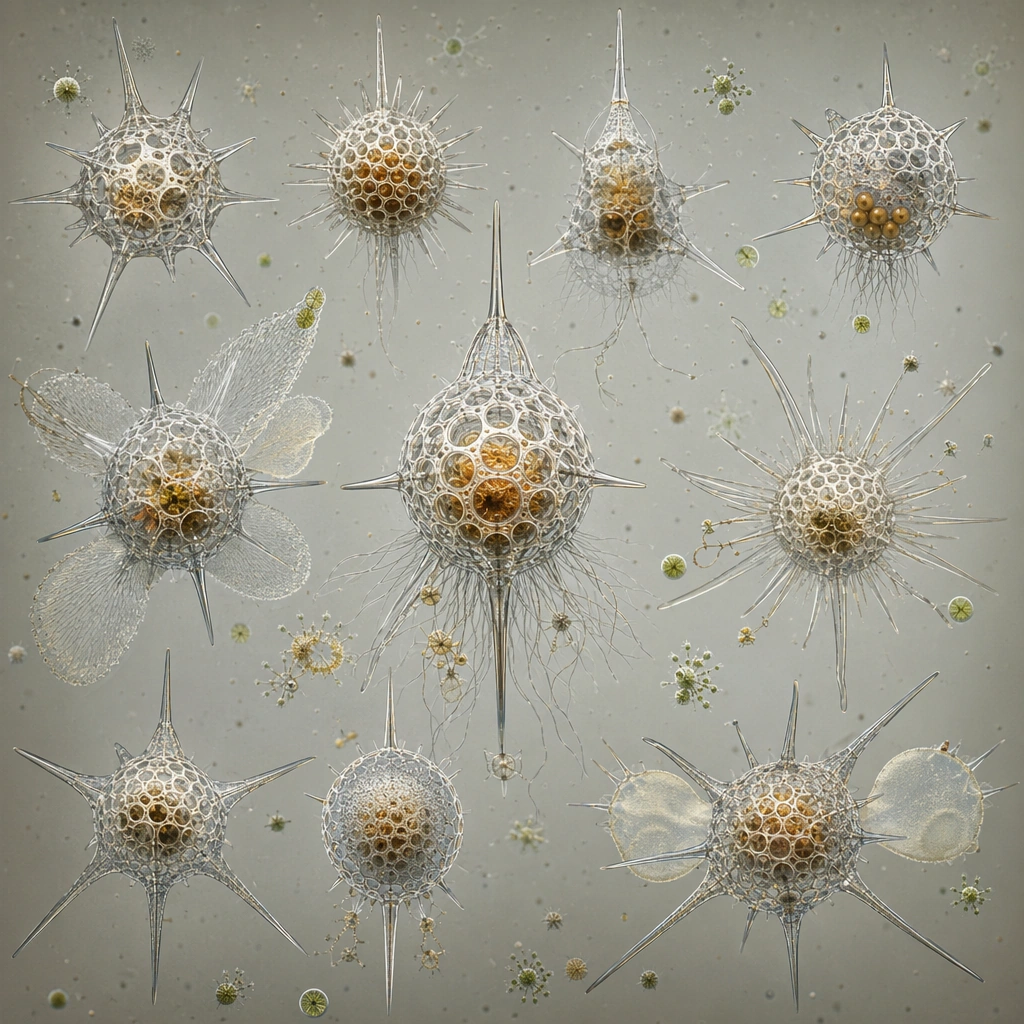
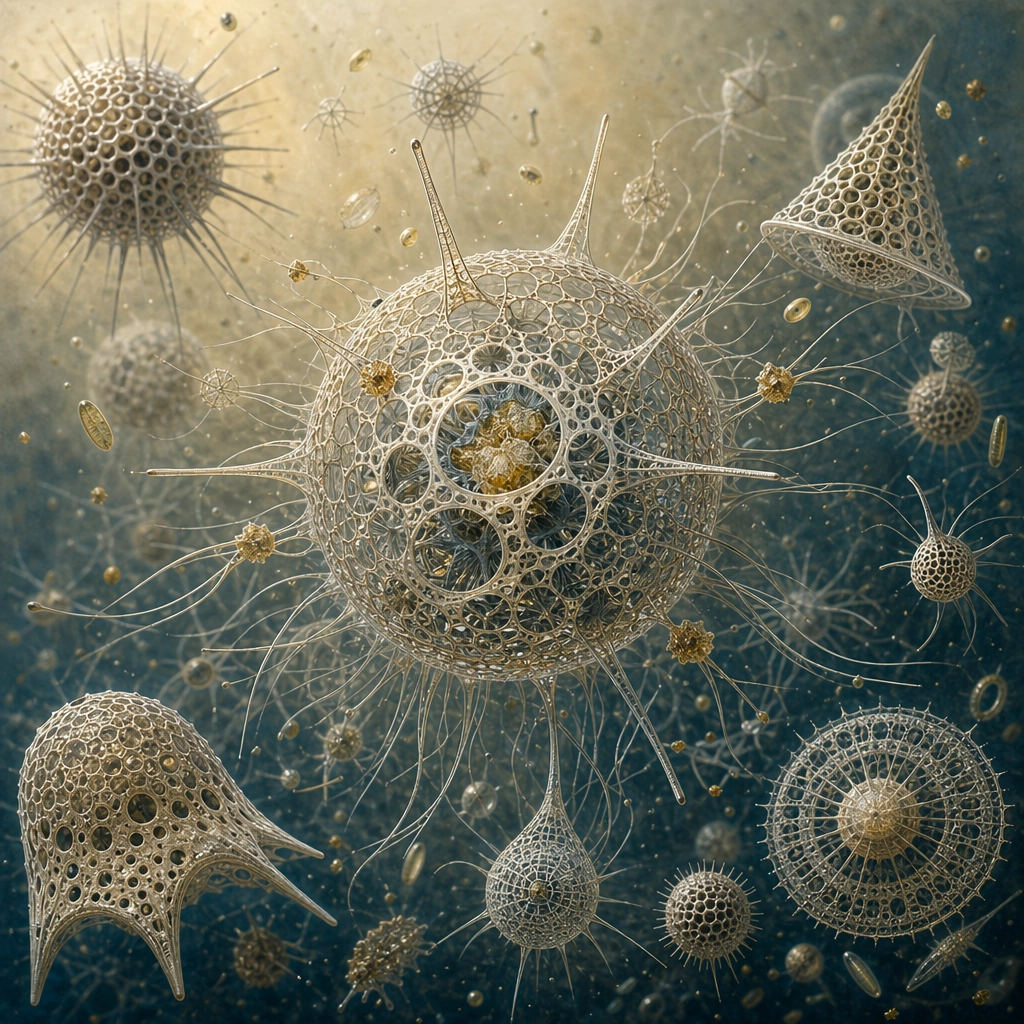
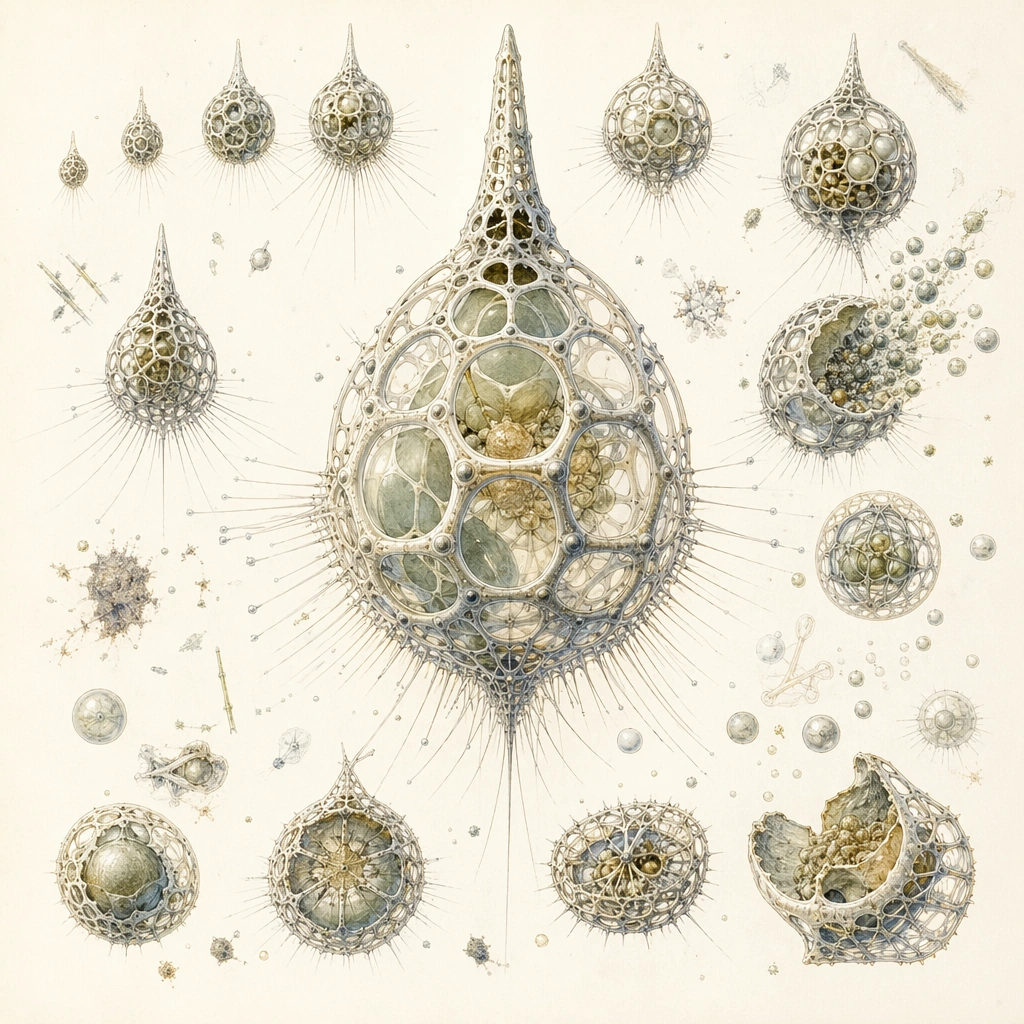
Arrange a cream scientific sheet that compares several growth or reproductive states of one radiolarian lineage. The page should feel careful and developmental, with one main mature form and surrounding earlier or altered states. Build the frame as a square natural history study with disciplined composition, believable lighting, and enough environmental evidence to explain how this organism or system functions without any caption. Keep the image polished, observational, and suitable for a research gallery rather than pulp fantasy spectacle.

Subject:
Show budding lattice expansion, spore-like release bodies, and shell remodeling that supports reproduction or seasonal bloom formation. The specimens should remain clearly related while displaying meaningful structural change. Show the anatomy, habitat interaction, and scale cues clearly so the viewer can infer locomotion, feeding, reproduction, or ecological role from the visual alone. Every visible structure should feel evolved for a purpose, with layered foreground, midground, and background information that rewards close inspection.

Important details:
Treat radiolarians as silica-skeleton plankton whose geometry serves buoyancy, defense, feeding, and reproduction. Even the most ornate forms should follow repeatable structural rules, radial symmetry variants, lattice thickness logic, and believable microscopic scale. The comparative logic matters more than visual spectacle. Use consistent scale cues, line discipline, and silica texture so the sheet reads as a developmental study rather than decorative variation. Favor coherent biology over decorative excess: tissues, shells, membranes, spores, tendrils, fins, silica lattices, or atmospheric sacs should all follow one material logic. Preserve a convincing relationship between the environment and the body plan, use restrained color hierarchy, and make the image feel like a serious speculative field record rather than a random monster concept.

Use case:
Radiolarian Marine Sculpture Atlas single study 6/9.

Constraints:
No readable text, no watermark, no logos, preserve exact 1:1 aspect ratio, no readable annotations, no infographic arrows, no fantasy blossom metaphor, no unrelated background scenery, no accidental brand resemblance, no direct copy of known terrestrial species, no cartoon simplification.
使い方
- パラメータを含む元のプロンプト全体をコピーします。
- 被写体、文字、構図を自分の要件に置き換えます。
- 対応する外部ツールで使用し、利用条件と結果を確認します。
開始前の確認
- 参考画像の要否を確認してください。互換モデルの表示は、そのモデルでの生成実績を意味しません。
- 名前、数値、画像内の文字を確認します。モデルの版で結果は変わります。