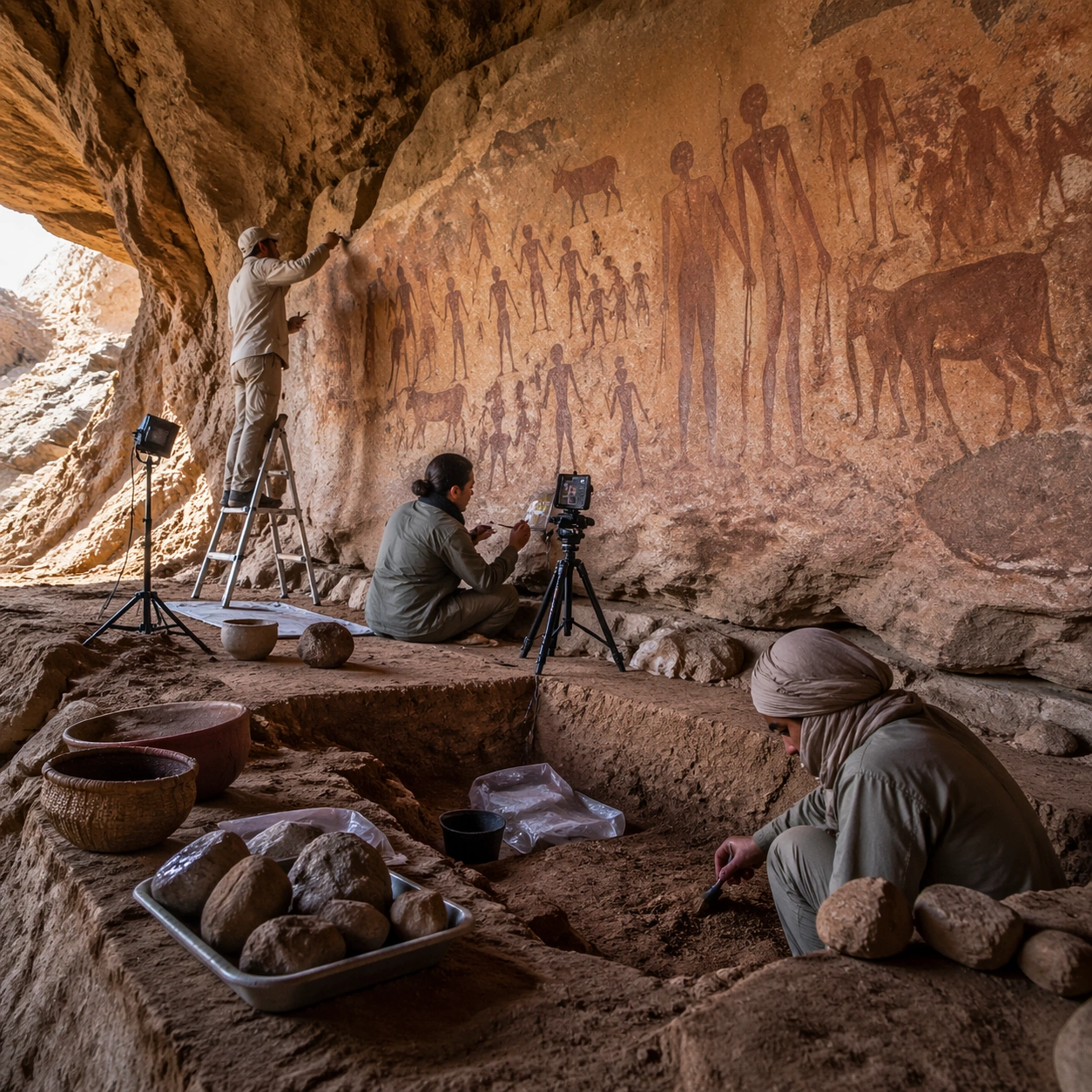
Tassili Rock Art Living — Survey Perspective

Tassili Rock Art Living — Survey Perspective

原文

GPT Image 2 · en

Scene:
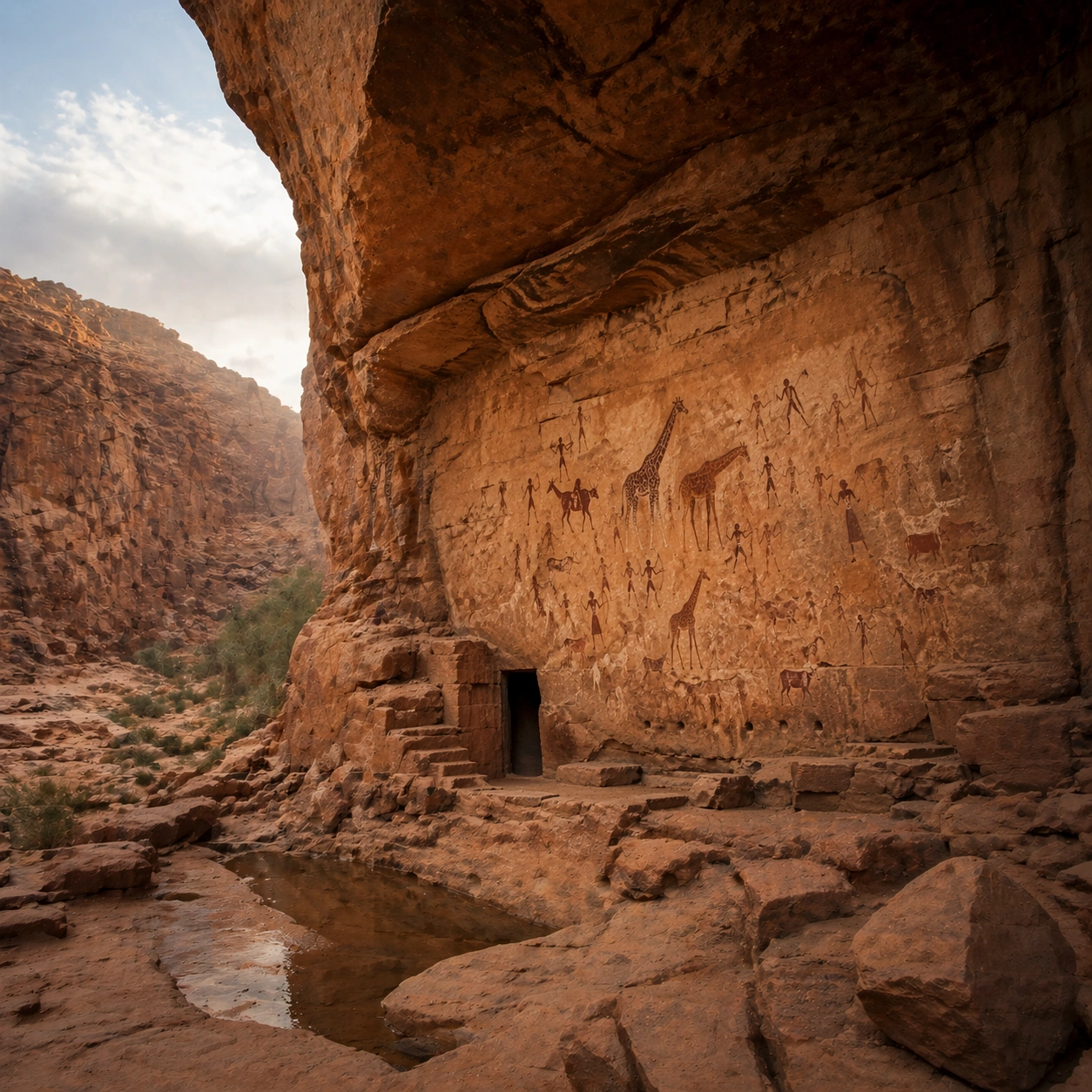
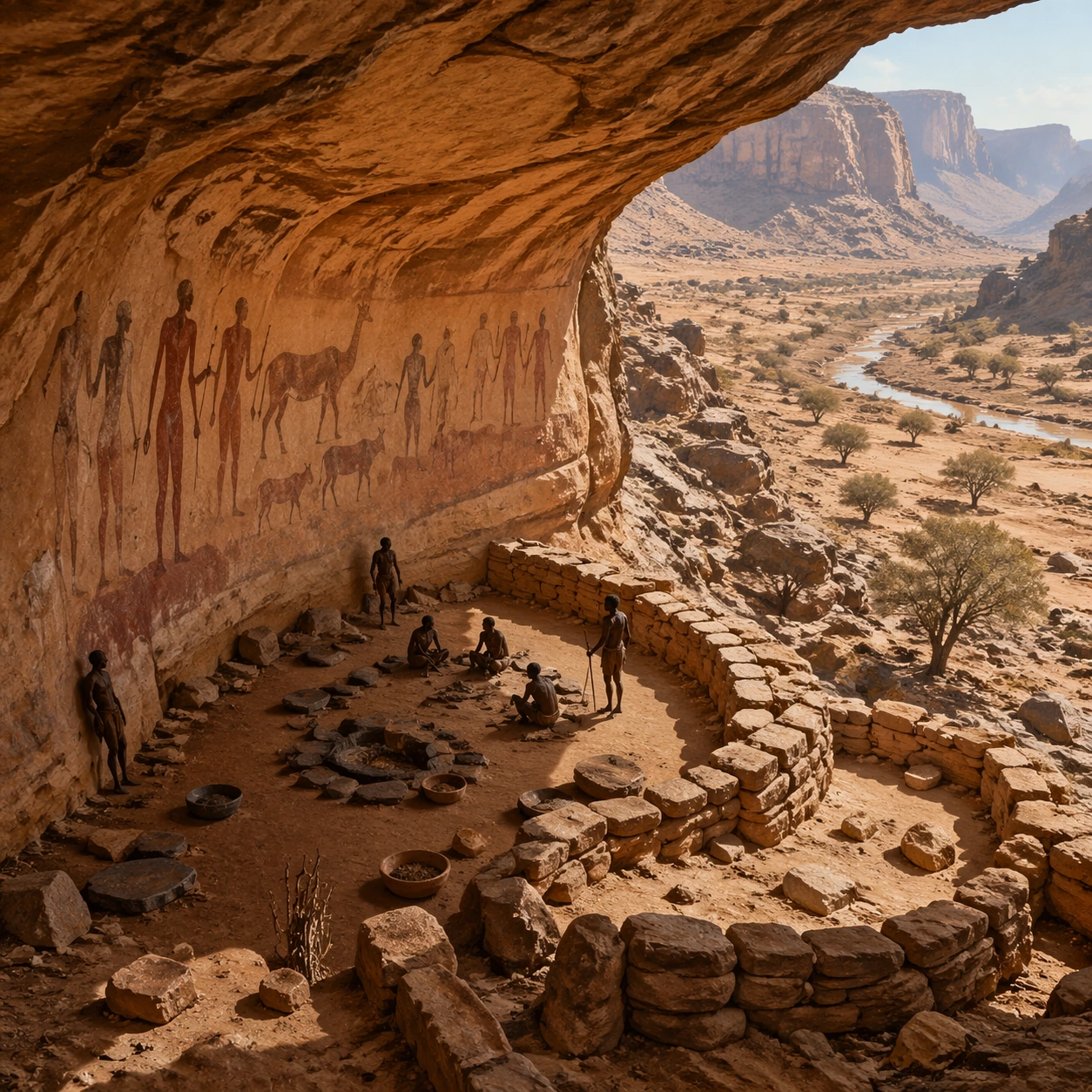
A square survey-oriented image that explains spatial logic with the clarity of an expert field overview while still reading as a finished artwork. Use a stable elevated vantage, clean depth layering, and enough visible terrain or architecture to make relationships legible without turning the frame into a literal map. The scene should feel analytical and cinematic at the same time.

Subject:
Show a shelter-wide survey perspective that shows wall curvature, figure placement, floor deposits, and the environmental setting of the painted chamber. Organize the composition so paths, terraces, walls, courtyards, chambers, canals, root systems, or quarry clusters can be read as a coherent system. The image should reveal how the civilization used land, water, elevation, enclosure, or monumentality. Keep all architecture, materials, and environmental details consistent with the correct place and period.

Important details:
Keep the imagery recognizably North African rock art, with elongated figures, animal profile logic, archaeological weathering, and only a restrained suggestion of volume emerging from the painted surface. This image should reward close looking by showing infrastructural logic: how stone courses align, how water moves, how rooms connect, how carved masses sit inside geology, or how vegetation interacts with built form. Avoid explicit annotation. Let composition, light, and scale cues do the explanatory work. Keep any measuring elements generic and unreadable, and make the image feel like serious research made visually elegant.

Use case:
Tassili Rock Art Coming Alive single study 8/9.

Constraints:
No readable text, no watermark, no logos, preserve exact 1:1 aspect ratio, no glowing magic portals, no comic-book action poses, no modern graffiti, no surreal monsters, no infographic arrows, no split-screen layout, no impossible aerial geometry, no unrelated settlements.

使い方

  1. パラメータを含む元のプロンプト全体をコピーします。
  2. 被写体、文字、構図を自分の要件に置き換えます。
  3. 対応する外部ツールで使用し、利用条件と結果を確認します。

開始前の確認

  • 参考画像の要否を確認してください。互換モデルの表示は、そのモデルでの生成実績を意味しません。
  • 名前、数値、画像内の文字を確認します。モデルの版で結果は変わります。
似た事例

Minoan Frescoes Living — Survey Perspective
GPT Image 2en

Scene: A square survey-oriented image that explains spatial logic with the clarity of an expert field overview while still reading as a finished artwork. Use a stable elevated vantage, clean depth layering, and enough visible terrain or architecture to make relationships legible

Tassili Rock Art Living — Light Shift Study
GPT Image 2en

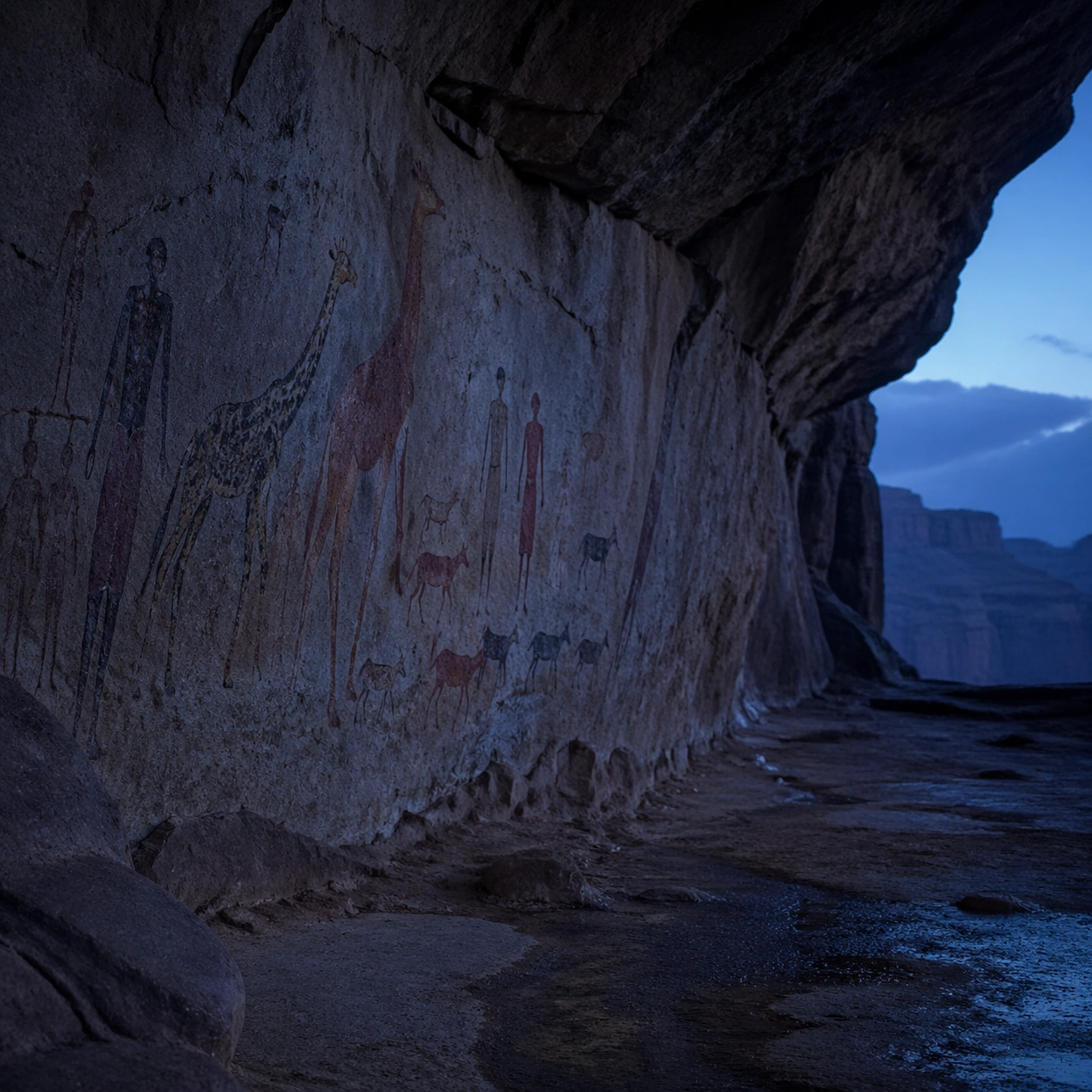
Scene: A square mood variation from the same civilization theme, built around cooler twilight light that emphasizes rock relief, shelter depth, and the subtle boundary between flat image and low volume. The image should stay grounded in field realism while testing how different i

Tassili Rock Art Living — Atmospheric Wide Reveal
GPT Image 2en

Scene: A square wide reveal of the same site under a slightly different environmental condition, with more surrounding geography or architecture visible while keeping the anchor landmark dominant. Use disciplined composition, atmospheric perspective, and natural light behavior so

Tassili Rock Art Living — Surface Close Study
GPT Image 2en

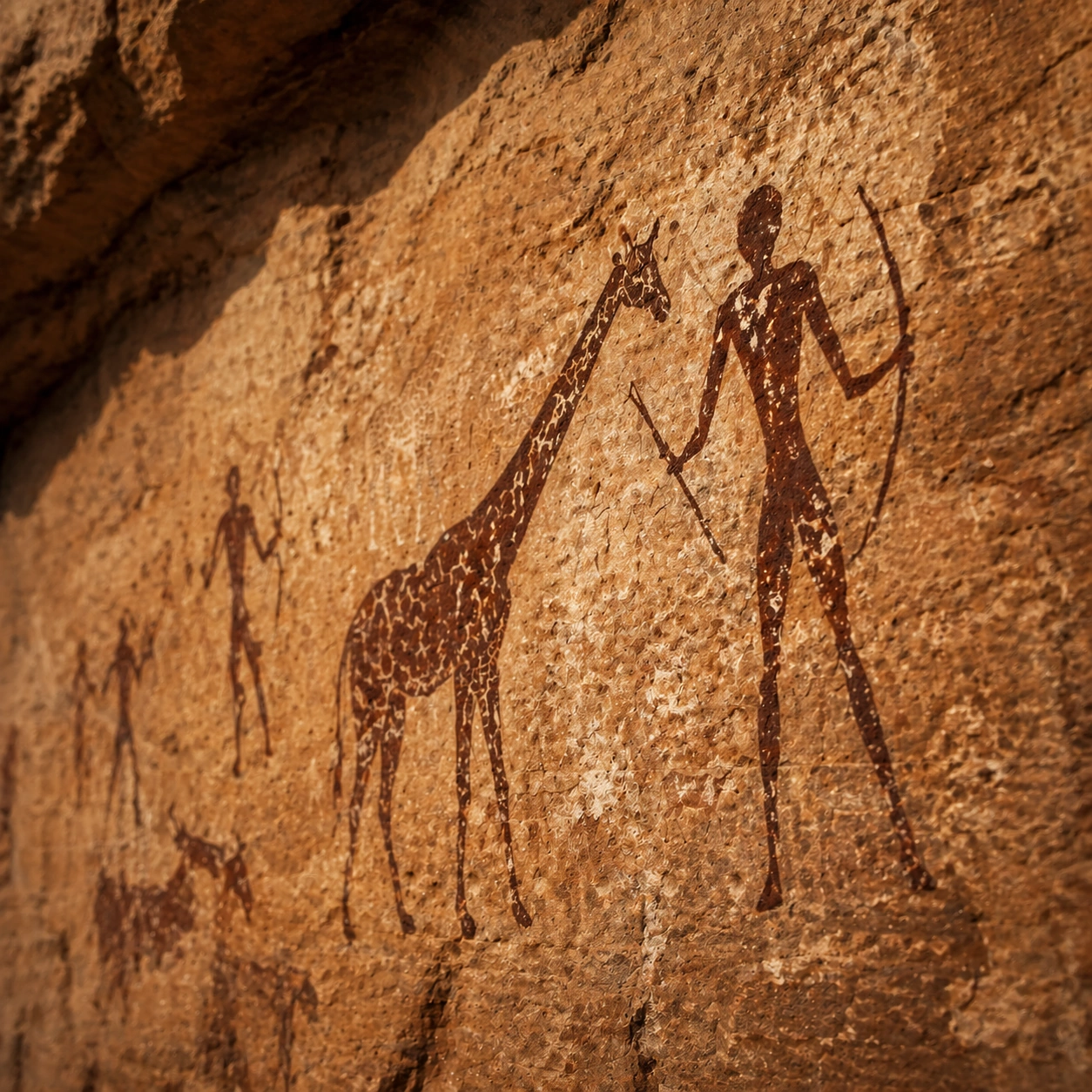
Scene: A square close study framed within the same site established by the reference anchor. Use a tight crop, shallow but believable depth of field, and raking light that reveals tactile evidence in surface relief, pigment, tool marks, moisture, or marine wear. The image should

Tassili Rock Art Living — Human Scale Reveal
GPT Image 2en

Scene: A square follow-up field image from the same site, slightly closer and lower than the reference anchor, with careful documentary framing and the same material palette. The camera should feel physically present inside the archaeological space, using natural light, soft dept

Tassili Rock Art Living — Excavation Overview
GPT Image 2en

Scene: A square independent archaeology study composed from a slightly elevated fieldwork viewpoint. Use balanced natural light, crisp evidence hierarchy, and practical site organization so the image feels publishable in a museum report and still visually strong enough for a gall