원본 문서
GPT Image 2 · en
Scene:
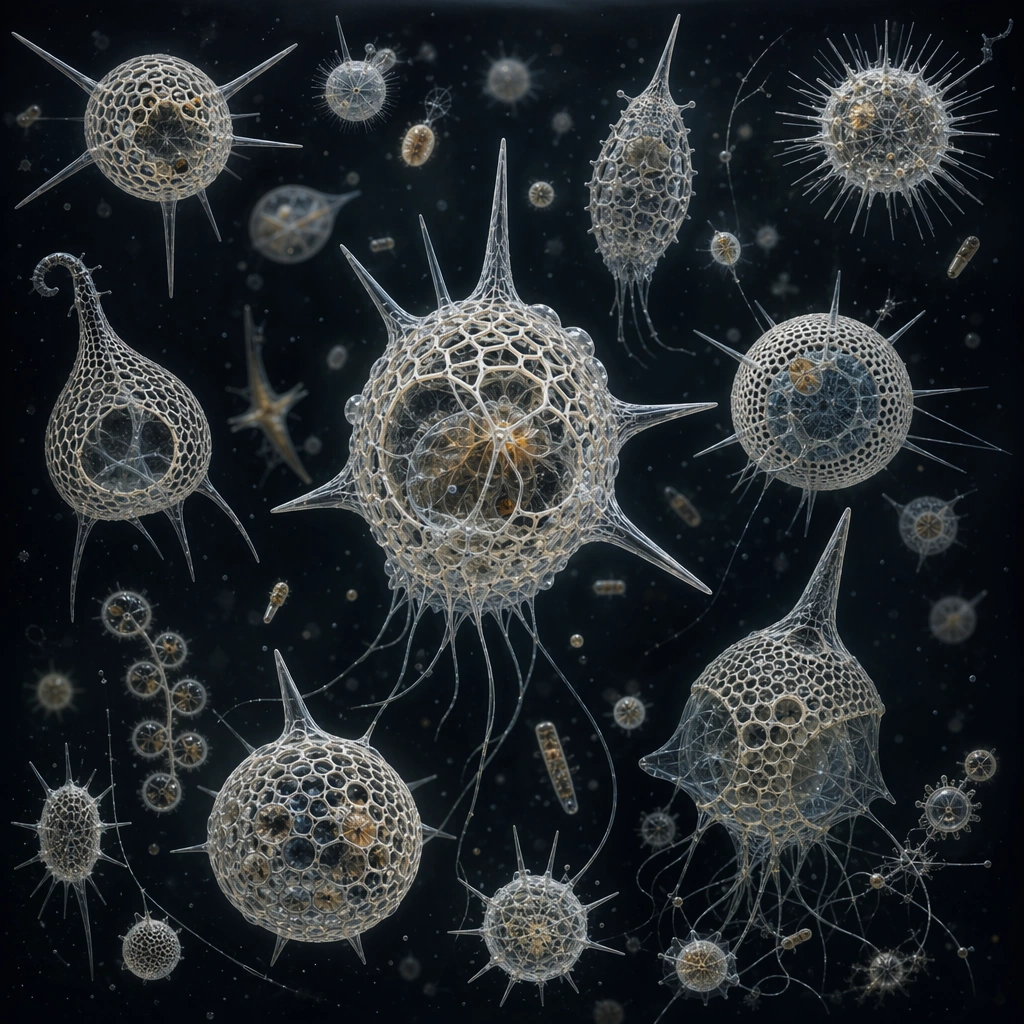
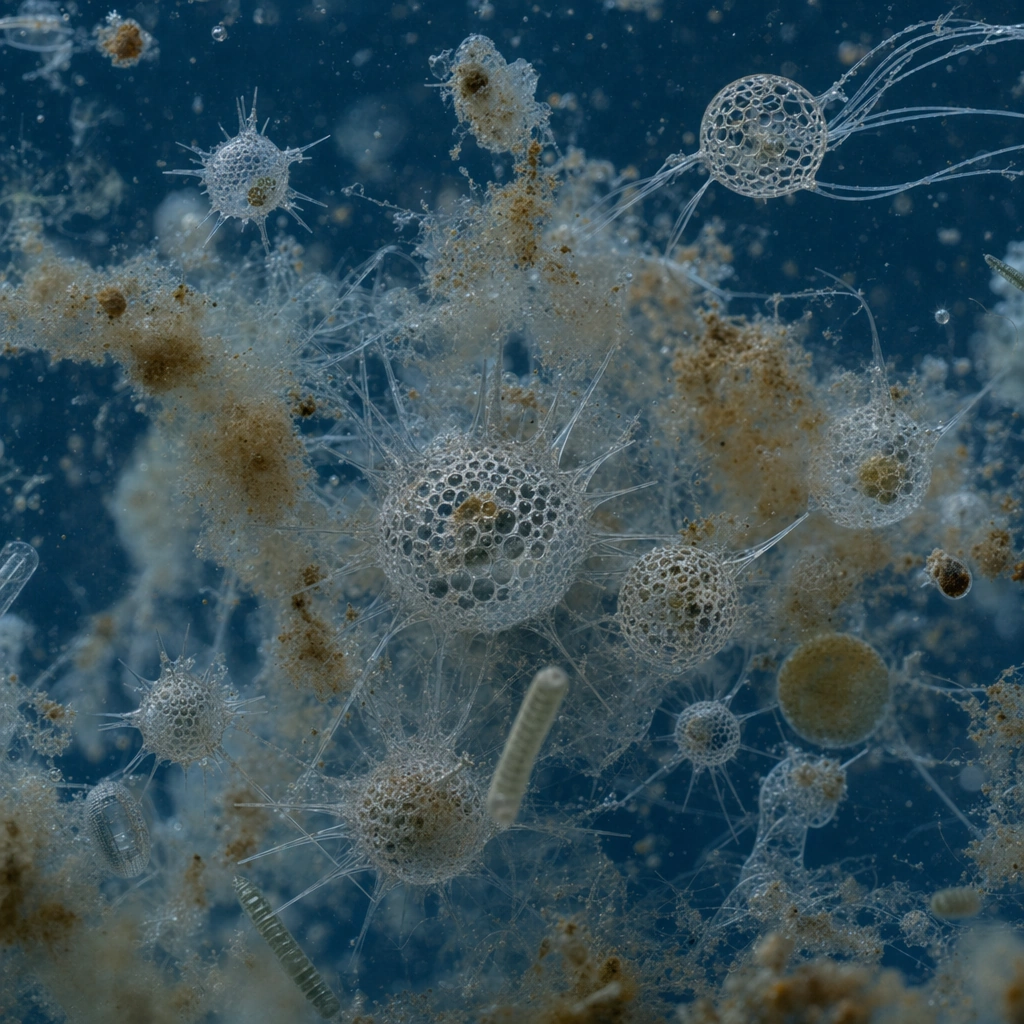
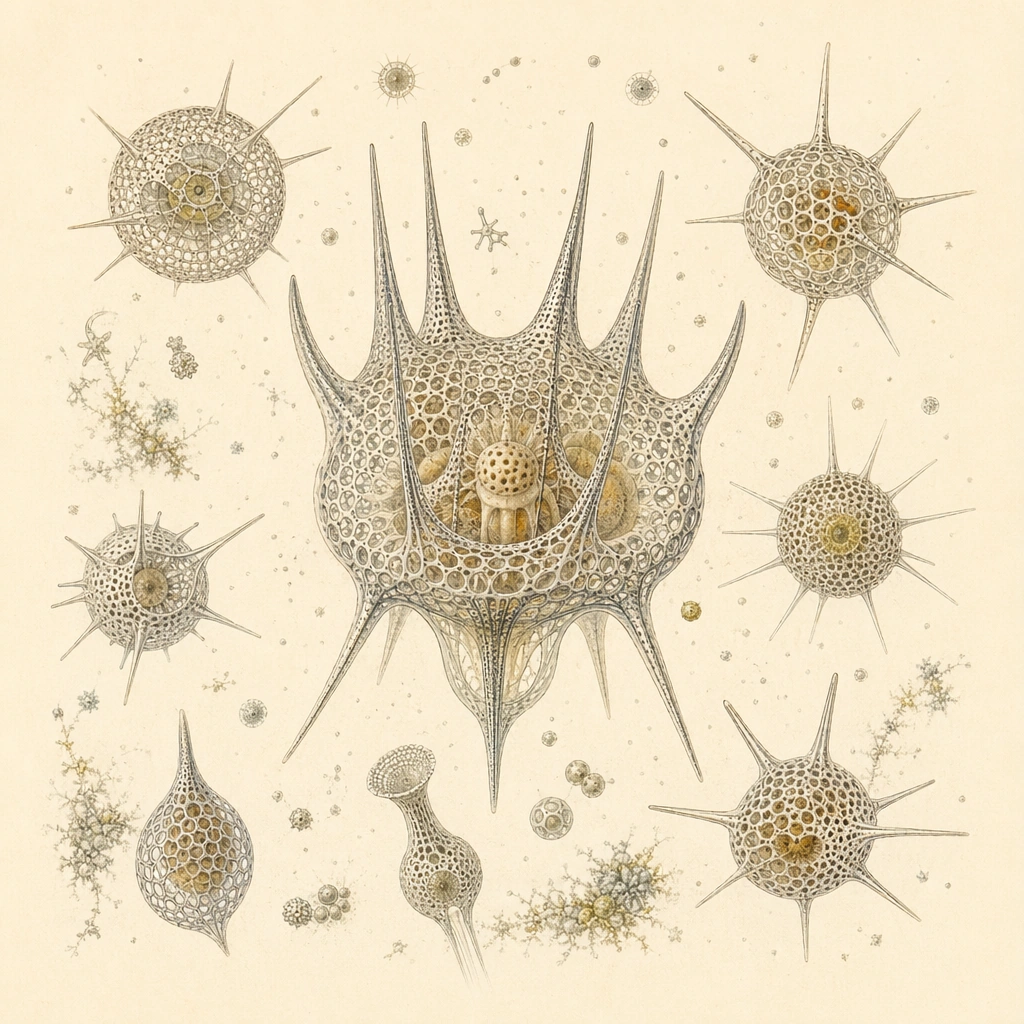
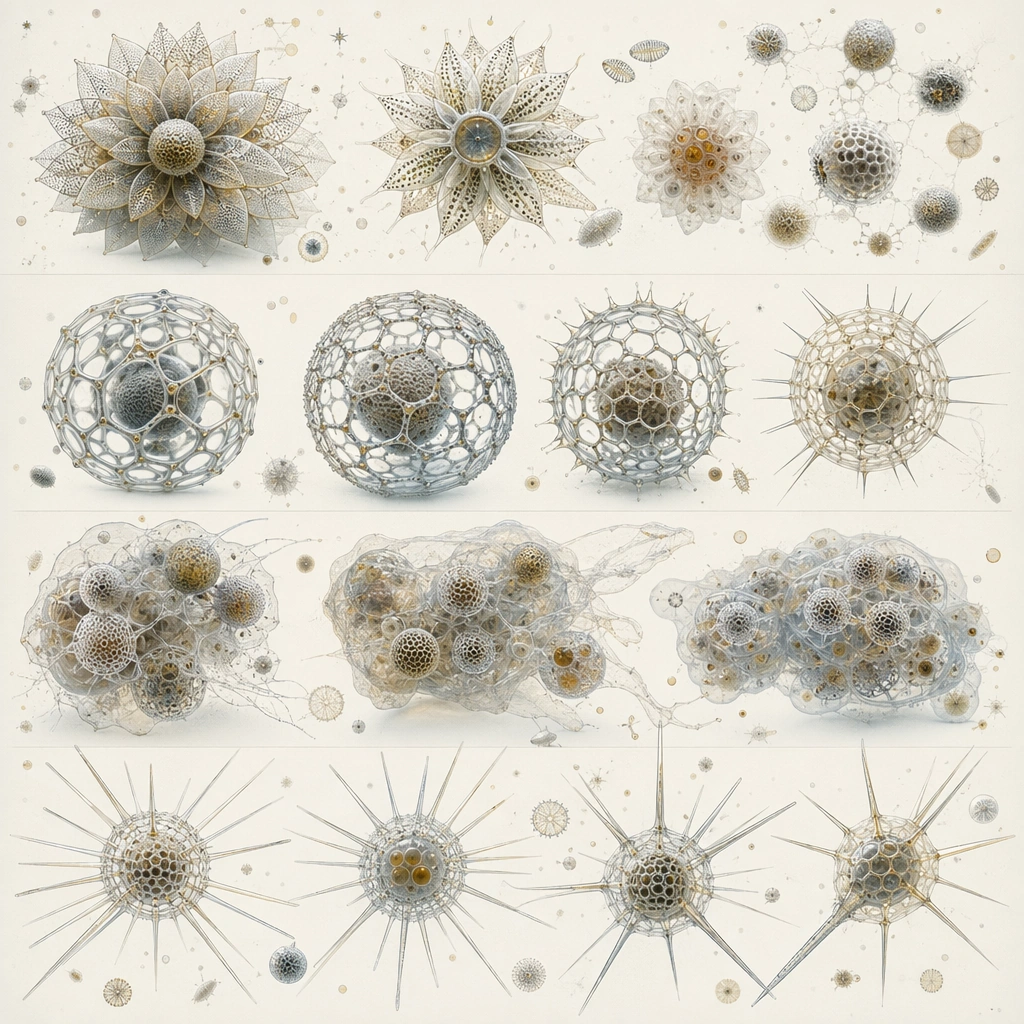
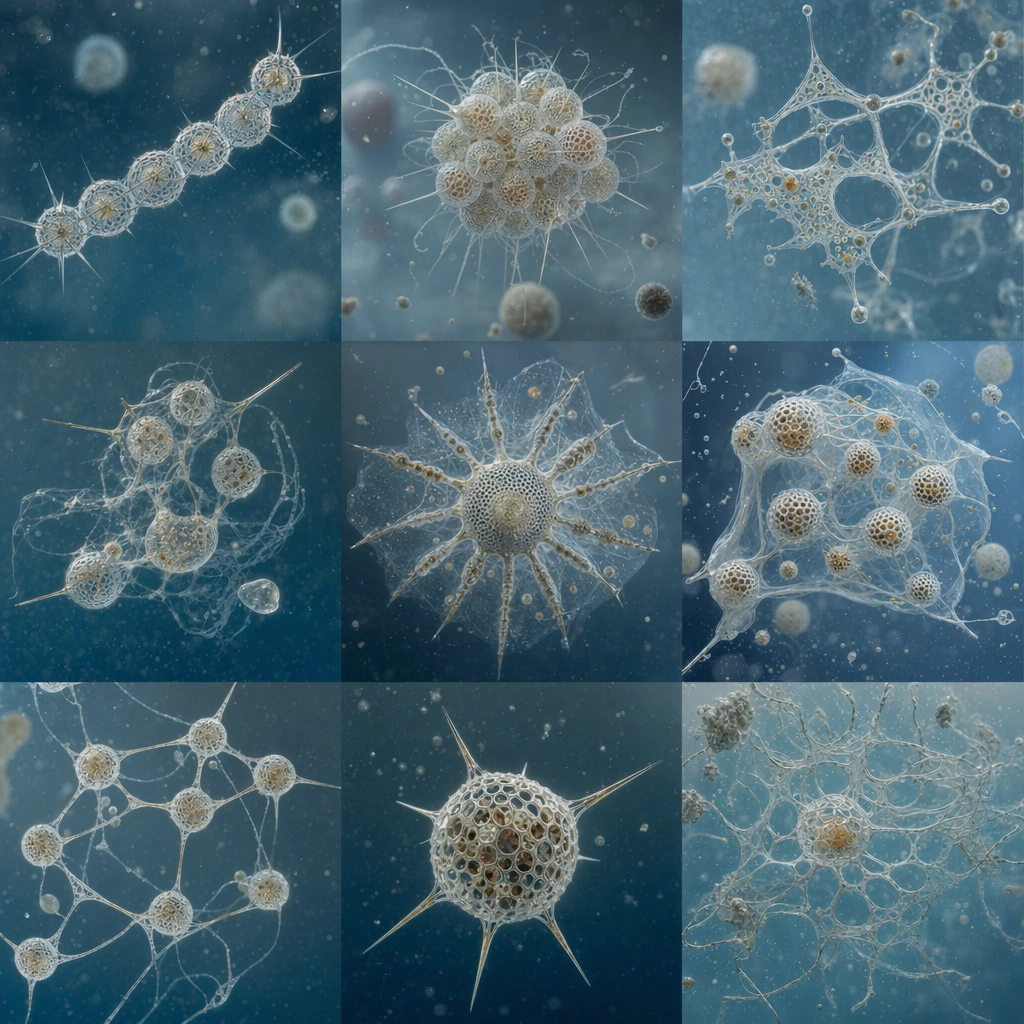
Build a square grid composition where each cell-like zone contains a different colonial radiolarian cluster suspended in subtle water-toned space. The board should remain highly organized while still suggesting microscopic life in fluid rather than dead specimens on paper. Build the frame as a square natural history study with disciplined composition, believable lighting, and enough environmental evidence to explain how this organism or system functions without any caption. Keep the image polished, observational, and suitable for a research gallery rather than pulp fantasy spectacle.

Subject:
Show linked chains, clustered spheres, and netted colonies whose shared silica structures suggest cooperation in buoyancy or feeding. Variations between colonies should be legible through architecture, not through random color shifts. Show the anatomy, habitat interaction, and scale cues clearly so the viewer can infer locomotion, feeding, reproduction, or ecological role from the visual alone. Every visible structure should feel evolved for a purpose, with layered foreground, midground, and background information that rewards close inspection.

Important details:
Treat radiolarians as silica-skeleton plankton whose geometry serves buoyancy, defense, feeding, and reproduction. Even the most ornate forms should follow repeatable structural rules, radial symmetry variants, lattice thickness logic, and believable microscopic scale. Use spacing, translucency, and scale with scientific restraint. The clusters should feel delicate and plausible, with connective elements that look grown and secreted, not welded or digitally constructed. Favor coherent biology over decorative excess: tissues, shells, membranes, spores, tendrils, fins, silica lattices, or atmospheric sacs should all follow one material logic. Preserve a convincing relationship between the environment and the body plan, use restrained color hierarchy, and make the image feel like a serious speculative field record rather than a random monster concept.

Use case:
Radiolarian Marine Sculpture Atlas single study 3/9.

Constraints:
No readable text, no watermark, no logos, preserve exact 1:1 aspect ratio, no infographic labels, no abstract data-art look, no bright candy palette, no decorative symmetry for its own sake, no accidental brand resemblance, no direct copy of known terrestrial species, no cartoon simplification.
사용 방법
- 매개변수를 포함한 전체 원본 프롬프트를 복사하세요.
- 주제, 문구, 구도를 자신의 요구에 맞게 바꾸세요.
- 호환되는 외부 도구에서 사용하고 이용 조건과 결과를 확인하세요.
시작 전 확인
- 참조 이미지가 필요한지 확인하세요. 호환 표시는 해당 모델로 이 예시를 생성했다는 뜻이 아닙니다.
- 이름, 수치, 이미지 속 문구를 확인하세요. 모델 버전에 따라 결과가 다를 수 있습니다.