Documento original
GPT Image 2 · en
Scene:
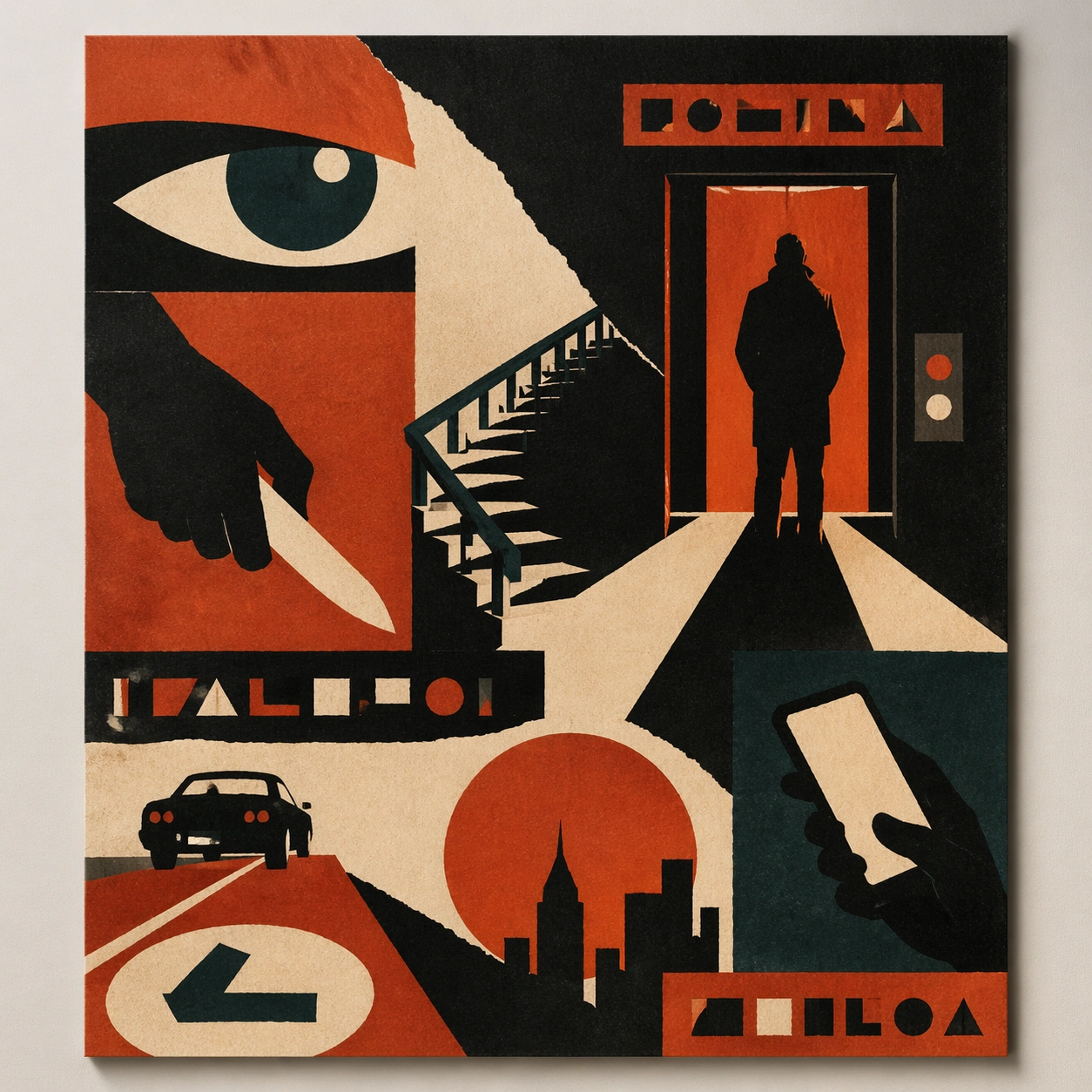
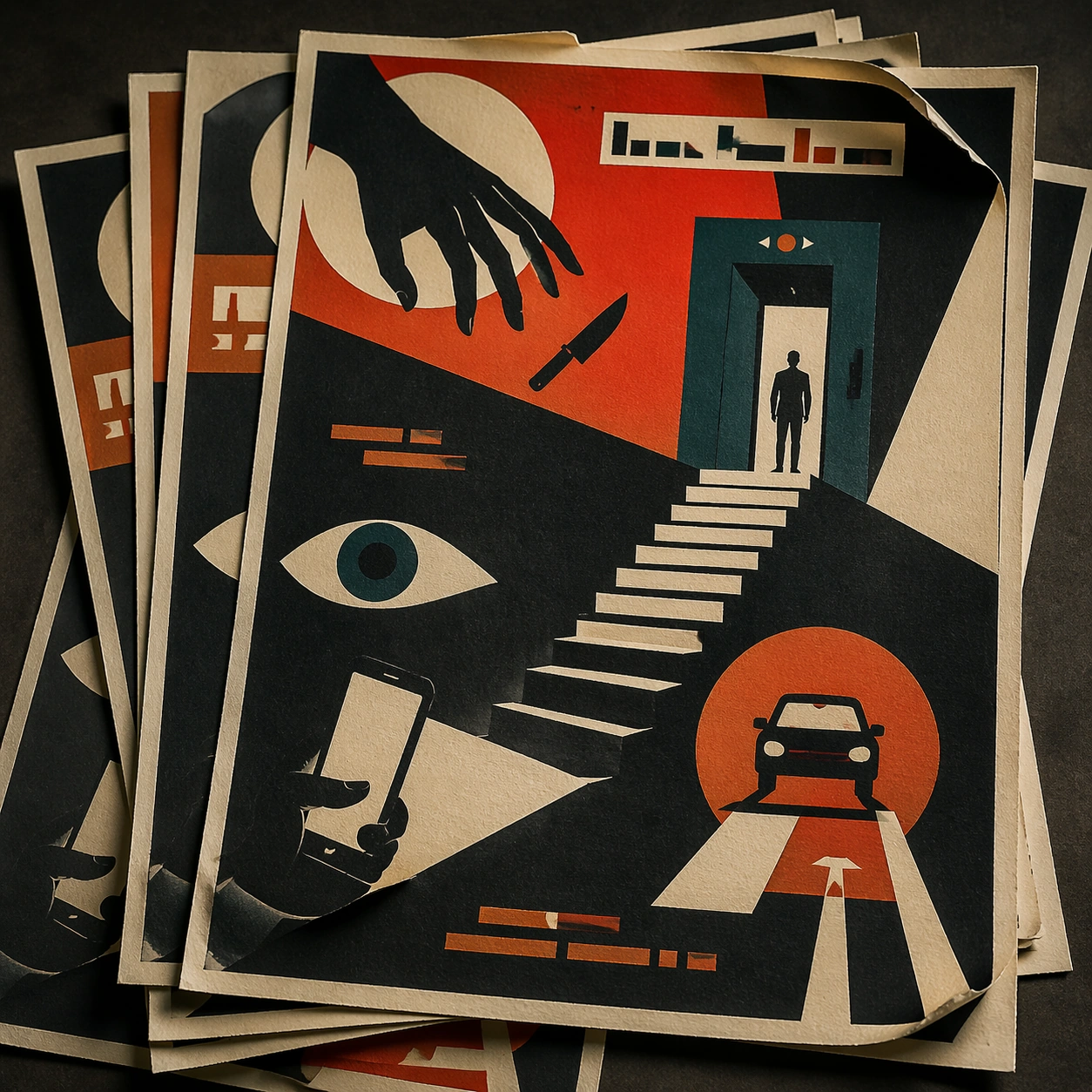
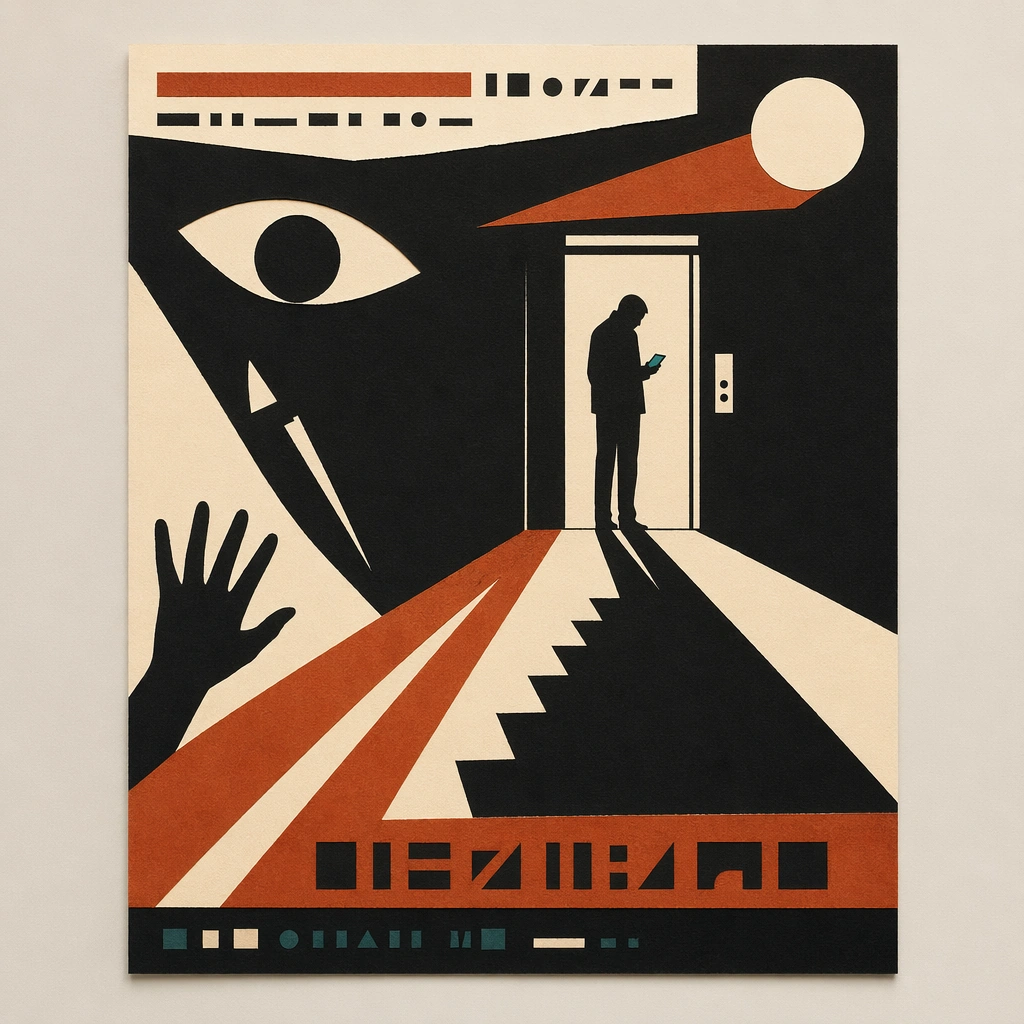
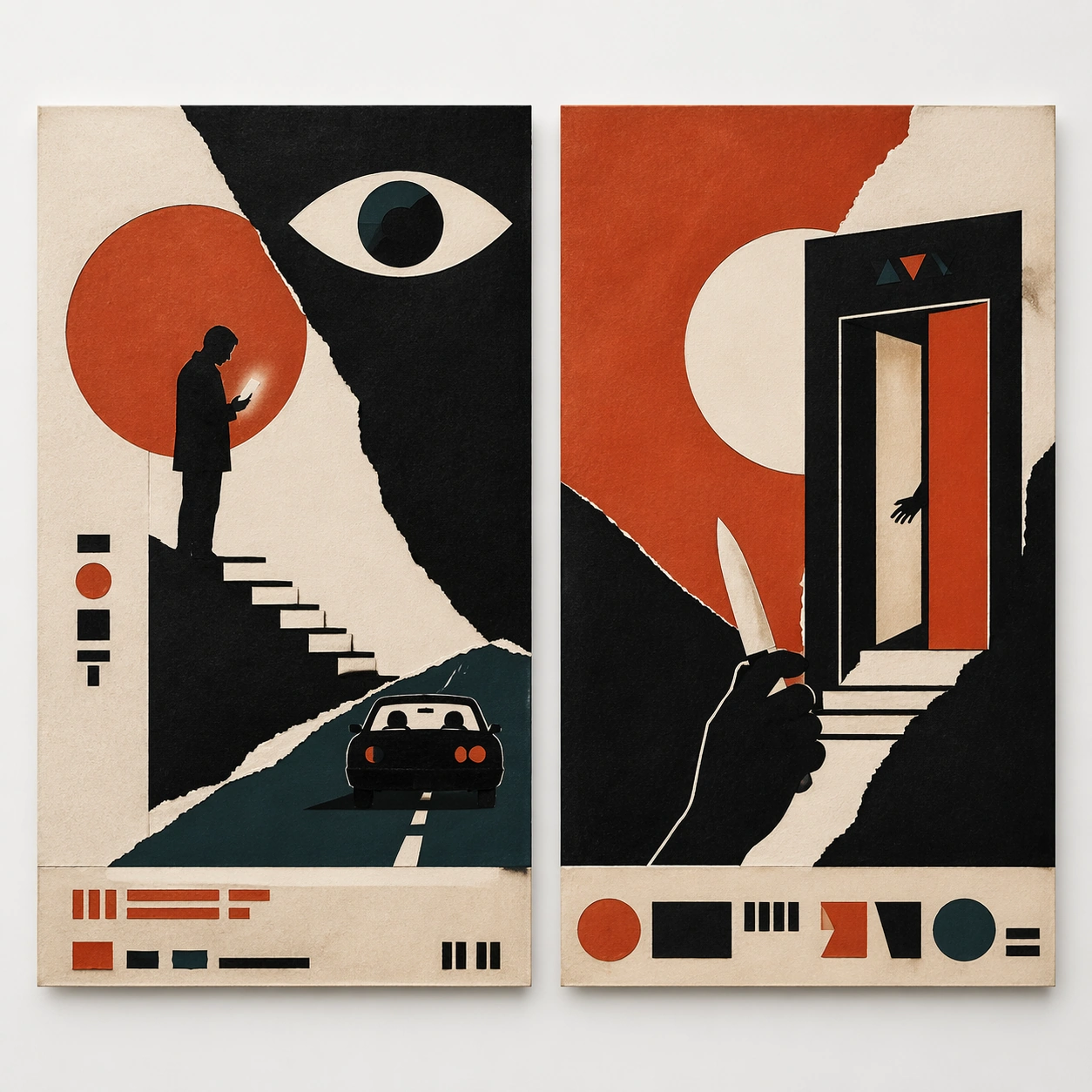
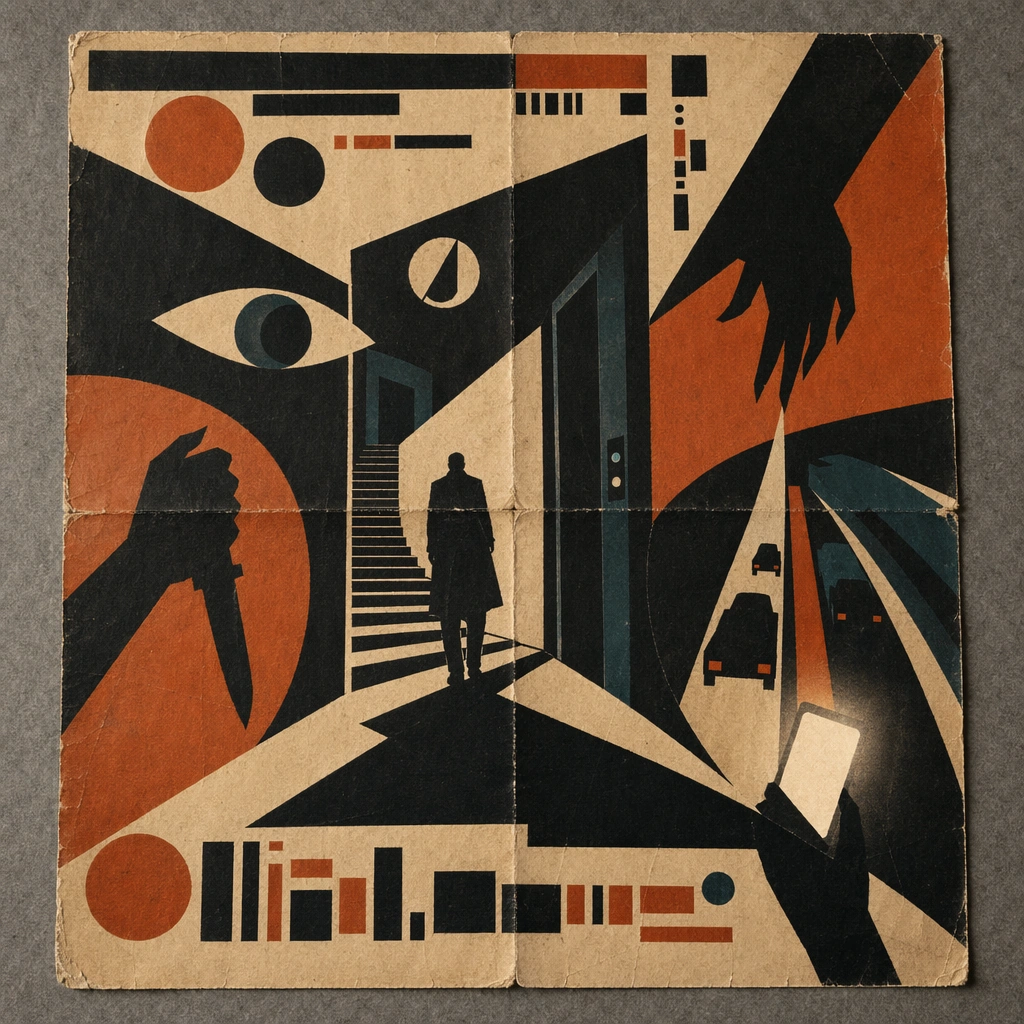
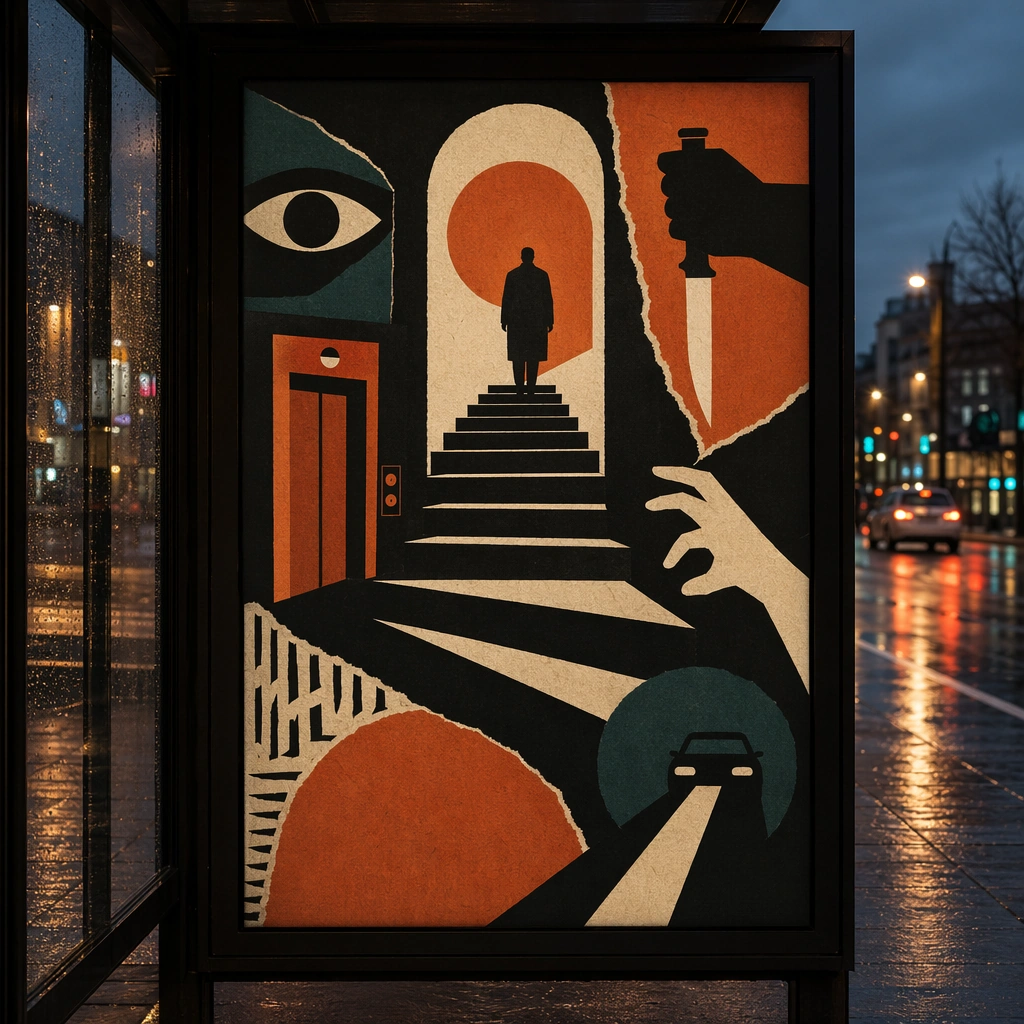
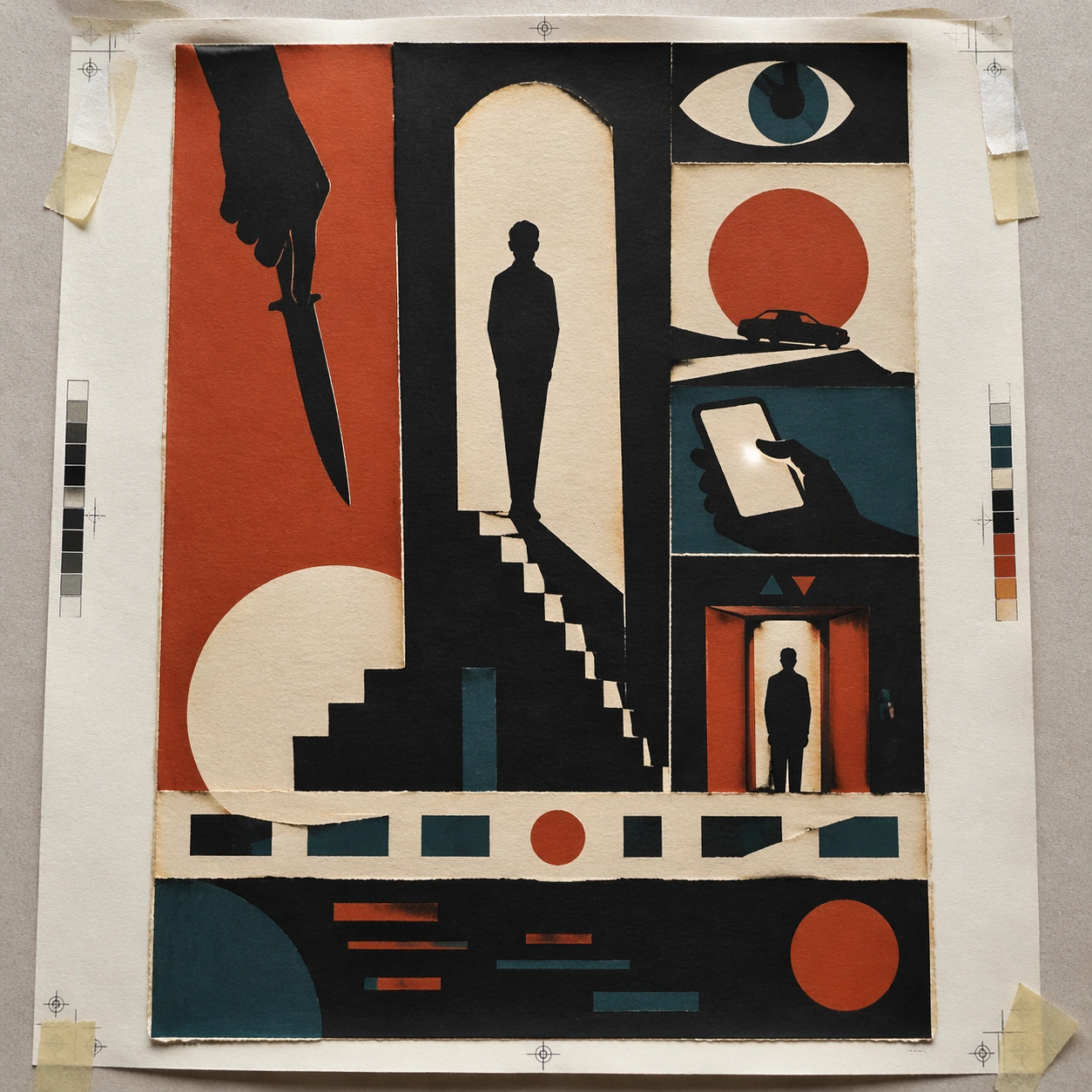
A square overhead tabletop photograph of a fresh poster proof on neutral worktable paper, lit by cool daylight, with crop marks, tape tabs, and slight paper bow visible around the sheet. The poster should express mid-century minimalist paper-cut poster language driven by torn shapes, narrative negative space, and three-color restraint, using matte black, rust orange, cream, and a very limited dark teal accent and a tactile surface appropriate to the medium.

Subject:
Design the poster as a print-shop proof, preserving the same poster language while allowing production clues such as edge trims, registration targets, and process marks to frame the composition. Use single silhouettes, staircases, hands, knives, eyes, circles, doorways, and dramatic shadows as the main visual ingredients, and organize them with simple cut-paper title bars and glyph fragments kept abstract and unreadable. For the contemporary-subject axis, thread in ride-share lanes, phone glare, and elevator doors converted into severe paper-cut suspense. The poster must feel like an original design object rather than a reproduction of any known work.

Important details:
The image must still read as a finished poster concept, but it should carry believable print-process evidence and material tactility instead of gallery-wall perfection. Preserve deliberate imbalance, clean cut contours, visible paper fibers, and story told through absence as much as presence. Keep every letterform abstract and non-readable, as if it were a typographic texture rather than language. Make the style unmistakable through composition, palette, surface behavior, and symbolic compression. no glossy gradients, no tiny fiddly detail, no photoreal rendering, no ornamental clutter.

Use case:
Paper-Cut Film single study 2/9, testing production realism and process evidence.

Constraints:
No readable text, no watermark, no logos, preserve exact 1:1 aspect ratio, no copyrighted characters, no real brand marks, no QR codes, no interface chrome, no accidental gibberish lettering.
Como usar
- Copie o prompt original completo, incluindo os parâmetros.
- Adapte o tema, o texto e a composição aos seus requisitos.
- Use uma ferramenta externa compatível; confira o acesso e o resultado.
Antes de começar
- Verifique se é necessária uma imagem de referência. Compatibilidade não comprova qual modelo gerou o exemplo.
- Confira nomes, números e textos; os resultados variam entre versões do modelo.