Documento original
GPT Image 2 · en
Scene:
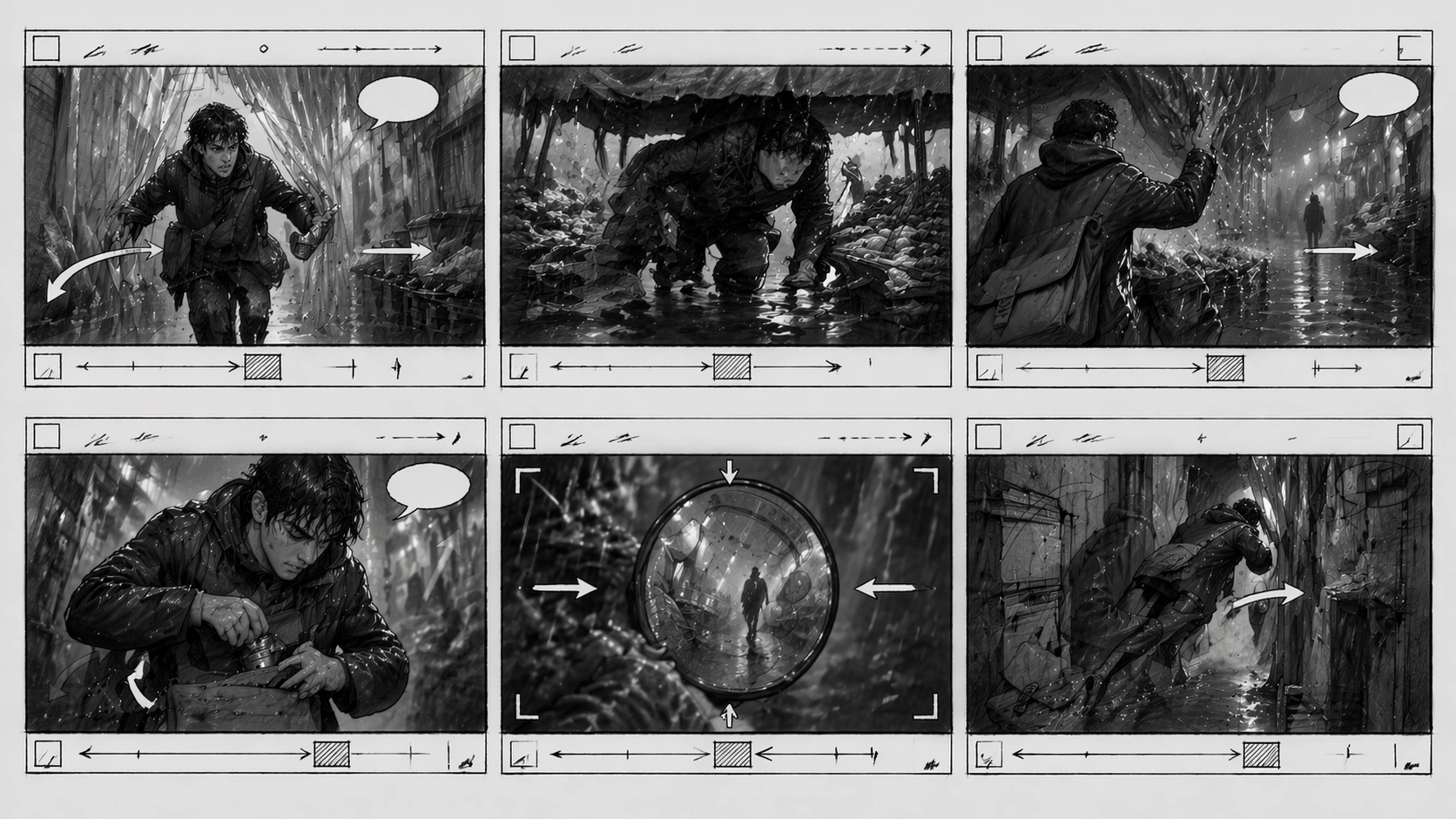
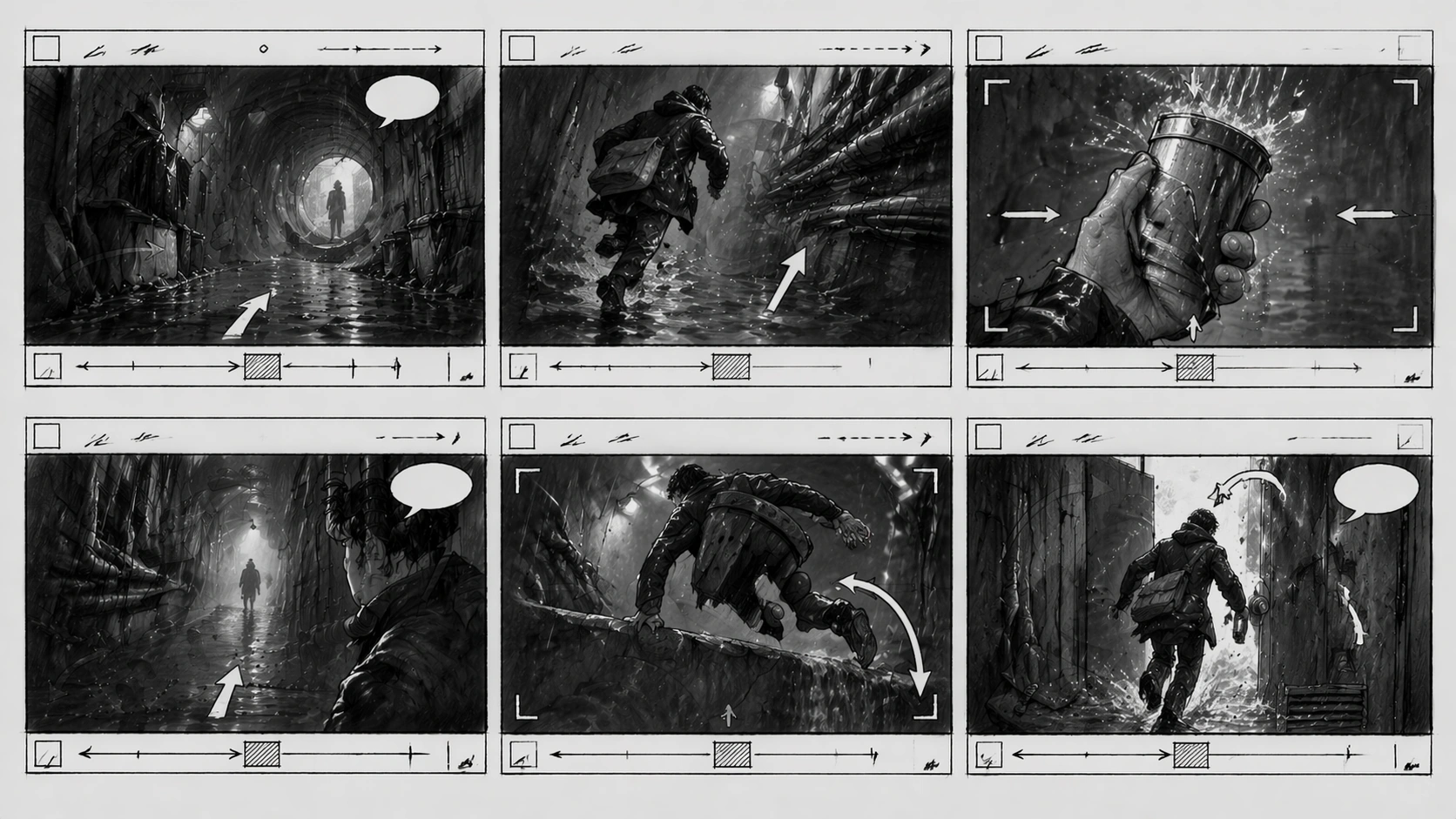
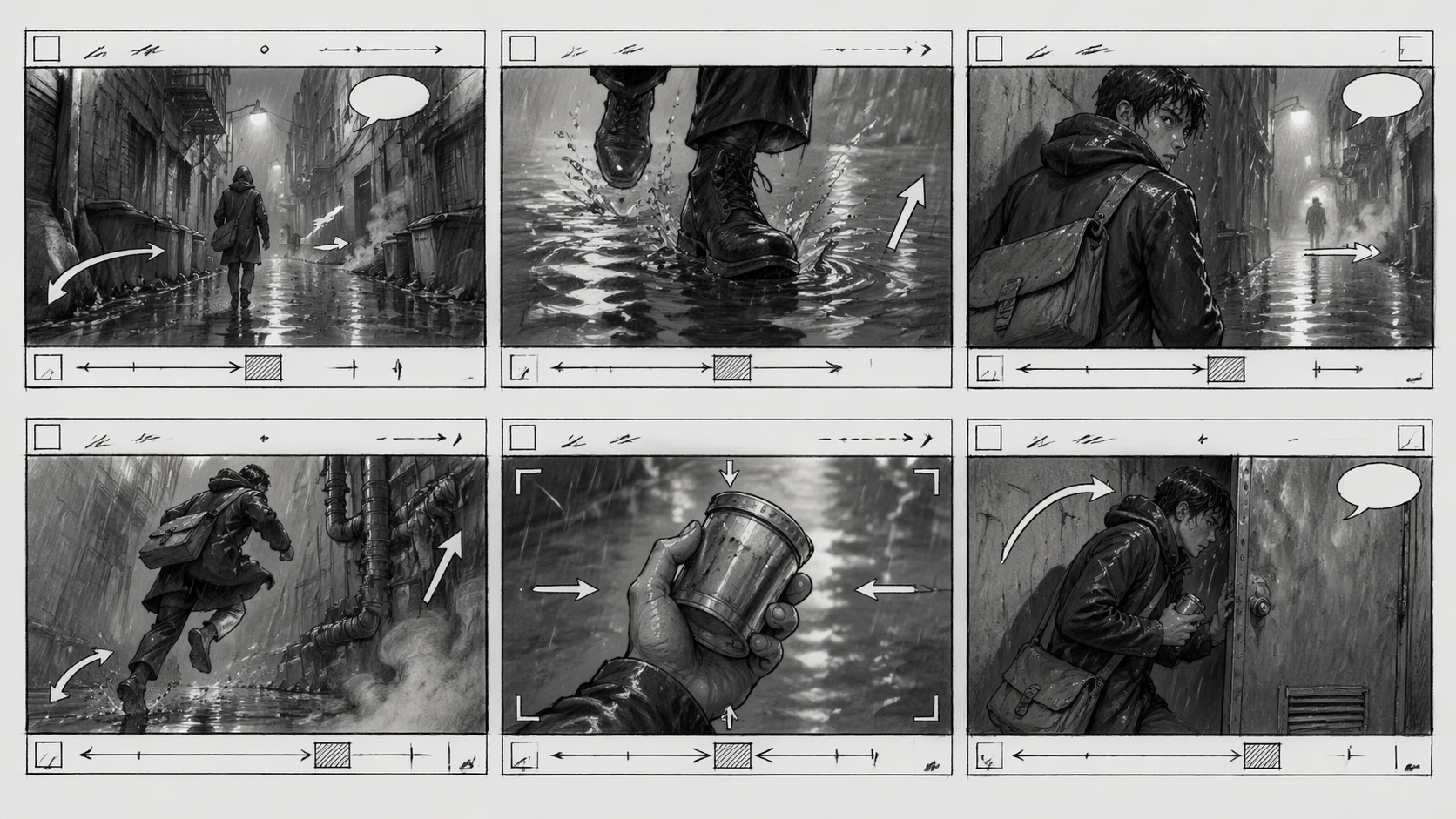
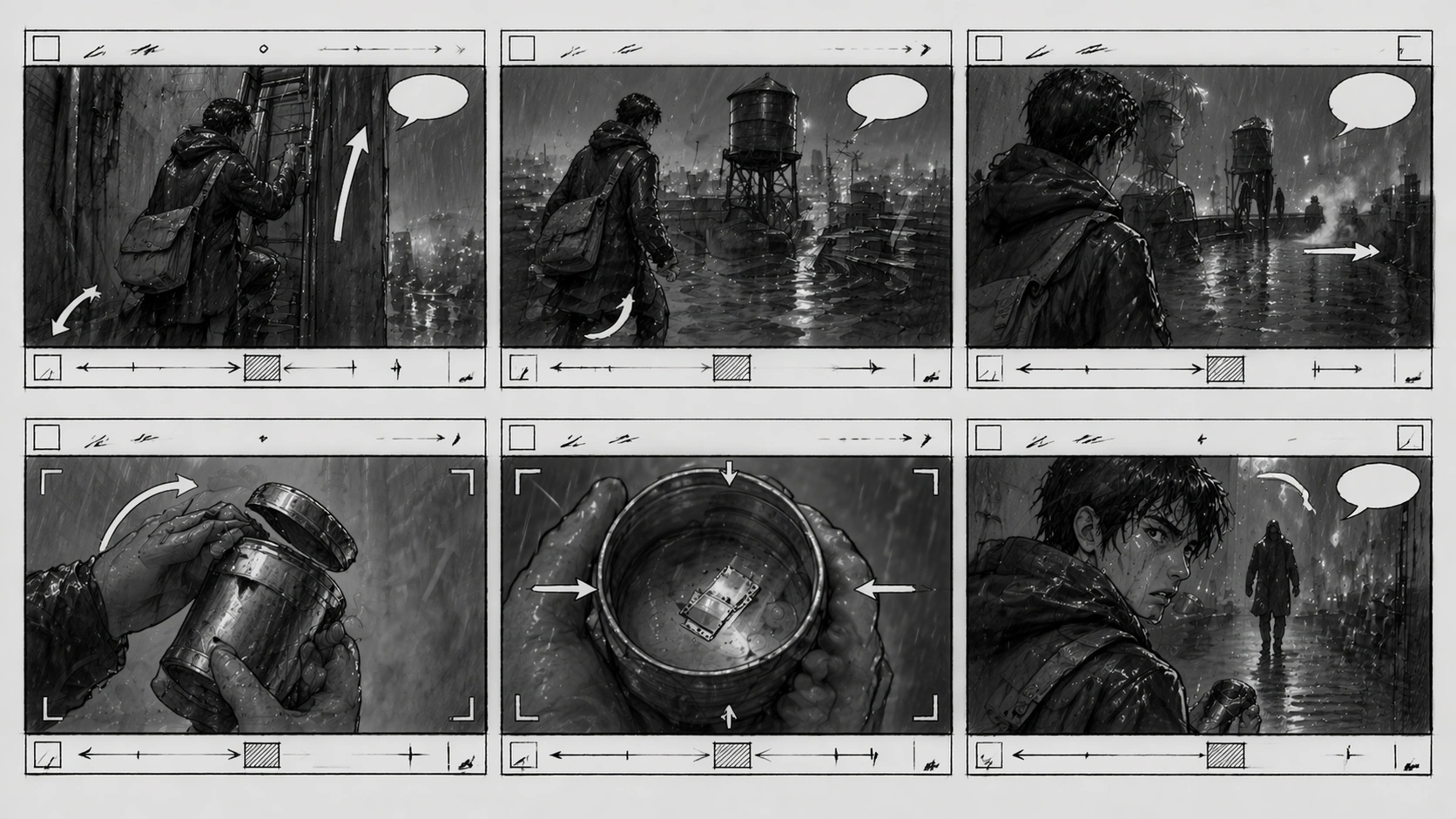
A horizontal 16:9 graphite storyboard sheet in the same six-panel 2 by 3 grid format as the reference, with ruler-straight gutters, header strips of unreadable pencil marks, blank notes bands, camera arrows, character-path arrows, and paper texture. The setting moves to a wet rooftop above the alley district, with rainwater tanks, antennas, low parapets, and city glow rendered in monochrome pencil wash.

Subject:
Use the reference as the primary guide for the same hooded courier, messenger bag, wet coat silhouette, and metal film canister. Six frames show a reveal sequence: the courier climbs a fire ladder, emerges onto the rooftop, sees the distant silhouette waiting near a water tank, opens the canister in a close insert, discovers a tiny reflective strip inside, and realizes the silhouette is closer in the final over-shoulder panel. The antagonist stays a vague recurring silhouette, never a detailed new protagonist.

Important details:
Preserve visual continuity from image 01: same character design, same pencil storyboard style, same notes bands, same arrow grammar, same rainy material logic. The board should demonstrate professional shot progression: vertical climb, wide establishing rooftop, compressed telephoto reveal, insert of canister, reaction close-up, and suspenseful over-shoulder setup. Rain must behave believably on metal, concrete, cloth, and paper-like pencil shading. Keep notation marks graphic but not readable.

Use case:
Film Storyboard Sequence series study 3/8, testing continuity and suspense blocking in a rooftop reveal board.

Constraints:
No readable text, no watermark, no logos, preserve exact 16:9 horizontal aspect ratio, no legible shot codes, no brand signage, no broken panel layout, no changed courier design, no polished full-color frames.
Como usar
- Copie o prompt original completo, incluindo os parâmetros.
- Adapte o tema, o texto e a composição aos seus requisitos.
- Use uma ferramenta externa compatível; confira o acesso e o resultado.
Antes de começar
- Verifique se é necessária uma imagem de referência. Compatibilidade não comprova qual modelo gerou o exemplo.
- Confira nomes, números e textos; os resultados variam entre versões do modelo.